Start with the child, not the age label
A puzzle can invite careful looking, turning, matching, and trying again. But a challenge that suits one child may frustrate another, even when both are the same age. Age labels can be a useful starting point, not a rule. A better clue is what the child does when a puzzle is within reach: Do they enjoy finding a place for each piece? Can they stay interested when the first attempt does not work? Do they want to try again later?
Watch a child use a familiar puzzle before choosing the next one. If they complete it easily and still want more, a small step up may be welcome. If they lose interest partway through, they might prefer a different picture, fewer pieces, or a puzzle they can work on with someone. Finishing is not the only sign of a good fit. Curiosity, experimentation, and a willingness to return all matter.
Look beyond the number of pieces
Piece count matters, but it does not tell the whole story. A puzzle with clear, distinct images may be easier than one with fewer pieces in similar colors. Large pieces can be easier to pick up and turn. Pieces with obvious shapes or a sturdy frame give extra clues, while a borderless puzzle asks the child to work out where the picture begins and ends.
For a child new to puzzles, consider a simple inset puzzle with pieces that each have a clear place. Later, a small jigsaw with a familiar subject may offer a fresh challenge. A child who already sorts by color or finds edges may enjoy a more detailed picture. Choose a theme they care about, whether it is animals, vehicles, gardens, or an illustration from a favorite story. Interest can make the effort of looking closely feel worthwhile.
Change one kind of challenge at a time
A manageable next puzzle often changes just one feature. You might move from an inset puzzle to interlocking pieces while keeping the picture simple. Or you might keep a familiar puzzle format and choose an image with more detail. Changing the piece count, picture complexity, piece size, and format all at once can make it hard to tell which part is causing difficulty.
You can also adjust a puzzle you already own. Offer only one section of a larger picture at first, or place a few related pieces together for the child to explore. Keep the box image nearby if it helps them see what they are making. As the task becomes familiar, put more pieces in the mix or move the picture farther away. These small changes let the same puzzle remain interesting without requiring a new one each time.
Help without doing the puzzle for them
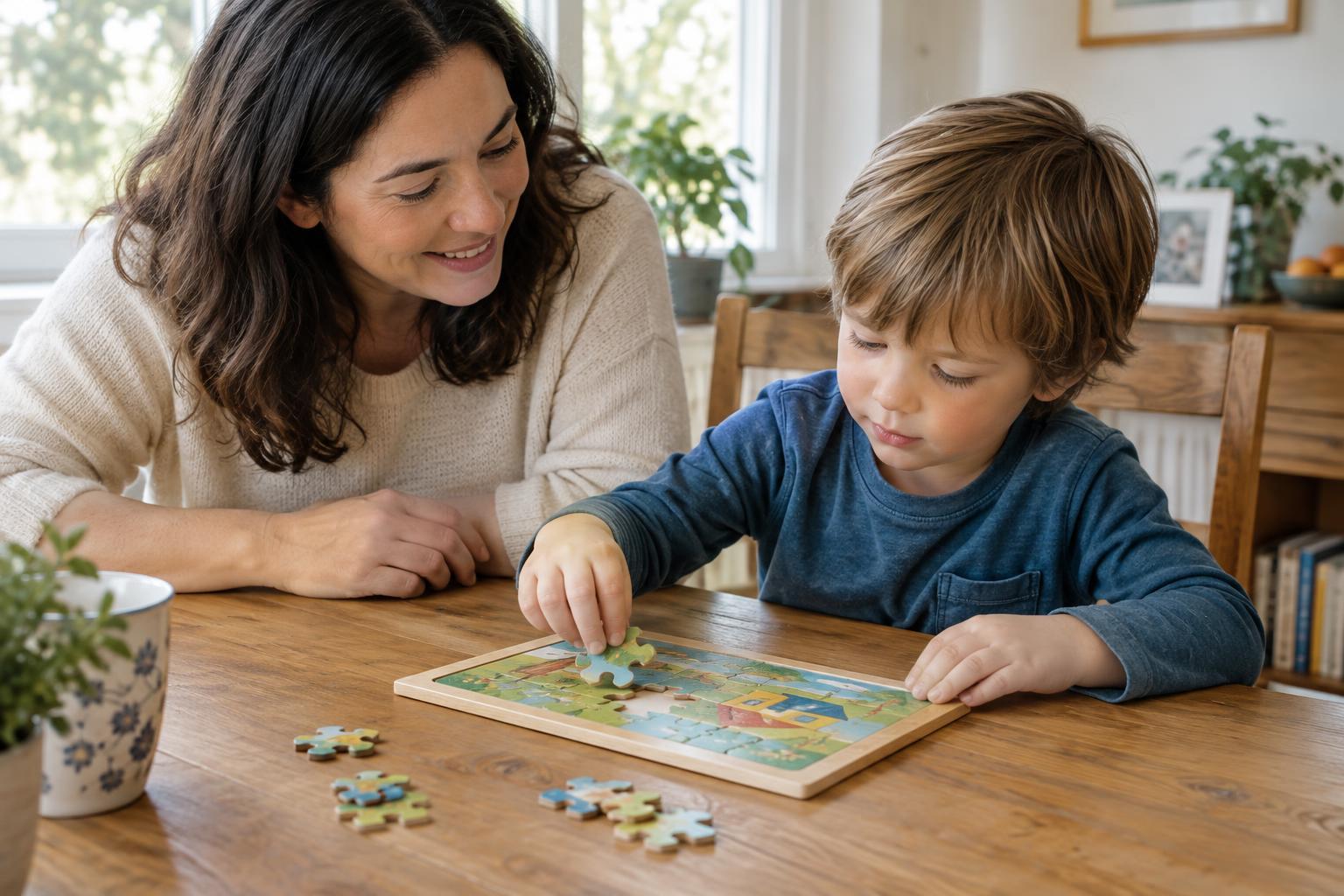
When a child gets stuck, a little company can be more useful than an answer. You might ask, “What do you notice on this piece?” or “Can you find another piece with the same color?” Give them time to turn a piece and test it. If they want help, demonstrate a strategy with one piece, then leave the next choice to them. Encouragement can focus on what they tried rather than how quickly they finished.
It is also fine to pause. A child may be tired, hungry, or ready for a different kind of play. Put unfinished pieces somewhere safe and return later if they want to. Completing a puzzle together is still a shared activity; independence does not have to mean working alone. The aim is to leave enough of the problem for the child to explore while making support easy to ask for.
Make puzzle time easy to return to
A clear surface and a place to keep loose pieces can make puzzle play less stressful. A tray or shallow container helps keep a work in progress together, especially in a busy home. Store puzzles where children can see a few choices without having to sort through every box. Rotating familiar puzzles back into view gives children a chance to notice what they can now do differently.
Check that pieces are in good condition and suit the children who can reach them. Small or broken parts can be a concern for younger children who may put objects in their mouths, so keep those puzzles out of their reach. When a puzzle no longer holds a child’s interest, there is no need to push for completion. The most useful challenge is one they can approach, explore, and feel welcome to try again.