Why an unfinished game can be worth keeping
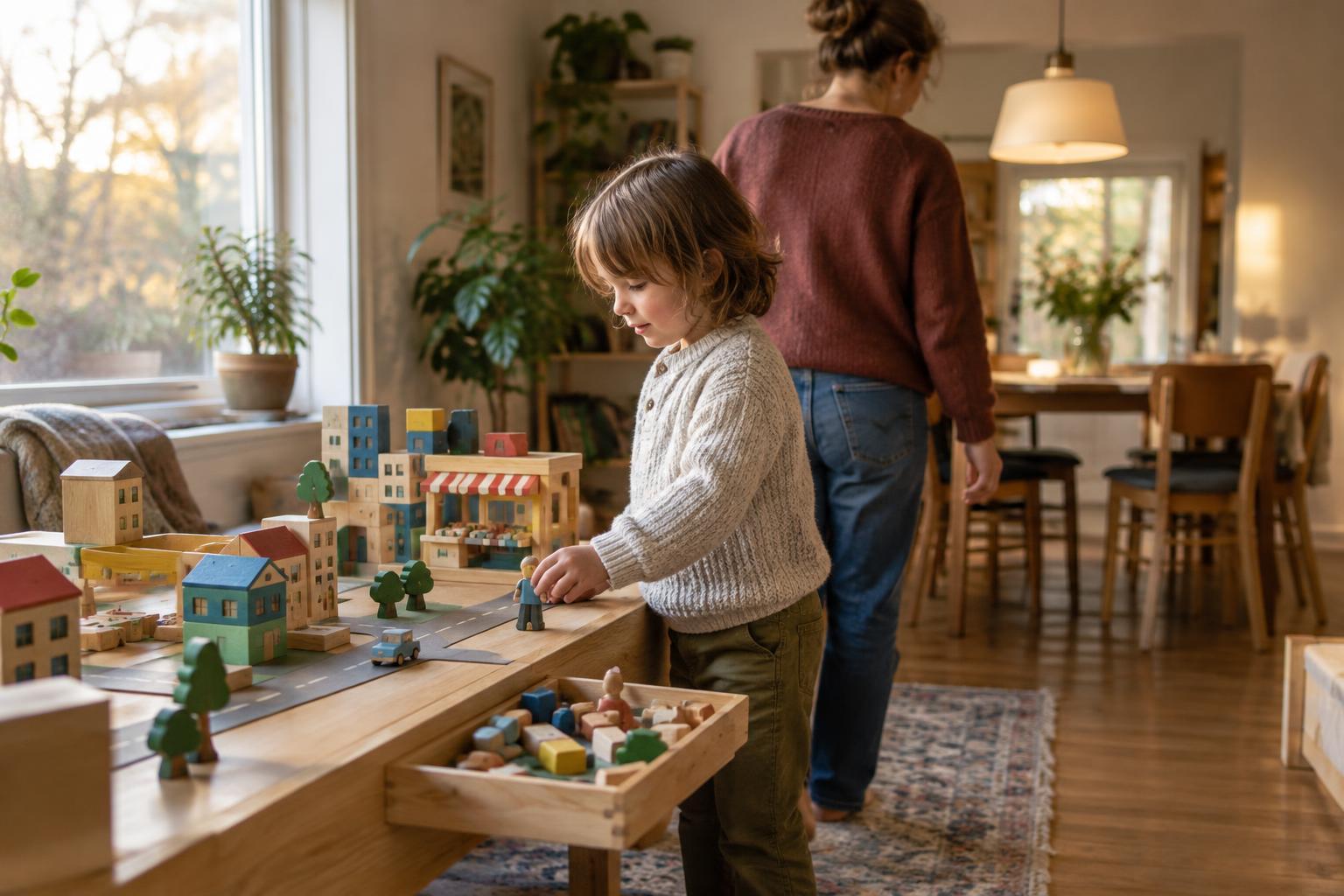
A child may spend a long time arranging a block city, setting up a pretend restaurant, or deciding what happens next in a story. To an adult, the pieces may look ready to tidy away. To the child, they may be reminders of an idea still in progress. Leaving some work intact, when the space allows, gives the child a starting point when they return.
That does not mean every game needs a permanent home. Family rooms have other jobs, and small pieces may need to be cleared before a younger sibling comes in. The useful question is not “Can we save everything?” but “What part of this idea would help you start again?” Sometimes that is the whole construction. Sometimes it is a few characters, a quick sketch, or the child’s description of what was going to happen next.
Give a clear pause, not a surprise ending
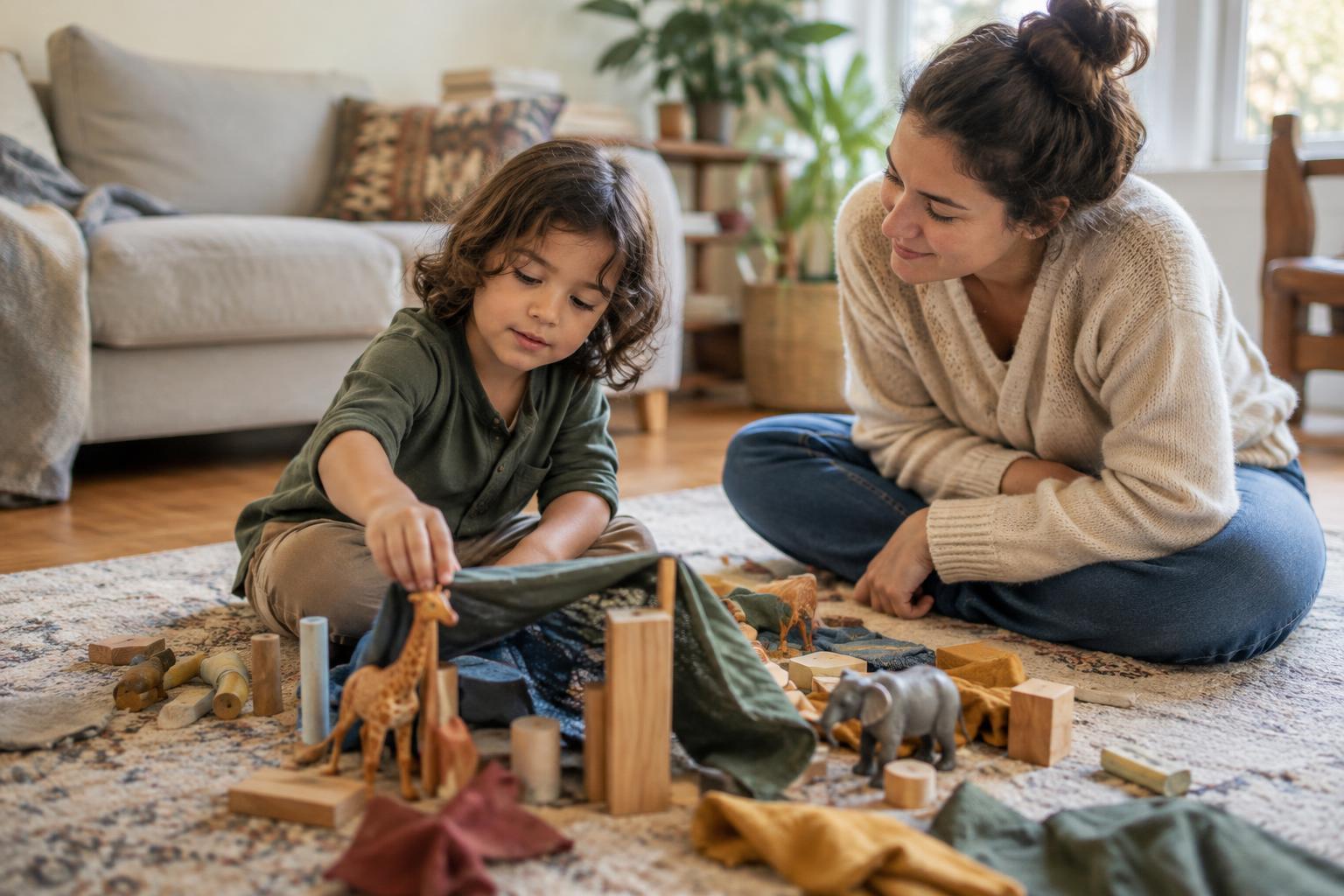
When possible, let the child know what is coming before it is time to stop. A simple notice such as “We’ll need the table for dinner soon” tells them why the space must change. Follow it with a small, concrete choice: “Would you like to move your animals to the tray, or take a picture of their setup before we clear the table?” A choice about how to pause is easier to act on than an open-ended request to finish a complicated game quickly.
You can also help the child mark a stopping point within the play itself. The pretend shop can close for the day; the block builders can leave their bridge unfinished until tomorrow. If the child is deeply involved, they may need help deciding what to save. Keep the discussion brief when a routine cannot wait. The aim is to acknowledge their plan without suggesting that dinner, bedtime, or a shared space can be postponed indefinitely.
Save the idea in a way that fits your home
Choose a method that matches the materials and the space available. A shallow tray can hold a small scene and move to a shelf. A marked corner of a table may work for a puzzle or drawing if that surface is not needed right away. For a large construction that cannot stay up, a photo or a simple drawing can show how the pieces were arranged. Ask the child which details matter most before clearing it.
Set practical limits in advance. A project left in a walkway is likely to be disturbed, and food, water, or materials that are unsafe for younger children should not be left out. If siblings share the space, agree on what can be touched and what needs to be put away. For children who find it hard to choose what to keep, offer a small boundary: “These pieces can stay on the tray; the rest go back in the box.” Saving less can still preserve the heart of the game.
Make returning to play easy, but optional
When there is another chance to play, a gentle reminder may be enough: “Your animal camp is on the shelf if you want to continue it.” Let the child decide whether to pick up the old plan, change it, or do something else. Returning to an idea can give them room to add a road, revise a story, or solve a problem they noticed earlier. It is also fine if the saved setup has lost its appeal.
If an unfinished game stays untouched, ask before dismantling it rather than treating the space as reserved forever. You might say, “We need this tray for something else. Is there one part you want to keep?” Over time, children can take a larger role in deciding what is worth saving and how to leave a shared area ready for the next activity. Pausing play then becomes a manageable part of family life, not a contest between imagination and tidying up.