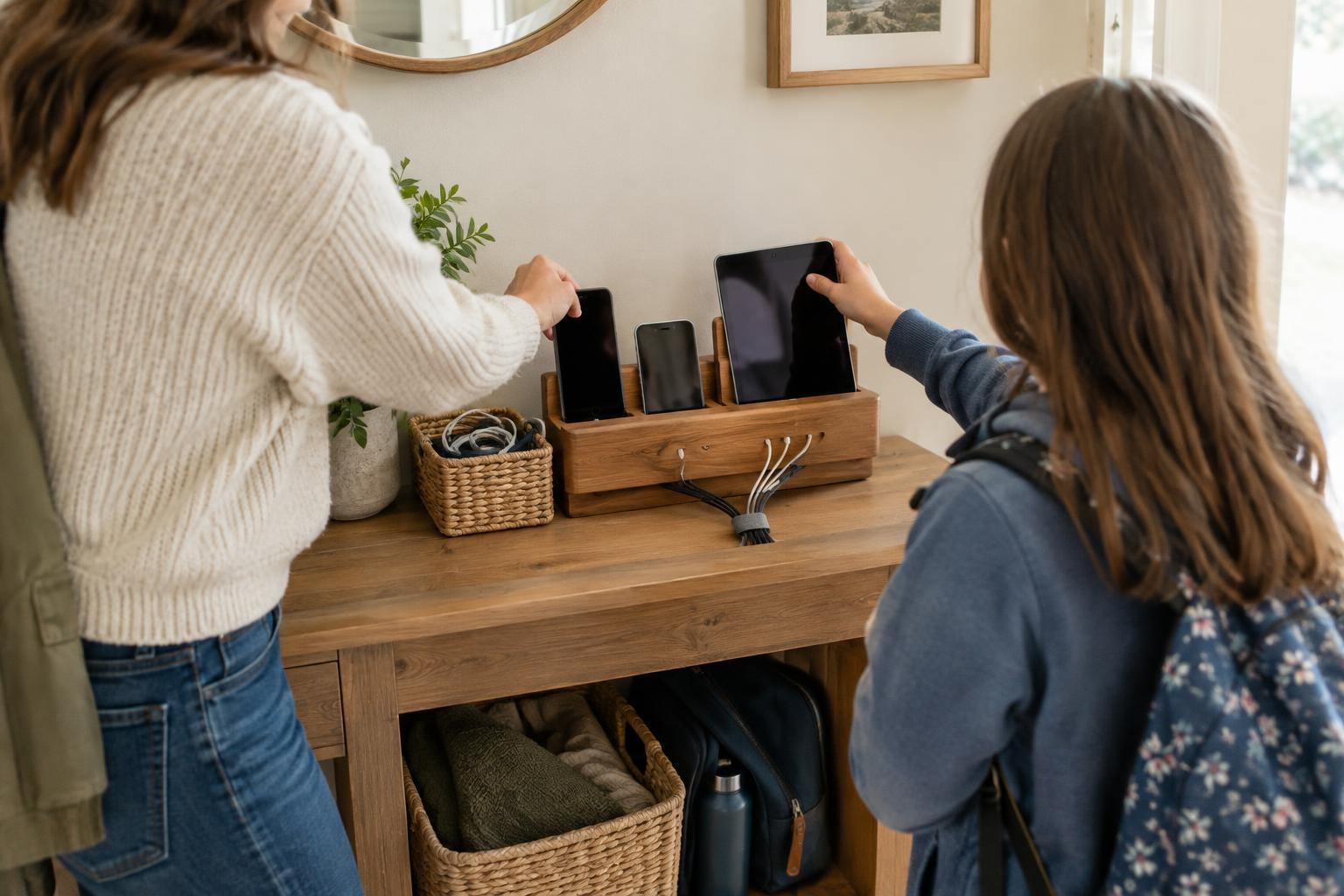
Choose a location that fits real routines
A useful charging spot is less about finding the perfect organizer and more about noticing where devices already gather. Think about the phone someone reaches for before leaving, the tablet used at the kitchen table, or the headphones that often go missing. Choose a place close enough to those routines that family members will use it, but not in the middle of a food-preparation area or a busy walkway.
Check the outlet and the surface before assigning them a new job. Chargers need a stable place where devices can rest without being stacked or covered. Leave room for cords to run without crossing a path or hanging where young children can pull them. If the most convenient location creates those problems, a slightly less central spot may work better.
Give devices and cords separate places
Start with the devices your household actually charges in one day. A small tray, divided container or open shelf may be enough to give each one a recognizable place. Avoid filling the area with every old cable and accessory you own; that makes it harder to find the charger you need. Keep only the regularly used cords at the station and store occasional accessories elsewhere.
Labeling can help when several chargers look alike, especially if family members share a space but not their devices. Simple names or pictures can work better than a complicated system. Keep cords as short and tidy as practical without bending them sharply or pulling them taut. If a cable is damaged, set it aside rather than leaving it in the daily-use pile.
Match access to each child’s age
Children may enjoy putting a tablet or headphones in their assigned spot, but they do not need unrestricted access to outlets and charging equipment to take part. For younger children, the routine might be handing a device to an adult. Older children may be ready to place their own devices in a tray and check that they have taken the right one in the morning. Set expectations according to what each child can do reliably, and follow the instructions supplied with your devices and chargers.
It can also help to separate charging from decisions about screen use. A device can have a predictable home even when the family’s rules about using it vary by day. If devices belong in the charging spot at certain times, explain when and why in plain language. That makes the station a shared household system rather than a surprise place where a device disappears.
Keep the routine small enough to last
A charging spot works best when returning a device takes only a few seconds. Pick one moment, such as the end of an activity or the start of the evening, when family members can put devices back. A quick glance at the station can reveal a missing charger or a device left in another room before anyone needs it. There is no need to make the check a lengthy household task.
After a week or two, notice what still collects nearby. If people leave headphones on the table beside the station, they may need their own hook or small container. If cords are constantly being moved, the location may be inconvenient. Make one adjustment at a time instead of buying more organizers. For a listening break while you tackle a small home project, browse Community Audio · Sound and Spark; then return to the station and see whether the simpler setup is serving your family.