Start with what your child is already doing
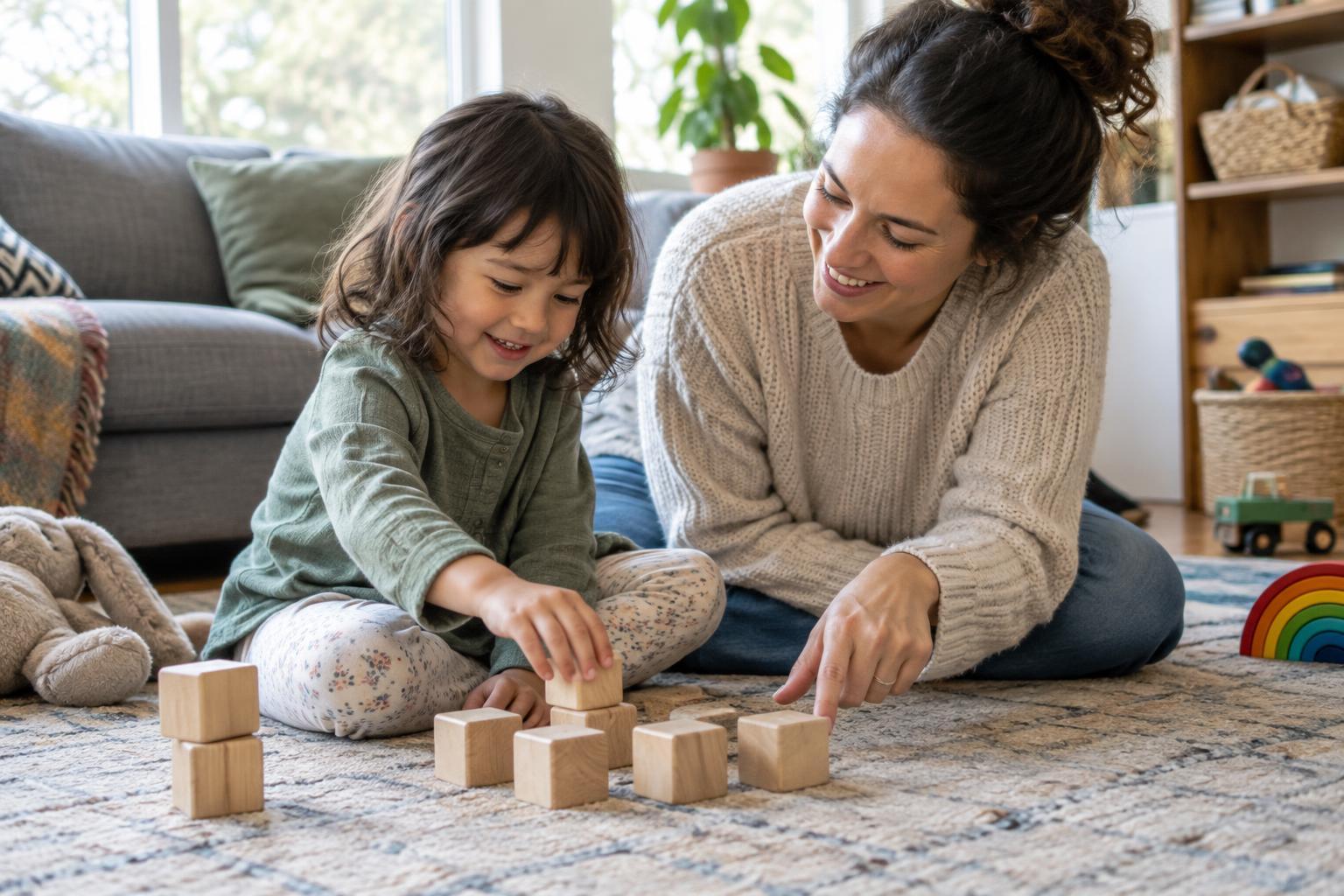
A tower falls, and your child reaches for more blocks. That is an opening for counting, but it does not need to become a lesson. You might say, “You put two blocks on top,” then help rebuild if invited. The number belongs to the action your child cares about. If they are busy making a garage instead, follow the garage.
Everyday play offers plenty of small moments like this. Count the toy animals getting into a cardboard box, the scoops of sand going into a bucket or the jumps it takes to cross a rug. You can say the numbers yourself without asking your child to repeat them. Hearing number words alongside objects and actions gives your child a chance to notice them at their own pace.
Count together rather than testing
It is easy for a playful moment to turn into a string of questions: “How many cars? What comes after three? Are you sure?” A question now and then can be fun, especially when your child asks you to play that way. But if they turn away, guess wildly or start moving the cars instead, join the new direction. Counting works well as something you do together, not something they must perform.
Try pointing to or moving one object for each number you say: “One spoon for you, one for me. That’s two spoons.” If you lose track, start again casually. If your child says a different number, you can count the objects side by side rather than making a big event of correcting them. Keep your voice as relaxed as it would be during any other part of play.
Use numbers that help the game along
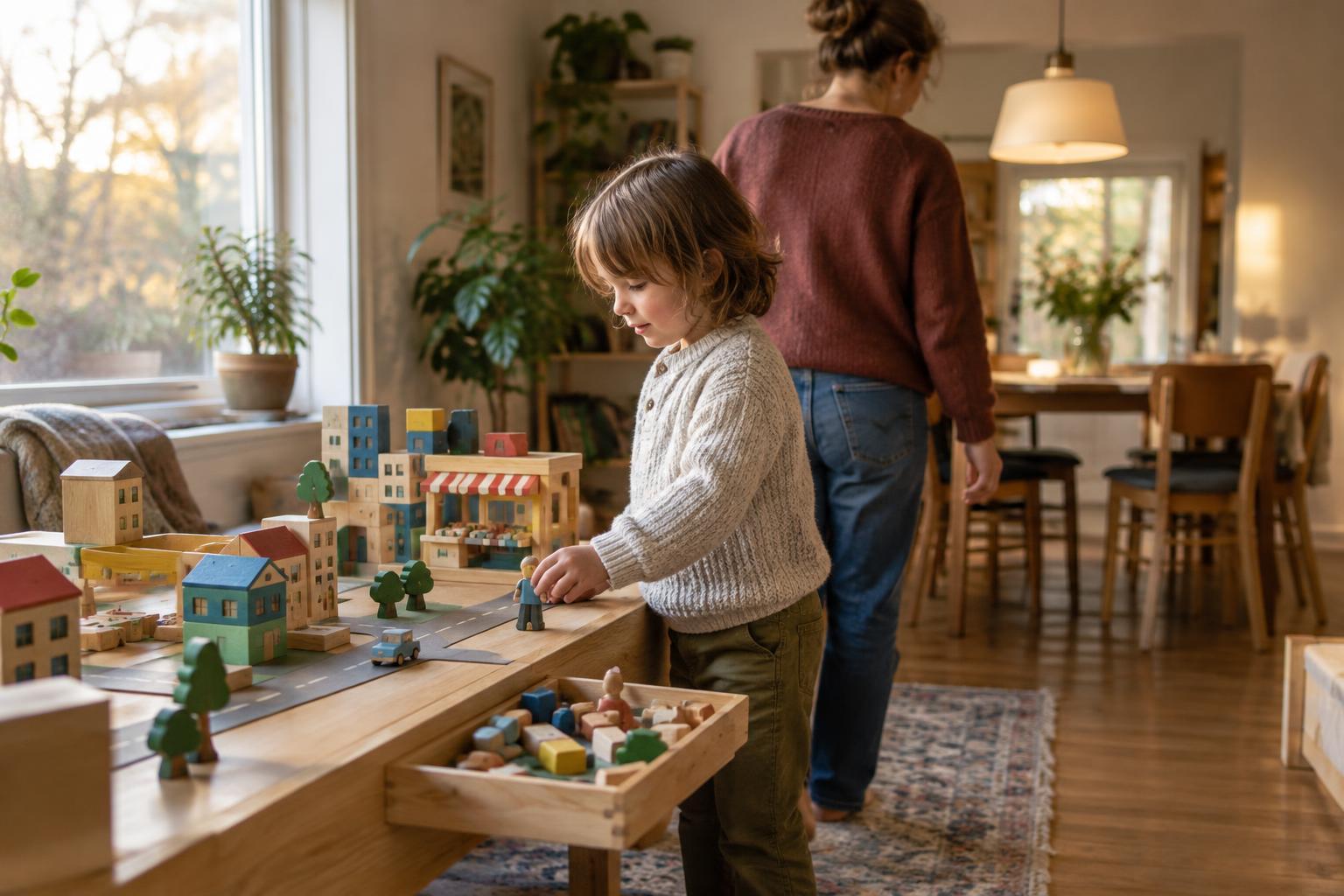
Numbers can have a purpose within pretend play. At a make-believe café, a customer might need three pretend biscuits. In a toy-car game, two cars may fit in the garage while another waits outside. At a block-building site, your child might decide the bridge needs one more piece. You do not need to introduce every number idea at once; choose the one that makes sense for the game unfolding in front of you.
Movement can work too. Take four giant steps toward a tree, or count the gentle pushes you give a swing before your child takes a turn. You can also notice when quantities change: “There were three ducks in our story, and one swam away.” If your child wants to keep pretending rather than work out how many remain, the story can continue.
Keep it age-aware and low-pressure
For a younger child, a short count paired with touch or movement may be plenty: one shoe, then the other; one ball into the basket, then another. Repetition is fine. They may enjoy the rhythm long before they use number words in order or connect each word to one object.
As children become interested in sorting, building or simple games, they may want to count their own collections. Offer a small group of things they can move or line up, and let them lead. Some children enjoy counting to high numbers for the sound of it; others prefer deciding whether everyone has enough cups. Both can be part of play. There is no need to compare siblings or turn a missed count into a measure of progress.
Know when to let the numbers go
The best counting moment may last only a few seconds. If your child begins a new story, needs help with a tricky lid or simply wants to run, you can stop counting. A game does not lose its value because nobody names a number. Attention, conversation, imagination and shared enjoyment have room alongside counting.
You can make it easier to notice natural openings by keeping familiar materials within reach: blocks, small toys, reusable cups or a basket for collecting leaves on a walk. No special setup is required. The aim is to make numbers available when they add something to the moment, then step back when play takes another path.