Start with a game they can see and touch
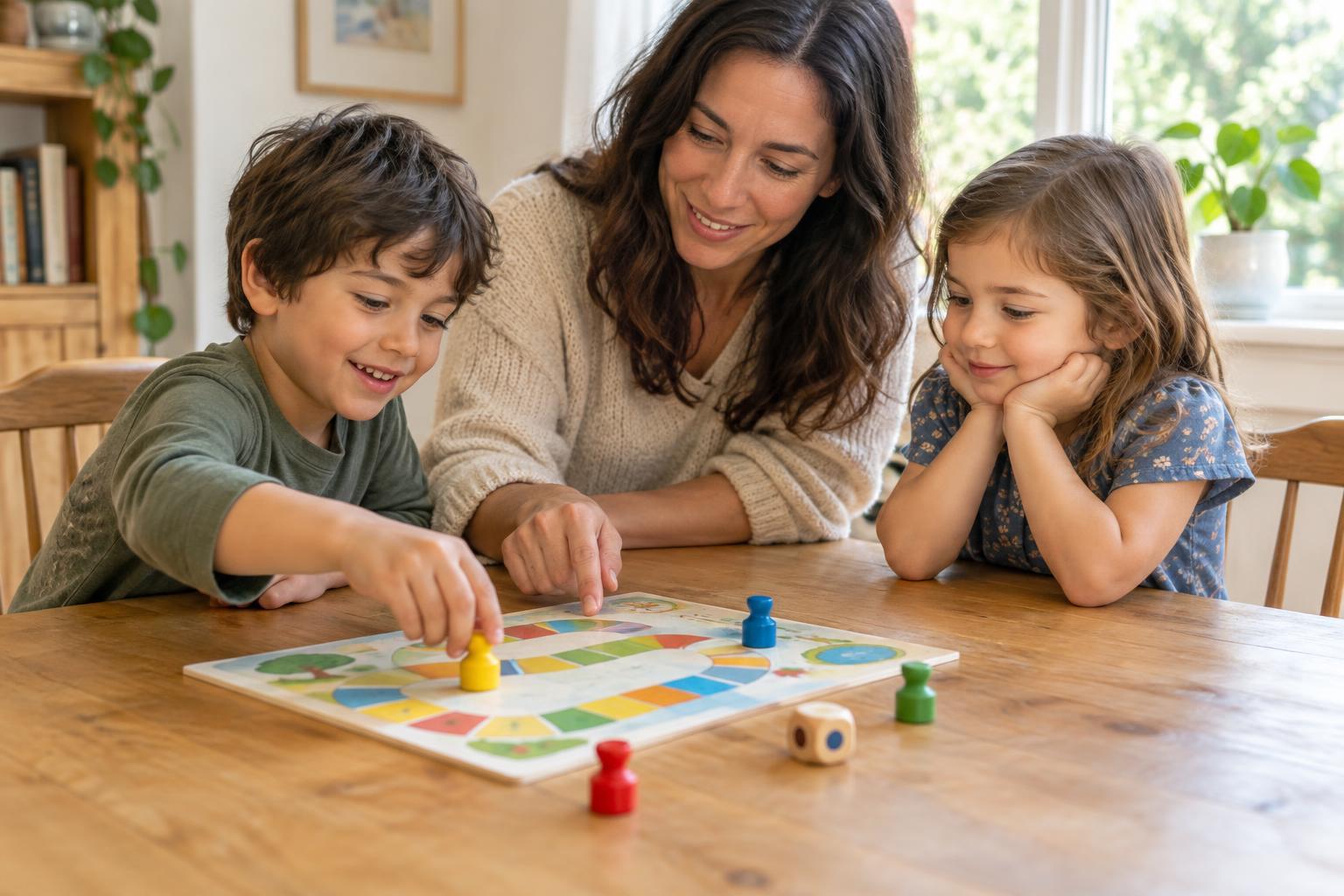
A first board game does not need an elaborate theme or a long list of instructions. Look for one with a small number of pieces, a clear path or shared goal, and turns that follow the same pattern each time. Matching pictures, moving a piece after a roll, or collecting a few objects can give a child something concrete to do while they learn what a rule is. Choose pieces that are suitable for the child to handle, and keep any small parts away from children who might put them in their mouths.
Think about the child’s interests as well as their age. A child who likes animals may enjoy moving animal pieces; one who likes building may prefer a game that involves arranging shapes. The best starting point is often a game that invites curiosity before anyone explains how to win. If the box suggests a long session, you can try one short round first.
Show the pattern before explaining every detail
Rules make more sense when children can watch them in action. Set out the pieces, name the goal in one sentence, and demonstrate a turn: “I roll, move my piece, and then it is your turn.” Invite the child to copy that pattern. You can add less common rules when they come up instead of asking the child to remember everything at the start.
A practice round can take pressure off both of you. Move pieces together, talk through choices, and treat mistakes as chances to try the step again. If the child skips a space or reaches for another turn, a calm reminder is usually more useful than stopping for a long explanation. For children who are still getting comfortable with turn-taking, a simple cue such as passing the die to the next player can make the sequence easier to follow.
Keep early games short and flexible
A game can be enjoyable without being played to the final square. For a first try, agree to play a few turns or stop when everyone has collected a small number of pieces. Ending while the child is still interested may leave them more willing to return to the game another day. If attention fades, you can say where you have reached and put the game away without making unfinished play feel like a failure.
It is fine to simplify a rule while a child learns, as long as the players know which version they are using. You might leave out a special action card or play without a timer. Tell everyone about the change before the round begins; changing rules only when someone is about to lose can feel confusing or unfair. As the basic turn pattern becomes familiar, you can introduce another rule.
Make room for feelings about winning and losing
Even a simple game can bring big feelings. A child may be disappointed to move backward, frustrated while waiting, or delighted to win. You do not have to dismiss those reactions or make every round end in a tie. Naming what happened in plain language can help: “You wanted another turn, and waiting is hard.” Then point to the next step in the game.
Adults can model a relaxed response to both outcomes. Congratulate the winner without treating the result as a measure of anyone’s ability, and notice specific actions such as remembering whose turn came next or trying a new strategy. If competition is making it difficult to enjoy the game, try a cooperative option in which everyone works toward one goal. You can return to competitive games when the child is ready to try again.
Let play lead to the next game
After a round, ask one small question: “What part would you like to do again?” The answer may tell you more than whether the child won. They might love rolling the die but find counting spaces tiring, or enjoy the story on the board but dislike waiting through several players’ turns. Use that information to choose a shorter game, play with fewer people, or take turns as a team next time.
Board games offer an everyday way to practice listening, choosing, counting, and adjusting to a shared plan, but they do not have to feel like lessons. Some days the pieces may become part of pretend play instead. Keeping the experience welcoming makes it easier to revisit the rules later, one turn at a time.