What counts as a loose part?
Loose parts are objects children can move, combine and use in more than one way. A cardboard box might become a garage, a counter or a home for stuffed animals. A set of large fabric squares might be sorted by color one day and used as pretend picnic blankets the next. The appeal is not a particular object; it is the freedom to decide what the object could do.
Everyday materials are a good starting point, but “ordinary” does not automatically mean “suitable.” Think about the child who will use an object, how they tend to play and who else can reach it. A child who still puts things in their mouth needs a different selection from an older child who enjoys building detailed scenes. You can keep the idea of open-ended play while changing the materials.
Start with how the child explores
For babies, exploration often involves grasping, shaking and mouthing. Offer a few large, intact objects made for their stage of play, such as a soft cloth or a sturdy stacking cup, and stay nearby. Avoid small pieces, detachable parts, cords and household items that could break or shed pieces. Loose-parts play at this stage can be as simple as choosing between two safe objects and discovering what each one feels like.
Toddlers often enjoy filling, emptying, carrying and lining things up. Large containers, sturdy cups and big fabric pieces can support those interests without requiring a complicated setup. Check that containers have no sharp edges and that pieces cannot come apart during rough handling. Even if a toddler usually plays gently, choose for what they might do on an energetic day, not only for what they did yesterday.
Add possibilities as skills and interests grow
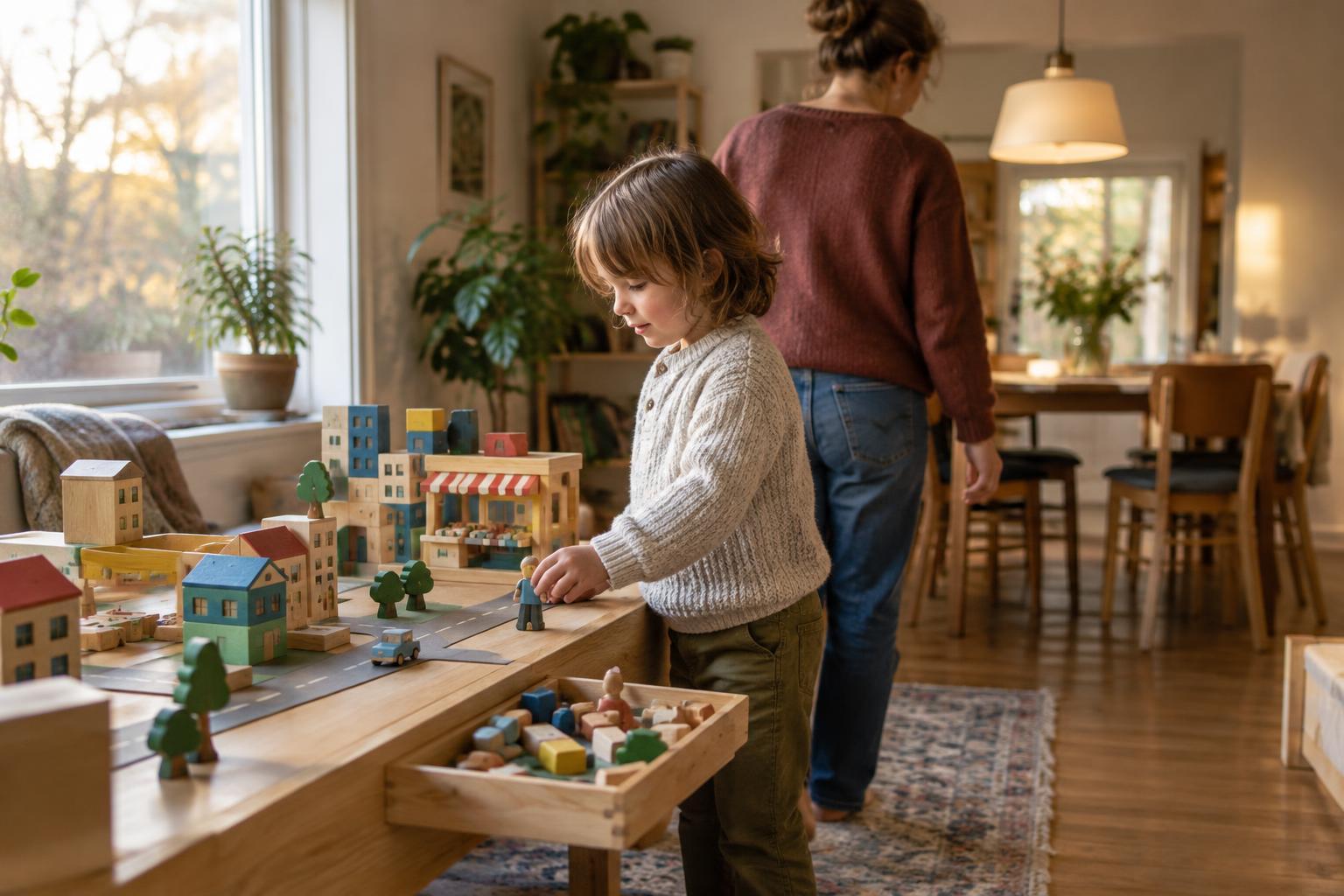
Preschoolers may enjoy making roads from wide cardboard strips, building with boxes or arranging large wooden blocks into a pretend town. A small collection of different shapes and textures often leaves more room for invention than a crowded pile. You might offer one container of building materials and another of props, then let the child decide whether anything needs a name or a story.
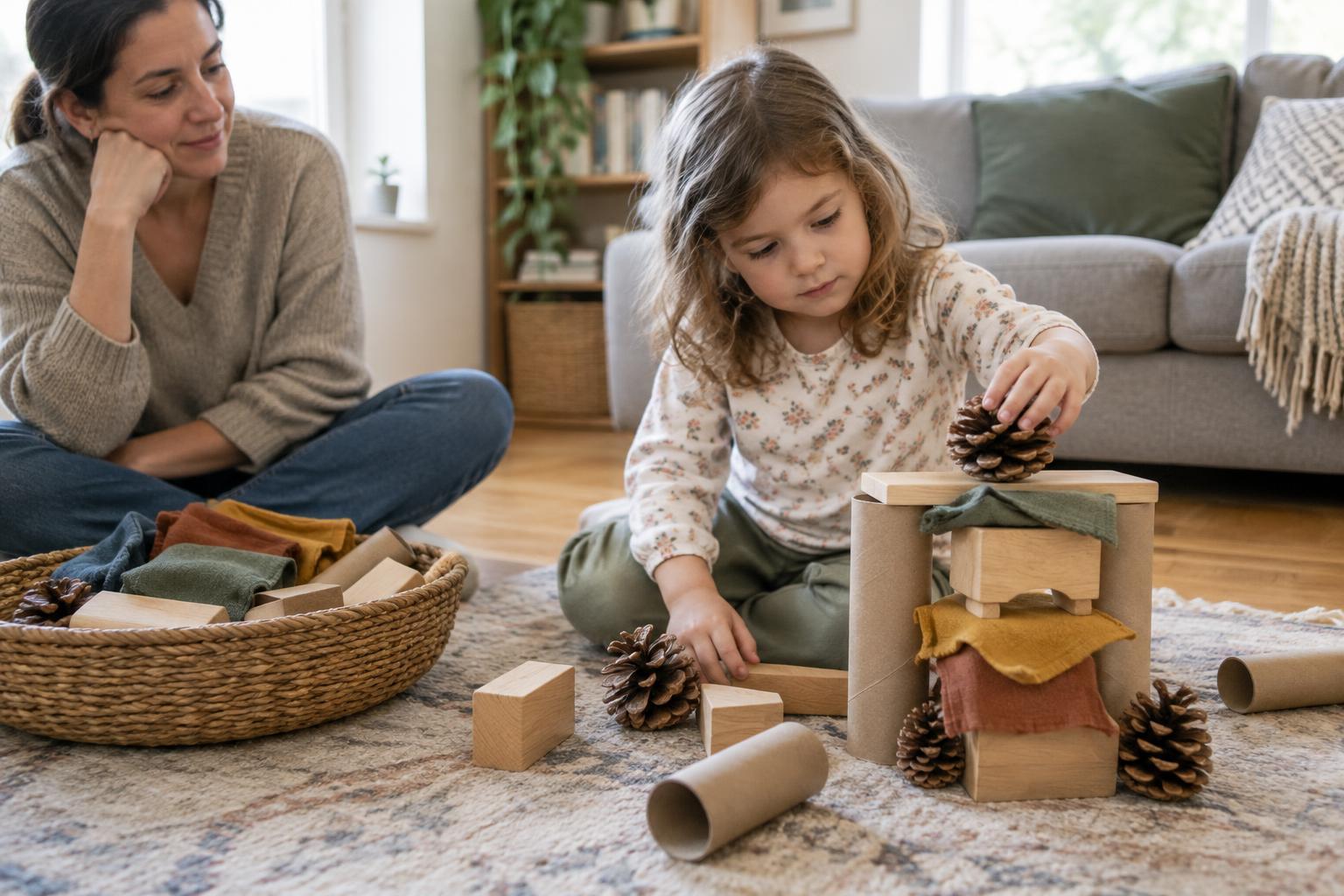
Older children may be ready to plan more detailed structures using items such as cardboard tubes, fabric scraps and reusable containers. Some may want smaller components, but consider younger siblings and shared spaces before bringing those pieces out. Rather than treating age as a fixed permission slip, watch how the child handles the materials: Can they use them as intended for the play space, notice when something breaks and help put pieces away?
Choose materials with the whole household in mind
Before offering a household object, inspect it. Skip anything with sharp edges, loose fasteners, batteries, magnets, long cords or pieces that could snap off. Packaging may have staples or tape that needs removing, and cardboard that has become soggy or torn may need replacing. Keep food containers clean and dry, and avoid using anything that previously held substances you would not want a child to touch.
Storage matters as much as the initial choice. If children of different ages share a room, put materials suited only to older children somewhere the younger child cannot access. A shallow basket or tray makes it easier to see what is available and spot damaged items at cleanup time. Rotate a few pieces when interest fades instead of continually adding more. This keeps the play area usable and makes each object easier to notice.
Set the scene, then leave room for ideas
A simple invitation might be a box beside a few large blocks, or two baskets of safe objects on a clear patch of floor. You do not need to demonstrate an elaborate finished project. If a child pauses, you can describe what you notice—“You put the cup inside the box”—or ask an open question such as, “What could go next?” Following their lead allows sorting, building and pretend play to develop in their own direction.
Agree on a few practical boundaries before play begins: which objects can be used, where they belong and how to pack them away. Stay close enough to respond if an object is used unsafely, especially with younger children. As habits and abilities change, revisit the selection. The most useful loose-parts collection is not the biggest one; it is one your child can explore freely within boundaries that work for your household.