Start with the pictures, not a question to get right
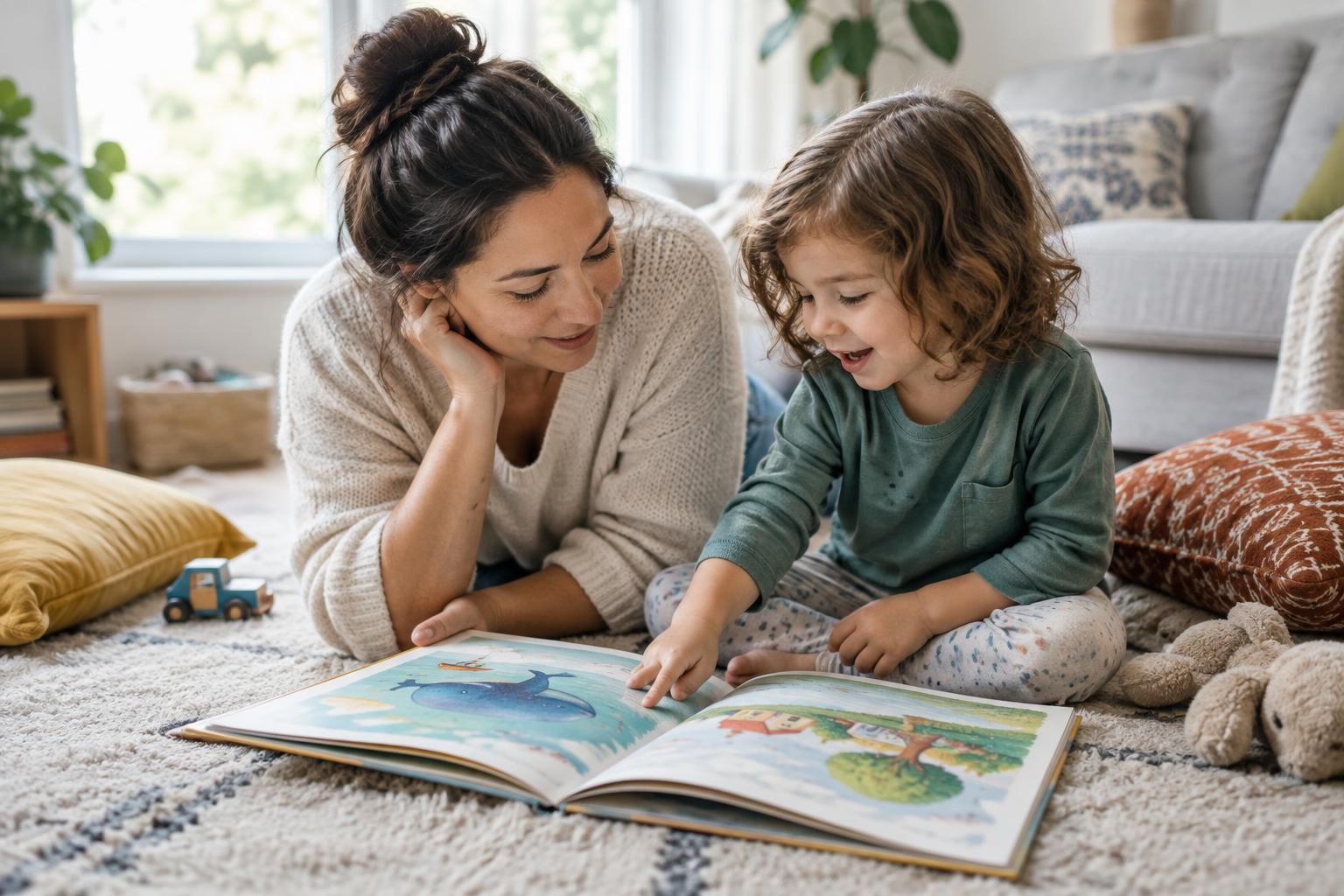
A picture book offers plenty to explore before anyone reads the first line. Look at the cover together and give your child time to point, name something familiar or simply take it in. You might say, “I see a tiny red boot,” or “That character looks ready to go somewhere.” Comments like these invite conversation without asking your child to produce an answer.
As you turn the pages, follow whatever catches your child’s eye. They may be more interested in a dog in the background than in the main character. That is still a way into the story. You can talk about what the dog is doing, look for it on the next page or wonder whether it will matter later. The printed words will still be there when you are ready for them.
Make predictions an invitation to imagine
Pausing before a page turn can add a little suspense. Try “What do you think they might find?” or “Where could that sound be coming from?” If your child offers a wild idea, enjoy it. A prediction does not need to match the author’s ending to be worth sharing. You can offer your own guess, too, so the conversation feels like a game you are playing together rather than a quiz.
The illustrations can give you both clues. A character may be looking toward a door, carrying an unusual object or standing under dark clouds. Point to one detail and wonder aloud what it could mean. When you turn the page, notice what happened without scoring the guesses: “Oh, it was a cat behind the door! We both thought it might be something bigger.” Then keep going.
Let the child’s pace shape the reading
Playful reading does not require stopping on every page. Too many questions can interrupt a story your child wants to hear. Some days they may want to race to the end; other days they may ask to revisit one busy illustration several times. You can alternate between reading the text and exploring the pictures, guided by their interest.
Age and mood can change what participation looks like. A younger child might point to a familiar object, copy a sound or turn a sturdy page. An older child might compare two characters’ expressions or suggest a different ending. A child who does not feel like talking can still join in by looking closely, choosing the next book or acting out a moment. There is no need to keep the conversation going for its own sake.
Use small playful twists
Once a book is familiar, try giving its pictures a new job. Before reading, look for a particular color or object across the pages. Give a side character a silly voice, or pause to make the sound of rain, footsteps or a creaking gate. If a character has to choose what to do, you could ask, “What would you pack for that trip?” These additions work best when they fit naturally into the moment.
You can also tell a brief story using only one illustration. Ask your child to choose a person or animal in the picture, then imagine what happened just before the scene or what might happen after it. If they prefer to listen, start with one sentence and leave room for them to add a word, gesture or sound. Familiar books often make this kind of play easier because everyone already knows the main story.
End the story without ending the conversation
After the last page, there is no need for a formal recap. A simple comment such as “I liked the picture of the crowded kitchen” may prompt your child to share a favorite moment. They might instead ask to read the book again, change the subject or go and play. Each response is fine. Reading together can be a relaxed part of the day rather than a task to complete.
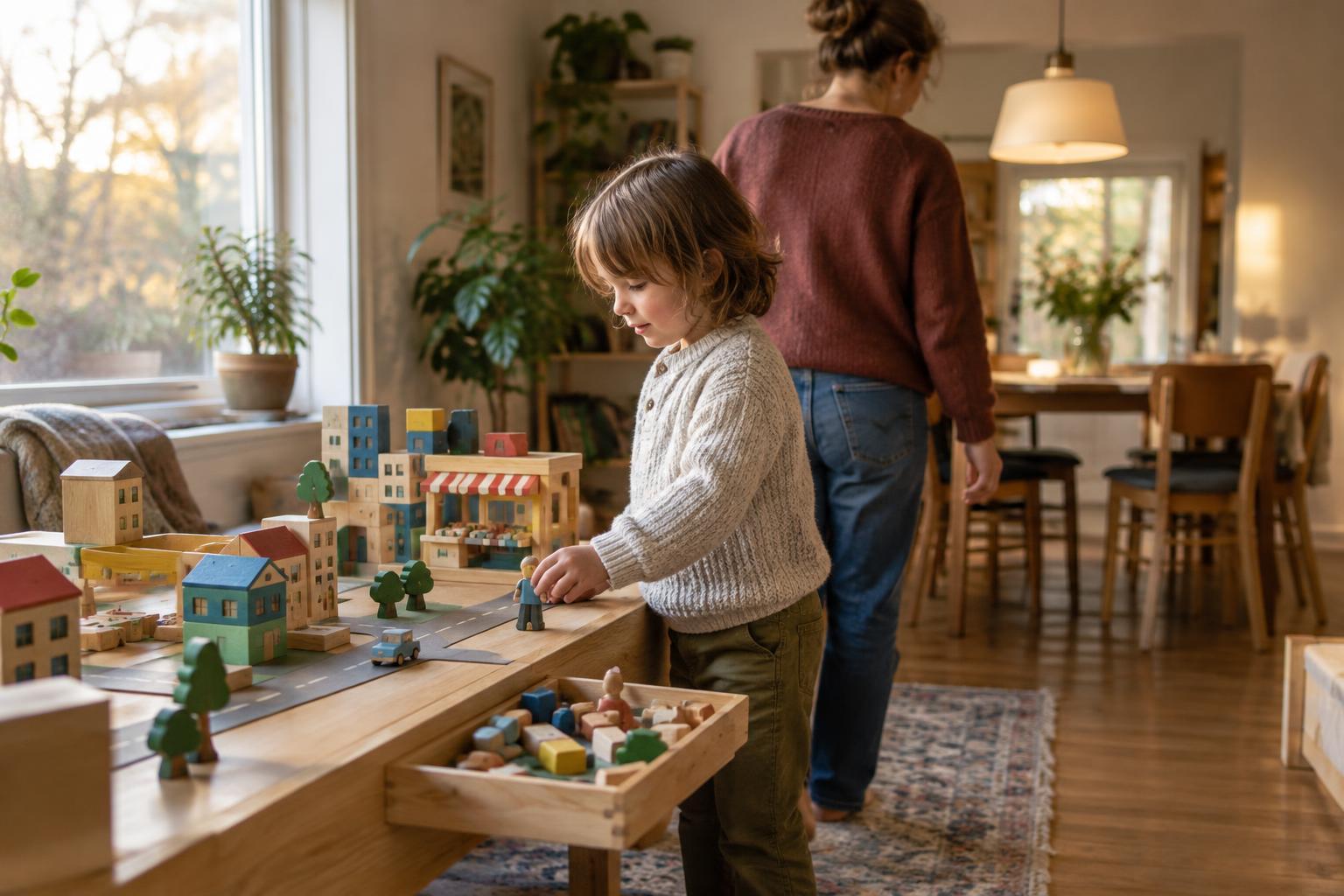
If the story stays on your child’s mind, carry a piece of it into ordinary play. Draw a new place for the characters to visit, build a setting with cushions or spot something outdoors that reminds you of an illustration. These little connections give children another way to revisit the pictures and predictions they enjoyed, while keeping the book at the center of a shared, unhurried experience.