Start with a shared idea, not identical tasks
When siblings are different ages, a single set of instructions may leave one child bored and the other overwhelmed. Instead, choose a broad idea that each child can explore at their own level: building a town, running a pretend café, making a picture for someone, or looking for interesting shapes outdoors. The children can share a theme without having to do the same thing.
For a pretend café, a younger child might arrange play food or take orders with pictures, while an older child writes a menu or designs the seating area. Both contributions belong to the same game. Ask each child what they would like to add before assigning roles; age does not always predict who wants to lead, build, draw, or make up a story.
Give each child a role that matters
Shared play tends to feel more inviting when everyone can make real choices. An older sibling can help plan a game, but should not always be expected to supervise or entertain the younger one. A younger sibling can have an important role without being asked to keep up with skills they are still developing. Try dividing a project into parts that can be changed or expanded as the children play.
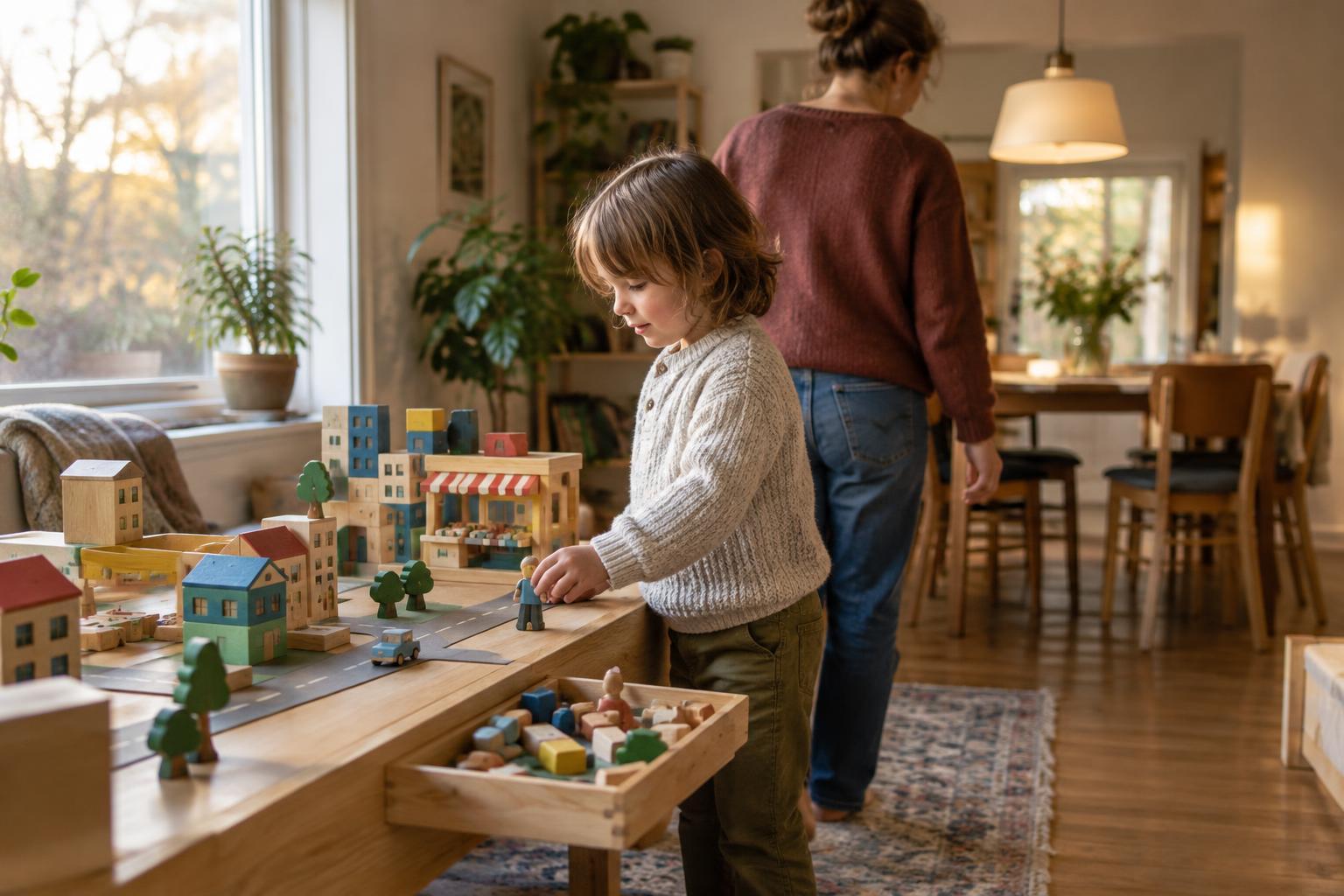
For example, in a block-building game, one child might make roads while another builds houses. They can decide together where the roads go, then work independently for a few minutes. If one child finishes first, offer an optional extension, such as adding signs or inventing a story about the buildings. This keeps the activity open-ended rather than turning it into a race.
Prepare the space for different abilities
A little preparation can make it easier for children to play near one another. Put a shared set of sturdy, age-appropriate materials within reach, and keep supplies that need more care in a separate place. If an older child wants to use small pieces, sharp tools, or a delicate project, set up a distinct work area and follow the safety guidance for those materials. Check the space with the youngest child in mind, especially if they still put objects in their mouth.
Consider how much room the activity needs, too. A floor space may suit large blocks or a pretend shop, while a table may help contain paper and drawing supplies. You do not need an elaborate setup: a few clear choices are often easier to manage than bringing out every toy at once. Leave a spot where a child can step away without disrupting the whole game.
Make room for different play styles
One sibling may want a detailed plan while another wants to change the story every minute. Before play begins, agree on one simple shared rule, such as asking before moving someone else’s work. Then let the details stay flexible. If a disagreement starts, help the children describe what each person wants: “You want the tower to stay standing, and you want to use those blocks for a bridge.” A pause and a new arrangement may work better than deciding whose idea is best.
It is also fine for siblings to play alongside each other rather than together every moment. Two children can draw different things at the same table or collect different leaves on the same walk. Shared time does not require constant cooperation. When an activity stops being enjoyable, a short break or separate play may be more useful than pressing everyone to continue.
Keep plans short and easy to change
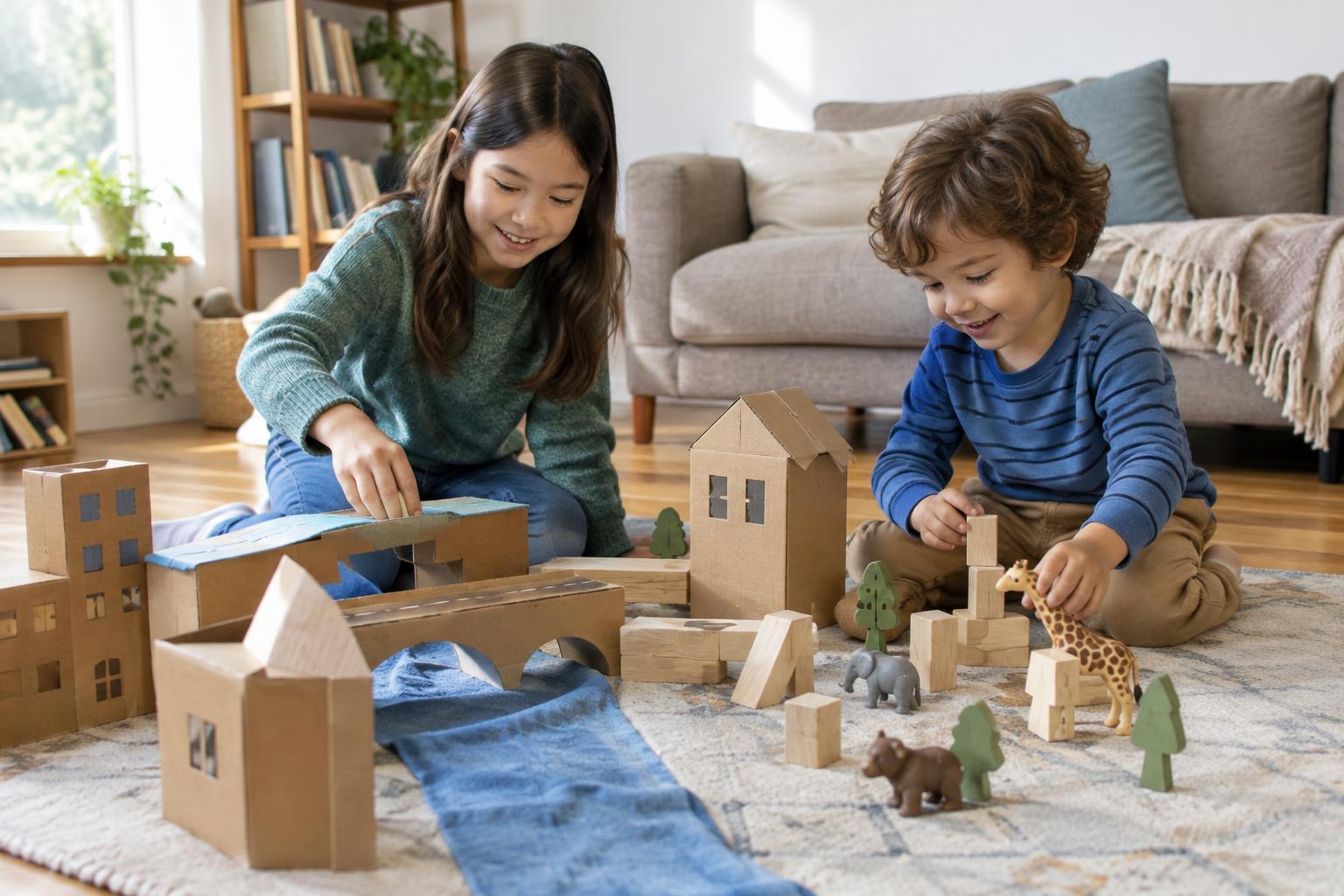
Choose a starting point instead of planning an entire afternoon. You might set out materials for a cardboard-box town, invite each child to make one part, and see where the play goes. Some days the town becomes a long-running project; on others, the children are done after a few minutes. Either outcome can be worthwhile.
Afterward, notice what helped. Did each child have something to choose? Was the space comfortable and suitable for the youngest child? Did the activity allow an older child to explore their own ideas? Use those observations to adjust next time. The aim is not perfectly harmonious sibling play. It is to create manageable opportunities for children to enjoy being together while respecting their different ages and interests.