Start with sounds, not right answers
A child who laughs at “cat” and “hat” may be noticing that the words sound alike at the end. That small moment can become a game. Rhyming play invites children to listen closely without needing to recognize letters, spell words or explain a rule. It works especially well when the words are familiar and the mood is light.
Begin by saying two words with a clear pause between them: “boat … goat.” Repeat them with a gentle bounce or clap. Then try a pair that does not rhyme, such as “boat … ball.” Ask, “Do those sound alike at the end?” If your child is unsure, say the words again rather than pressing for an answer. Hearing the same playful contrast several times can be more useful than a quiz.
Build a rhyme collection with everyday objects
Choose an object your child can see or hold, such as a sock, cup or toy car. Say its name, then offer a rhyme: “Sock, clock!” Invite your child to find another word that sounds like it. The new word does not have to name something in the room. You can take turns supplying ideas, repeating each pair aloud so the ending sound stays easy to hear.
For children who are just starting to join in, give a choice: “Does ‘car’ sound more like ‘star’ or ‘cup’?” An older or more confident player might enjoy making a short chain: “car, star, jar.” Silly made-up words can join the chain too. If your child says “zar,” you can enjoy the sound together without worrying that it is not a real word. The aim is to play with sounds, not test vocabulary.
Make room for rhymes in familiar routines
Rhyming games need no special setup. While putting toys away, you might say, “A bear goes on the chair,” and let your child decide whether the bear belongs there. At snack time, try a playful sentence with a clear rhyme: “The pear is over there.” A short, amusing line is often easier to remember than a long list of words.
You can also leave a space for your child to fill: “I found a sock beside the …” Pause before saying “clock,” or accept a different suggestion and see where the story goes. Some children prefer listening to joining in, particularly when they are tired or busy with another task. Keep the invitation open; a smile, a repeated phrase or a deliberately silly answer can all be ways of participating.
Use books and songs as shared play
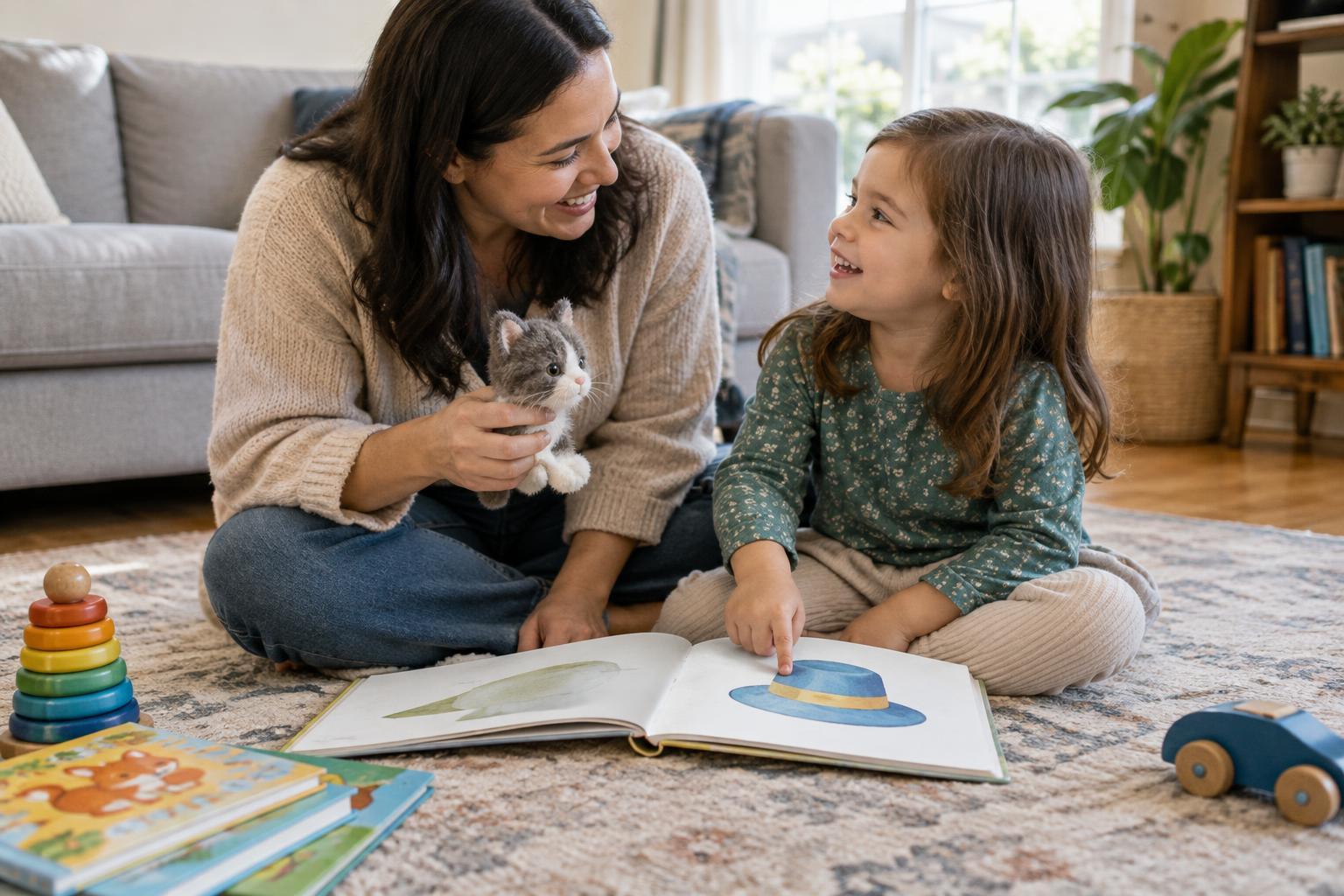
Books with repeating phrases and obvious rhymes offer a relaxed place to listen together. Once a line becomes familiar, pause before its final word and see whether your child wants to say it. If they choose a different word, you can repeat their version for fun, then read the printed line. This keeps the story moving while showing how the words sound.
Songs and chants can bring rhythm into the game. Tap your knees or sway as you say a short rhyme, then change one word to make a new version. A child might find it funny to sing about a “mouse in the house” and then imagine a mouse on a blouse. You do not need to sing perfectly or invent elaborate verses. Repetition and shared enjoyment give children plenty to listen to.
Follow your child’s lead
Children may notice rhymes at different times and show it in different ways. One may eagerly call out matching words; another may repeat a favorite line days later. Keep games brief enough to end while they are still enjoyable. If a word is hard to rhyme, switch to an easier one instead of turning the moment into a search for the correct response.
It also helps to separate sound play from meaning. “Cat” and “hat” rhyme even though they are different things; “cat” and “kitten” are related but do not rhyme. You can model that distinction casually by saying the words aloud and emphasizing their endings. Above all, let laughter and curiosity guide the activity. A few minutes of back-and-forth play can make everyday language feel worth listening to.