Two activities, two starting points
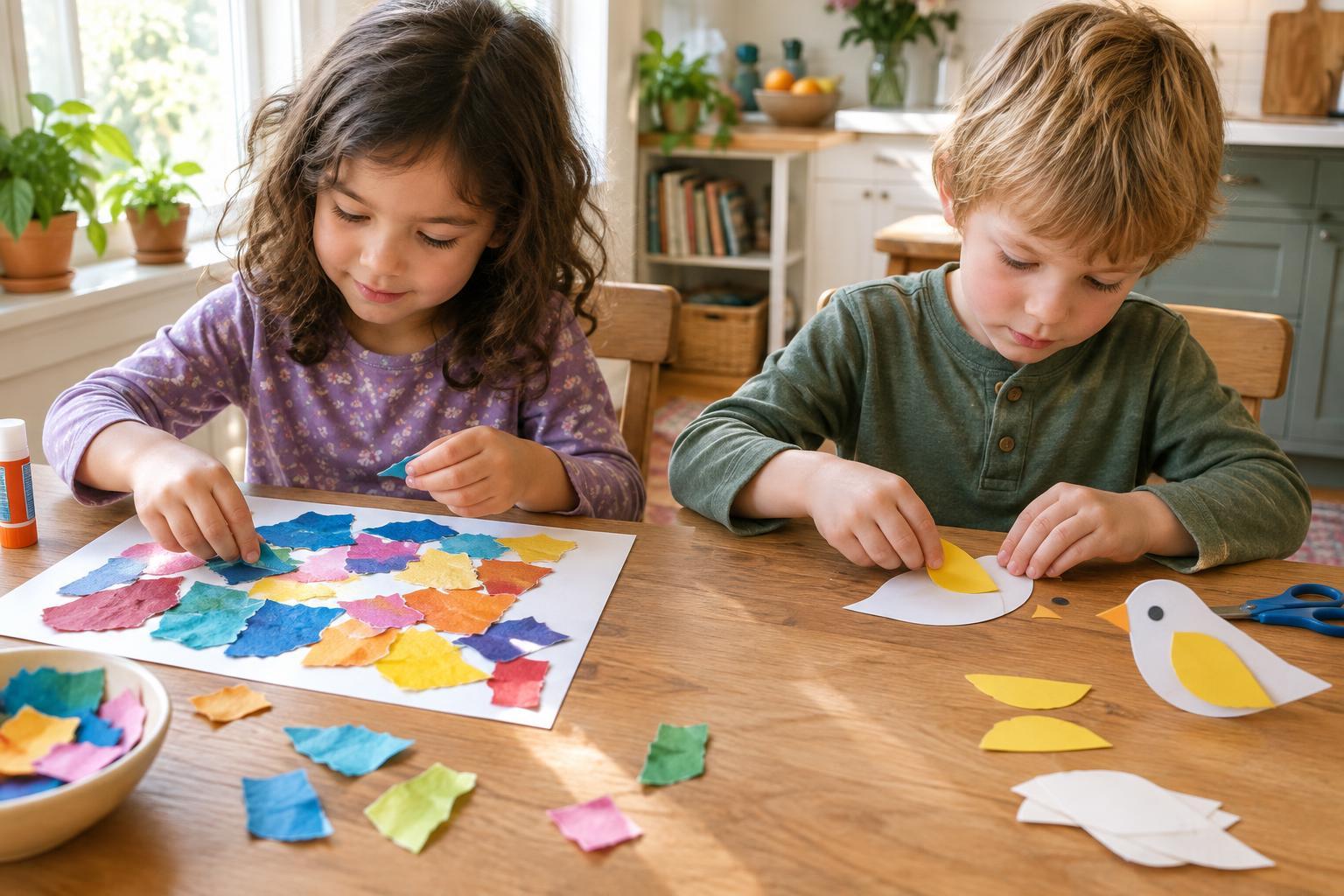
In process art, the activity begins with materials and possibilities rather than a picture of the finished piece. A child might press a sponge into paint, notice the pattern it leaves, then try a brush to see what changes. The result could be a page of marks, a layered collage or something the child decides is a map. The main activity is experimenting, making choices and responding to what happens.
In a follow-the-model craft, someone has an outcome in mind: a paper bird, for example, with wings, eyes and a beak. The child uses materials and steps to make a version of that model. There is still room for personality in the colors or details, but the task includes working toward a recognizable result. Neither approach is automatically better. They simply offer different things for children to do.
What children do during process art
Process art gives children room to test an idea without needing to make the page look a certain way. They may mix two colors, decide they dislike the mixture, cover it with another color and discover an effect they want to repeat. They may sort scraps before gluing any of them down or spend the whole time moving materials around. These choices are part of the activity, even when there is little to display afterward.
For younger children, the exploration may be especially physical: dabbing, spreading, tearing or noticing how a tool feels. Older children may use the same open-ended setup to plan a scene, revise it or invent a technique. An adult can support either child by making materials accessible and describing what they notice without assigning a meaning: “You tried the wide brush and then the sponge.” Asking “What would you like to try next?” keeps the direction with the child.
What children do during a model-based craft
A model-based craft invites children to look closely at an example, gather the pieces they need and work through a sequence. They might fold paper, place shapes, attach parts and check whether the pieces stay together. Following directions, handling tools and solving small construction problems can be satisfying, particularly when a child wants to make something they can recognize, use in pretend play or give to someone.
The model need not be a strict test of accuracy. A child may need help with a fold but want to choose where the eyes go. Another may enjoy repeating the steps exactly. Age and familiarity matter, too: a project with many tiny pieces may leave a younger child watching the adult do most of the work. If that happens, simplifying the steps or preparing some pieces can give the child a more active role. It is fine for the final bird to look unlike the example.
Choosing an activity for the moment
Think first about what your child seems eager to do. If they want to explore new materials, an open invitation such as “What can you make with these paper shapes?” may fit. If they ask how to build a kite or enjoy following a picture, a model can provide a welcome starting point. You can also offer both: show a simple way to connect pieces, then leave the colors, arrangement and extra details open.
Your available time and space matter as well. Process art can be as small as drawing on scrap paper or as messy as painting at a covered table. A craft can be a quick paper chain or a longer project that needs drying time. Choose child-appropriate materials, supervise tools and small pieces as needed, and set up cleanup before starting. A tray for supplies and a clear place for finished or drying work can make either activity easier to revisit.
Keeping the focus on participation
Children do not have to finish every project to have taken part in it. A child who tests several ways to attach a wing has been busy making decisions, even if the bird never gets a second wing. Likewise, a child who carefully follows a model may feel proud of matching a step they found tricky. Rather than judging the value of an activity by the finished object, notice the choices, attempts and enjoyment along the way.
When displaying or sharing the work, let the child tell you about it if they want to. You might ask, “How did you make that part?” or “Which part was your favorite to do?” Those questions suit a painted page and a paper bird equally well. Over time, offering both open-ended art and crafts with a model gives children more than one way to explore materials, make plans and enjoy creating.