Start with a beat you can share
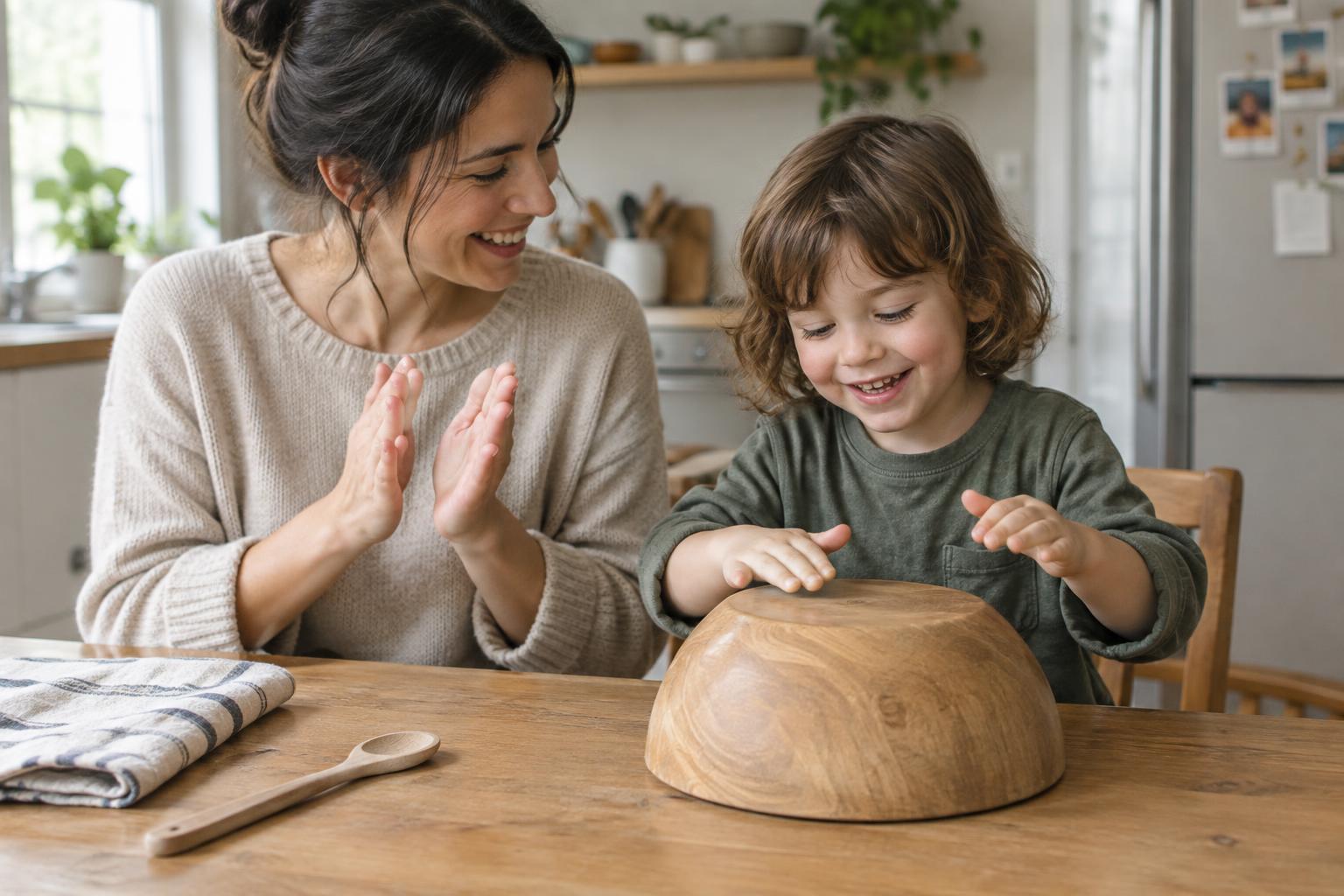
Rhythm play can begin wherever your family has a few spare minutes: at the kitchen table, on the floor, or while waiting for a meal. Clap twice, pause, and clap once more. Invite your child to copy you, then let them make a pattern for you to copy. There is no need to keep perfect time. The pleasure is in noticing what the other person did and answering with a sound of your own.
For a young child, try one action at a time, such as patting your knees slowly. An older child might enjoy making a longer pattern with claps, pats, and pauses. If copying feels frustrating, make sounds together instead. A shared beat can be easier to join than a pattern someone has to remember.
Make room for voices and silence
Your voices offer plenty of sounds to play with. Hum a short tune and invite an echo, or take turns saying a familiar word in a slow, quick, high, or low voice. You can also invent a simple call and response: one person says “hello, hello,” and the other answers “here I am.” Keep the words light and let children change them. A silly answer often makes the game feel more like play than a performance.
Pauses are part of the game, too. Try three soft claps followed by a moment of quiet. Can everyone wait until a nod to begin again? With younger children, make the pause brief and predictable. With older children, let them lead the stops and starts. These games give everyone a chance to listen as well as make noise.
Find gentle sounds in everyday objects
A household item can become a temporary instrument. Tap a wooden spoon lightly on an upside-down plastic container, crinkle a sheet of paper, or brush your fingers across a cardboard box. Put two items side by side and ask, “How do these sound different?” The goal is not to find the right description; children might call a sound scratchy, bouncy, quiet, or something entirely their own.
Choose objects that are sturdy, clean, and appropriate for the child’s age. Keep small parts and breakable items out of reach, and stay nearby when children use objects for sound play. Start softly rather than banging: loud or sharp sounds can be uncomfortable, and a gentle tap makes it easier to hear each object’s character. If someone seems overwhelmed, switch to a quieter sound or take a break.
Turn patterns into little games
Once everyone has tried a few sounds, build a short family pattern. For example: clap, clap, tap the box, rest. Repeat it together a few times, then ask what should change. A child might swap the box tap for a hum or add a knee pat. Keep the pattern short enough that people can join without much explanation. If it falls apart, laugh and start again.
You can also play a sound-guessing game. One person closes their eyes while another makes one gentle sound with an item already on the table. After the guess, switch roles or reveal the object and compare it with another. For children who are not ready to guess, simply show the item and name the action together: “I tapped the box. Now you’re brushing it.”
Follow the child’s pace
A sound game does not need a planned length or a finished song. Some children will want to repeat the same beat many times; others will try a sound once and move on. You can follow their interest by offering a choice between two sounds, inviting them to lead, or leaving the materials out for another day. A child who prefers to listen can still take part by choosing when the group starts or stops.
Consider the setting as well as the activity. Quiet humming may suit a shared room, while tapping a container may work better when it will not disturb anyone. When the game ends, invite children to help put items back where they belong. That small closing routine makes it easier to return to sound play whenever the mood strikes.