First, notice what kind of stuck this is
A child may stop playing because a block tower keeps falling, a toy is hard to operate, or they cannot decide what happens next in a story. Each calls for a different response. Before stepping in, watch for a moment. Is your child trying a new approach, asking for help, or showing signs that the activity has stopped being enjoyable? A quiet pause can give them room to think without making them feel they must solve everything alone.
Also check whether the problem is safe to leave in their hands. If a toy has broken into small pieces, an object is out of reach in a risky place, or another child is being hurt, step in promptly. Otherwise, being stuck for a short time can be a normal part of figuring out how play works.
Start with presence, not a solution
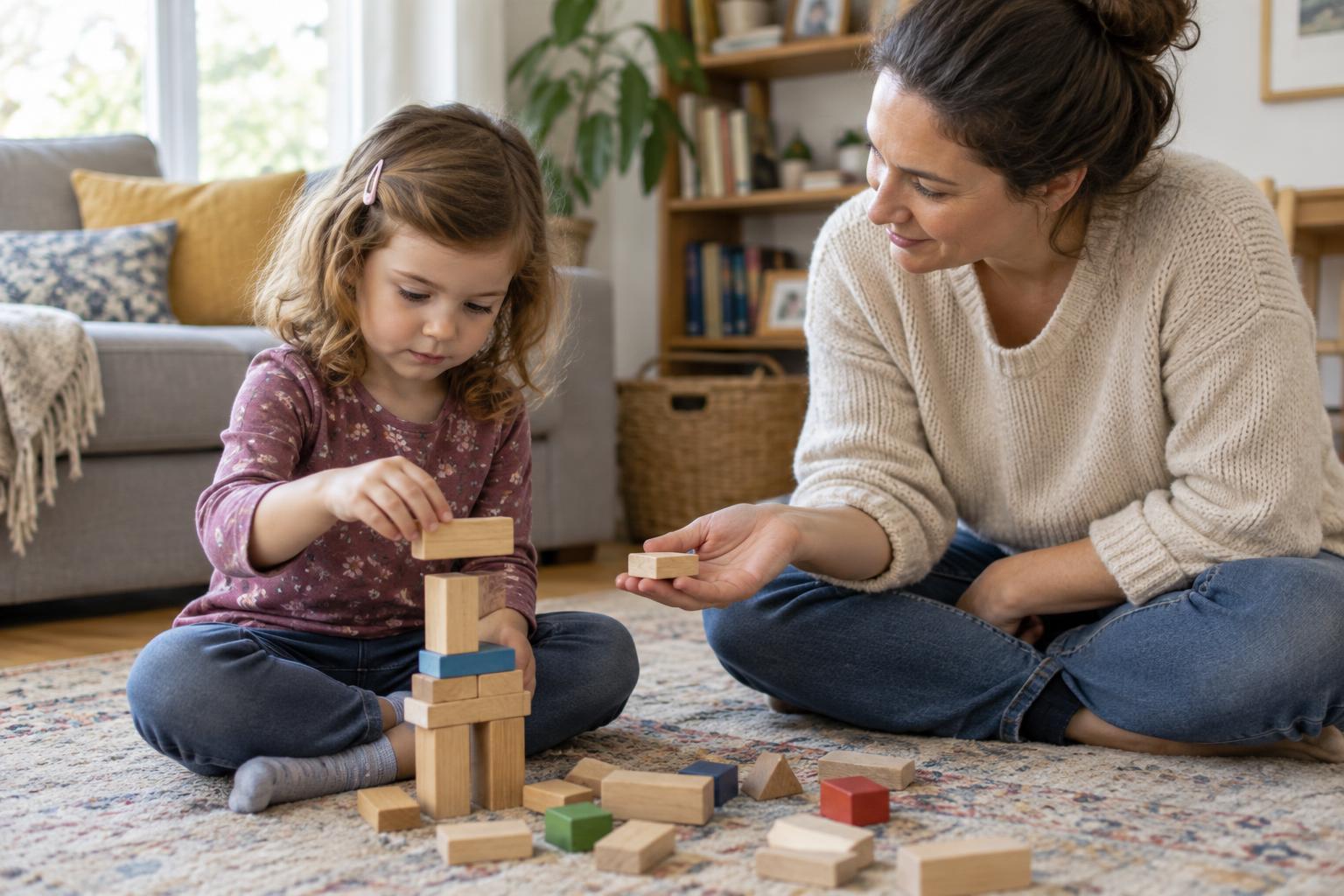
You can offer support without touching the toys. Sit nearby, make eye contact if your child wants it, or say, “That part is tricky.” This shows you are available while leaving the next move open. If your child seems interested in continuing, ask a question tied to what they are doing: “What have you tried?” or “Which piece might go at the bottom?” A question can help them look again without turning play into a test.
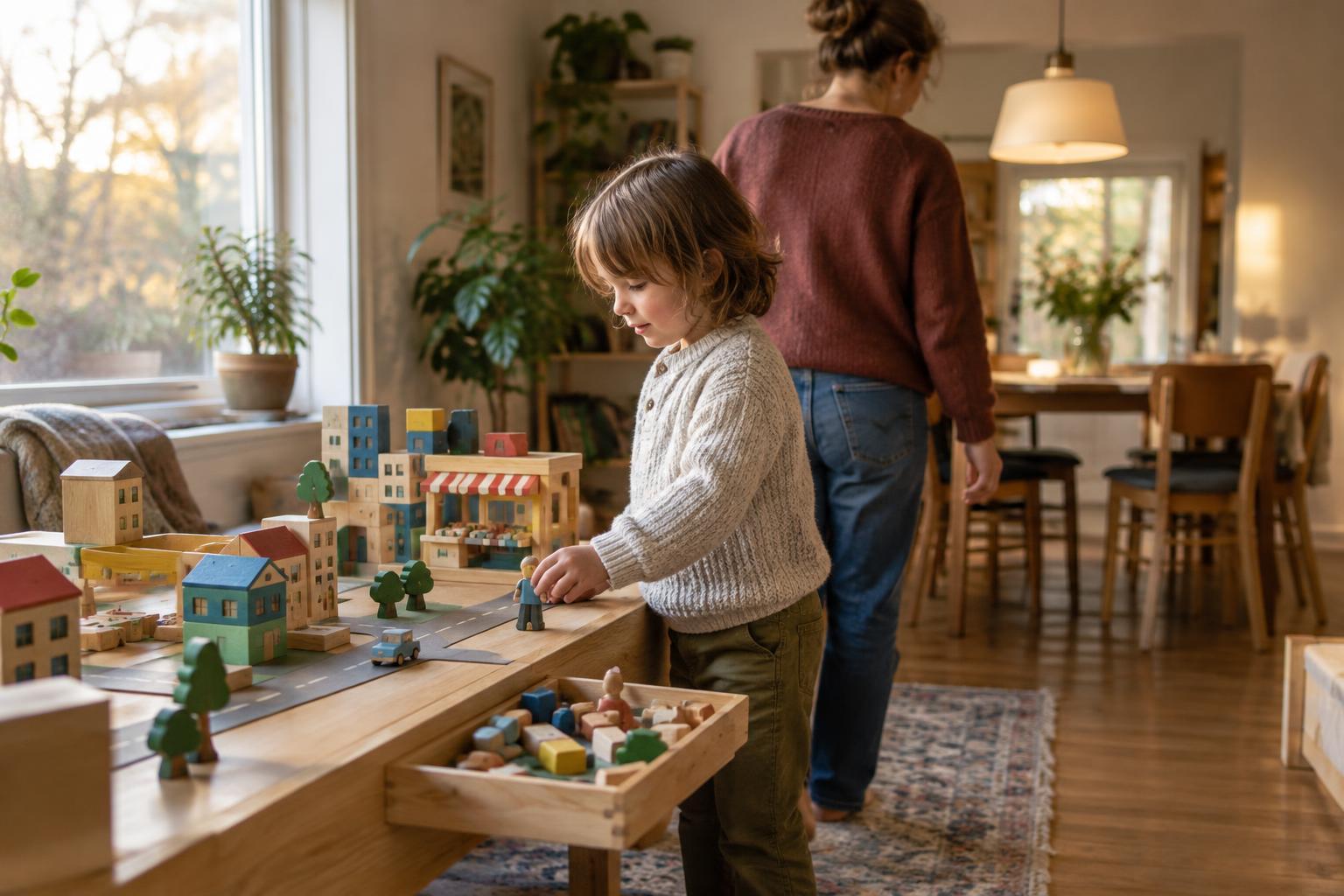
Try to follow the child’s goal rather than your own idea of the right result. A bridge made from cushions does not have to resemble a real bridge. A puzzle may become a sorting game. When you ask, “What are you trying to make?” you may discover that the apparent problem is not a problem to your child at all.
Offer the smallest useful bit of help
If waiting and asking are not enough, try one small hint. Point to the wider base of the tower, hold a box steady while a child opens it, or suggest turning a puzzle piece to see another side. Then pause again. This back-and-forth lets your child keep ownership of the play while making the next step feel possible.
Sometimes a demonstration helps more than words, especially when a child is learning to use a new material. You might show how two pieces connect, then hand them back and let your child try. Avoid completing the whole task unless they ask you to or the task cannot continue safely. If your help is taking over, it is fine to stop and say, “I got carried away. Do you want to take the lead?”
Match your help to your child and the moment
Younger children may need more hands-on support with materials, turns, and words for what they want. An older child who has used the same materials before may prefer time to test ideas independently. These are starting points, not rules: familiarity, energy, and mood can matter as much as age. A child who happily experiments in the morning may want company near the end of a long day.
Watch for cues that frustration is building rather than easing. If your child throws the pieces aside, becomes upset, or repeatedly asks you to do it, you can offer a break or a simpler version of the activity. “We could try with fewer blocks,” gives a choice without treating the original attempt as a failure. It is also all right to put the game away and return to it later.
Let play stay playful
Not every snag needs to become a lesson in persistence. Sometimes your child wants to laugh about a collapsing tower, change the rules, or move to something else. You can name the effort you noticed without making a big speech: “You tried two ways to balance that.” If the play continues, follow their lead; if it ends, the time was still worth sharing.
A useful question for adults is, “Am I helping my child take the next step, or am I trying to make the activity come out neatly?” When you pause, offer a little support, and then make room for another try, you give your child both company and space. The right amount of help can change from one moment to the next.