What a familiar game offers
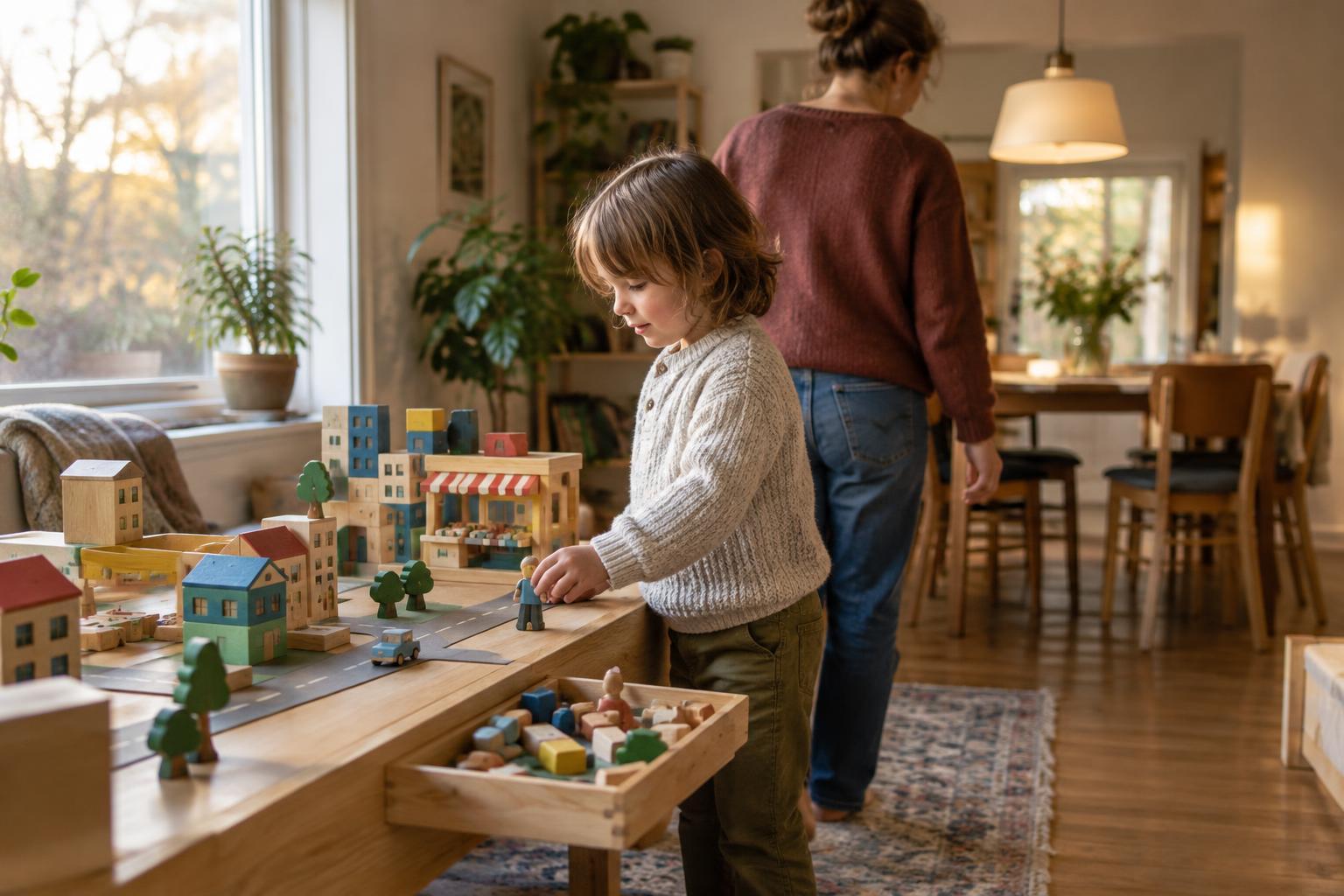
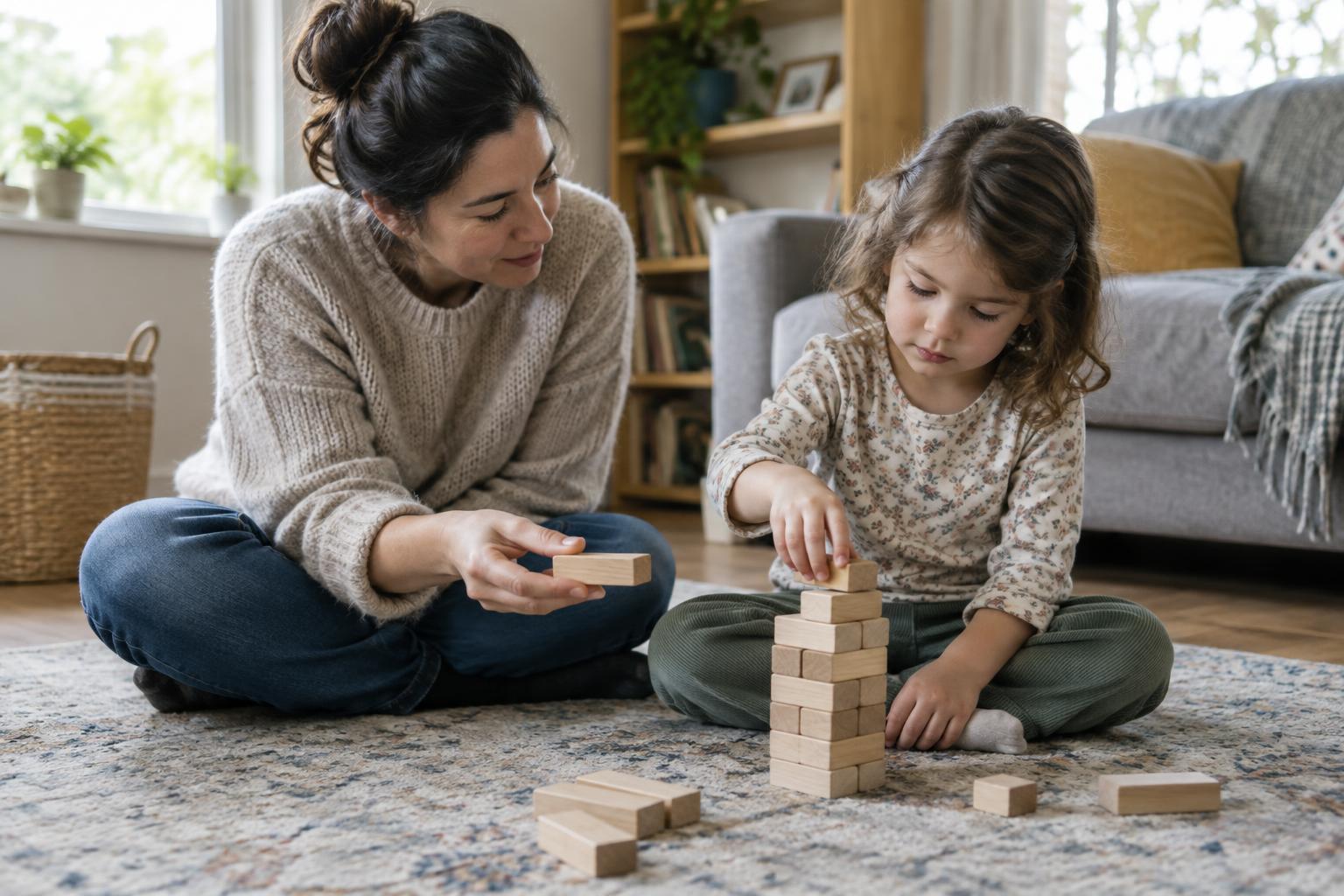
A child may ask to build the same block tower every morning or assign everyone the same roles in a pretend shop. To an adult, the game can seem unchanged. To the child, a familiar setup offers a chance to notice a small difference: which block balances, what happens when a customer changes an order, or how a story ends with a new character.
Repetition can make it easier to take part. When children already know the basic rules, they have more room to experiment with words, movements and choices. A younger child might enjoy the predictable action of filling and emptying a container. An older child might replay a pretend adventure while changing one detail at a time. Neither needs an adult to turn every round into a lesson.
Favorite games can also fit comfortably into a family routine. A quick round before dinner or the same made-up story on a rainy afternoon may feel inviting because everyone knows how to begin. Enjoyment alone is a good reason to return to a game.
Watch for the small changes
Before suggesting something new, spend a few minutes noticing what your child is doing. Are they repeating the whole game, or testing one part of it? They might stack the same blocks in a different order, give a toy a new voice, or ask you to respond differently. Those changes can tell you what currently holds their attention.
Try describing what you see without directing it: “This time the bridge is wider,” or “The bear is the customer today.” Then pause. Your child may explain their plan, invite you in or continue quietly. If they correct your description, you have learned something useful about the game they have in mind.
Interest can also vary from day to day. Sometimes a child wants you to be an enthusiastic partner; sometimes they want you to perform your usual role without surprises. Following those cues often works better than arriving with a new activity every time.
Add one small twist at a time
If the game seems ready for variety, change just one ingredient. A familiar building game could use cushions as hills or a sheet of paper as a road. A pretend restaurant could offer a menu drawn together. A hiding game could include a toy to find instead of another person. Keeping the basic game intact lets your child decide whether the new idea belongs.
Questions can open possibilities without taking control. You might ask, “What could we use for a doorway?” or “Where should the train go next?” If your child ignores the question, you can return to their version. Offering a choice is often easier to work with than announcing a new rule: “Should the animals visit the farm or the park?”
Match the twist to the child and the space. Younger children may enjoy a new object they can handle in a familiar way. Children who like stories may prefer a new character or problem to solve. Simple household items can be enough, provided they are suitable for the child to use and you can keep an eye on play that needs supervision.
Let the child keep the lead
Adults sometimes feel pressure to make play more educational or exciting. Yet adding too many instructions can turn a child’s game into an adult’s task. If your child wants the tower to fall in exactly the same way again, it is fine to help rebuild it. You can enjoy the shared moment even when you already know what happens next.
When you join, ask what role your child wants you to play. In pretend play, let them explain the rules, even if the rules change halfway through. In active games, agree on clear boundaries for the space and then leave room for invention. If a proposed change frustrates your child, treat that as feedback rather than a problem to fix.
You can also step back. Put a few materials within reach, stay available and allow your child to continue independently if they prefer. A game does not need a fresh adult contribution each time to remain worthwhile.
Make room for both favorites and new discoveries
A favorite game need not crowd out every other kind of play. You might keep familiar materials easy to reach while occasionally offering something different nearby: paper beside the blocks, a basket of dress-up items near the pretend kitchen, or time outdoors after an indoor game. An invitation is enough; your child can choose whether to use it.
If the repetition wears you out, it is reasonable to set a kind limit. You might say, “I can play one more round, then I need to start dinner.” Another family member may enjoy taking a turn, or your child may be happy to carry on alone. Protecting your own energy makes it easier to be present when you do join in.
The aim is not to make every round novel. It is to notice what your child enjoys, offer a little space for exploration and let a well-loved game remain well loved.