What active listening looks like
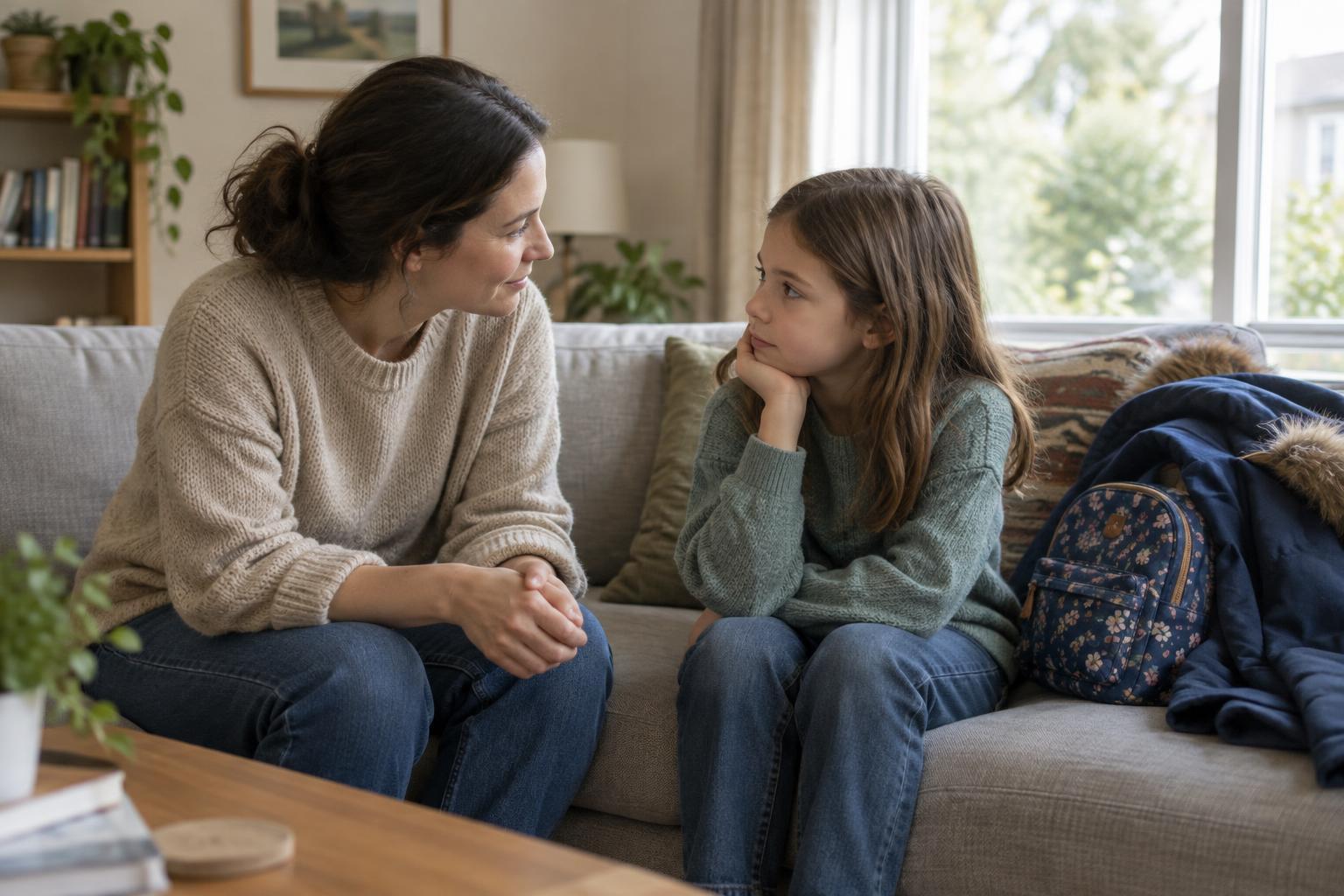
Active listening means giving a child enough attention to understand what they are trying to tell you before you respond. It is more than waiting for your turn to speak. You notice their words, tone, and body language, then check whether you have understood. You do not need a perfect response. A brief, attentive exchange can be more useful than a long conversation in which you are distracted.
Listening does not mean agreeing with every request or removing every frustration. You can understand why a child is upset and still keep a boundary: “You wanted to stay at the park. It’s hard to leave when you’re having fun. We’re going home now.” The child hears that their experience matters, while the plan stays clear.
Start by making space
When a child begins talking, pause what you can. Put down your phone, turn toward them, and give them a moment to finish. If you cannot listen properly right then, say when you can: “I want to hear this. Let me turn off the stove, and then I’ll sit with you.” Follow through when possible. Small, reliable moments of attention can make it easier for children to bring up everyday thoughts.
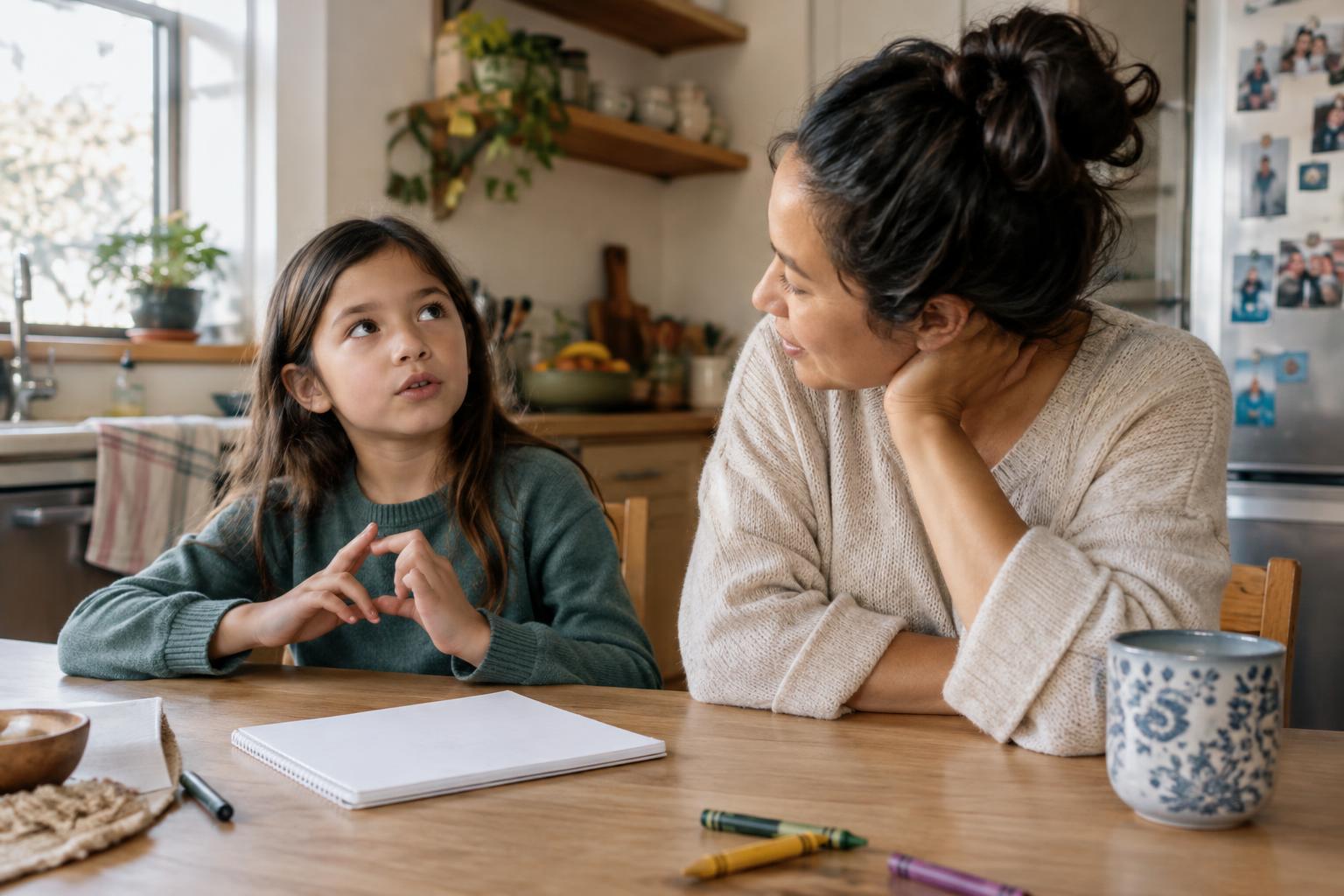
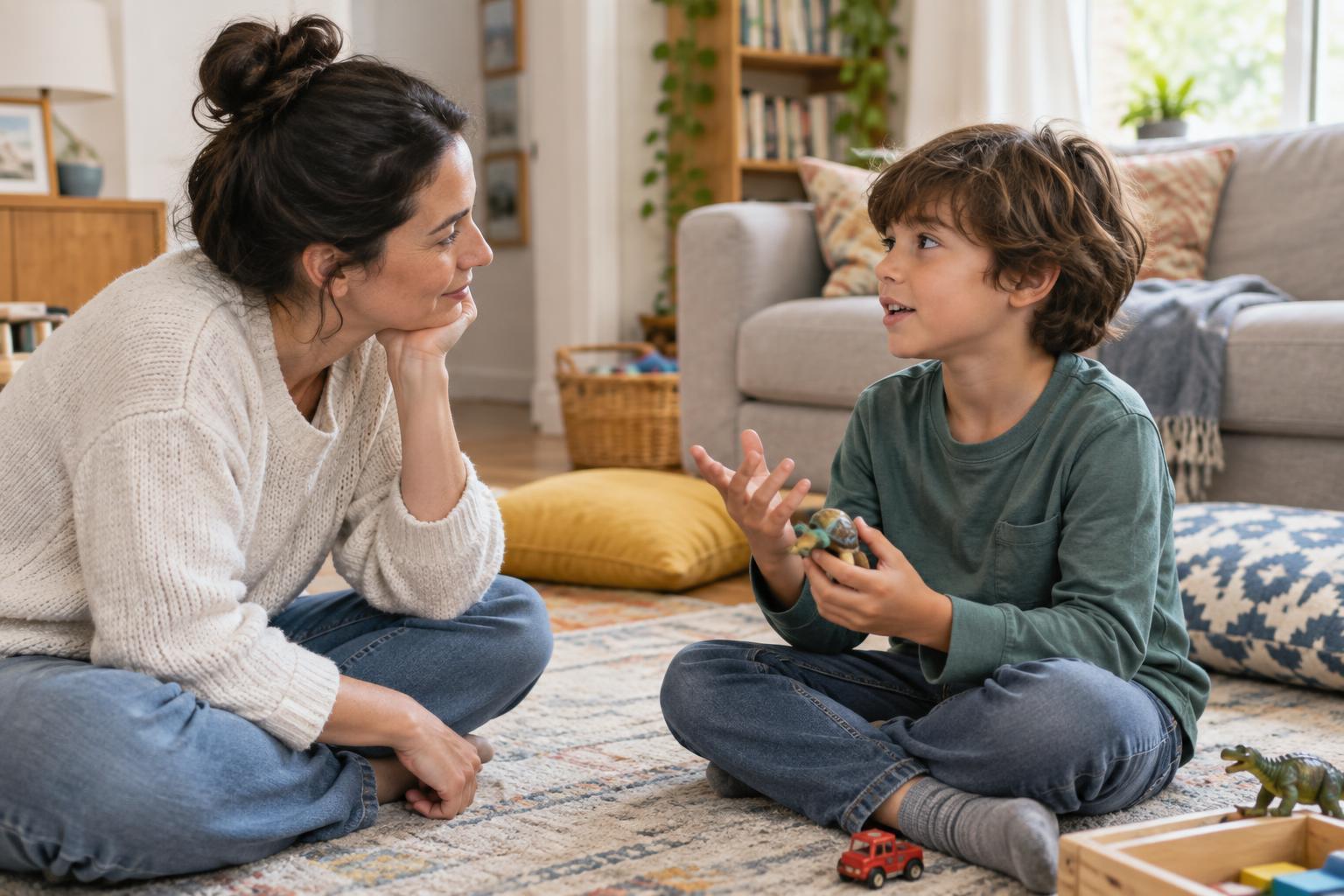
Choose a setting that fits the child. Some children talk while sitting face to face; others open up while drawing, walking, or tidying alongside you. Younger children may communicate through play or a few repeated words. An older child may need time to decide what they want to share. A quiet pause is not necessarily a cue to fill the space with questions.
Reflect before you solve
Try putting what you heard into simple words: “You were building a tower, and it fell when your brother bumped the table.” If the feeling seems clear, you might add, “That was disappointing.” Keep your wording tentative when you are unsure: “Were you annoyed, or was it something else?” This gives the child room to correct you. Being corrected is useful; it helps you understand rather than guess.
It can be tempting to offer a fix immediately, especially when the problem looks small from an adult’s point of view. First, find out what the child needs. You could ask, “Do you want help thinking of what to do, or do you just want to tell me about it?” If a child is too upset to answer, a calm presence and a few plain words may be enough for the moment. The conversation can continue later.
Ask questions that invite more than yes or no
Open questions can help a child tell the story in their own way. Try “What happened next?” or “What was the best part?” rather than a rapid series of questions about every detail. Follow the child’s lead and ask about what seems important to them. If they mention a game at school, for example, they may want to describe the rules, talk about a friend, or simply share that it was fun.
Age and temperament matter. A young child might answer “How did your day go?” with one word but happily explain the picture they drew. An older child may prefer a specific question or no question at all at first. Avoid turning every conversation into a lesson. Sometimes “Tell me more” shows more interest than an explanation of what the child should have done.
Keep listening workable in real family life
Active listening can fit into ordinary routines: a few minutes after pickup, a chat while preparing a snack, or a pause before bedtime. These moments do not have to become formal check-ins. Notice when your child tends to talk, and make room for that pattern when you can. If you have more than one child, short individual conversations can help each person speak without competing for the floor.
You will sometimes interrupt, misunderstand, or react too quickly. You can return to the conversation: “I started giving advice before I heard the whole story. Do you want to try again?” That kind of repair shows that listening is something family members can practice, not a test anyone has to pass. The aim is a steady habit of paying attention, checking your understanding, and leaving space for a child’s own words.