What makes praise descriptive?
General praise gives a broad positive response: “Great job,” “You’re so clever,” or “That’s amazing.” It can be a quick, genuine way to share a child’s excitement. Descriptive praise adds something you actually noticed: “You tried two ways to make that tower stand,” or “You put the books back where everyone can find them.” Rather than simply giving a verdict, it tells the child what caught your attention.
The distinction is not a rule that every compliment must become a detailed observation. Children also benefit from relaxed conversation, shared laughter, and a simple “I love seeing what you made.” Descriptive praise is most useful when you want to acknowledge a particular choice, effort, or contribution. Keep it truthful and proportionate; an ordinary moment does not need a grand speech.
Everyday swaps during play and learning
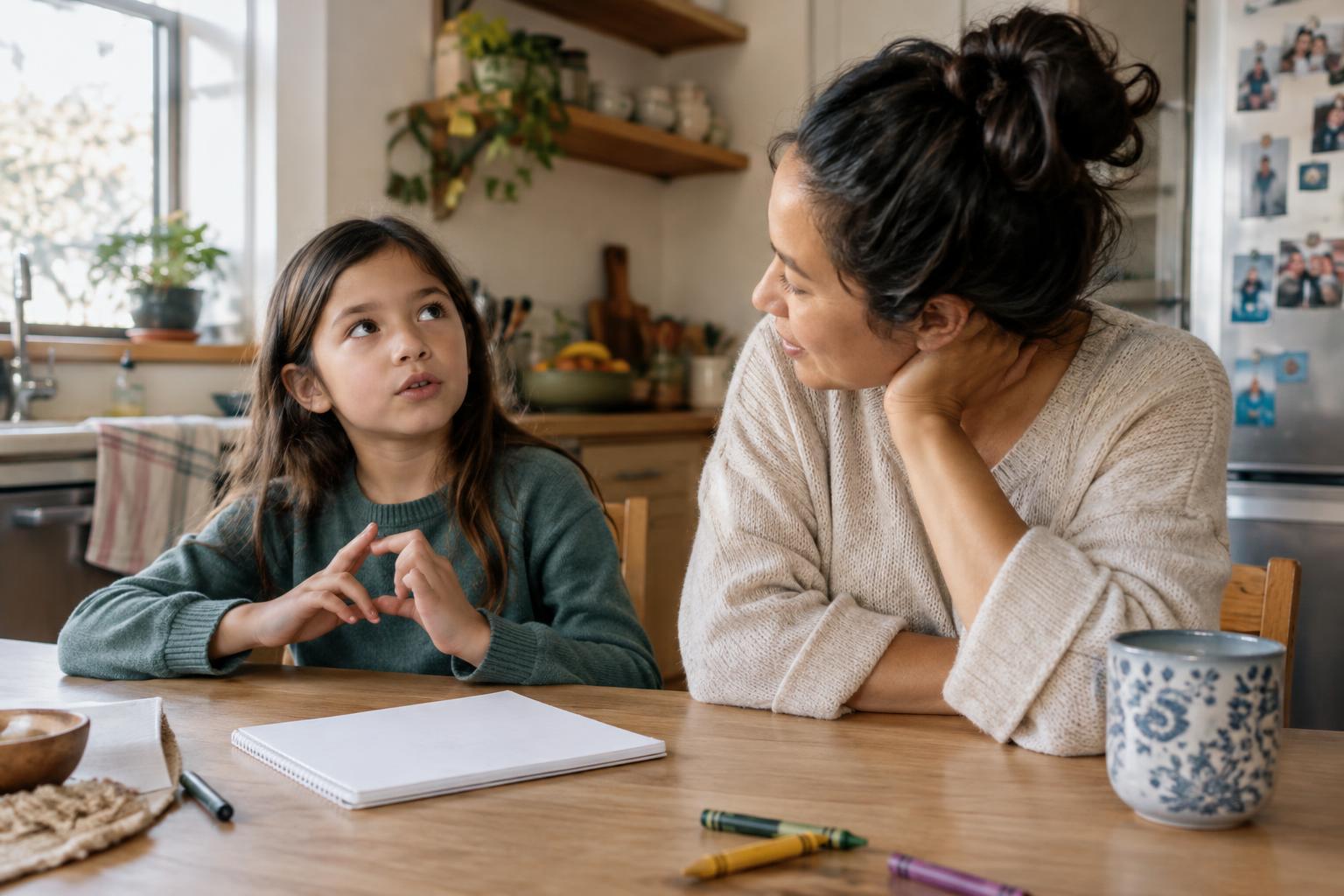
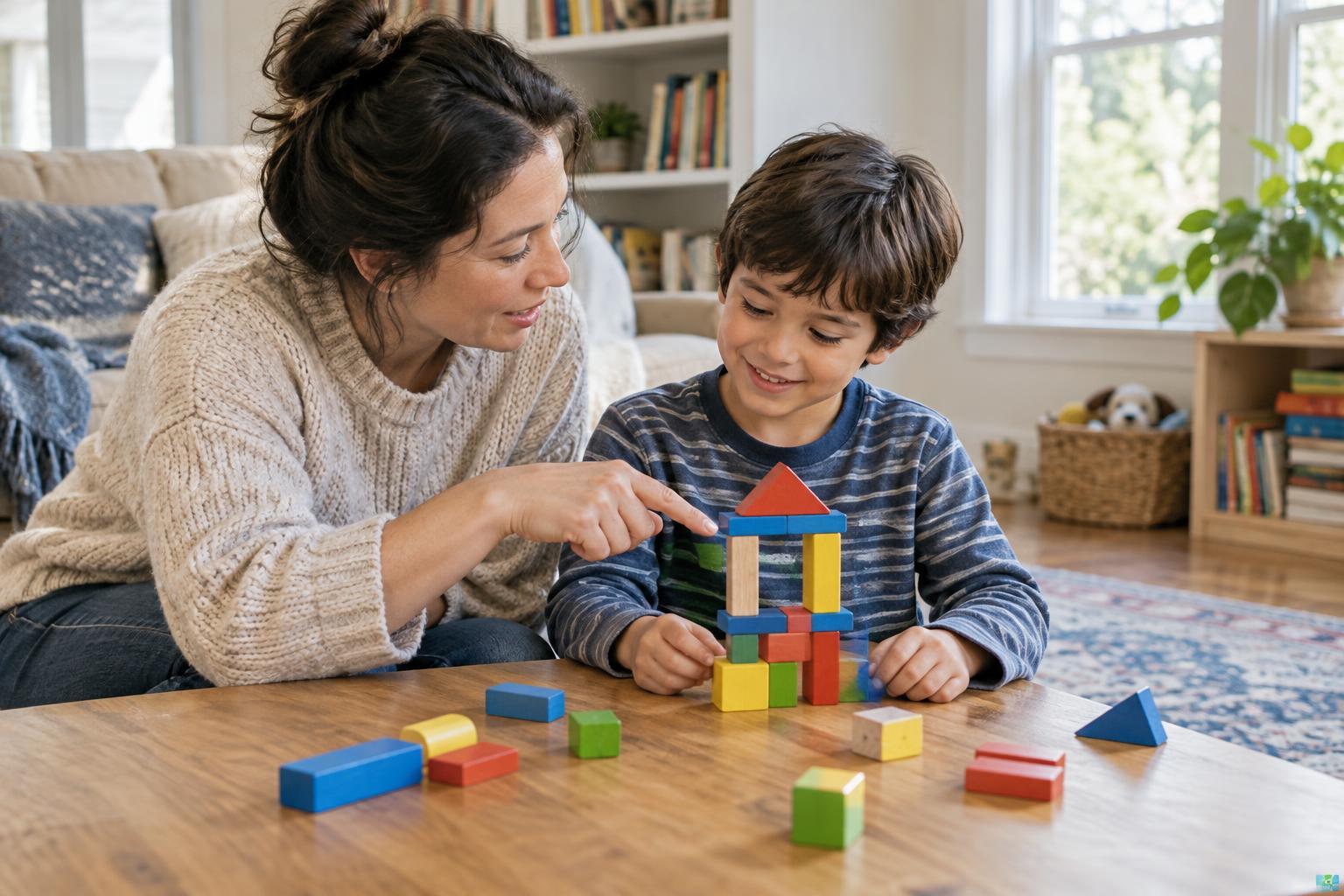
During block play, “You’re brilliant at building!” is general praise. A descriptive alternative is, “The bridge kept falling, and you moved the blocks closer together.” If a child is drawing, you might replace “Beautiful picture!” with “You used lots of different lines for the rain. Tell me about them.” The second response notices a detail and leaves room for the child to explain an idea you might otherwise miss.
When a child is learning a new skill, focus on what you can see rather than guessing how hard it felt. Try “You went back and checked the last piece of the puzzle” instead of “That was easy for you!” With a younger child, one short sentence may be enough: “You carried the cup with both hands.” An older child may welcome a more specific observation: “You compared the instructions with what you built and spotted the missing step.”
You can also let an achievement stand without evaluating it. “You did it!” or “How does it feel now that it’s finished?” may fit better when a child is already proud. The aim is a conversation, not a constant stream of feedback.
Noticing contributions to family routines
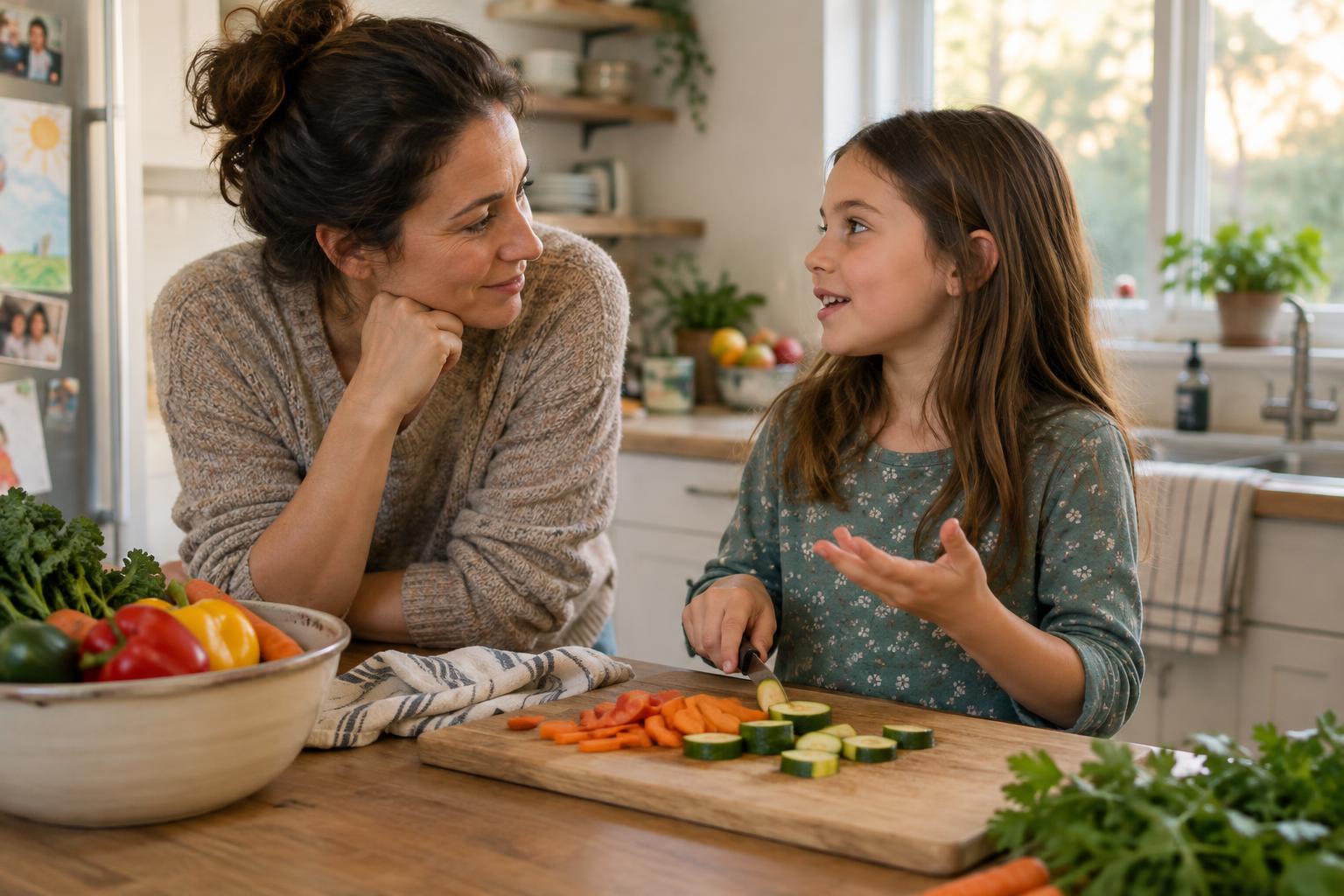
Daily tasks offer small, natural chances to be specific. Instead of “Good helper,” you might say, “You put the napkins where everyone can reach them.” Instead of “You’re so tidy,” try, “You cleared the markers before we set out dinner.” These descriptions show that you noticed a contribution without turning helpfulness into a fixed label the child has to live up to.
Be careful not to make every routine feel like a performance. A child does not need praise for each bite of food or every item placed in a basket. Sometimes a straightforward “Thanks for bringing your plate over” is enough. If a task is shared, name your part too: “You gathered the toys, and I wiped the table. Now we have space for the game.” This frames the routine as cooperation rather than a test.
Descriptions can also make expectations clearer. “You hung your coat on the low hook, so the doorway is clear” connects an action to its practical result. Keep that connection simple and avoid implying that a child is responsible for everyone else’s mood.
Speaking about kindness and communication
General praise such as “You’re such a nice kid” is affectionate, but it can be more helpful to name the action: “You asked if your cousin wanted a turn,” or “You waited while I finished my sentence.” For a child working through a disagreement, you might notice a specific attempt: “You told your brother you wanted the toy back without grabbing it.” That does not mean the whole conflict is solved; it acknowledges one useful step.
Try to describe what happened without assigning a motive you cannot know. “You moved over to make space” is an observation. “You moved over because you always care about others” asks the child to accept a broader story about themselves. If they did not intend to help, the first statement still leaves space for an honest conversation.
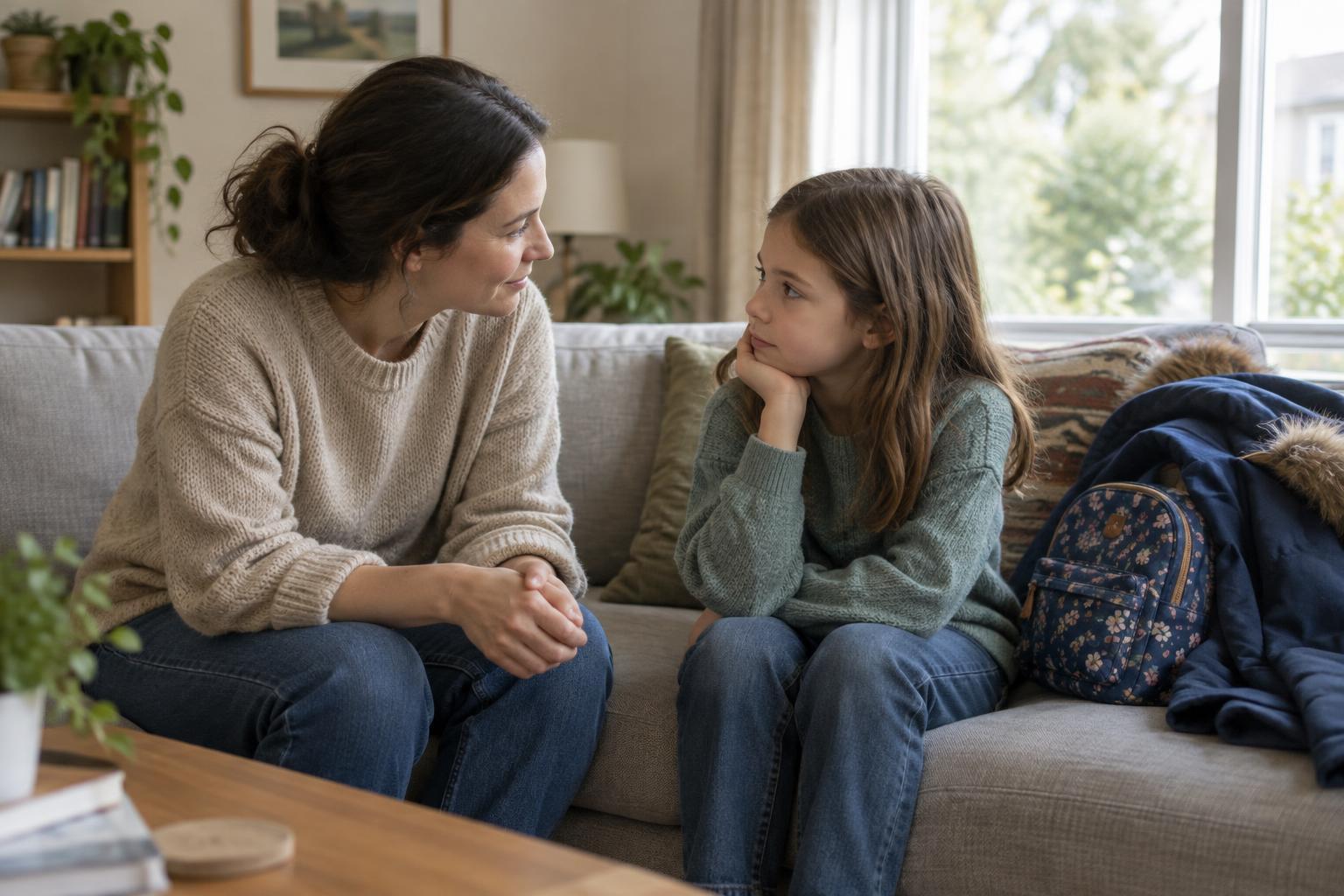
Praise need not replace listening. If a child tells you about a difficult interaction, ask what happened and how they saw it before looking for something positive to point out. A specific compliment lands better when it fits the moment than when it interrupts what they are trying to say.
Keeping praise natural, not scripted
A useful habit is to pause briefly and ask yourself, “What did I actually notice?” You might notice persistence, a new approach, care with materials, or a thoughtful question. Say it in words you would normally use. “You kept trying different spots for that plant” can sound more natural than a long explanation about perseverance.
Let the child’s response guide you. Some children enjoy having their work noticed in front of others; others prefer a quiet comment or no comment at all. If a child corrects your description, stay curious: “Oh, you meant it to be a river, not a road. Tell me about it.” Specific praise works best when it opens a door to the child’s perspective, rather than making the adult’s opinion the center of the moment.
General and descriptive praise can comfortably coexist. Use “Great job!” when it comes naturally, and add detail when detail would help a child feel seen. The goal is not perfect wording. It is to pay attention, speak honestly, and make room for a child to share what matters to them.