Pause before asking anyone to explain
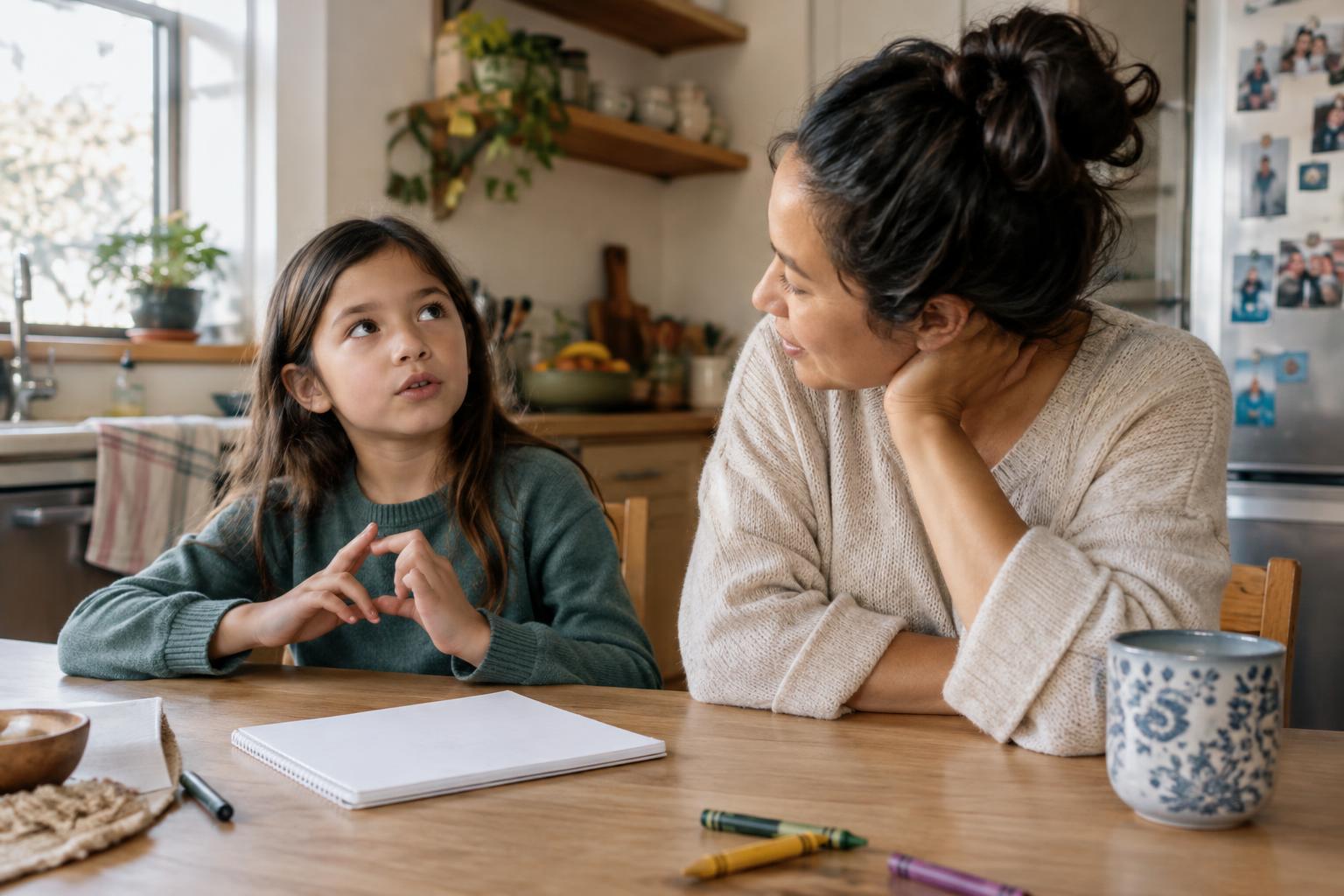
A disagreement over a toy, a game rule, or personal space can quickly become a contest to be heard. Before deciding who speaks first, help everyone pause. Move close enough to be heard, use a calm voice, and state what you see without assigning blame: two children want to tell you what happened, and both will get a turn. If voices are too loud for a conversation, give everyone a little space and return to the discussion when they are ready.
Safety comes before a speaking routine. If children are hitting, throwing things, or crowding each other, separate them and make the space safe first. Taking turns to talk is useful once everyone can listen without the disagreement continuing around them. A child who needs a moment to settle is not giving up their chance to speak.
Make the turns short and predictable
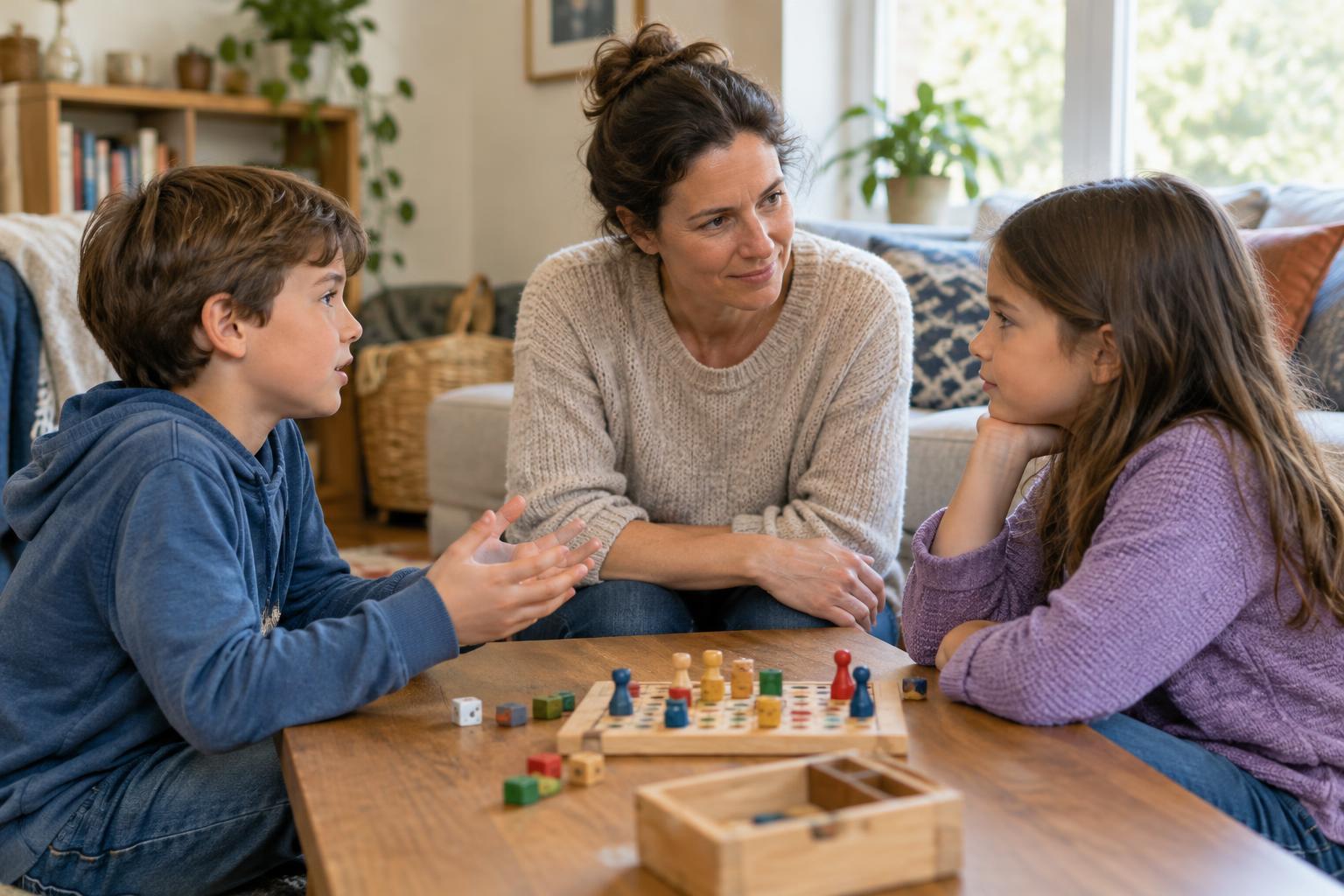
Explain the routine before asking for anyone’s account: one person speaks, the other listens, and then they switch. Keep the first turn brief. You might ask each child to say what they wanted and what felt difficult, rather than recount every detail from the beginning. The goal is to understand the problem well enough to choose a next step, not to hold a trial about who started it.
Choose a clear way to mark the turns. You can point gently to the person speaking or use a small object that stays in the speaker’s hands. The object is a reminder, not a prize to compete for. If children disagree about who goes first, choose for them and offer the other child the first turn next time. What matters most is that both know their turn is coming.
Younger children may need simple prompts, such as asking what they wanted or what happened next. Older children may be able to describe their point of view in more detail. Either way, a turn should be short enough for the listener to manage. You can always offer another round if something important was missed.
Help the listener feel heard, too
Waiting quietly can be hard when a child believes the other person is telling the story incorrectly. Let the listener know they will have a chance to respond, but ask them not to interrupt this turn. If they keep jumping in, briefly restate the boundary and return to the speaker. You do not need perfect silence; you are helping children practice a skill that takes repetition.
After each child speaks, check your understanding in neutral language. For example, one child wanted more time with the blocks, while the other thought the game had ended. This does not mean you agree with every claim. It shows that you have heard the concern beneath it. Invite a correction if you missed something, then move on rather than reopening the whole account.
Avoid requiring an immediate apology or asking one child to repeat the other’s words as a test. Those steps can feel forced when feelings are still strong. A simpler question is whether each child can name what the other wanted. If they cannot yet, you can supply a brief summary and continue.
Turn the conversation toward a workable next step
Once both children have spoken, shift from what happened to what can happen now. Name the shared problem in ordinary terms: both want the same space, the game needs a rule everyone understands, or someone needs their belongings returned. Then ask for one possible next step from each child. Options might include setting a timer, taking separate play spaces, restarting with a clearer rule, or choosing another activity for now.
A solution does not have to make both children equally happy in the moment. It should be understandable, manageable, and respectful of each child’s needs. Some limits are not open for negotiation: a child can say no to someone using their personal belongings, and rough play must stop when someone wants it to stop. Within those limits, let children help shape the plan when they can. If no plan works yet, pause the shared activity and try again later.
Practice the routine outside an argument
The middle of a disagreement is a difficult time to learn a brand-new skill. During a calm moment, explain that everyone in the family gets a chance to finish a thought. Practice with an easy choice, such as what game to play together, so children can experience listening and switching turns without the pressure of a conflict. Keep it brief and light.
Expect to guide the process many times. Children of different ages may need different amounts of help, and fairness does not always mean identical speaking time. Notice small improvements: a child waited until a sibling finished, asked for a turn instead of shouting, or offered a workable idea. Over time, those moments give siblings a familiar way to handle everyday disagreements, even when they still disagree.