Pause before you try to fix it
You are trying to get out the door, a shoe is missing, and your child asks one more question. Your voice gets louder than you intended. Once you notice it, you may want to explain yourself immediately or rush everyone back to normal. A brief pause can help you respond to what happened instead of continuing the argument.
If your child is safe, take a breath, lower your voice, or say, “I need a moment. I’ll come back and talk with you.” Keep that promise. A pause is not the same as ignoring your child; it gives you time to choose words you can stand behind. If the family still needs to leave, the fuller conversation can wait until you have a quiet moment together.
Name your part without handing over the blame
Repair often begins with a short, specific acknowledgment: “I raised my voice when we were looking for your shoes. I’m sorry I spoke to you that way.” This tells your child what you are taking responsibility for. Try not to attach a “but” that turns the apology into an explanation of why your child made you do it.
You can still hold a boundary. “We do need to leave on time, and I should have said that calmly” makes room for both truths. The goal is not to pretend the original problem disappeared. It is to separate the problem you were trying to solve from the way you spoke while trying to solve it. You do not need a long speech or a promise that you will never feel frustrated again.
Make space for your child’s response
After an apology, your child may want a hug, want to talk, or want to keep playing. They may still be upset. You can ask, “How was that for you?” or “Is there anything you want to tell me?” Then give them time to answer without correcting every detail of their account. Listening does not require you to agree on every part of what happened.
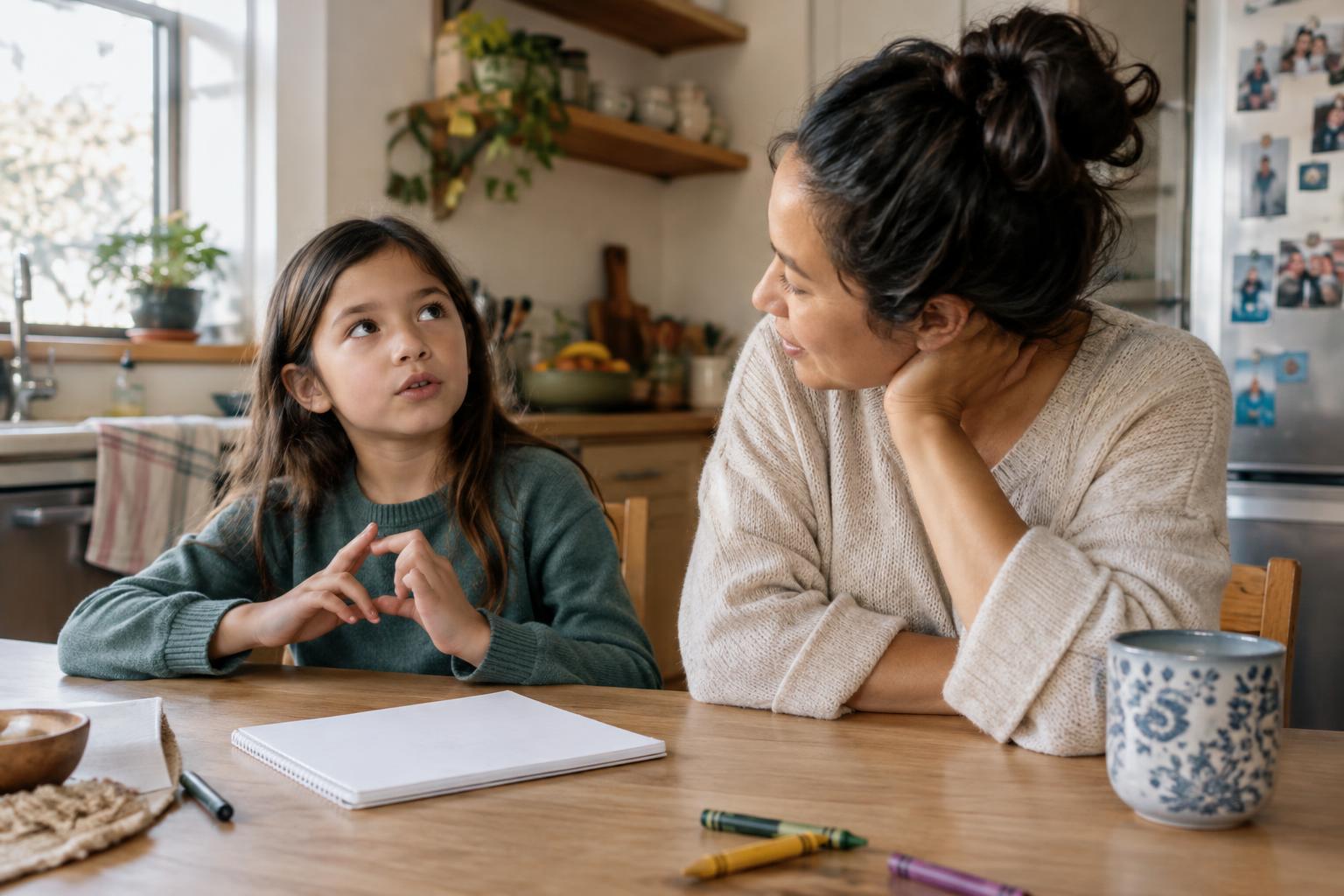
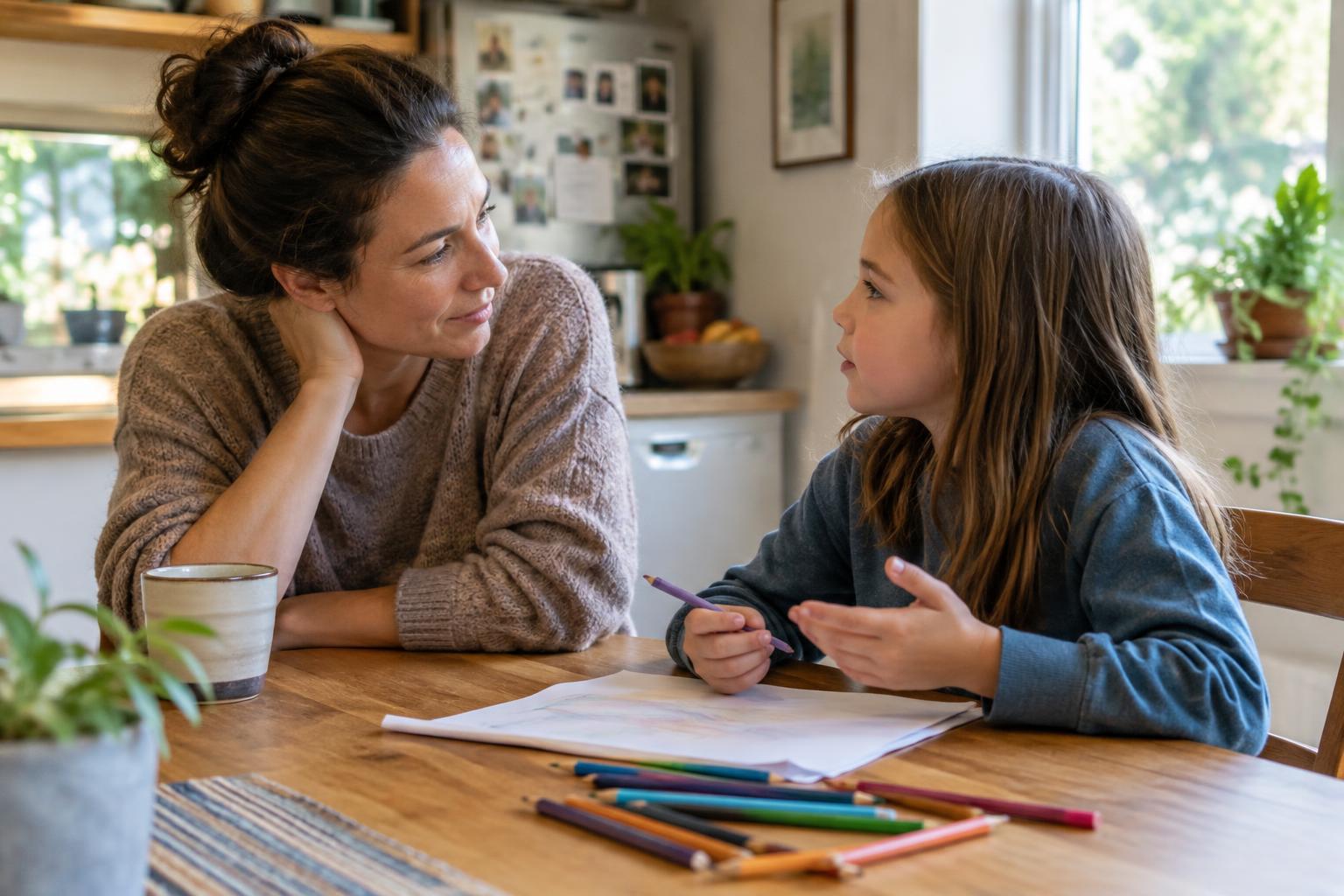
Keep the invitation suited to your child. A younger child may respond more easily while drawing or sitting beside you than during a face-to-face discussion. An older child may prefer to talk later, when the moment feels less intense. If they do not want to talk, you can say that you are available and let your calmer actions carry some of the message.
Return to the problem as a team
Once you have addressed your tone, revisit the practical issue if it still matters. Use a question small enough to answer: “Where could the shoes go tonight so we can find them tomorrow?” or “What would help us pause before this turns into an argument?” Your child may have an idea you can try, even if you make the final decision.
Choose one manageable next step rather than designing a whole new family system in the middle of a difficult day. You might place a basket by the door, give a reminder before it is time to stop playing, or agree to say “let’s start over” when voices rise. A shared plan cannot prevent every tense moment, but it gives everyone something concrete to practice.
Let everyday behavior reinforce the repair
Children learn about conversations through repeated experiences, not one perfect apology. Speaking respectfully at the next rushed moment, following through when you say you will return, and accepting a request to try again can all reinforce your words. If you lose patience another time, you can pause and repair again without treating the earlier effort as a failure.
It can also help to notice the conditions that make patience harder. A crowded morning, hunger, or too many instructions at once may call for a simpler routine or fewer words. You cannot control every stressful moment, and your child is not responsible for managing your feelings. What you can offer is a clear example of taking responsibility, listening, and finding a way forward together.