Notice the whole conversation, not one gesture
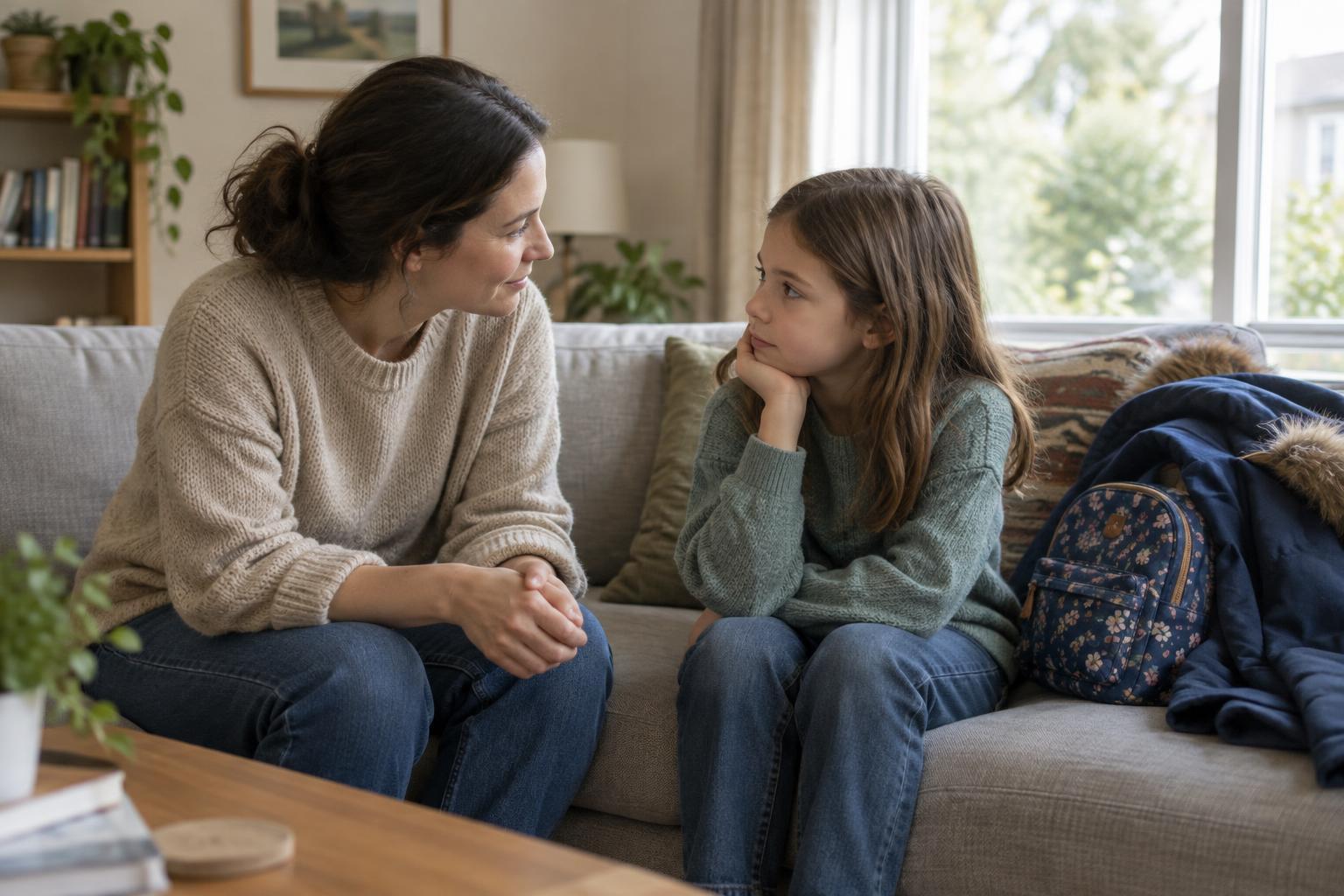
Family conversations include more than words. A child may speak quickly while gripping a toy, or a parent may say “I’m listening” while looking toward the next task. Posture, facial expression, movement, distance and tone can offer clues about how an exchange is going. They are clues, though—not a reliable way to know exactly what someone thinks or feels.
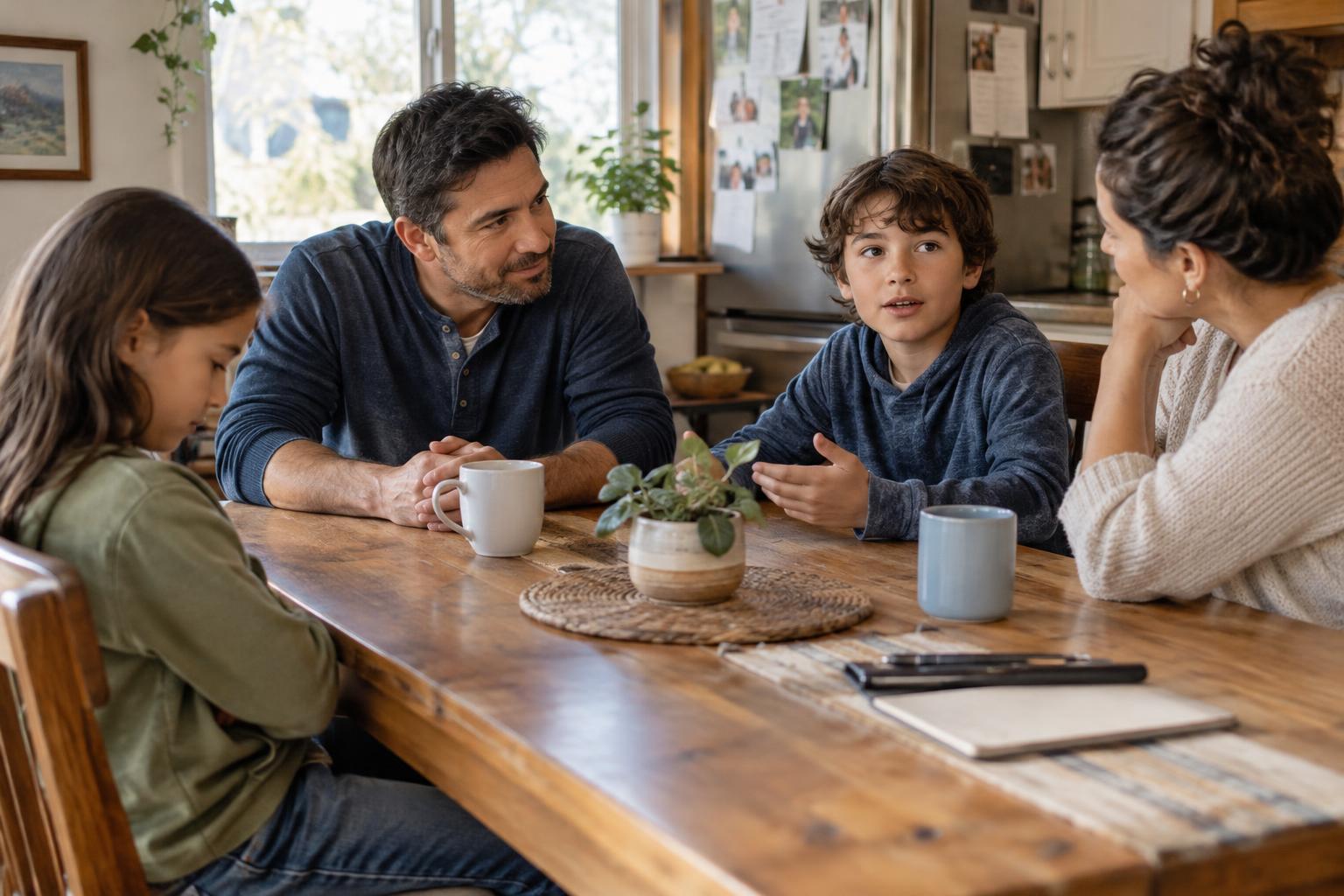
Before interpreting a gesture, look at the situation. A child who avoids eye contact might be concentrating, tired, shy or simply more comfortable listening while looking elsewhere. Someone with folded arms might be cold rather than upset. Notice patterns across the conversation instead of assigning a meaning to a single movement. Ask yourself what happened just before the cue appeared, and whether your own pace or tone might be affecting the exchange.
Start with observation, then check in
When a family member seems uneasy, describe what you notice without declaring what it means. “You got quiet when we started talking about tomorrow” leaves room for a response. “You’re angry about tomorrow” may put words in their mouth. A gentle follow-up, such as “Do you want to tell me what’s on your mind?” invites clarification without demanding it.
Give the other person time to answer. Silence can be part of thinking, especially for a child trying to find words. If they do not want to talk immediately, you might offer another chance later or suggest talking while doing something familiar together. The aim is not to decode every expression. It is to make it easier for someone to correct your guess, explain themselves or ask for a pause.
Make room for different ages and styles
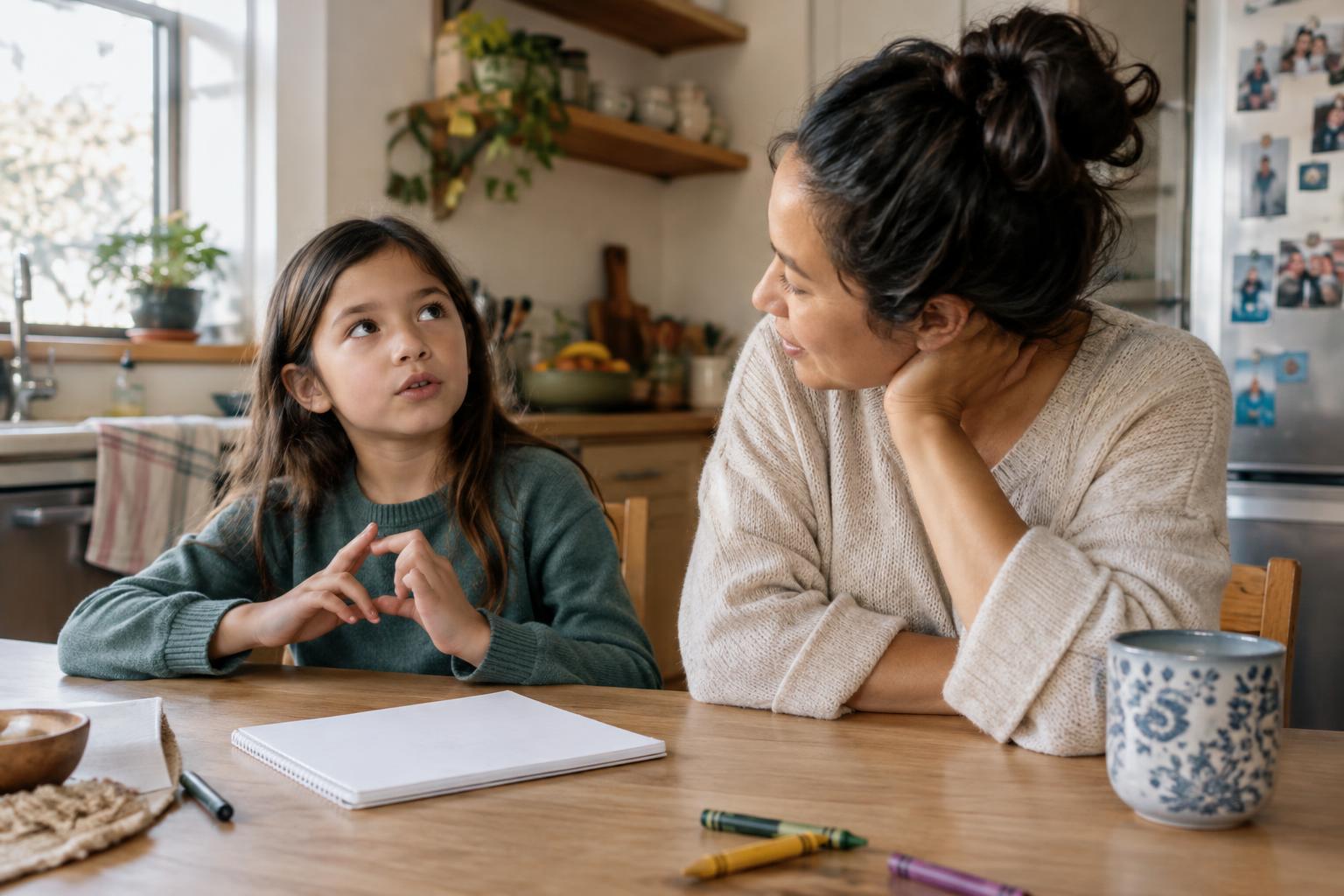
Younger children may communicate through movement as much as speech. They might wander away from a long discussion, cling to a familiar object or become animated while telling a story. Short questions and a calm setting can make participation easier. Older children and teenagers may want more privacy or may find face-to-face questioning intense. Some people talk more freely while walking, drawing or helping with a routine task.
Family members also differ in how they use eye contact, personal space and expressive gestures. Habits, preferences, sensory comfort and cultural background can all affect what feels natural. Rather than requiring everyone to look or sit the same way, pay attention to whether they can follow the conversation and have a fair chance to contribute. If you are unsure, ask what would make talking more comfortable.
Use your own body language to support listening
Noticing others is only half the task. Your posture and attention can influence whether a conversation feels open. When practical, pause the task you are doing, turn toward the speaker and let them finish before responding. A relaxed position and an unhurried voice may help show that there is time to talk. You do not need to perform perfect eye contact or sit completely still; genuine attention matters more than a fixed pose.
During disagreement, check your signals as well as your words. Standing over a seated child, pointing or speaking from another room may make an ordinary reminder feel more forceful than intended. Moving to a comfortable distance and keeping your words simple can help you stay focused on the issue. If you notice yourself becoming impatient, it is reasonable to say, “I need a moment, and then I’ll listen.” That models a pause without pretending the disagreement has disappeared.
Return to what was said—and what remains unclear
Body language is most useful when it leads to curiosity, not a verdict. At the end of a conversation, briefly reflect what you understood: “You’d rather have some warning before we change plans. Did I get that right?” This gives the other person a chance to add detail or disagree. It also keeps a moment of discomfort from becoming a lasting story about what they “always” mean.
Not every exchange ends with complete understanding. A family member might say they are fine but still seem withdrawn, or they may need time before explaining. You can respect their answer while leaving the door open: “Okay. If you want to talk later, I’m here.” Over time, these small check-ins can help family members learn one another’s preferences. The goal is not to read minds; it is to listen with enough care to ask rather than assume.