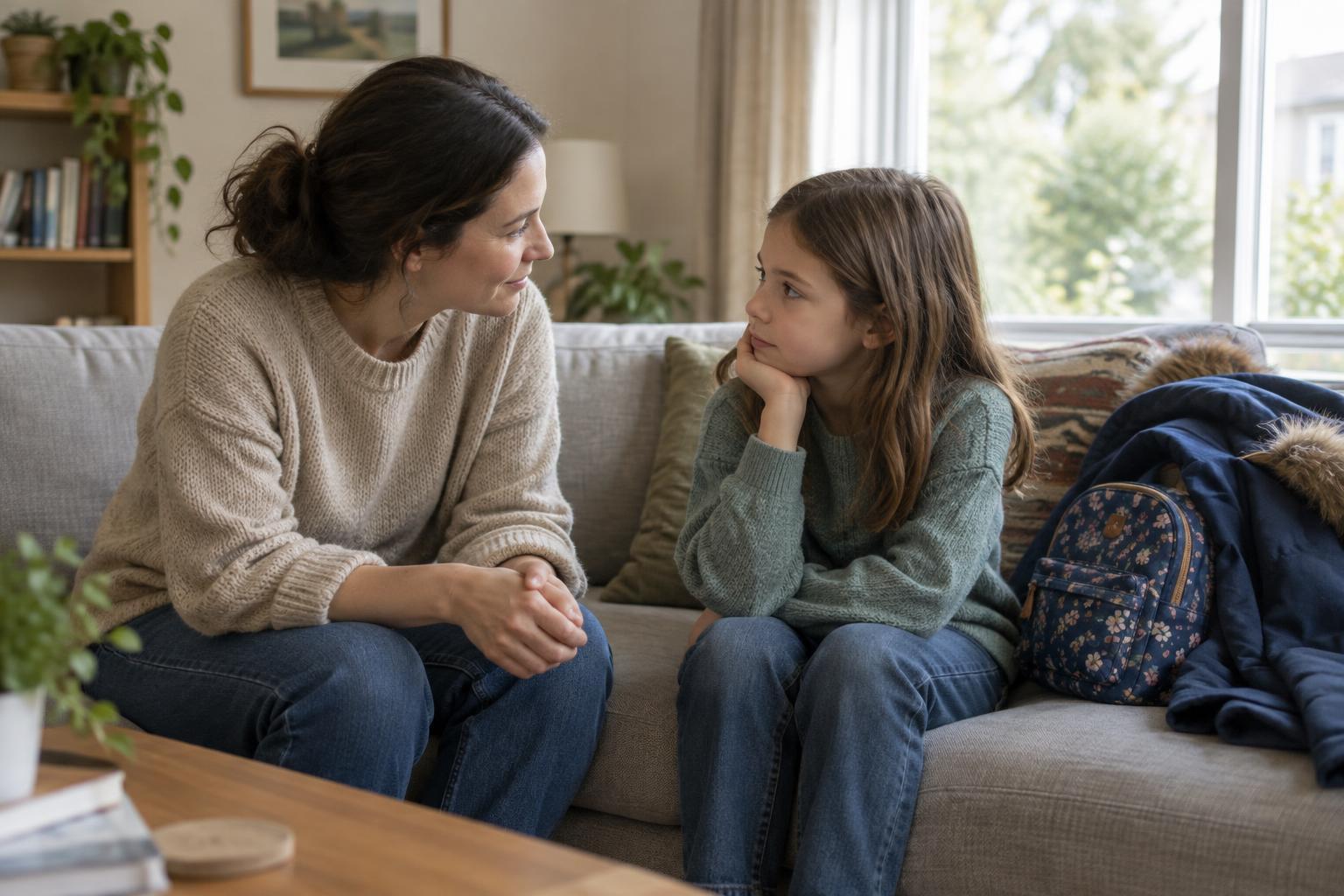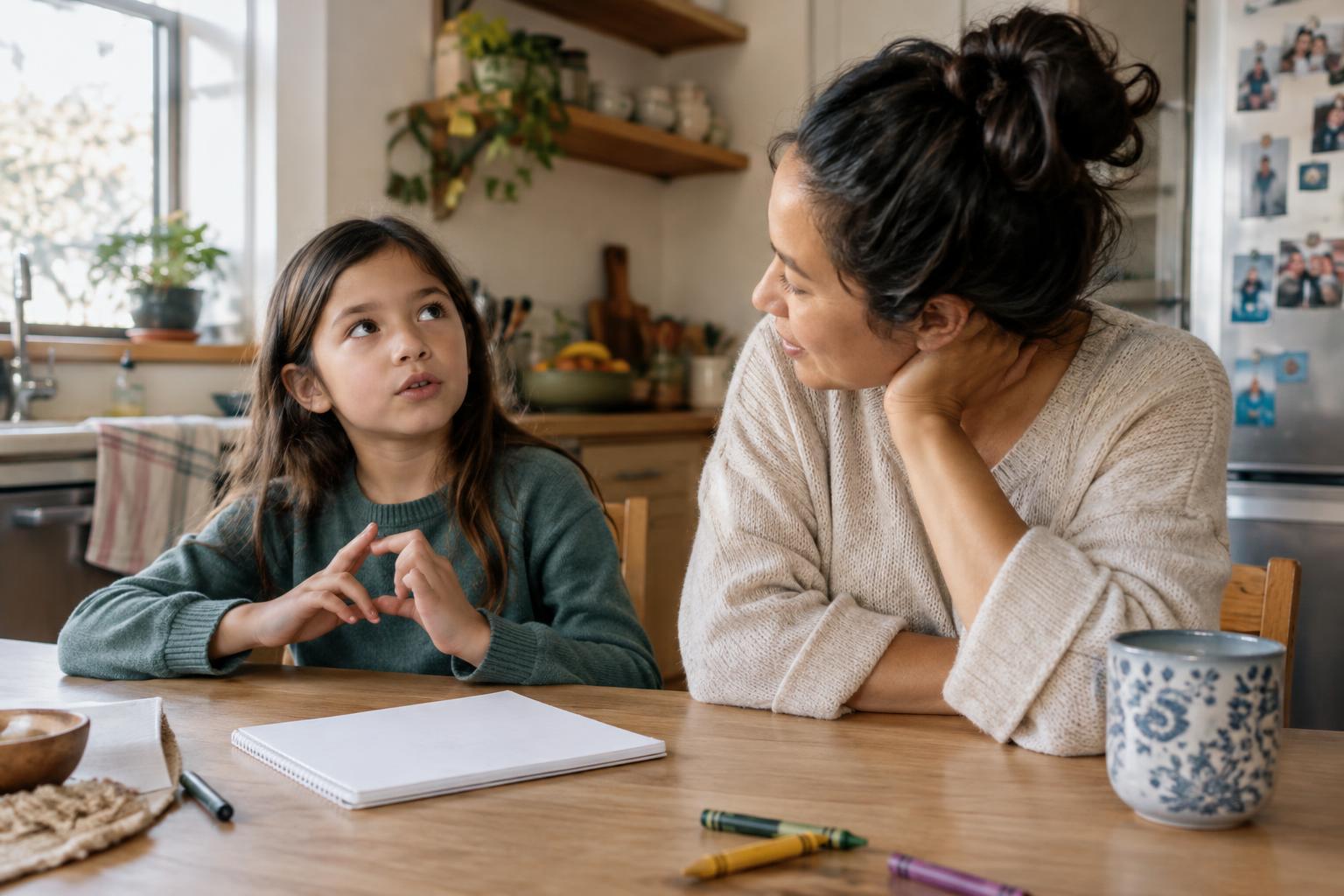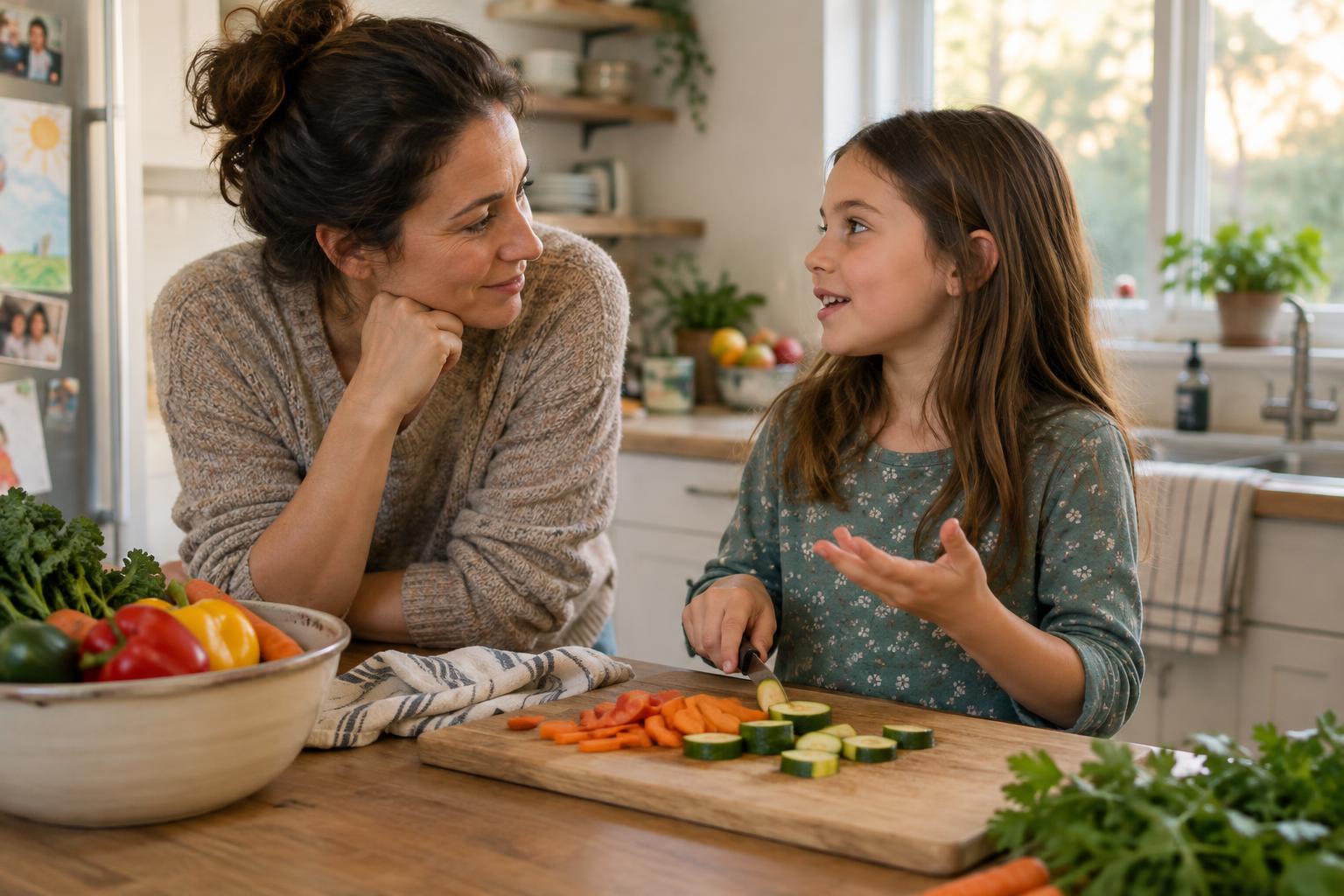
Start with the conversation already happening
A toddler who uses few spoken words may still have plenty to communicate. A look toward the door, a hand reaching for a cup, or a toy placed in your lap can be the start of an exchange. When you notice and respond, you show that communication works, even when it does not arrive as a sentence.
Try getting close enough to see what has caught your toddler’s attention. If they point at a passing dog, you might say, “A dog! It’s walking.” If they hand you a closed box, you could say, “You want it open. Let’s open it.” Short, relevant comments give words to a shared moment without requiring your child to repeat them. A smile, gesture, sound or glance can be their turn in the conversation.
Use small, clear bits of language
Daily routines provide familiar chances to talk. While getting dressed, you can name what is happening: “Sock on. Other sock.” At snack time, try “Banana or toast?” and hold up both options. When your toddler makes a choice by looking, pointing or speaking, respond to that choice. This keeps the exchange connected to something they understand and care about.
It can help to leave a little space after you speak. Adults often fill a pause quickly, but a toddler may need time to look, move, gesture or find a sound. You do not have to wait for a word every time. If they reach for the banana, you can say, “Banana. Here you go,” and continue with your day. The goal is a comfortable back-and-forth, not a test.
Follow their lead during play
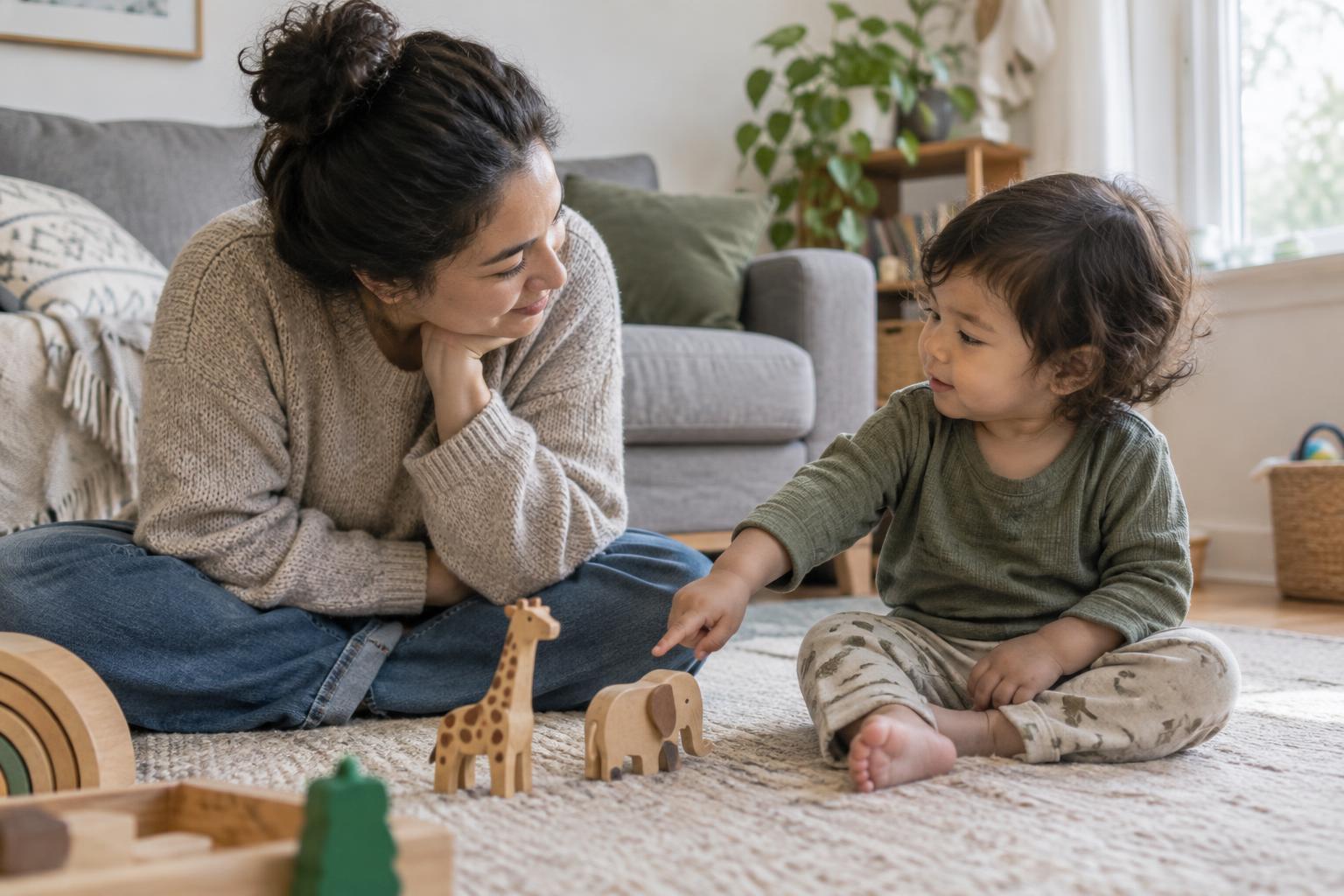
Play is a useful setting for conversation because your toddler has some control over what happens next. Sit nearby and watch before suggesting a new game. If they are rolling a car, roll another car alongside it and say, “My car goes fast.” If they stack a block, you might add, “Up it goes!” Words paired with an action can be easier to connect to the moment than a running stream of questions.
You can also build gently on what your toddler offers. If they say “car,” you might answer, “Red car,” or “Car goes down.” If they make an engine sound instead, treat that as a turn too: “Vroom! It’s coming my way.” Repeating a favorite game is fine. Familiar actions can leave more room for your toddler to anticipate, participate and try something new when they are ready.
Make room for more than spoken words
Pointing, waving, facial expressions and simple gestures can help a toddler take part in family life. You might wave while saying “bye,” or hold out your hands while asking “more?” These gestures do not need to replace speech; they give everyone another way to understand one another. Responding warmly to a gesture tells your child their message was received.
If your family uses more than one language, speak in the languages that feel natural to you. Naming a familiar food, person or game in the words your family uses can make conversation more personal. You need not turn every moment into a lesson or insist on a particular word before meeting a need. The exchange matters more than a perfect answer.
Keep connection at the center
Some days, a toddler may be eager to interact; on others, they may be tired, busy exploring or frustrated. It is okay to keep your words simple and return to the conversation later. Books, bath time, a walk or putting toys away can all offer brief chances to notice something together. Rather than asking question after question, mix in comments about what you see and allow your child to respond in their own way.
If you have questions about your toddler’s communication, you can share what you are noticing with a qualified child health professional. For everyday conversation, though, you do not need a special activity or a perfect script. Notice what interests your child, answer their attempts to connect and give them time for a turn. Those small exchanges can make talking together feel welcoming for both of you.