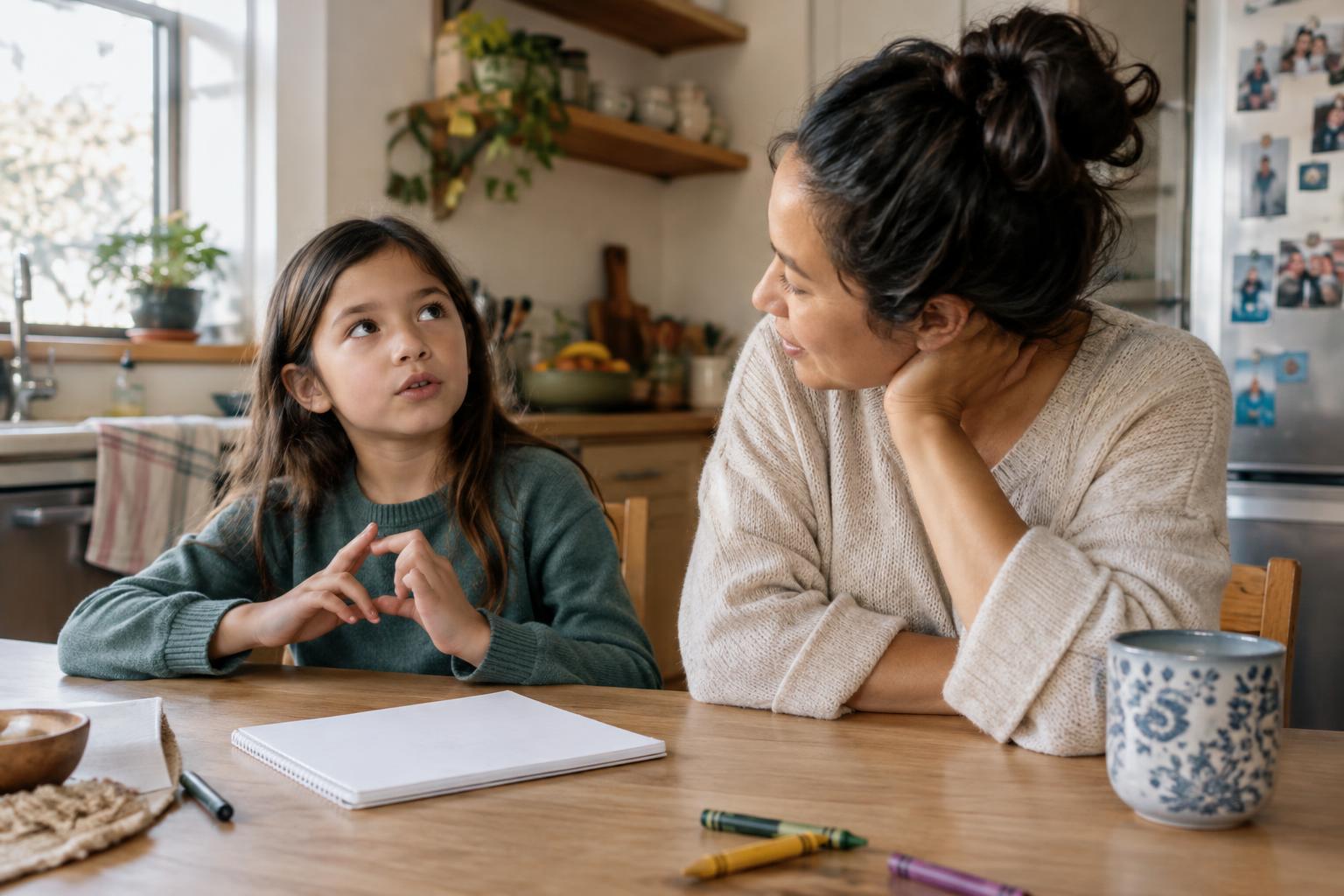
Two responses that can sound alike
When a child says, “It’s not fair that we have to leave,” an adult may worry that acknowledging the complaint will invite an argument. But validation and agreement do different jobs. Validation communicates, “I can see that this matters to you.” Agreement communicates, “I think you are right,” or “We will do what you want.” A parent can offer the first without offering the second.
For example, “You wish we could stay at the playground longer. Leaving when you’re having fun is disappointing” recognizes the child’s experience. It does not promise more time. The next sentence can be, “We’re leaving now.” Together, those sentences make room for a feeling and a boundary. Neither one needs to cancel the other.
Why the distinction helps
Children may not have the words to explain why a small change feels enormous. A younger child might protest when a game ends; an older child might say a family rule is unfair. Listening first can help adults respond to the concern underneath the words rather than debating every detail. It also gives children a model for talking about difficult feelings without needing someone else to fix them immediately.
Validation is not the same as declaring that every interpretation is accurate. If a child says, “Nobody ever lets me choose,” you do not have to confirm that as a fact. You could say, “It sounds frustrating not to get a choice this time.” That response takes the frustration seriously while leaving room to discuss what happened. It is often more useful than arguing over the word “ever” in the middle of an upset moment.
A simple way to respond
Start with what you notice, using tentative language when you are unsure: “You seem disappointed,” or “Was that embarrassing?” A child may correct you, and that is useful information. Next, name the understandable part of the experience: “You worked hard on that tower, and it fell.” Keep it brief. A long explanation can feel like a lecture when someone is still upset.
Then state the limit or decision plainly, if one is needed: “I won’t let you throw the blocks,” or “We still need to turn off the screen.” Finally, offer a manageable next step: “You can tell me what happened,” “Let’s put the blocks down together,” or “Would you like to walk beside me or hold my hand?” Choices work best when both options are genuinely available. Validation does not require an instant solution; sometimes a calm pause is enough before moving on.
Feelings can be accepted while actions are limited
The difference between a feeling and an action is especially important when a child lashes out. “You’re angry that your sister took the marker” acknowledges the anger. “I won’t let you hit her” sets a limit on the action. Once things are calmer, the family can return to practical questions: who was using the marker, what each person needs, and how to try again.
Adults can use the same distinction with each other. You might understand why a family member wants a quieter morning without agreeing to cancel every weekend plan. Saying, “I hear that you need some downtime; I still want us to visit Grandma today. Let’s talk about how to make the morning less rushed,” keeps both perspectives in view. Validation is not a technique for winning someone over. It is a way to show that disagreement does not have to erase respect.
Keep it natural, not scripted
A validating response can be as short as “That was disappointing” or “I get why you wanted another turn.” It need not appear in every exchange, and children may not always welcome it. If a child says, “Stop telling me how I feel,” step back: “Okay. I may have guessed wrong. I’m here if you want to tell me.” Making space for their own words matters more than finding a perfect phrase.
Over time, families can practice holding two truths together: a feeling is real to the person having it, and a request may still receive a no. That balance can make everyday limits clearer and conversations less like contests. The goal is not to prevent disappointment. It is to help each person feel heard while the family works through what happens next.