Start with participation, not perfection
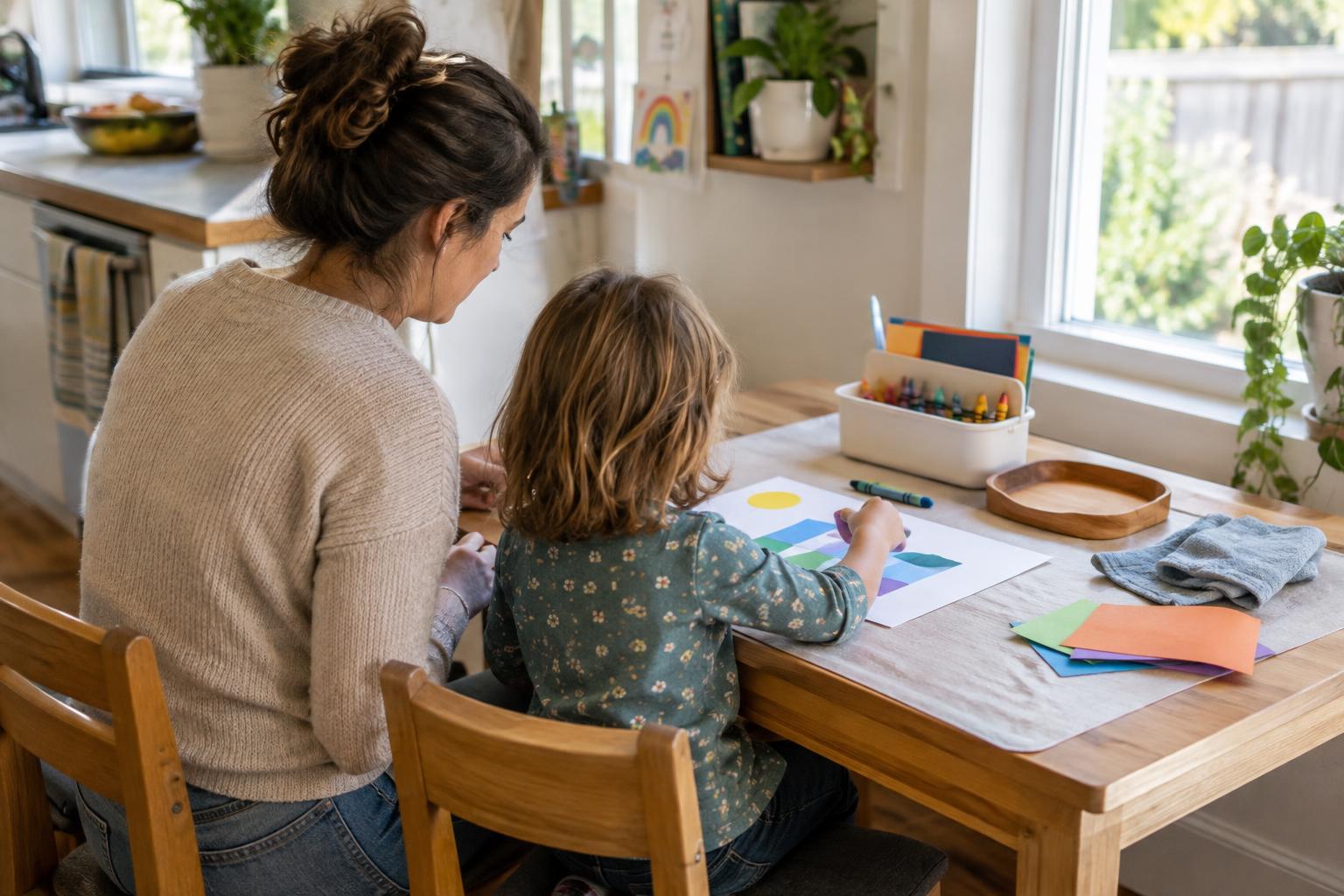
A household chore is more than a job to cross off a list. Putting shoes away or clearing a plate lets a child contribute to a space the family shares. The goal is not to make a young child work at an adult’s pace. It is to give them a task they can understand, practice, and eventually do with less help.
Age is a useful starting point, but readiness varies. A toddler might carry one unbreakable item to its place, while an older child might follow a short sequence such as sorting, wiping, and putting supplies away. Show the task, do it together, and gradually step back. Keep cleaning products, sharp tools, hot surfaces, and heavy objects under adult control, regardless of a child’s enthusiasm.
Kitchen and dining area: Build a routine around meals
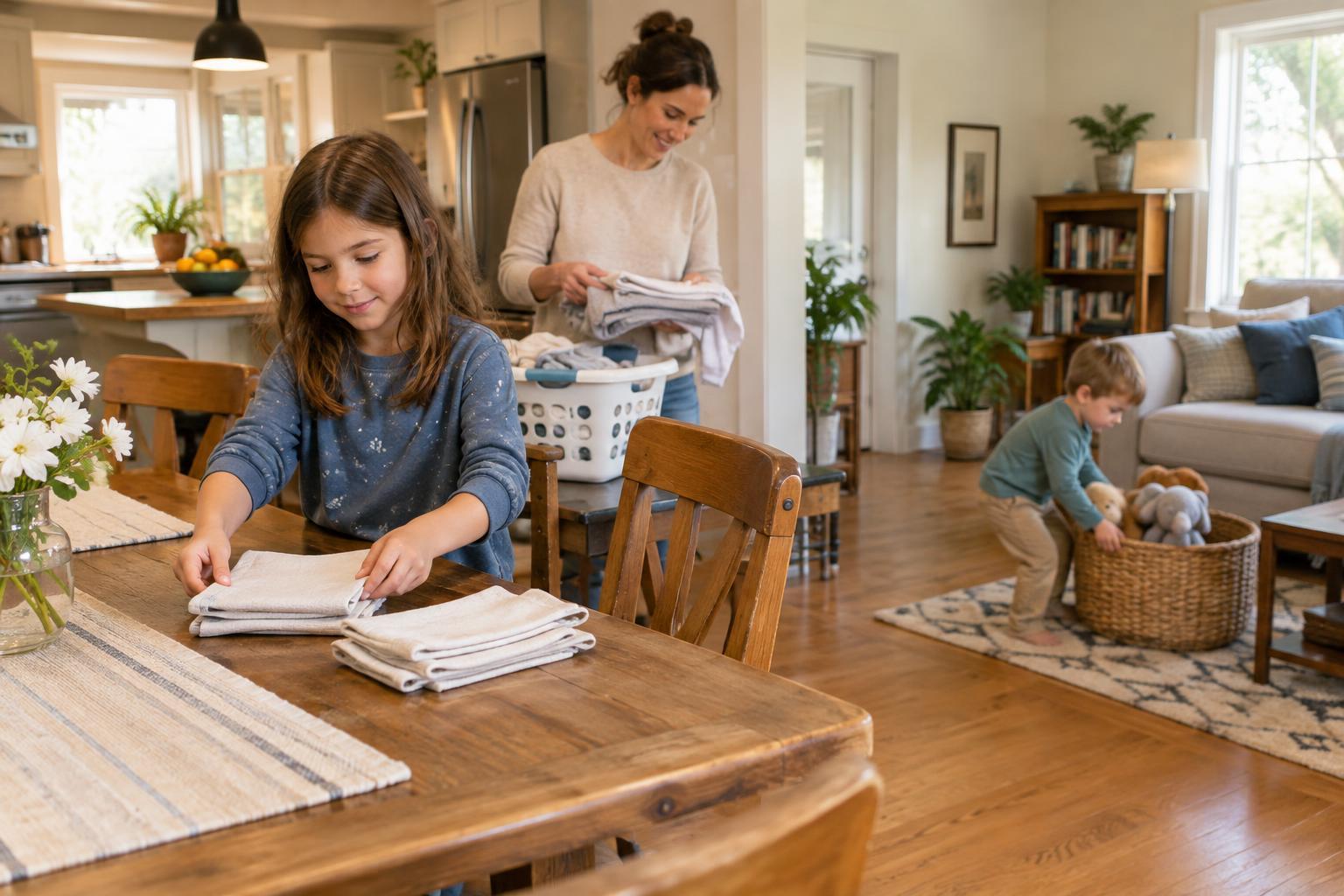
The kitchen offers natural jobs before and after eating. Toddlers can place napkins on the table, carry a plastic cup, or put their own placemat away. Preschoolers may be ready to match spoons to place settings or wipe a small spill with a cloth. Give young children a clear destination for each item so “help set the table” does not become a guessing game.
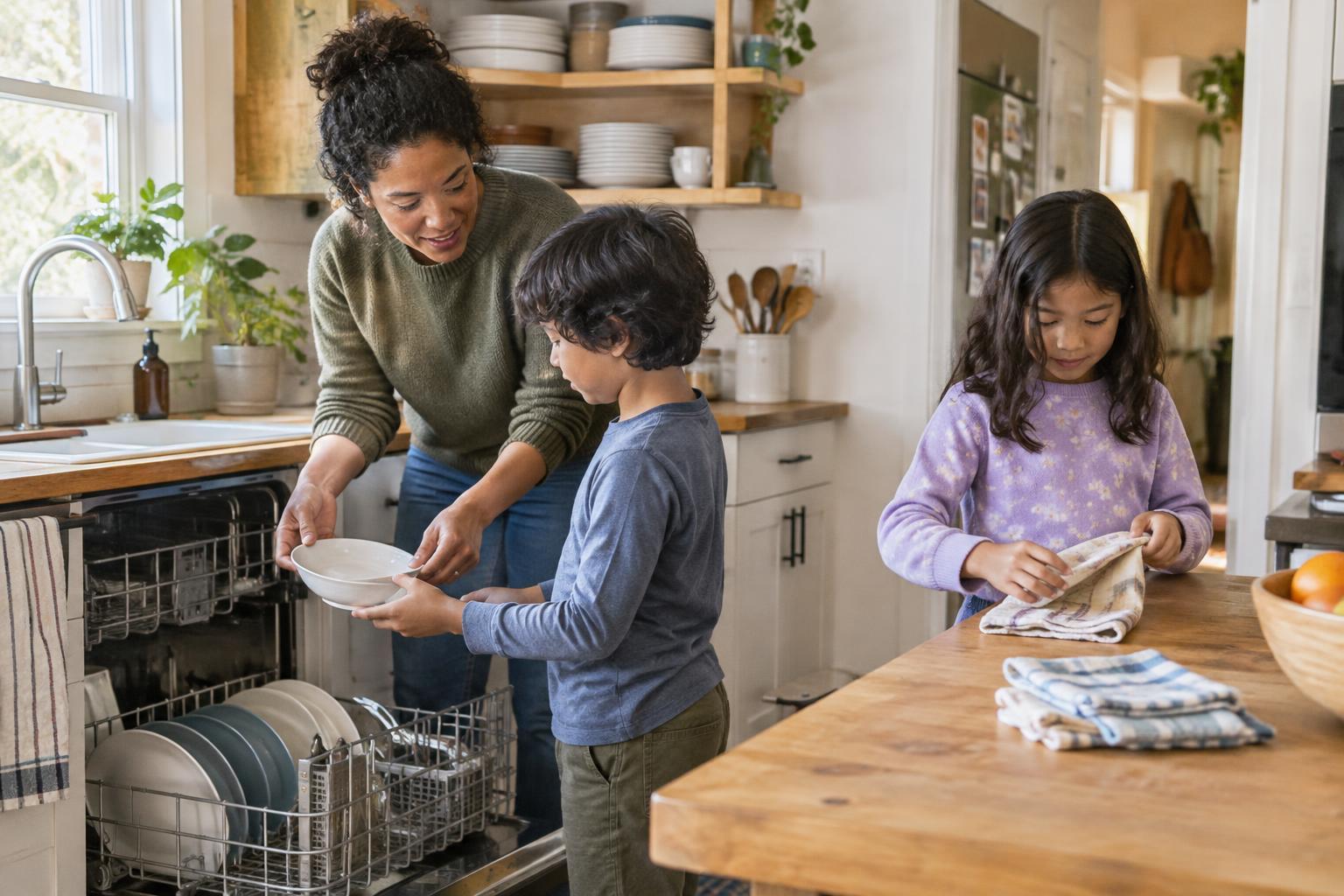
School-age children can take on longer steps, such as clearing their place, sorting clean utensils, or wiping the table with an adult-approved cloth. Teens may be able to prepare a simple snack, load a dishwasher according to household rules, or take responsibility for one part of dinner cleanup. Explain which items need special handling; knives, breakables, hot pans, and cleaning chemicals should not be treated as ordinary chores.
Meal-related jobs work best when they fit the family’s actual rhythm. One child might set out cups while another gathers used napkins. A small, repeatable task is often easier to maintain than a different assignment at every meal.
Living spaces: Make shared areas easy to reset
In a living room or play area, start with jobs that have a visible finish. A toddler can place soft toys in a low bin. A preschooler can return books to a reachable shelf or sort blocks into a container. Pictures on storage bins can help children find the right spot without needing an adult to direct every move.
Older children can straighten cushions, fold throw blankets, collect their belongings, or sweep a small, open area if they can handle the tool comfortably. Teens can manage a fuller room reset or take turns vacuuming, provided they know how to use the equipment safely. Shared spaces are everyone’s responsibility, so avoid making one child the automatic cleaner for other people’s messes.
A brief reset at a predictable time, such as before an evening activity, may feel more manageable than waiting for a large cleanup. Define the result in concrete terms: “Books on the shelf and floor clear enough to walk through” is easier to act on than “Make it tidy.”
Bedrooms and laundry: Practice caring for personal spaces
Bedroom chores can begin with simple habits. Young children can put pajamas in a basket, place a stuffed animal on the bed, or choose which toys to return first. Preschoolers can help pull up a blanket and pair socks from a small pile. These tasks may take longer when children are learning; leave room for practice when the schedule allows.
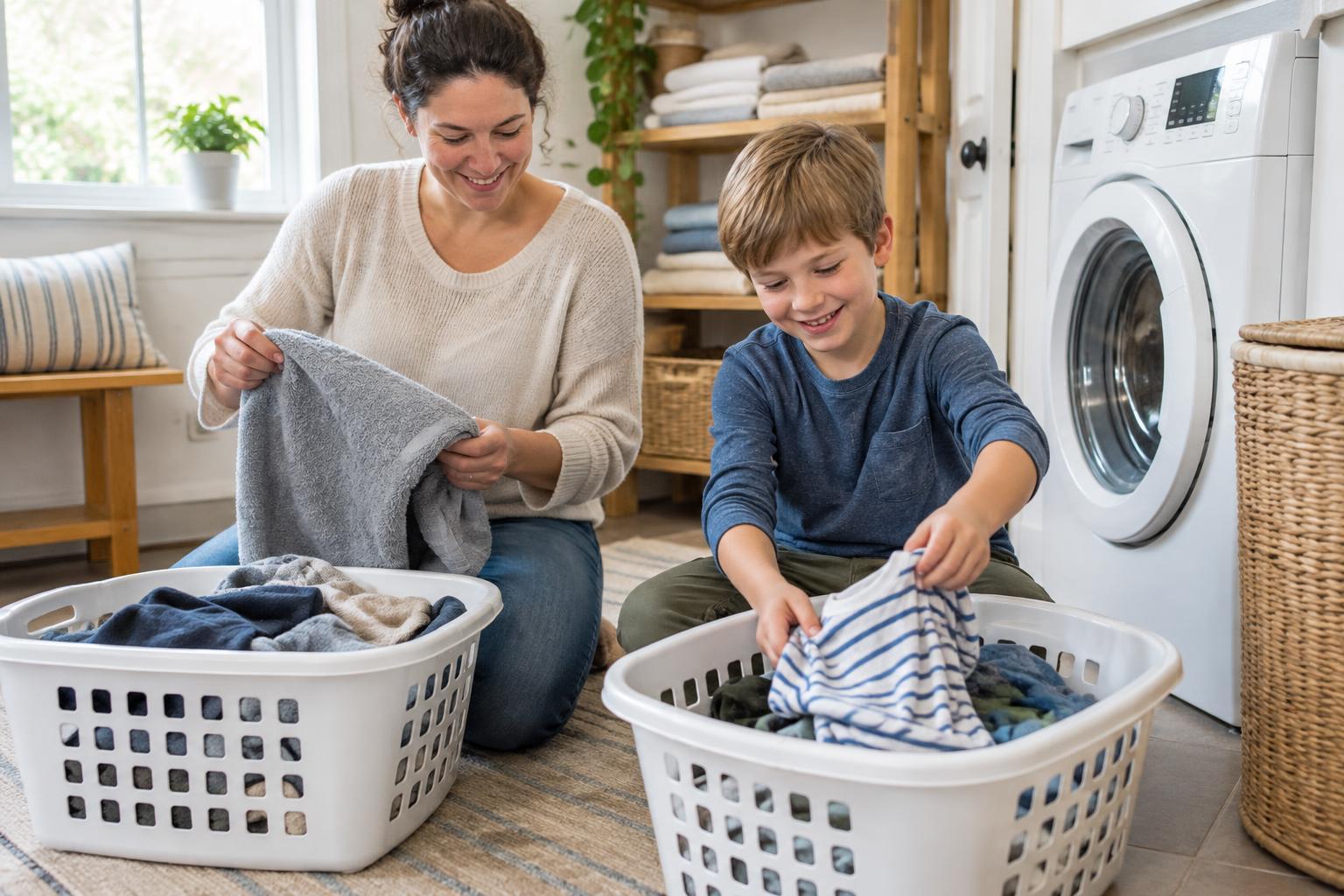
School-age children can put clean clothes in drawers, change a pillowcase with help, or check that dirty laundry reaches the hamper. Teens may be ready to follow the full laundry sequence, from checking clothing labels and sorting to folding and putting clothes away. Teach each step before expecting independent results, and agree on what needs doing daily versus weekly.
A child’s room does not have to meet an adult’s standard to be functional. Focus first on clear walking paths, clothes where they belong, and items that can be found again. Those priorities make the purpose of the work easier to understand.
Bathroom and entryway: Keep jobs small and safe
Bathrooms call for especially clear boundaries. Young children can hang up a towel, place clothes in a hamper, or restock toilet paper rolls with supervision. Older children might wipe a mirror with a suitable cloth or replace empty supplies. Adults should decide who handles disinfectants and other cleaning products, explain which surfaces need particular care, and store supplies securely.
The entryway is a useful place for independent routines. Toddlers can put shoes in a designated spot; preschoolers can hang a lightweight coat on a low hook. School-age children can line up shoes, put away bags, or shake dirt from a small mat outdoors. Teens can take a turn sweeping the area or checking that shared items are ready for the next day.
When a chore is not getting done, consider whether the setup needs to change. A hook may be too high, a bin may be too full, or the instruction may contain too many steps. Adjusting the space and practicing together can help a child contribute without making chores a daily point of conflict.