Start with the space you already have
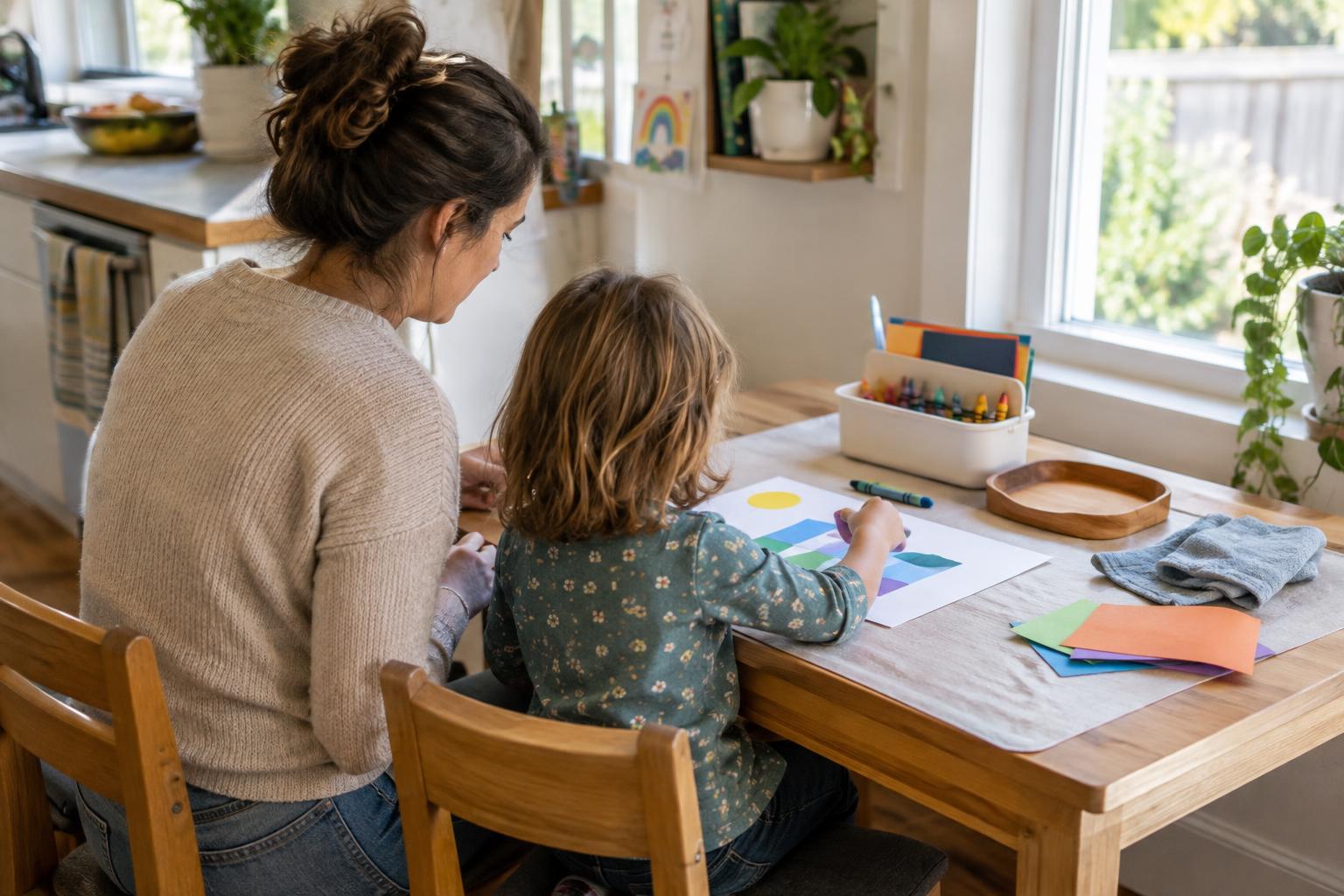
An art area can be one end of a kitchen table, a small desk or a cleared patch of floor. The best spot is one you can prepare quickly and return to everyday use afterward. Look for enough room to spread out paper and supplies, a stable work surface and a nearby place for finished pieces to dry. Easy access to a sink is helpful, but a damp cloth and a small bowl for used brushes can work when the sink is farther away.
Before bringing out materials, decide what needs protection. A wipeable table covering, reusable mat or large tray can catch stray marks and small spills. If children will work on the floor, choose a covering that lies flat rather than one that bunches under their feet. Keep the setup simple: if preparing the space takes longer than the activity, it may be harder to use regularly.
Choose materials that fit the cleanup you can manage
Keep a small group of familiar supplies within reach instead of putting everything out at once. Paper, crayons and washable markers make an easy starting kit. Add glue sticks, paint or collage materials when there is time and space for more cleanup. Check product labels for age guidance and use materials as directed. For younger children who may put objects in their mouths, avoid small loose pieces and offer close supervision with art supplies.
Match the materials to the day, not just the child’s interest. A quick drawing session may suit the half hour before dinner better than a project involving glitter or several open containers. If you want to offer a messier activity, place a limited amount of each material in small containers and keep refills out of reach. Children can still make creative choices without having the whole supply cupboard on the table.
Give every supply and project a place
A portable caddy or shallow box can turn a shared table into an art area in minutes. Store everyday supplies together and keep less frequently used materials separately. Clear containers can help children see what is available; simple picture or word labels can make returning items easier. Put anything that needs adult help, such as scissors or certain adhesives, where an adult can bring it out when appropriate.
Plan for work that is not finished yet. A tray, shelf or designated corner can hold a project while glue dries or a child takes a break. Keep that space separate from the supplies waiting to be put away. For finished art, you might choose a small display spot and a folder for pieces a child wants to keep. Neither needs to hold everything forever; revisiting the collection together can be part of the routine.
Make cleanup part of making art
Set out cleanup tools before starting: a cloth for spills, a place for scraps and a spot for used brushes. When each item has a destination, the end of an activity is less confusing. A predictable sequence might be to put caps on markers, gather reusable supplies, collect scraps, wipe the surface and wash hands. Doing these steps in the same order helps children learn what “finished” means in this space.
Give children jobs that suit their age and ability. A young child may put crayons in a box or drop paper scraps into a bin, while an older child may wipe a tray and check that lids are closed. Spills will still happen, so keep the tone matter-of-fact: pause, clean up what is needed and continue if there is time. The aim is shared care of the space, not a perfectly tidy project.
Adjust the setup as your family uses it
After a few art sessions, notice what causes friction. If paper keeps sliding, try a larger mat or a tray with a raised edge. If supplies pile up, reduce what stays in the caddy. If drying work blocks the table, move the drying spot. Small changes based on how your household actually uses the space are often more useful than buying a complete set of new equipment.
An easy-to-clean art area should make it simpler to say yes to making things, even on an ordinary day. It does not have to stay set up or look like a classroom. A protected surface, a manageable selection of supplies and a cleanup routine are enough to give children room to explore while keeping the home ready for whatever comes next.