Start with a system that fits your week
A family laundry routine does not have to mean washing every day or keeping every basket empty. The useful question is where laundry tends to stall in your home. Are clothes left on bedroom floors, clean items forgotten in the machine, or folded clothes waiting to be put away? Pick one sticking point first. A small change that solves a familiar problem is usually easier to keep than a complete overhaul.
Give worn clothes an obvious destination. A hamper near the place children change can be more useful than one tucked away in a distant room. If your household separates laundry before washing, use only as many containers as everyone can realistically manage. A single hamper and a quick sort at wash time may work better than a complicated set of rules.
Choose a repeatable washing rhythm
Some households prefer a load on most days; others do better with set laundry days. Either approach can work if it leaves enough time to finish the load. Think of washing, drying, and putting away as one cycle, then choose a time when the final step is possible. Starting a load just before a busy stretch may create more work later.
A short reminder can help if clean laundry often stays in the washer. You might set a timer, leave the empty basket where you will see it, or connect moving the load to an existing routine, such as tidying the kitchen. Keep a little flexibility for muddy clothes, spills, and bedding changes. The aim is a rhythm you can return to, not a schedule that never changes.
Give children manageable ways to join in
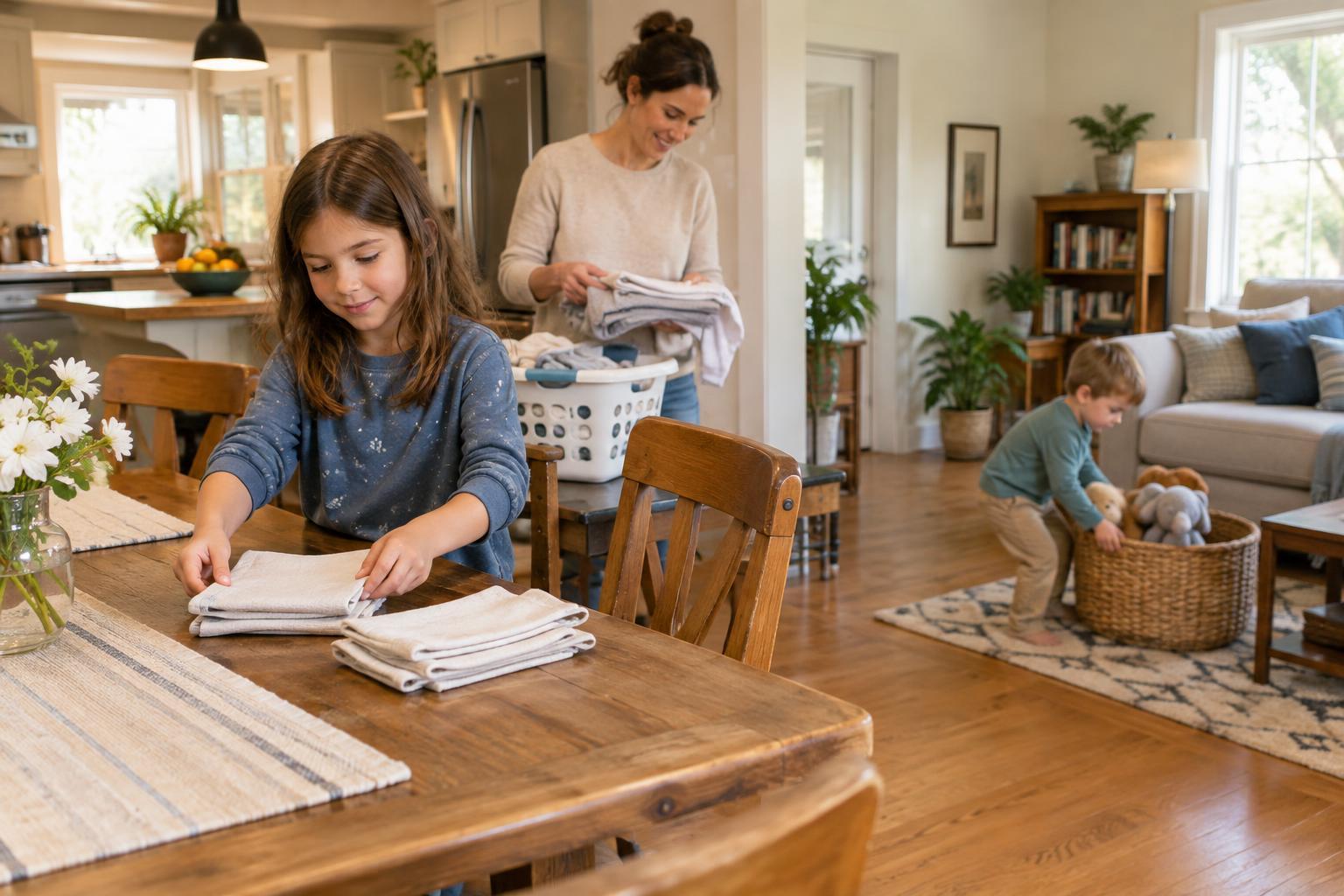
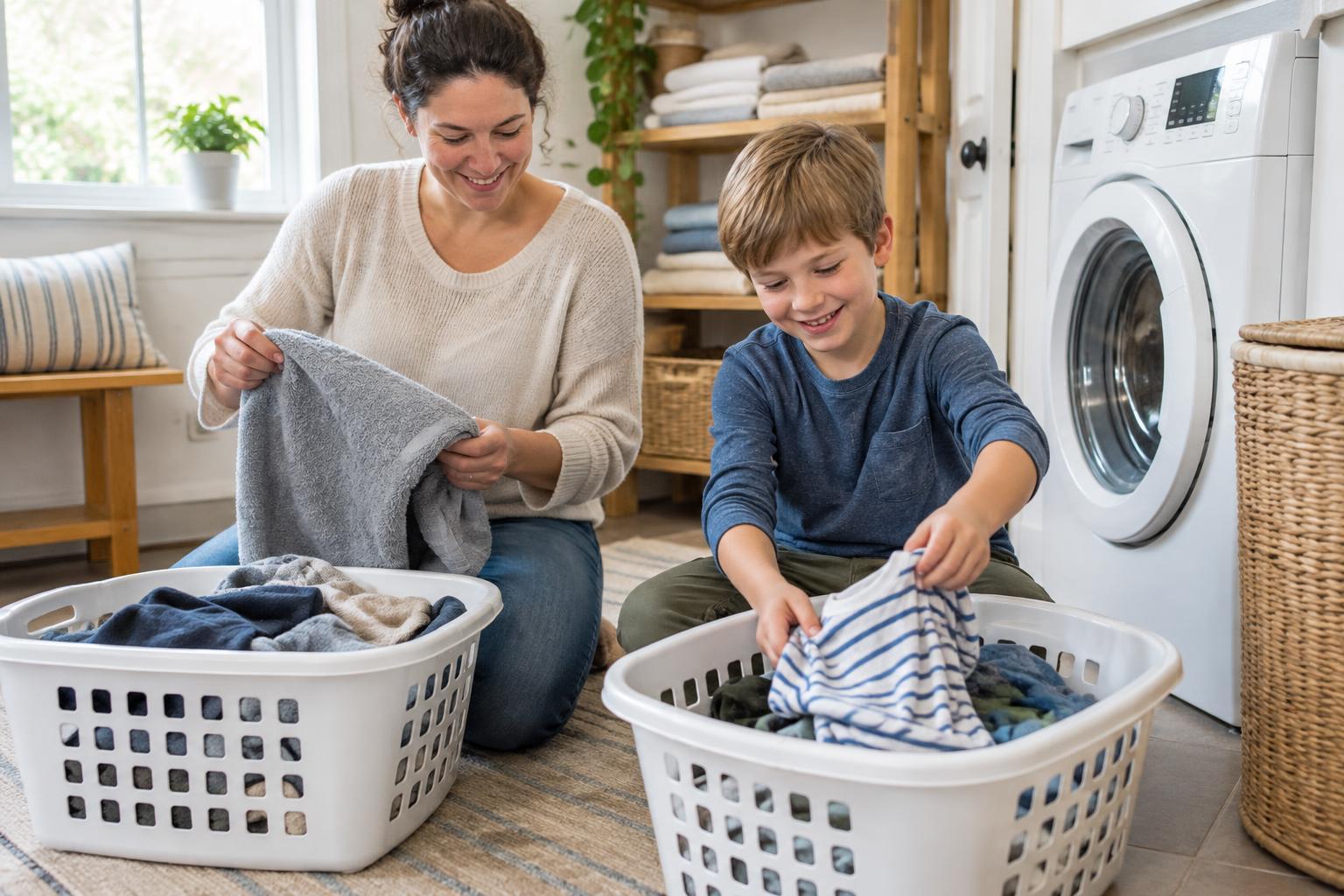
Children can take part without being responsible for the whole job. A young child might place worn clothes in a hamper or match socks beside an adult. An older child might sort their own clothes, carry a light basket, or put folded items into drawers. Show the task once, make its end point clear, and expect that it may take longer while they learn.
Keep participation low-pressure. A child who can sort socks today may not want to do it after a tiring day, and a hurried morning is rarely the best time to teach a new step. If putting clothes away is difficult, make the storage simpler: a labeled drawer, a reachable hook, or a bin for everyday items can be enough. The goal is to make helping possible, not to insist on perfect folds.
Make the laundry area easier to use safely
Keep detergent, stain removers, and other laundry products in their original containers and out of children's reach. Close containers promptly rather than leaving them open while you sort clothes. Children can help with tasks suited to their age, but an adult should handle laundry products and supervise around machines. Check inside a washer or dryer before starting it, and keep machine doors closed when they are not in use.
A clear work surface or a dedicated basket for clean clothes can also reduce mix-ups. If space is limited, choose a folding spot that can be cleared quickly, such as a table or bed. Try to keep clean and worn items in separate places, even if the system is as simple as two baskets. Less searching makes it easier to finish a load.
Lower the effort of the last step
Putting clothes away is often the part that makes laundry feel endless. Consider whether every item needs to be folded. Everyday pajamas, play clothes, or towels may be easy to find in separate drawers or bins without precise stacking. Save more careful folding for items that need it. If family members share a folding session, sorting by person first can make the trip to each room quicker.
Finally, leave room for an imperfect week. A clean basket waiting to be emptied is not a failed system; it is a sign that one step needs a better place in your routine. Notice what repeatedly gets in the way, adjust that step, and keep the parts that already work. An easier laundry routine is one your household can use again next week.