Decide what the reset is for
By the end of the day, toys may have spread across the floor, dishes may be waiting, and tomorrow’s essentials may be hard to find. An end-of-day reset is a short pause to make shared spaces usable again. It is not a promise that the whole home will be clean. Keeping that distinction clear makes the routine easier to start and easier to repeat.
Choose two or three results that would make the next day smoother. You might want a clear path through the living room, a usable kitchen table, or bags and shoes in one place. Start with what matters in your home rather than a room-by-room checklist. On a busy evening, completing those few tasks can still count as a successful reset.
Give the routine a familiar starting point
A routine is easier to remember when it follows something that already happens, such as clearing dinner dishes or getting ready for bedtime. Pick a point when there is enough energy left for a small shared effort. If evenings vary, use an event rather than a fixed clock time: “After dinner, we reset the shared space” is easier to adapt than a schedule that only works on quiet days.
Keep the order simple. For example, return loose items to their homes, clear one surface, then set out what is needed tomorrow. Put the most important task first so it gets done even if the reset ends early. A short closing cue, such as turning off the kitchen light after the table is cleared, can help everyone recognize that the work is finished.
Make it easy for children to participate
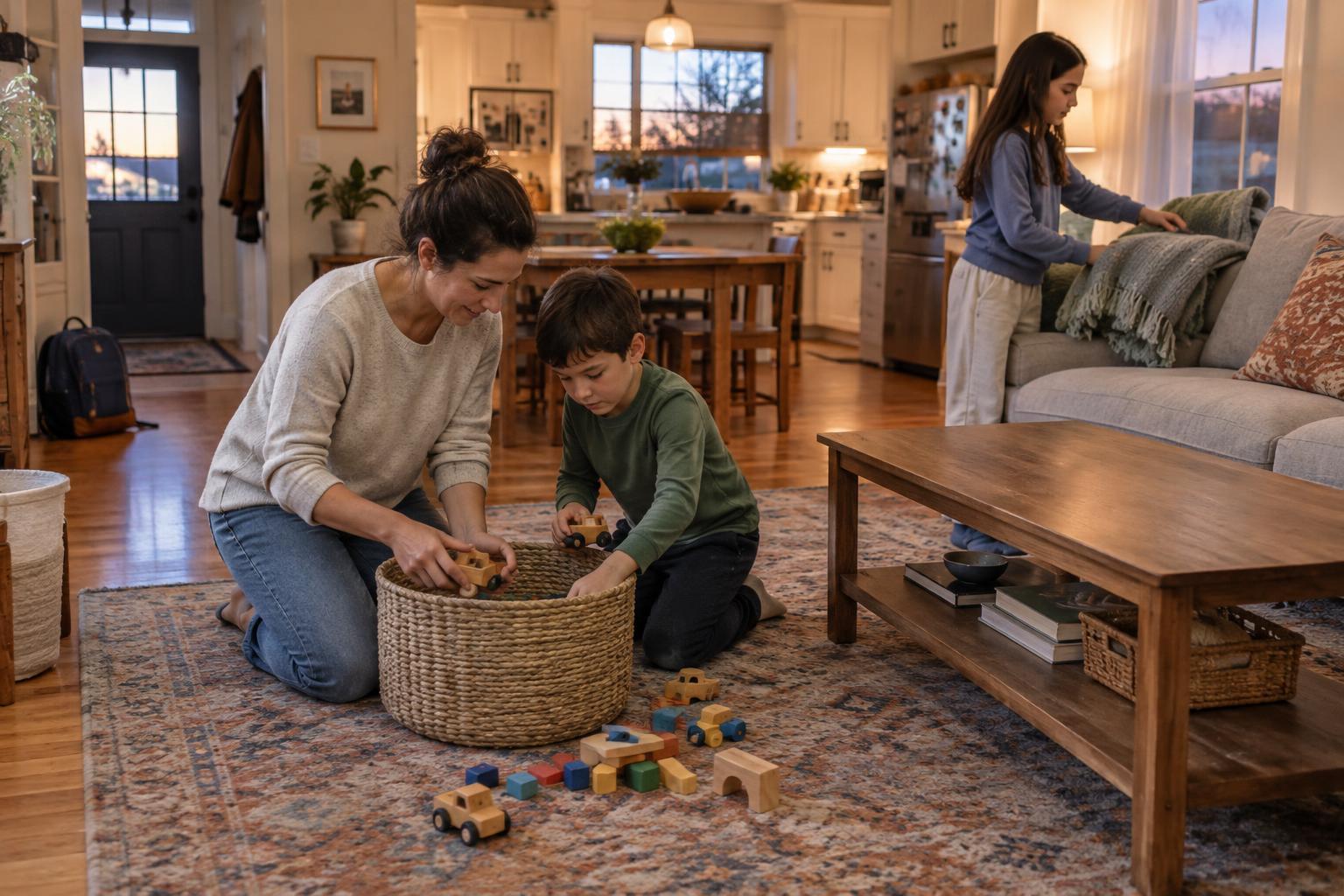
Children can help when the task is specific and suited to what they can manage. A young child might place soft toys in a low basket with an adult nearby. An older child might put books on a shelf or check that their school items are together. Rather than saying “clean your room,” try a small request with a visible finish: “Please put the blocks in this bin.”
Participation does not need to look the same for every family member. Adults can handle sharp objects, cleaning products and other tasks that require care, while children take on manageable parts of the shared work. If a child is tired or upset, working alongside them or offering one smaller job may be more useful than insisting on the full plan. The aim is to build a familiar habit, not to make every evening a test.
Set up the space to support the habit
A reset takes less effort when everyday items have obvious places to go. Open baskets can hold frequently used toys, a tray can collect papers that need attention, and a spot near the door can hold items needed for the next outing. These do not need to be new purchases. A container or shelf you already own may work well enough if everyone knows what belongs there.
Notice where clutter repeatedly gathers. If shoes land beside the door rather than in a distant closet, a nearby shoe spot may be more practical than repeated reminders. Keep walkways clear and store small objects, cords, cleaning supplies and other hazards according to the ages of children in the home. A useful system should fit the people using it, not depend on perfect follow-through.
Keep a lighter version for harder days
Some evenings leave little time or patience for a shared reset. Decide in advance what the smallest useful version looks like. It might be putting dishes in the sink, moving toys out of the walking path and placing tomorrow’s bags by the door. Having this fallback makes it possible to maintain the routine without treating an unfinished list as a failure.
After trying the reset for a while, ask what helped and what got in the way. Perhaps the basket is too far from where play happens, or the routine starts too late. Adjust one thing at a time and let family members suggest changes. A good end-of-day reset is not the most thorough one; it is a small, workable practice that helps your household begin again tomorrow.