Give the routine a clear beginning and end
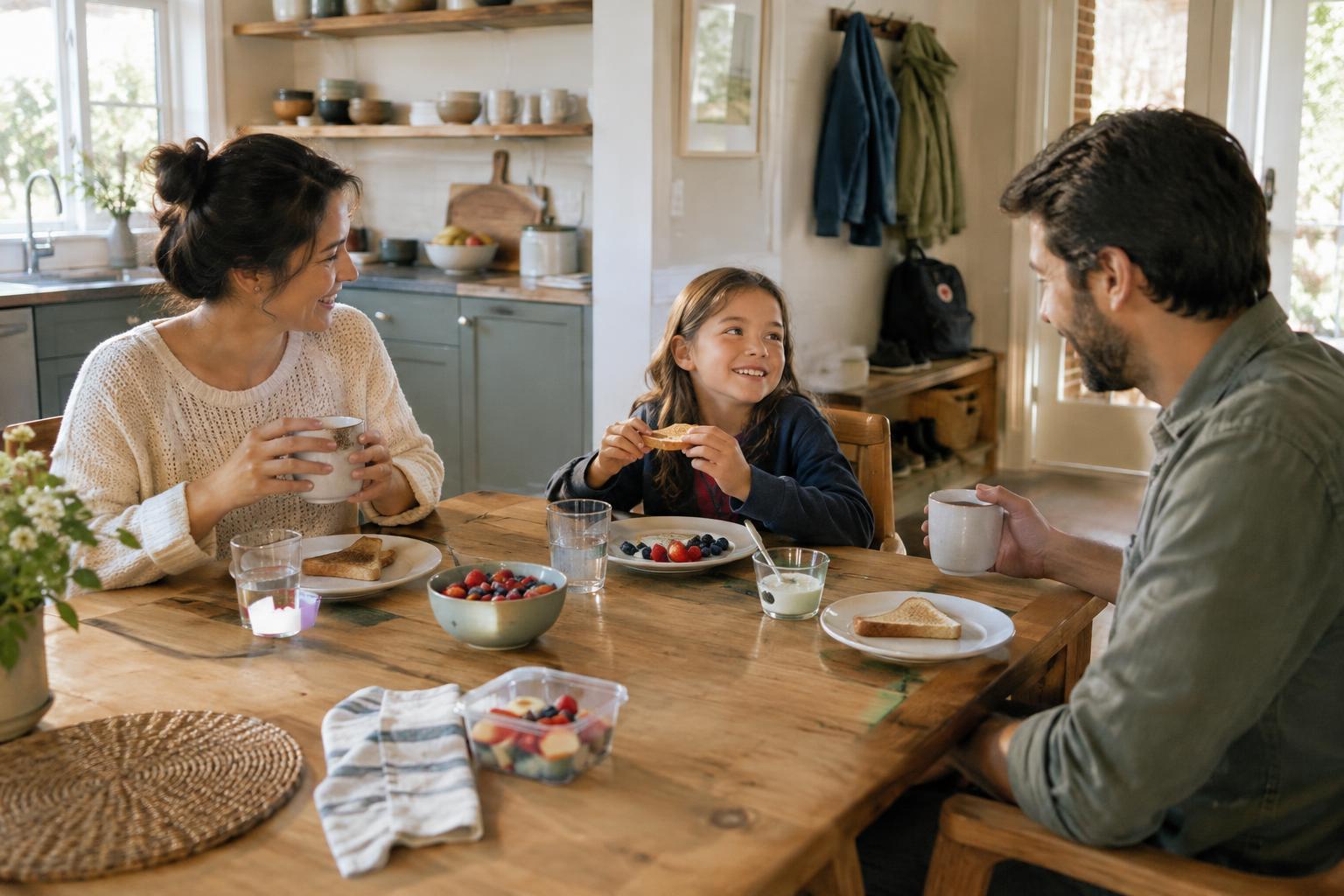
Meals often involve more than sitting down to eat. Someone prepares the space, everyone arrives with different levels of energy, and dishes remain when the food is gone. A short, predictable routine can make those transitions easier. Try thinking of it as three steps: wash hands, enjoy the meal, and help reset the space. The steps can stay the same even when the menu, schedule or people at the table change.
Choose a cue your family can use most days, such as “It’s time to wash hands before we eat.” Afterward, use another familiar cue: “Let’s clear our places.” A cue works best when it is calm and specific. Children may still need reminders, especially when they are excited, tired or eager to get back to playing. The aim is not a perfect sequence every time; it is to make the next step easy to recognize.
Make handwashing easy to reach and remember
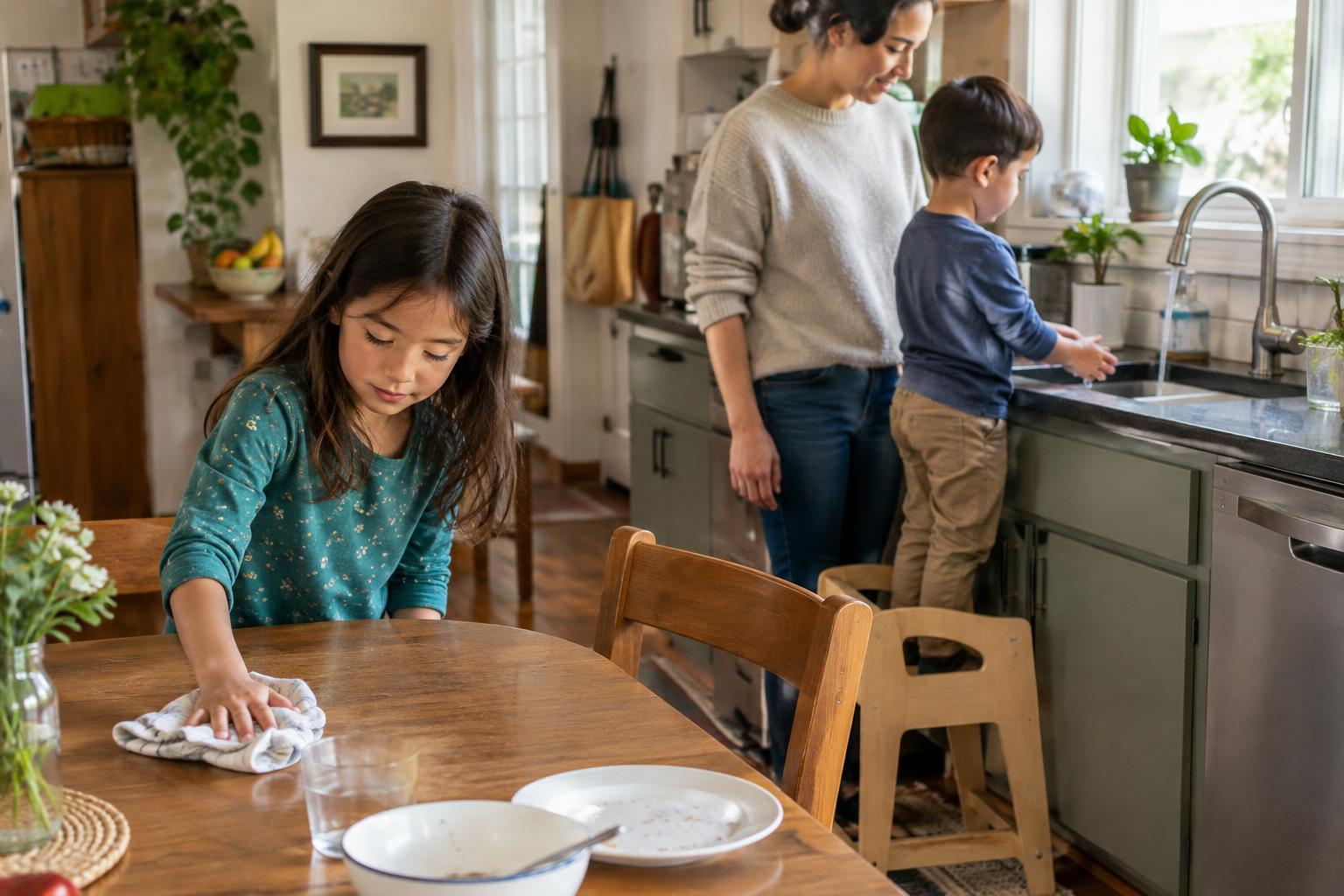
Before meals, pause for handwashing rather than trying to squeeze it in while everyone is already taking a seat. Keep soap available and, where practical, place a sturdy step stool at the sink for a child who cannot reach comfortably. A nearby towel and a clear place for used towels can prevent the routine from ending with a search for supplies. Young children need an adult close by to help with the tap, soap and drying as needed.
Talk through the actions in simple terms: wet hands, use soap, rub across the fronts and backs of hands and between fingers, rinse, then dry. For children learning the sequence, saying the steps aloud can be more helpful than repeating “Wash properly.” You can model it alongside them without turning every meal into a lesson. If a child gets distracted, point to the next action rather than starting the entire instruction again.
Handwashing does not need to become a source of tension at the table. If a child resists, offer a small choice within the routine, such as which towel to use or whether to walk or hop to the sink. The choice gives them some ownership while keeping the expectation clear.
Give each child a manageable cleanup job
Cleanup is easier to learn when “help” means a specific, achievable task. A toddler might carry an unbreakable napkin to the bin or place a spoon in a collection spot with close supervision. An older child might bring their plate to the counter, wipe their eating area or put away a washable placemat. Choose jobs based on the child’s abilities and the objects involved, not only their age. Adults should handle hot dishes, sharp utensils, cleaning products and anything too heavy or awkward to carry safely.
A consistent landing place helps: dishes go on one part of the counter, food scraps go in a designated container, and cloths return to a particular hook or basket. Show the steps together at first. For example, demonstrate how to hold a plate level and how to wipe crumbs toward the middle of a cloth. When a child’s effort leaves a few crumbs behind, acknowledge the help and finish the job together. Participation is more likely to become familiar when the task feels possible.
Keep the routine flexible for real family meals
Not every meal calls for the same amount of cleanup. Breakfast before a busy morning may mean clearing plates and wiping one surface; a relaxed weekend meal may leave room for children to help sort cutlery or put placemats away. Decide what the essential steps are for your household and treat extra jobs as optional. A small routine that happens often may be more useful than a long checklist that is hard to repeat.
Children also respond differently from day to day. If someone is hungry, overwhelmed or still learning, an adult can do more of the work while keeping the sequence visible: “I’ll carry the plate today; you can put your cup on the counter.” Shared meals with guests, meals away from home and occasional spills may call for adjustments. You can return to the usual pattern at the next meal without treating a change as a setback.
Use the moments to build cooperation
Handwashing and cleanup are practical tasks, but they are also chances to practice working together. Invite children to notice what needs doing: “What’s left on our table?” Then offer a task they can complete. Clear, neutral language keeps the focus on the job instead of on blame for a mess. Spills can be met with a cloth and a plan rather than a long discussion during dinner.
It helps when adults take part in the routine too. Seeing someone wash before eating, carry a dish away and wipe the table makes these actions part of family life rather than a rule only for children. Over time, you can change the jobs as children gain confidence. The goal is a welcoming meal space that everyone helps care for, one ordinary meal at a time.