Keep the pattern, not the exact clock
On weekdays, school, childcare, work, and travel often decide when everyone eats. A weekend might start later or include an outing that shifts lunch. The two schedules do not have to match minute for minute. What helps is a recognizable pattern: opportunities for meals and snacks across the day, with enough notice that children know what is coming next. For many families, “breakfast after we get dressed” is a more useful anchor than a fixed time.
If plans change, a simple explanation can preserve that sense of order. You might say, “We’re having lunch after the park, so we’ll bring a snack.” This gives children a picture of the day without promising a precise schedule. Younger children may benefit from shorter, concrete reminders; older children can help think through when and where the family will eat. The aim is predictability that can travel with you, not a weekend ruled by the weekday clock.
Let the setting and expectations feel familiar
Meals can look different on Saturday, but a few shared habits can stay in place. Washing hands before eating, sitting somewhere suitable for food, and making space to talk are simple examples. A picnic blanket can serve the same purpose as the kitchen table: it marks a pause in the day to eat together. If a meal is especially rushed, keeping even one familiar step may make the transition easier.
It also helps to keep expectations clear and age-aware. A toddler may only manage a short time at the table, while an older child may be ready to help set it or clear their place. Instead of adding weekend-only rules in the moment, choose a few household expectations that work in both settings. Children can then spend less effort guessing what is allowed and more time taking part in the meal.
Keep food choices flexible without making them a surprise
Weekends often bring different foods: a shared breakfast project, a meal with relatives, or lunch away from home. Variety can be part of the pleasure. If children find new settings or foods unfamiliar, a recognizable item alongside something different can make the meal feel less abrupt. You can describe what is available in straightforward terms and let the meal be a chance to explore, rather than a test of whether anyone eats a particular dish.
The weekday habit worth carrying over is calm communication about food. Adults can plan what is offered and when the next eating opportunity will be; children can say what they notice or prefer without needing to turn every meal into a negotiation. This does not mean every request must be granted. A clear response such as, “That isn’t on the menu today; we can put it on our ideas list,” acknowledges a request while keeping the plan understandable.
Prepare for the gaps that outings create
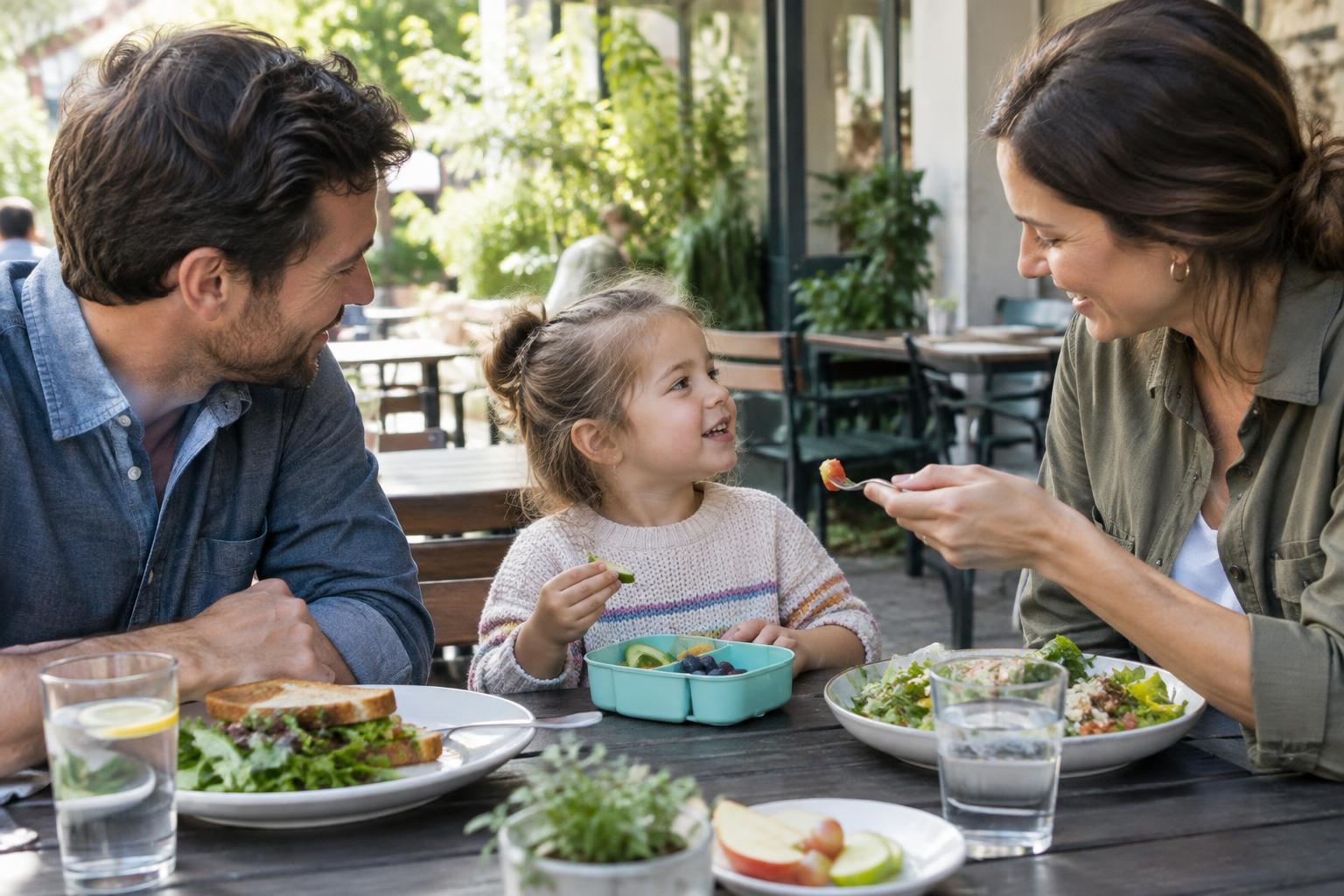
Weekend activities can make it easy to lose track of the usual food routine. Before heading out, consider when the next meal is likely to happen and whether bringing a familiar snack and water would make the plan simpler. For a long trip, it may help to decide where the family can take a comfortable break rather than expecting children to eat while moving from one activity to the next. Pack and serve food in ways that suit each child’s age and your usual mealtime supervision.
A little preparation also reduces last-minute decisions for adults. You do not need a detailed menu for every hour: knowing the next likely chance to eat may be enough. If the day takes an unexpected turn, tell children the revised plan in plain language. “The café is busy, so we’ll eat what we brought and have dinner at home” makes a change easier to follow than an unexplained delay.
Make room for rest and connection
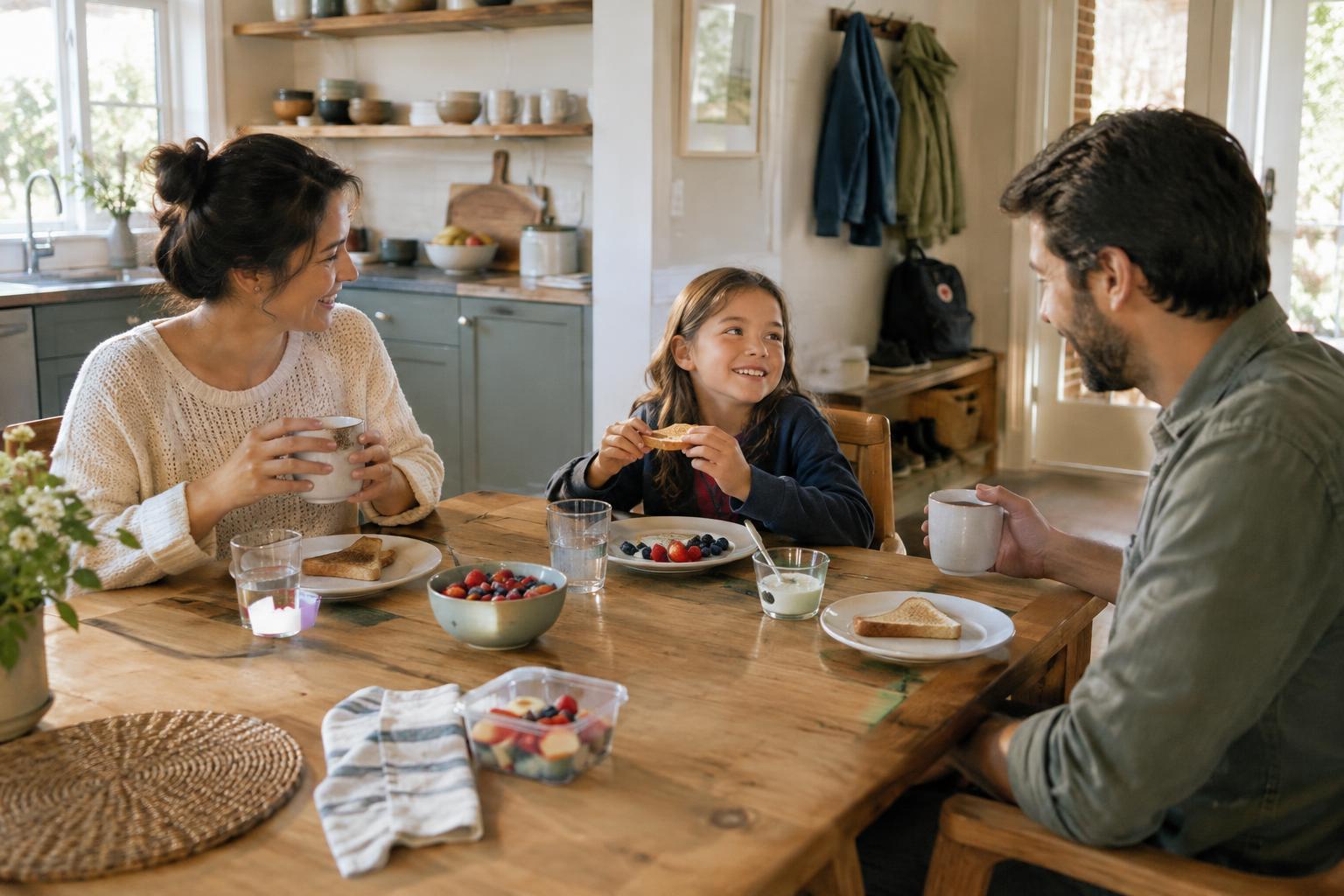
Some weekend meals take longer because everyone has more time; others happen between visits or activities. Neither is a failure of routine. A shared breakfast conversation, letting a child choose between two places to sit, or inviting them to help wash fruit can make a meal feel connected to family life. Children often enjoy having a small, manageable role, and the task can grow with their abilities.
When planning the next weekend, notice which anchors genuinely helped your household. Perhaps a familiar breakfast sequence made mornings smoother, or a packed snack helped an outing feel less rushed. Keep those useful pieces and let the rest vary. Consistency is not repeating the same menu or schedule seven days a week. It is giving children a dependable framework while leaving room for the family to enjoy a different pace.