Think of a shared menu as a starting point
A family menu can give the day a useful rhythm: someone decides what is available, ingredients are prepared, and everyone has a chance to sit down together. It need not require every person to enjoy every part of every meal. Children, like adults, may have favorite flavors, textures and combinations. Making room for those preferences can turn a menu from a fixed set of rules into a plan the household can actually use.
Start by noticing the difference between a preference and a request for an entirely separate meal. A child who dislikes sauce mixed into pasta may be content with the same pasta and sauce served side by side. Someone who prefers crunchy vegetables may eat part of a shared dish before the vegetables are cooked. These adjustments use much of the same food and preparation, while leaving room for individual tastes.
Offer choices within a manageable plan
Choices are easiest to offer when they have clear boundaries. Instead of asking, “What does everyone want for dinner?” try asking whether the family should have rice or potatoes alongside a planned dish, or which of two vegetables to prepare. The adults can keep responsibility for the overall plan while children contribute to parts of it. This avoids making one child’s answer a promise the whole family must follow.
The size of a choice can grow with a child’s age and interest. A younger child might choose between two familiar toppings or help place items on the table. An older child might pick one meal for the weekly plan, check what ingredients are already at home, or help turn leftovers into lunch. Participation can be an invitation rather than a requirement; some days, choosing between options is enough.
Build flexibility into familiar meals
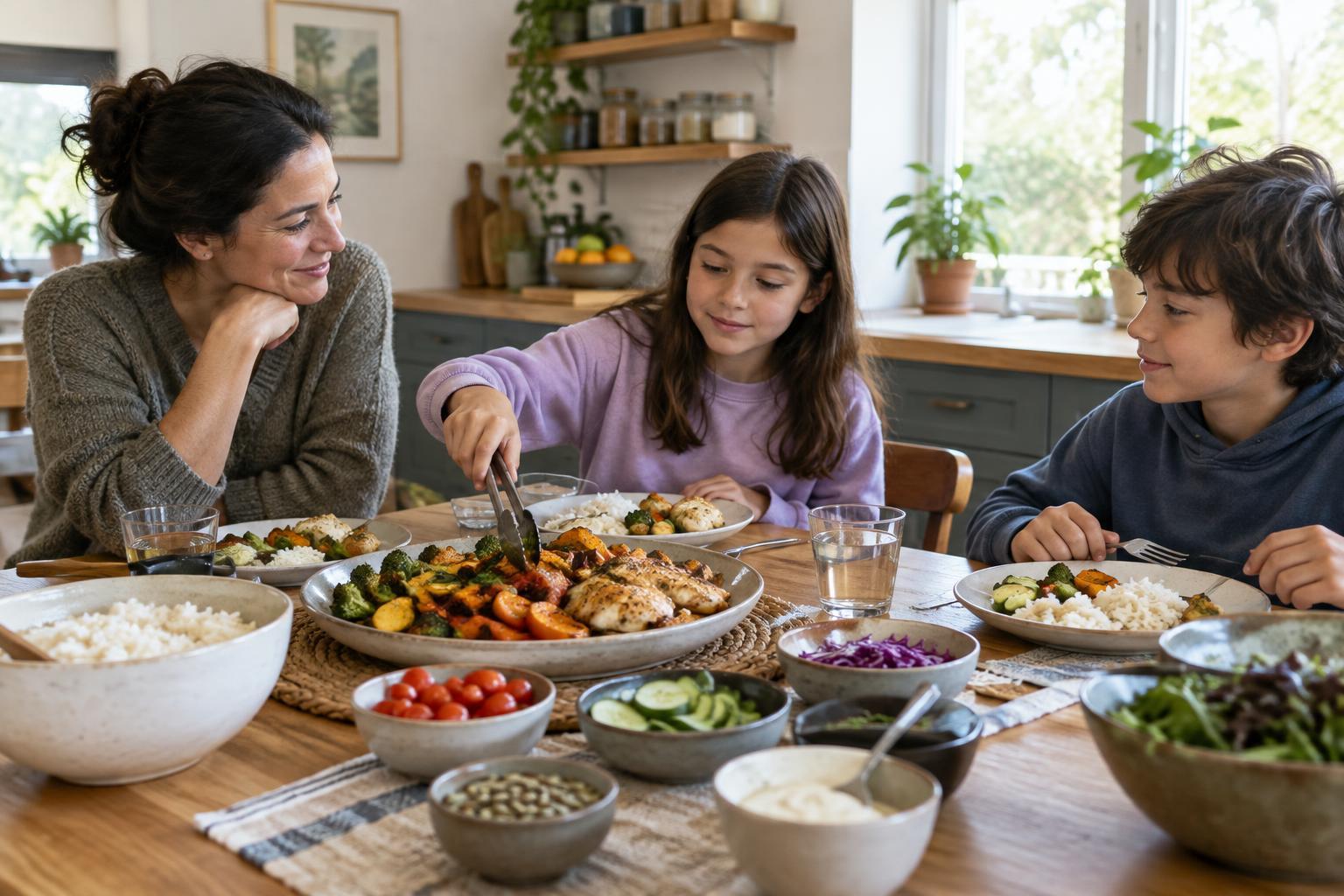
Meals with parts that can be assembled at the table often make different preferences easier to accommodate. A bowl meal might include a base, a few toppings and a sauce on the side. Sandwiches, wraps and simple plates of shared components can work in a similar way. Everyone draws from the same set of foods, but each plate can look different. This is especially useful when family members prefer ingredients separate rather than mixed.
Not every dinner needs to be assembled piece by piece. A familiar main dish can be served with one or two flexible sides, such as fruit, bread or vegetables prepared in a way the family already likes. Keeping some flavors optional, instead of stirring everything together, may help too. The aim is not to create a guaranteed favorite every night. It is to make small, repeatable adjustments that fit the time, budget and energy available.
Listen without turning dinner into a debate
Children’s comments about food can be useful information, even when their words are blunt. “I don’t like this” might mean a dish tastes unfamiliar, the texture feels unpleasant, or the ingredients are touching. A calm question such as “Is there a part you would change next time?” can reveal more than a long discussion at the table. It is also reasonable to leave that conversation for another moment if everyone is tired.
Families can acknowledge a preference without redesigning the meal on the spot. You might say that the sauce is already mixed in today, but you can set some aside next time. If a child helped choose a dish and then changes their mind, that can be treated as ordinary feedback rather than a broken agreement. Keeping the conversation matter-of-fact makes space for honest opinions without placing pressure on anyone to praise, finish or reject a particular food.
Keep the plan open to change
A short menu conversation outside mealtime can help preferences shape future meals. Ask each person for a meal they enjoy, a food they would like served differently, and a new idea they are curious about. Look for patterns rather than trying to satisfy every request in one week. If one child likes a dish and another does not, it can still appear on the menu, perhaps with a familiar component available alongside it.
Preferences may shift over time, and a busy week may leave little room for customization. A useful family menu is one that can absorb both realities. Keep a few dependable meals in rotation, try modest changes when practical, and revisit what is working. Children do not need control over every meal to know their views matter. They can see it in the small ways the household listens, adapts and continues to share the table.