Two ways to serve the same meal
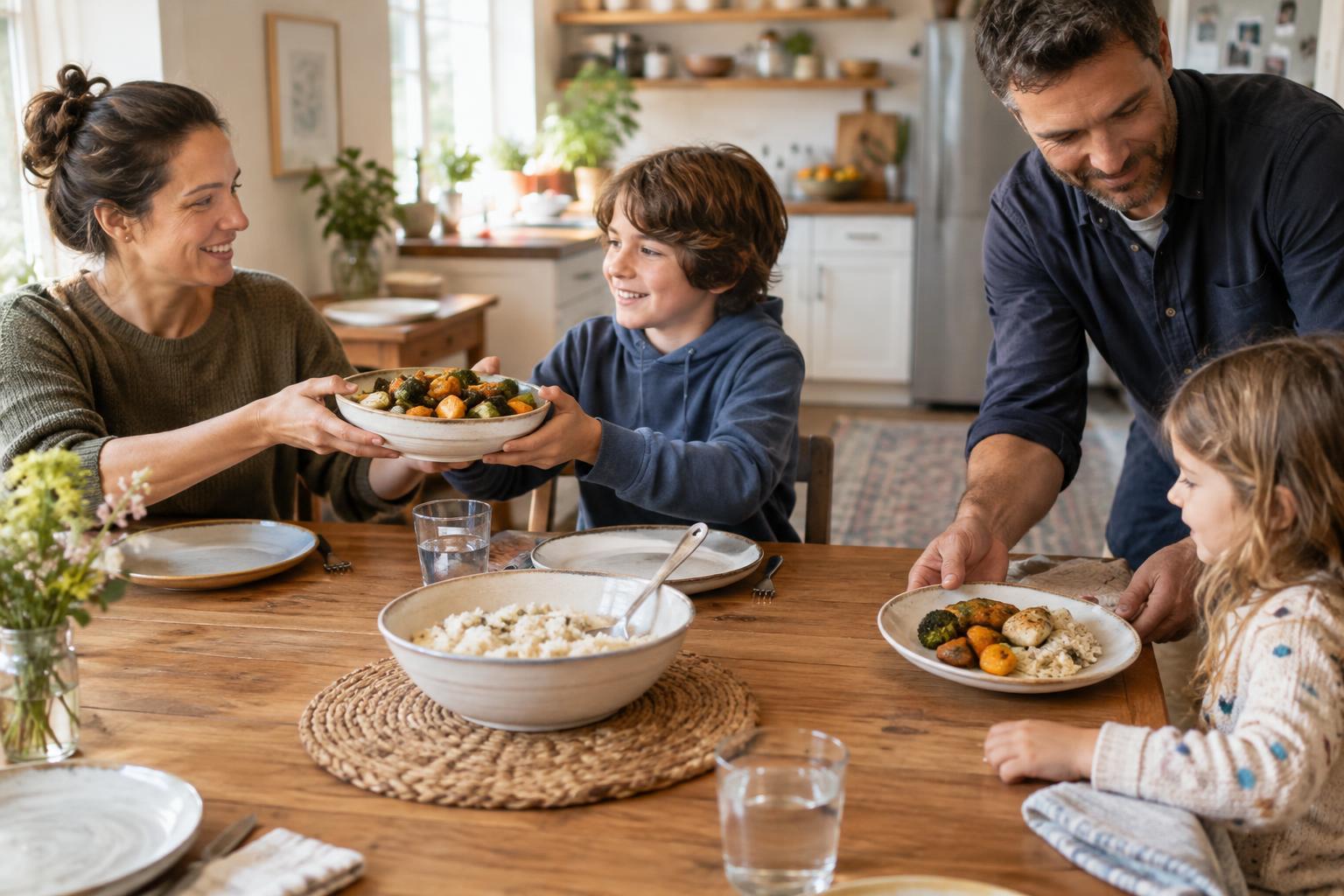
In a family-style meal, food arrives at the table in shared dishes, and each person serves themselves or gets help serving. With a pre-plated meal, someone puts food on individual plates before everyone sits down. Neither method makes a meal more meaningful on its own. The better fit is the one that lets your household eat together with a manageable amount of work.
Start by noticing what happens at your table now. Does passing bowls invite conversation, or does it leave everyone waiting? Does plating in the kitchen make dinner calmer, or do you spend the first few minutes getting up for changes? The answers may differ between a relaxed weekend lunch and a rushed weekday dinner. You do not need one permanent rule for every meal.
What family-style serving can offer
Shared dishes give children a visible role in the meal. A child might choose between two vegetables, use a serving spoon, or pass a bowl to someone else. With patient help, these small jobs offer practice in coordination and everyday table manners. They can also create easy conversation: “Would you like the rice?” is a simpler opening than a question that demands a long answer.
Family-style serving does not mean every child must manage every dish independently. An adult can handle a hot pan or a heavy bowl while a younger child chooses from food that has already been placed within reach. If the table is crowded, keep some dishes on a nearby counter and bring them over as needed. Expect an occasional spill, and make cleanup an ordinary part of the routine rather than a reason to abandon the approach.
When pre-plating makes things easier
Pre-plating can reduce the number of bowls, utensils, and decisions on a small table. It can be especially useful when one adult is serving several young children, when a dish is awkward to pass, or when dinner needs to begin promptly. Setting out plates before calling everyone to the table may give the meal a quieter start.
A prepared plate can still leave room for choice. You might ask a child whether they want a small or larger spoonful of a familiar side, or leave one component separate for them to add at the table. If someone asks for more, keeping extra food available avoids treating the first plate as a final decision. The goal is not to make every plate identical; it is to choose a serving process that works for the people eating.
Match the method to the moment
Think about ages and abilities, available space, and the meal itself. Shared dishes may work well for foods that are easy to scoop or pick up. Pre-plating may be simpler for soups, very hot food, or meals with several messy parts. Young children can take part in either approach: they might carry napkins to the table, choose between two sides, or help place a cool, manageable item on their plate.
It is also worth considering the work after dinner. Family-style serving may leave extra dishes to wash, while pre-plating can mean more time assembling plates in the kitchen. Neither is automatically faster. If evenings feel difficult, try changing just one part of the routine for a few meals. Keep what helps, and let go of what adds unnecessary effort.
Try a flexible middle ground
Many tables work best with a mix. An adult could plate the main dish while putting fruit or a side in a shared bowl. Or everyone could serve themselves from a few dishes on the counter before sitting down. This preserves some choice without asking people to pass every component around a busy table.
Whichever method you use, a predictable rhythm can matter more than the serving format: gather what you need, sit down, make space for requests, and clear up together in age-appropriate ways. On a day with more time, you might invite children to help serve. On a tired evening, ready-made plates might be the kindest option for everyone. Your table can change with your family without losing the pleasure of eating together.