Start with an invitation, not an assignment
Helping with a meal does not have to mean making a whole dish. A child might carry napkins to the table, tear lettuce or choose between two vegetables to wash. Small jobs let children take part in a familiar routine and see how a meal comes together. They also create natural moments to name ingredients, notice textures and talk about what the family is doing.
Choose a task that fits the child in front of you rather than relying on age alone. Interest, coordination and attention can vary from day to day. Explain the job in one or two steps, show what you mean, then leave room for the child to try. If they would rather watch, that counts as joining in too. The goal is a comfortable shared routine, not a perfect result or a promise that they will eat what they helped make.
For younger children, keep the job short and hands-on
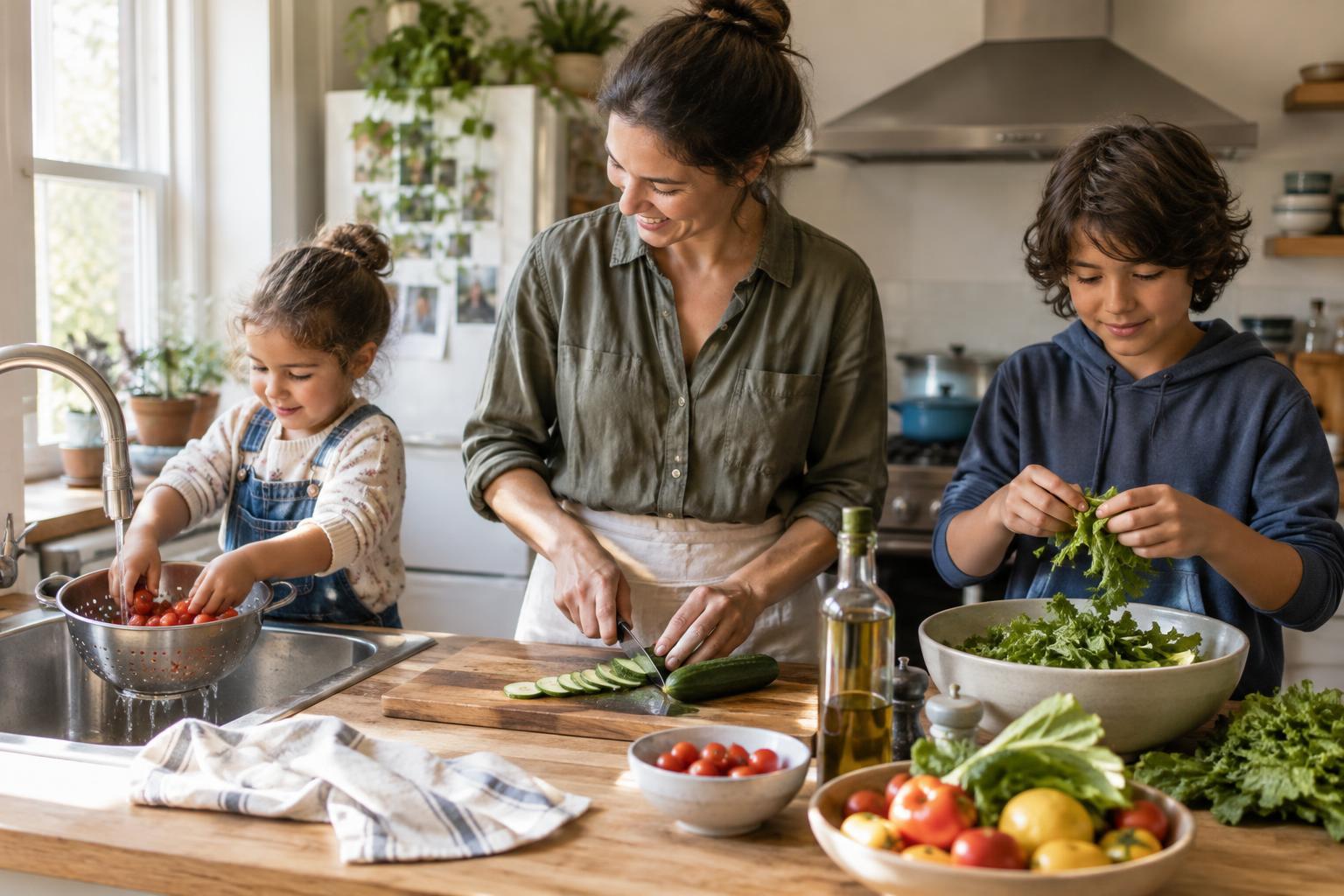
Very young children can participate from a safe spot near the preparation area. A child who is not ready to handle ingredients may enjoy naming foods as you unpack them or placing a spoon on the table. When they can follow a simple direction with close supervision, they might rinse produce in a bowl, tear soft leaves or add a premeasured ingredient to a mixing bowl. Expect spills, offer a towel and plan for the job to take longer than it would on your own.
Keep hot pans, sharp tools and small items that could pose a choking risk out of reach. Check that a step stool is stable if one is used, and stay beside a child working at a counter. Handwashing before handling food and after touching raw ingredients can become part of the routine. Give younger helpers a clear place to work so they do not need to reach across knives, appliances or cooking surfaces.
Give growing helpers a little more ownership
As children become more comfortable following several steps, they can take on jobs such as measuring dry ingredients, mixing a cool batter, assembling sandwiches or arranging vegetables on a tray before an adult puts it in the oven. Reading a simple recipe together offers a reason to practice sequencing: What comes first? What needs to be ready before we mix? You can divide a task so the child handles the cool, low-risk parts while an adult manages heat and sharper tools.
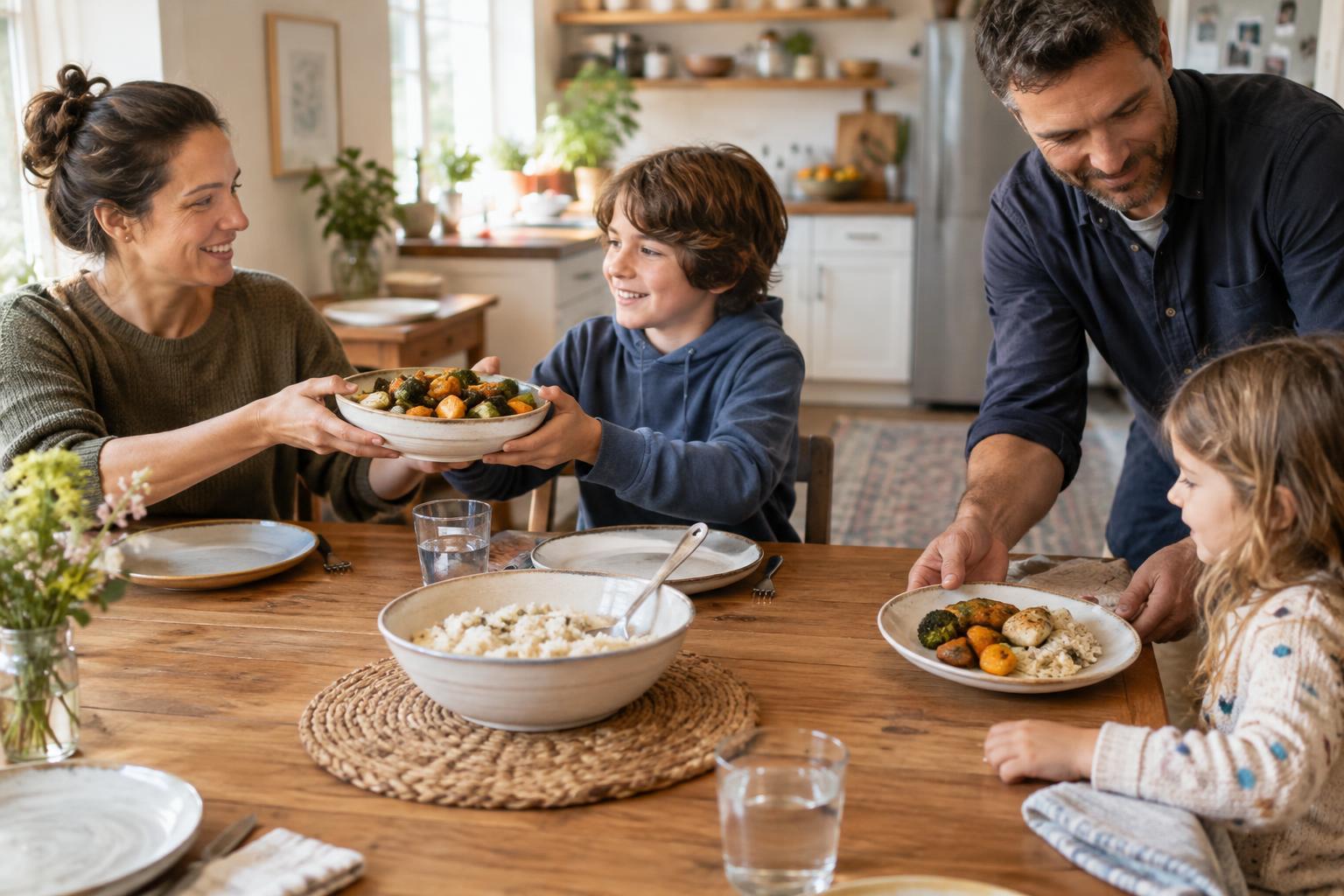
Offer limited choices that make the job feel meaningful without turning dinner into a negotiation. A child could choose which of two bowls to use, decide how to arrange fruit on a shared plate or pick a topping to serve on the side. If a step goes wrong, try describing what happened and finding a fix together. A lopsided sandwich or unevenly mixed dressing can still be useful practice.
Let older children practice planning as well as preparing
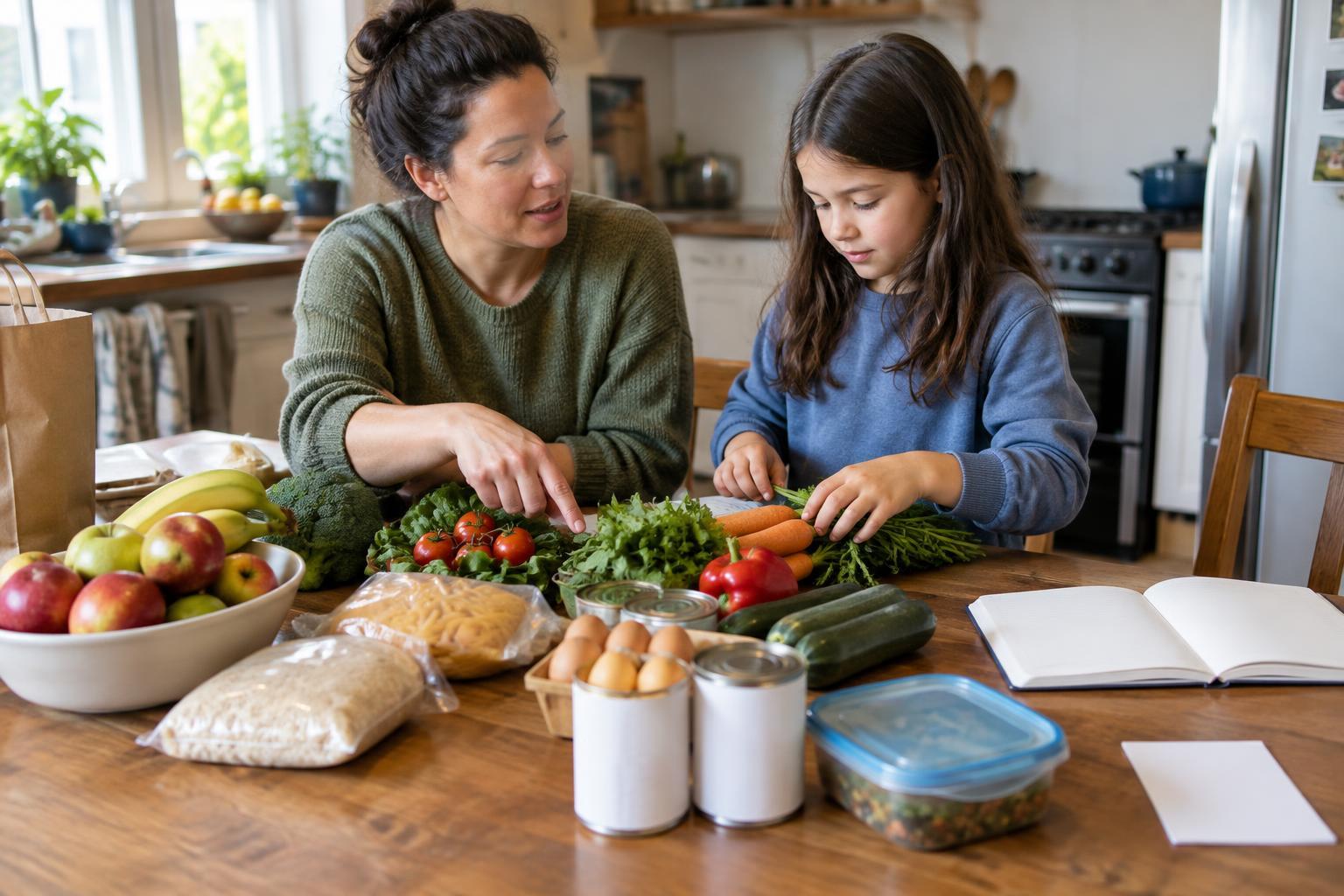
Older children who have practiced basic kitchen routines may enjoy taking responsibility for part of a meal. They could check what ingredients are available, write a short shopping list, prepare a side dish or follow a familiar recipe with an adult nearby. Planning can include ordinary questions: How many people are eating? Which steps can be done ahead? What will need space on the counter? These decisions make the work more than a series of instructions.
Increase independence gradually, especially around knives, hot surfaces and electrical appliances. Agree on which tools require an adult to be present and what to do if a step feels uncertain. Independence does not have to mean preparing food alone; working side by side gives families time to talk and lets a child ask questions without interrupting the whole meal. Responsibilities can also rotate so one person is not always expected to help.
Make room for real family schedules
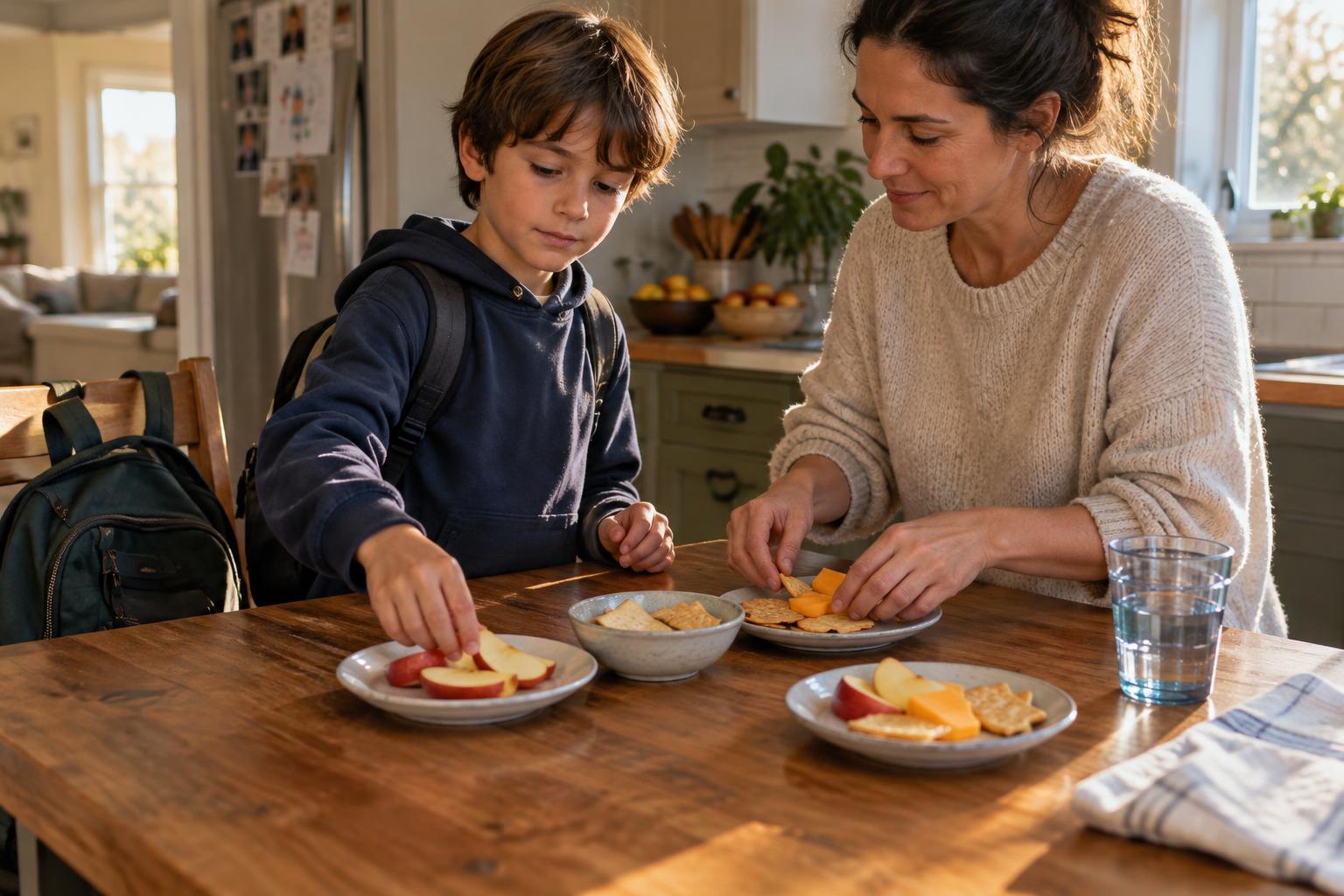
Not every meal is a teaching moment. On a rushed evening, inviting a child to put cups on the table may be enough. At another time, washing produce or preparing a snack together may be easier than involving them in dinner. Keeping a few dependable jobs in mind helps you offer participation without inventing a new activity each day.
Be clear when help is welcome and when the kitchen needs to be an adult workspace. Thank children for their effort without making the meal a test of how much they eat. If they lose interest midway, give them a way to finish one small step or step away safely. Over time, repeated, manageable invitations can help meal preparation feel like an ordinary part of family life rather than a special project that has to go perfectly.