Keep the routine, not the exact setting
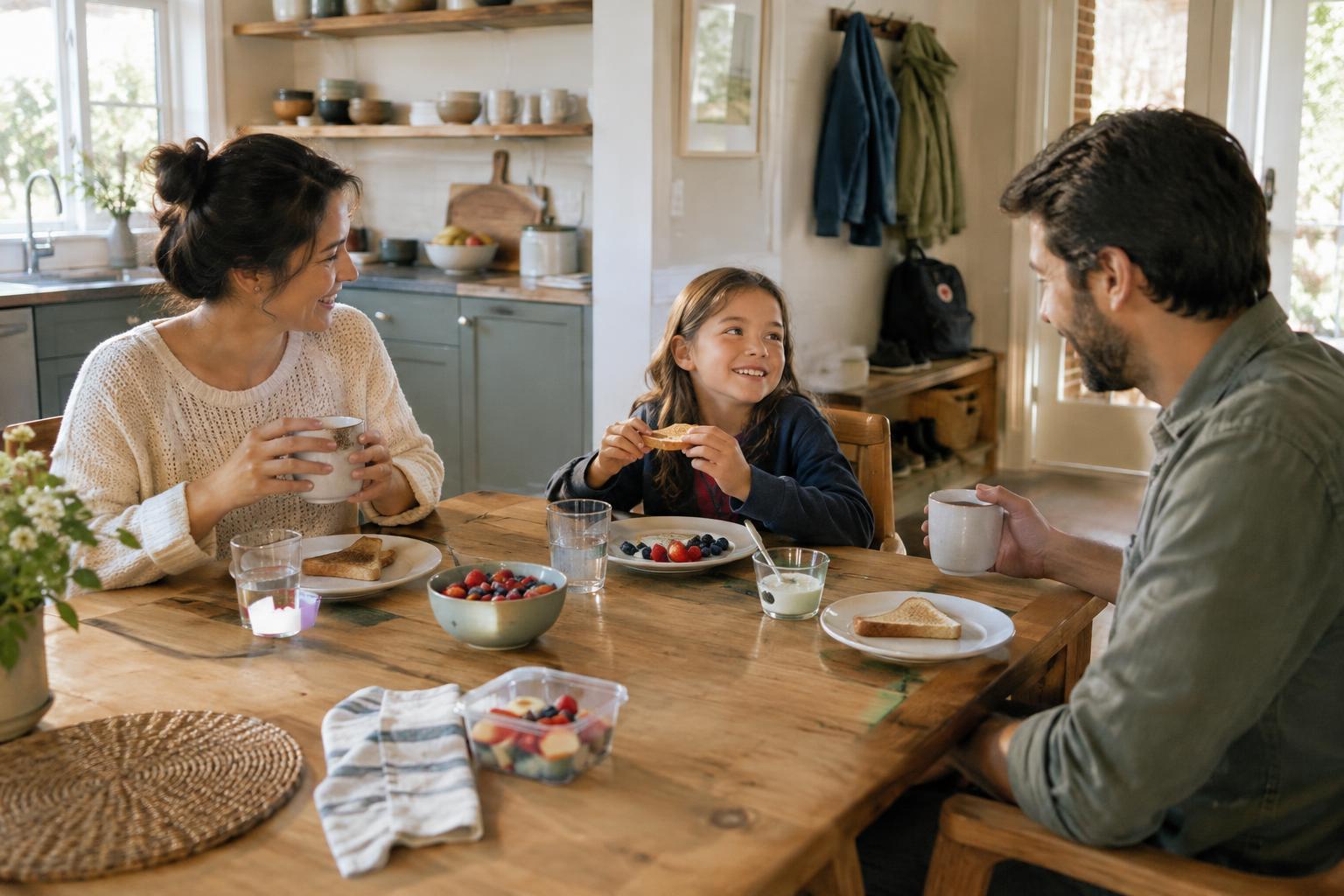
A family meal routine is more than a particular chair or plate. It may include washing hands, sitting together, sharing food, chatting, and knowing what happens when everyone is finished. Those small steps can travel with you to a relative’s house, a picnic table, or a restaurant. The goal is not to recreate home perfectly. It is to give children a few familiar cues in a place that feels different.
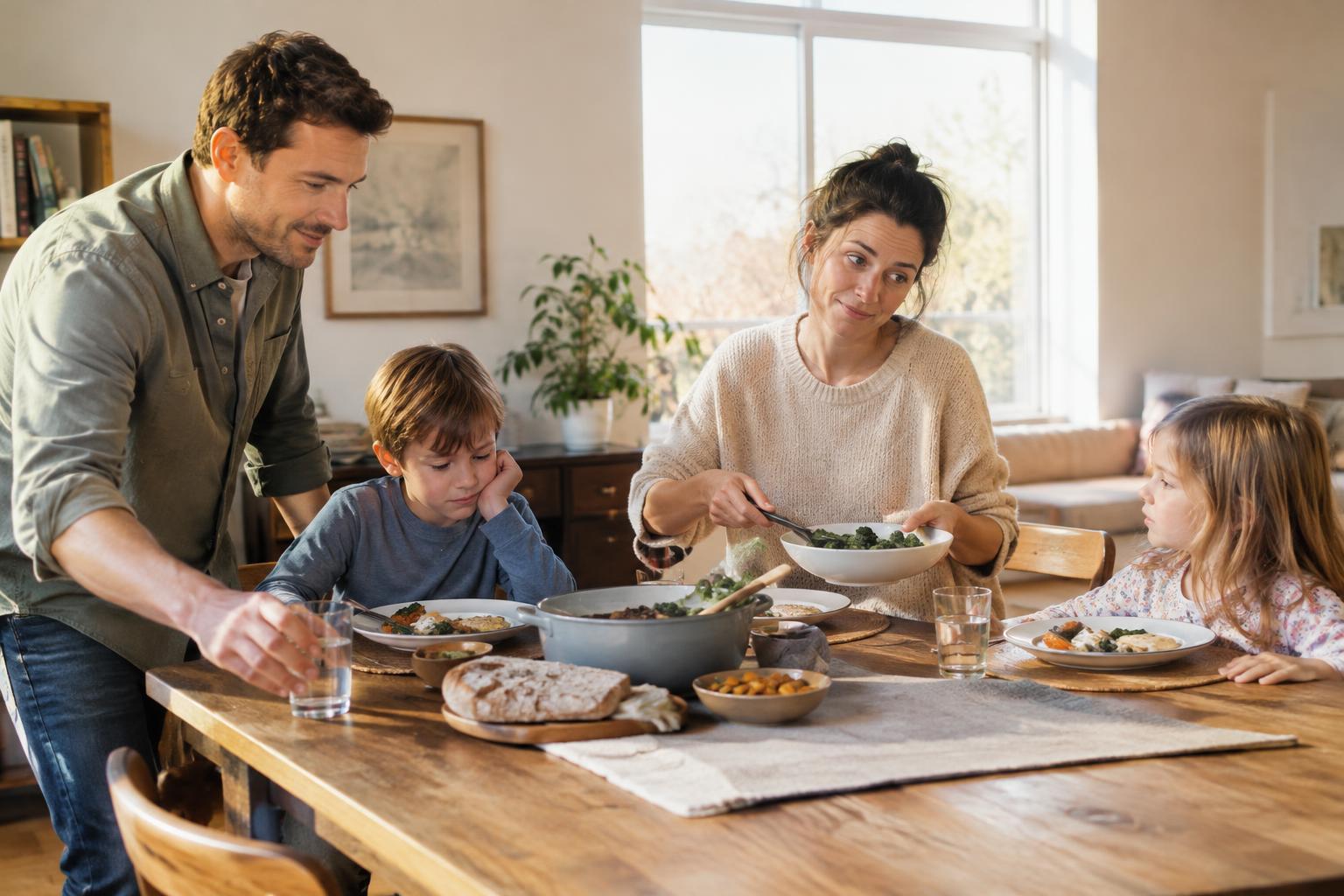
Before leaving, think about which parts of your usual routine matter most to your family. If meals normally begin with a few minutes to settle in, allow time for that after arriving. If your child likes to help set the table, they might place napkins or carry an unbreakable cup. A simple job can make a new eating space feel more predictable without adding much work.
Plan for timing without watching the clock too closely
Eating away from home often means waiting: for other people to arrive, for food to be prepared, or for a table to open up. A little planning can reduce the pressure on everyone. If possible, choose a meal time that is reasonably close to your family’s usual one. For a longer outing, consider bringing an easy-to-carry snack that fits your family’s preferences and the place you are visiting.
Plans will still change. Rather than trying to hold out for a particular time, pay attention to how the day is going and adjust when you can. A meal served earlier or later than usual does not need to define the whole outing. Once you get home, you can return to your ordinary rhythm at the next opportunity.
Bring a few familiar choices
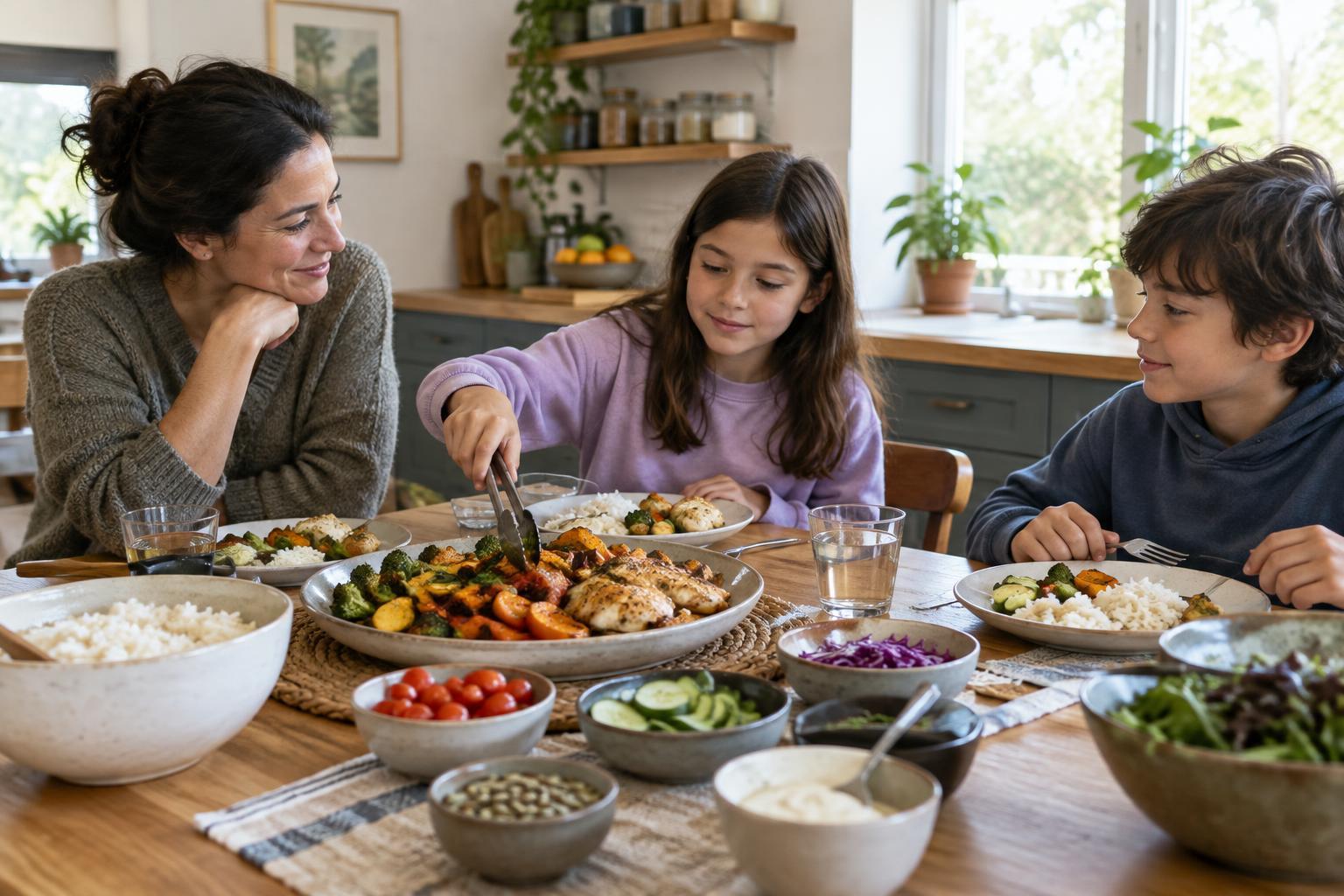
New places may come with unfamiliar menus, serving styles, smells, and sounds. Offering a choice between two manageable options can help a child take part without having to navigate every possibility. At a restaurant, you might describe a couple of available dishes in simple terms. At a shared family meal, you might invite your child to choose which foods to put on their plate from what is offered.
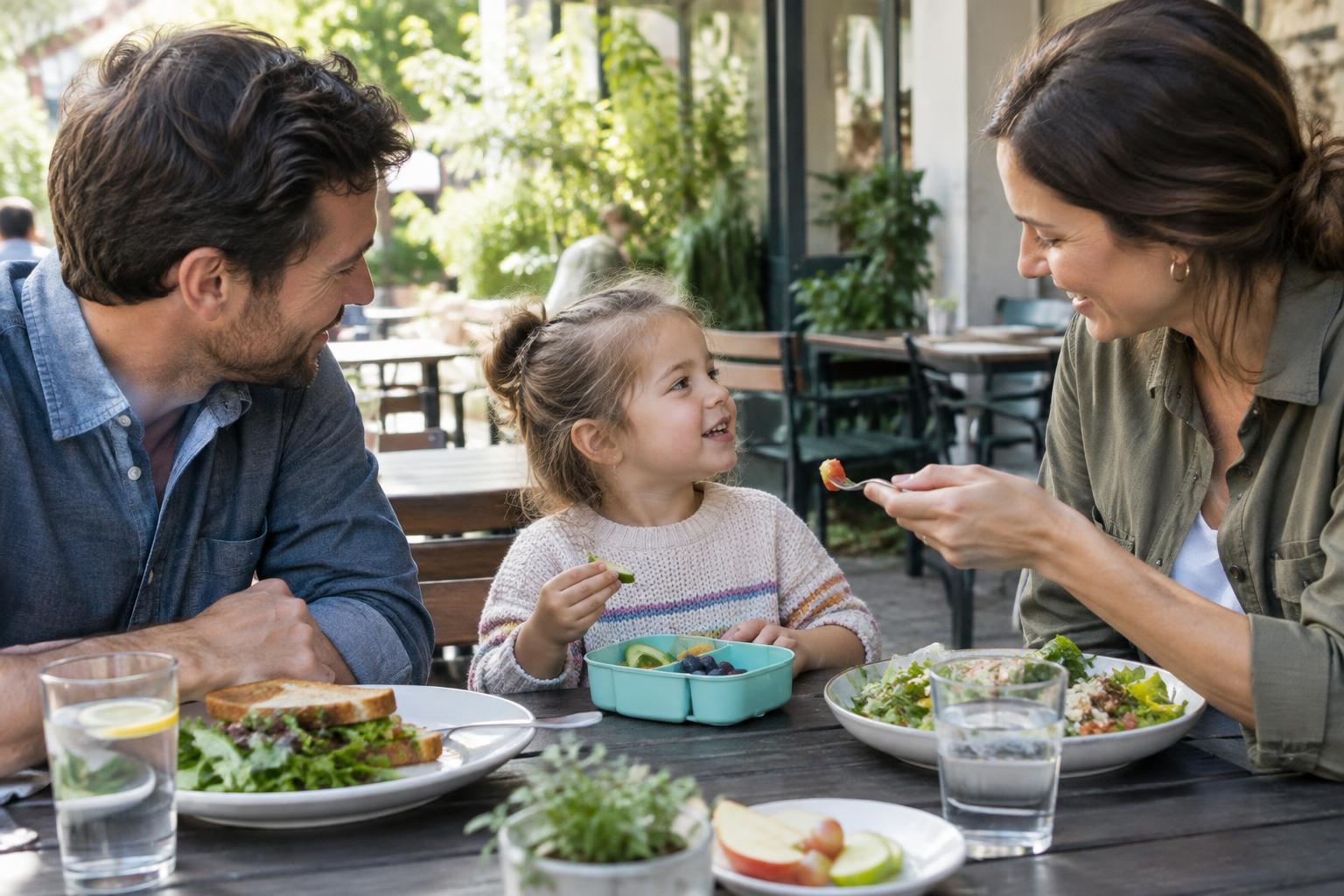
A familiar cup, small utensil, or napkin can be useful if it is easy to carry and appropriate for the setting. It does not have to become a requirement for eating away from home. If you bring food, check any venue rules and consider how to store and serve it safely. A short list of essentials is usually easier to manage than a bag packed for every possible outcome.
Make room for conversation and curiosity
Eating elsewhere can be a chance to notice what is different together. You can talk about the colors on a plate, how a meal is served, or who helped prepare it. Children may want to watch before joining in, especially at a busy table. Gentle conversation gives them a way to participate even if they are not ready to try something unfamiliar.
Try to keep the tone of the meal relaxed. You can offer food and describe it without turning each bite into a negotiation. If a child eats differently from how they do at home, there is no need to make it the main topic of conversation. Sharing a table, listening to others, and practicing everyday courtesies are also parts of a meal routine.
Use a simple beginning and ending
A brief transition into the meal can help everyone shift from travel or play to eating. It might be washing hands, finding seats, or taking a moment to look at what is available. For younger children, a clear explanation of what comes next can help: “We’ll sit down, eat together, and then go back outside.” Older children may appreciate knowing the plan for the rest of the visit, especially if the meal involves waiting.
Endings matter too. Let children know when the meal is winding down, and offer a small, suitable task such as putting a napkin in the bin or helping gather belongings. Some outings will be smooth; others will be noisy, rushed, or shorter than expected. Keeping just a few familiar steps, then moving on without dwelling on a difficult moment, helps make meals away from home an ordinary part of family life.