Start with the part of breakfast that feels hardest
A breakfast routine does not have to begin with a new menu. Start by noticing where your family loses time: deciding what to eat, finding clean dishes, preparing ingredients, or getting everyone to the table. Pick one recurring snag to address first. A small change that fits your actual mornings is more useful than an elaborate plan that only works when everyone wakes up early.
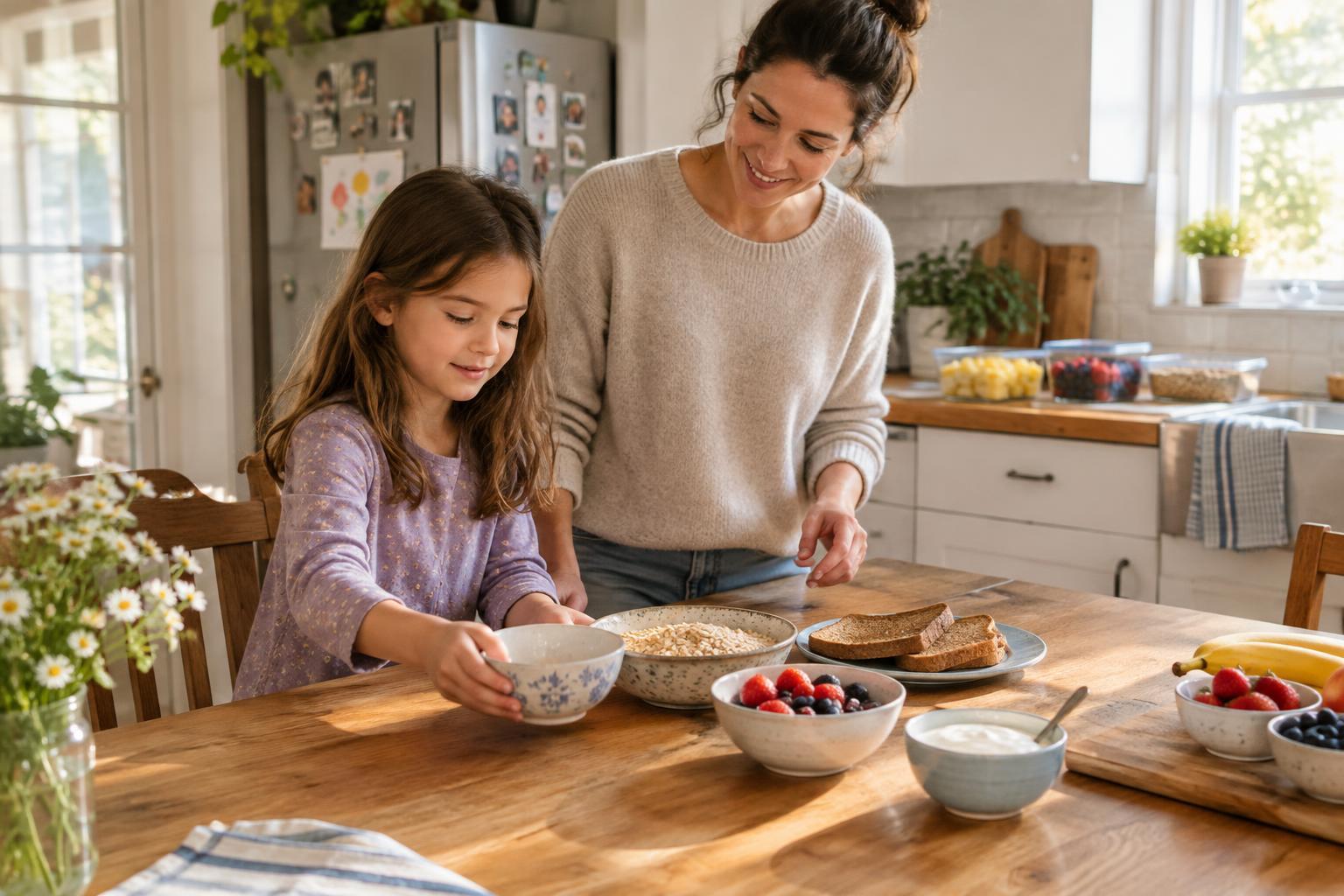
Try choosing two or three familiar breakfasts that your household is willing to eat on ordinary weekdays. Keep the choices simple enough to prepare while other morning tasks are happening. You might pair a ready-to-serve item with something that needs a little assembly, such as toast and fruit, or yogurt with a topping offered separately. Familiar options can reduce decisions without requiring every family member to want the same thing each day.
Do a ten-minute evening reset
Before bed, check what is available for the next morning and decide which breakfast is easiest with those ingredients. Set out nonperishable items, bowls, cups, and any utensils you will need. If you have a lunch-packing area, keep breakfast supplies separate so people are not reaching over one another. The aim is not to prepare everything in advance; it is to remove a few decisions and searches from a busy hour.
For foods that need refrigeration, prepare only what you can store appropriately and return it to the refrigerator promptly. Washed fruit, a container of toppings, or a planned portion of leftovers may be helpful if they suit your household. A short note on the counter or refrigerator can remind another caregiver what is ready and what still needs doing. On a tiring evening, setting out bowls and naming tomorrow's breakfast is enough.
Make the morning setup easy for everyone to use
Give frequently used breakfast items a predictable home. A low shelf or reachable drawer can hold child-friendly dishes and napkins; an adult can keep items that require supervision elsewhere. Place a cloth nearby for spills and leave a clear spot where breakfast can be assembled. When the setup stays much the same, family members have a better chance of finding what they need without repeated questions.
Invite children to take part in ways that match their abilities and your comfort with supervision. A younger child might carry napkins to the table or choose between two fruits you offer. An older child might pour a premeasured topping, put out bowls, or help check whether there is enough bread for tomorrow. Give one clear task at a time rather than expecting a child to manage the whole routine. Helping should make them feel included, not responsible for keeping the family on schedule.
Leave room for different appetites and pace
Breakfast can be a point of connection even when nobody has time for a long meal. Try announcing a simple start time and allowing a few quiet minutes to sit, rather than calling everyone only when it is time to leave. If someone is moving slowly, a calm reminder of the next step may work better than repeated questions about how much they have eaten. Keep the focus on making food available and giving people a reasonable chance to eat.
Preferences and appetites can vary from morning to morning, especially across different ages. Offering familiar components separately can make a shared breakfast easier without preparing a custom meal for each person. If your family has specific dietary needs, follow the guidance you already use for those needs. For a typical busy day, flexibility might mean serving the same foods in a different combination or allowing someone to choose between two prepared options.
Keep a backup plan for the mornings that go sideways
Even a good routine cannot prevent a misplaced shoe, a late alarm, or a suddenly empty carton. Choose one easy backup breakfast from foods your family commonly keeps on hand, and check its supplies when you plan groceries. If eating at the table is not possible, think ahead about a suitable place and time for breakfast rather than assuming everyone can comfortably eat while rushing out the door. Younger children in particular need an appropriate, supervised place to eat.
After a week or two, ask what part of the routine helped and what still felt crowded. You may find that preparing dishes matters more than preparing food, or that one menu choice works better than several. Keep the useful step and drop the rest. A simple breakfast prep routine is successful when it gives your family a little more breathing room, not when every morning looks exactly the same.