Start with the lunch break your child has
School lunch is different from eating at the kitchen table. Children may have limited time, a busy room around them and no familiar adult beside them to peel a lid or find a spoon. An independently manageable lunch lets a child recognize what is packed, reach it without unpacking everything and open it with the skills they already have.
Before choosing containers or foods, ask what lunch is like at your child’s school. Is there time to wash hands and sit down? Are utensils provided? Are there rules about sharing food, allergens or where certain foods can be eaten? Check the school’s guidance rather than assuming that a lunch that works at home will work there. Your child can also tell you which parts of lunch feel rushed or frustrating.
Choose packaging that passes the child test
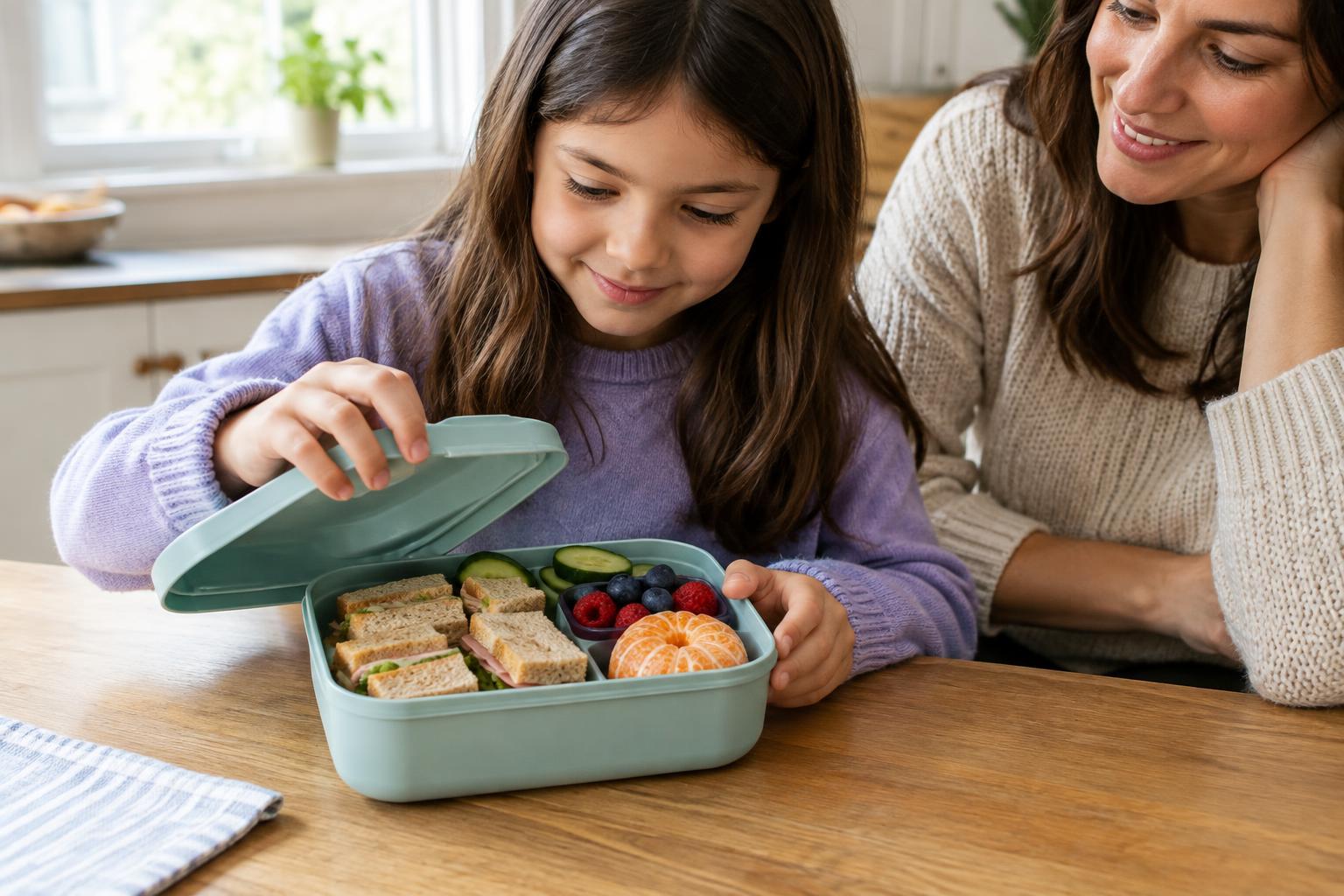
A container is only convenient if its intended user can open and close it. Tight seals, tiny pull tabs, slippery pouches and several nested boxes can turn a simple meal into a long task. Try each item at home with the amount of food or drink it will actually hold. A lid that lifts easily when empty may be harder to remove when a full container creates a firm seal.
Aim for a manageable number of steps. A divided lunchbox can reduce individual wrappers, while a small container may be useful for a dip or side. If you use a reusable bottle, check that your child can release the top and drink without frequent spills. Pack a utensil only if it is needed, and put it somewhere obvious. Labels or a consistent place for each item can help younger children find what they want without emptying the whole bag.
Practice closing containers as well as opening them. Children may need to put leftovers away quickly, and a lid they cannot secure can leave food loose in a backpack. At-home practice also shows whether a container is too heavy or awkward to carry.
Prepare food for easy eating
Familiar foods are a useful starting point, especially while a child is learning a new lunch routine. Cut or portion foods in ways your child can comfortably handle, taking their age and usual eating skills into account. A sandwich that stays together, fruit prepared as your child normally eats it and a snack in an easy-open container may be more practical than a lunch with many fiddly components.
Think about what happens after the first bite. Will a topping fall out when the sandwich is lifted? Does the food require peeling, mixing or squeezing? Could a sauce make fingers too messy for the rest of the school day? None of these foods must be avoided, but doing some preparation at home can make them easier to enjoy at school. Follow the school’s food-storage guidance and use appropriate containers for foods that need to stay cool.
Children’s appetites can vary from day to day. Packing a reasonable amount in recognizable portions makes it easier for your child to see what is available and choose where to begin. If lunch often comes home uneaten, ask what got in the way before changing the menu: the issue might be an unfamiliar food, a difficult package or simply not enough time.
Rehearse without turning lunch into a test
A short practice lunch at home can reveal obstacles that adults overlook. Put the packed bag where your child would find it, then let them take out the food, open each item, use the utensil and pack up afterward. Watch for the moments when they ask for help, but keep the mood relaxed. The goal is to improve the setup, not to expect every child to master every kind of packaging.
Make one adjustment at a time. Swap a hard-to-peel wrapper for a container, loosen a lid or move the drink to an easier-to-reach pocket. For a younger child, a predictable layout may matter more than variety in presentation. An older child may prefer to help pack lunch so they know what is inside and where everything goes.
Use the lunchbox as a conversation starter
When the lunchbox returns, take a curious rather than critical approach. “Was anything tricky to open?” and “Did you have enough time for what you wanted to eat?” can produce more useful answers than focusing only on how much food remains. A child may need several tries to explain why a lunch did not work.
An independent lunch does not mean a child never asks for help. It means the everyday parts of the meal are set up so they can do as much as they are ready to do. Small changes to containers, food preparation and packing order can make lunch feel calmer, while regular check-ins help the routine grow with your child.