Start with a small, useful goal
Children’s belongings can spread through a home because they are part of daily life: shoes by the door, drawings on the table, and toys wherever play happened last. The aim of decluttering is not to erase those signs of family life. It is to make it easier to find, use, and put away the things your family needs.
Choose one small area rather than an entire bedroom. A single shelf, a coat hook, or the basket beside the sofa is enough for a first session. Decide what you want that space to do. A clear entryway might help everyone get out the door; an accessible toy shelf might help a child choose an activity without emptying several boxes. A specific goal makes decisions easier and gives you a natural stopping point.
Set aside enough time to finish the area you open up. If the session is interrupted, keep unsorted items together rather than spreading them across the room. A modest project that reaches a usable end is more helpful than a large project left halfway done.
Sort by what your family uses now
Take everything out of the chosen spot so you can see what is there. Group similar items together, then make simple decisions: keep within reach, store for later, pass along if appropriate, or discard if an item is no longer usable. Check clothing for fit and comfort, games for the pieces needed to play, and art supplies for whether they still work. These questions are more useful than asking whether an item might someday come in handy.
Consider your child’s current interests and abilities without assuming every interest will last. A toddler may need only a few sturdy play choices within reach, while an older child may want space for a project that stays out between sessions. If something is worth keeping but is not being used now, give it a labeled storage place and a reason to revisit it. Otherwise, “store for later” can become a way of postponing every decision.
You do not need to make a final decision about every object in one sitting. A small, clearly marked “decide later” container can help with uncertain items, provided it does not become permanent overflow.
Give children a meaningful part in the process
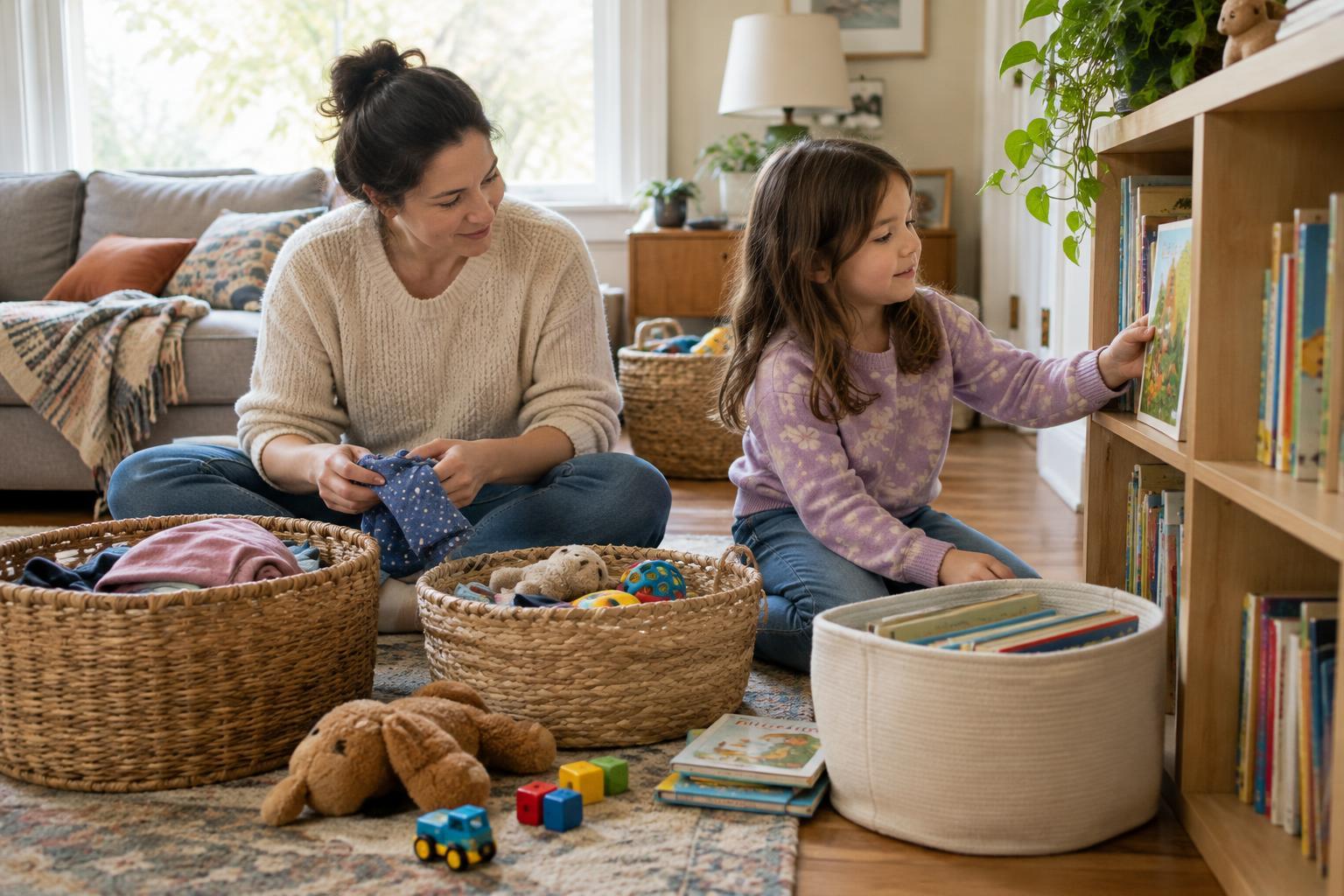
Children may experience their belongings differently from adults. A worn toy can hold a story, and a collection of small objects can be the beginning of a game. Before removing items that belong to a child, invite them into age-appropriate decisions. Young children might choose which books go on a low shelf or help match toys to bins. Older children can sort a category and explain which items they still enjoy.
Offer choices that are manageable rather than asking, “What should we get rid of?” You might ask which puzzles they want easy to reach, or which drawings they would like to display this month. If a child is reluctant, take a break or begin with outgrown clothing that has already been set aside. Decluttering works better as a shared household task than as a surprise removal of familiar things.
Adults can still set limits on the space available. A container or shelf gives a visible boundary: when it fills, the family can look together at what belongs there. The goal is not to force quick choices but to practice making them.
Make storage easy to understand
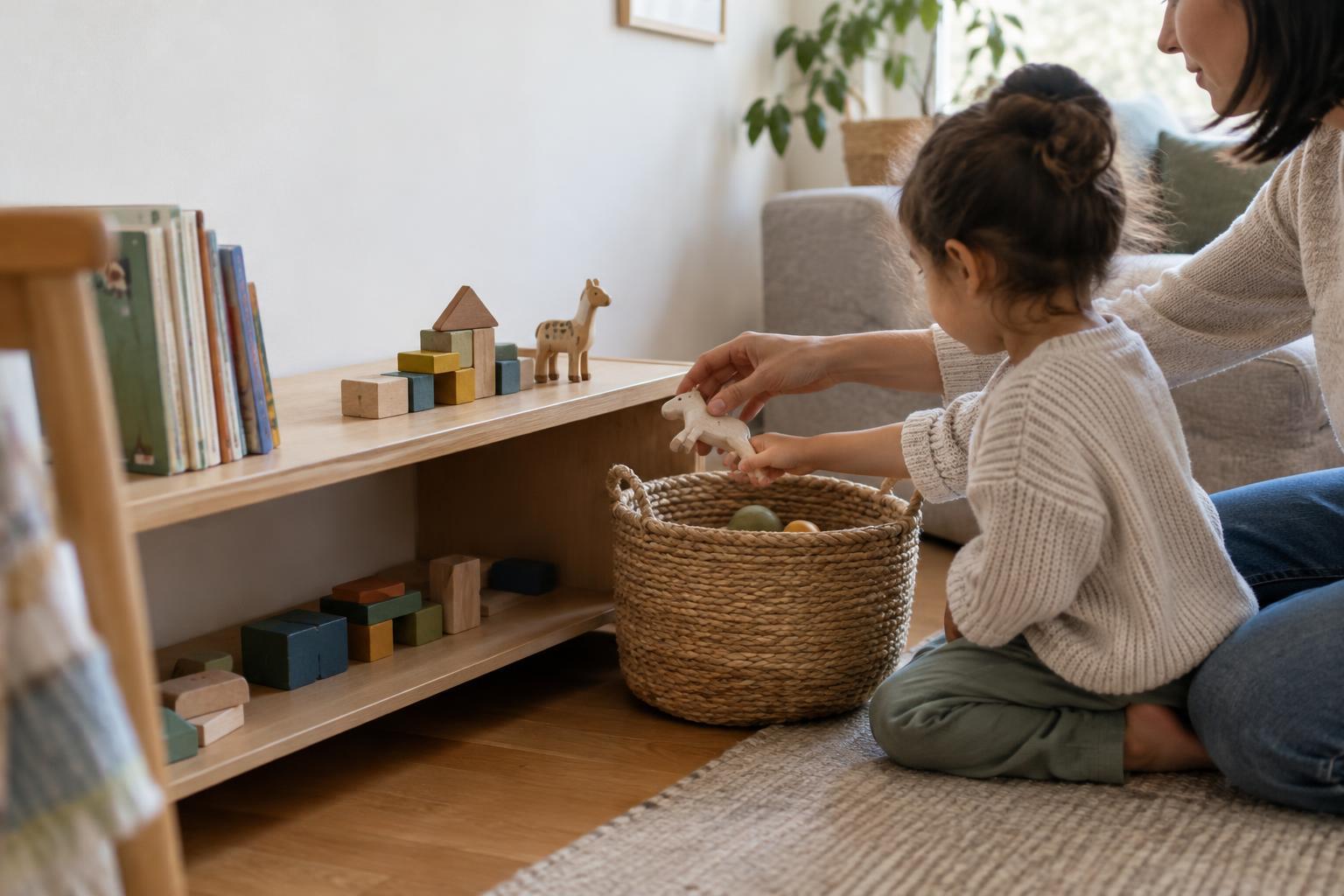
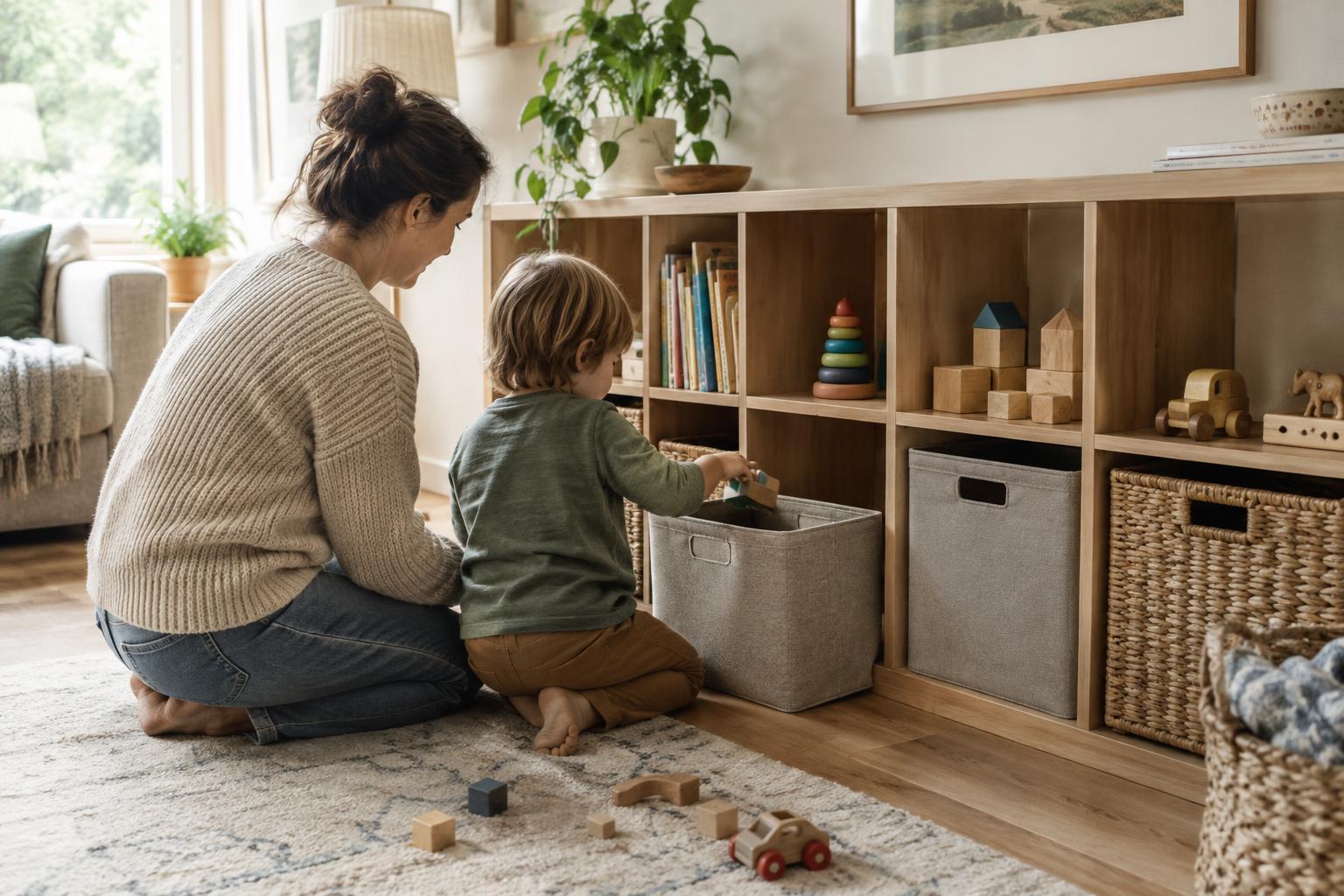
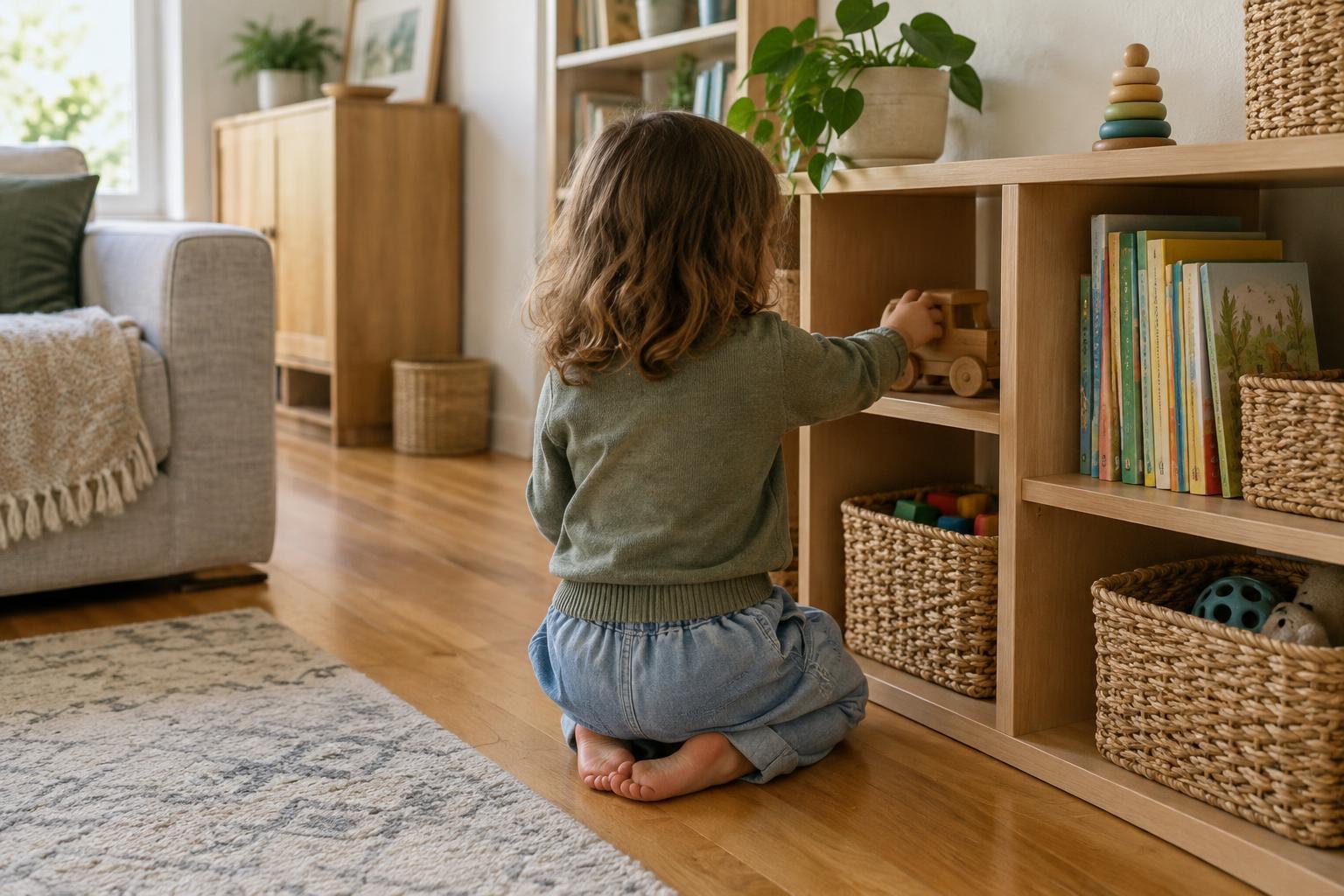
Once you know what is staying, give frequently used items homes close to where they are used. A basket for outdoor gear near the door, a tray for drawing supplies near the table, and low shelves for everyday toys can reduce the number of steps involved in tidying. Less-used items can go higher up or into a separate storage area.
Containers help most when their purpose is clear. Use broad categories such as blocks, pretend-play items, and craft supplies rather than making a separate bin for every small type of object. Picture labels can help children who do not yet read, while words or a combination of words and pictures can work for older children. Leave a little open space in each container so putting things back does not require careful packing.
Consider how the room is actually used. If a favorite activity regularly moves to another room, its storage spot may need to move too. A practical system follows family habits instead of relying on everyone to remember an inconvenient rule.
Keep the system flexible
Clothes become too small, interests change, and new materials come into the home. A short reset during an ordinary tidy-up can keep belongings from building up again. Look for items that have lost their place, check whether containers still match what your child uses, and clear a small surface before it becomes a catch-all.
Build in an easy place for items awaiting a decision or a new home, and make a plan to empty it. When a child brings home a drawing or receives a new toy, you do not have to decide its long-term future immediately. You can enjoy it first, then decide later whether it belongs on display, in everyday storage, or among a limited number of keepsakes.
Some seasons of family life are busier than others. If a system stops working, adjust the shelf, the category, or the routine rather than treating it as a failure. A home that supports play and daily tasks will not stay perfectly tidy. The useful measure is whether family members can find what they need and put it away without too much effort.