Start with what children actually use
A storage system works best when it fits the way your family uses a room. Before rearranging shelves, notice where children get dressed, play, make art or leave their shoes. Which items do they regularly ask an adult to retrieve? Which ones tend to end up on the floor because putting them away takes too many steps? These observations can guide a small, useful change instead of a whole-house reorganization.
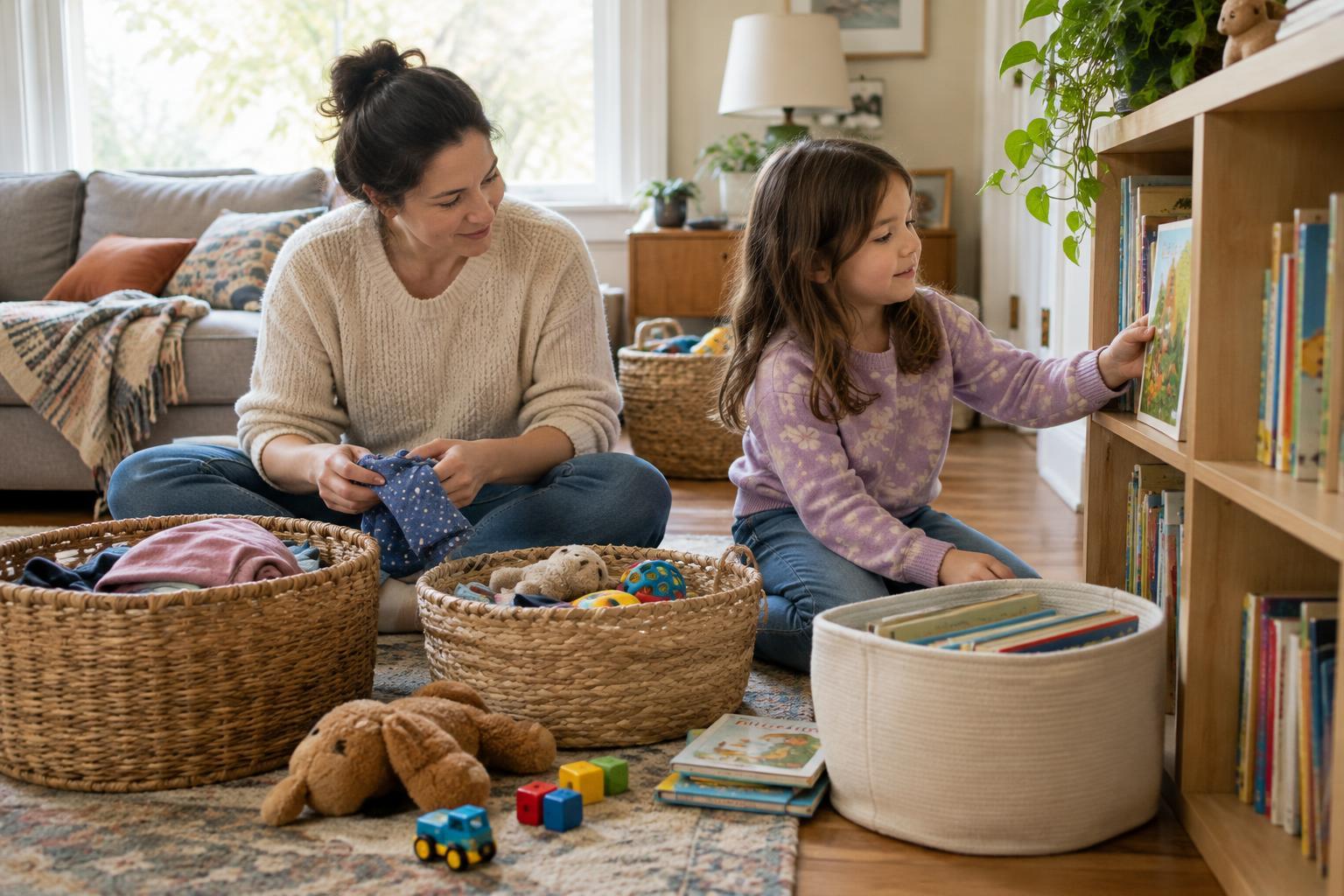
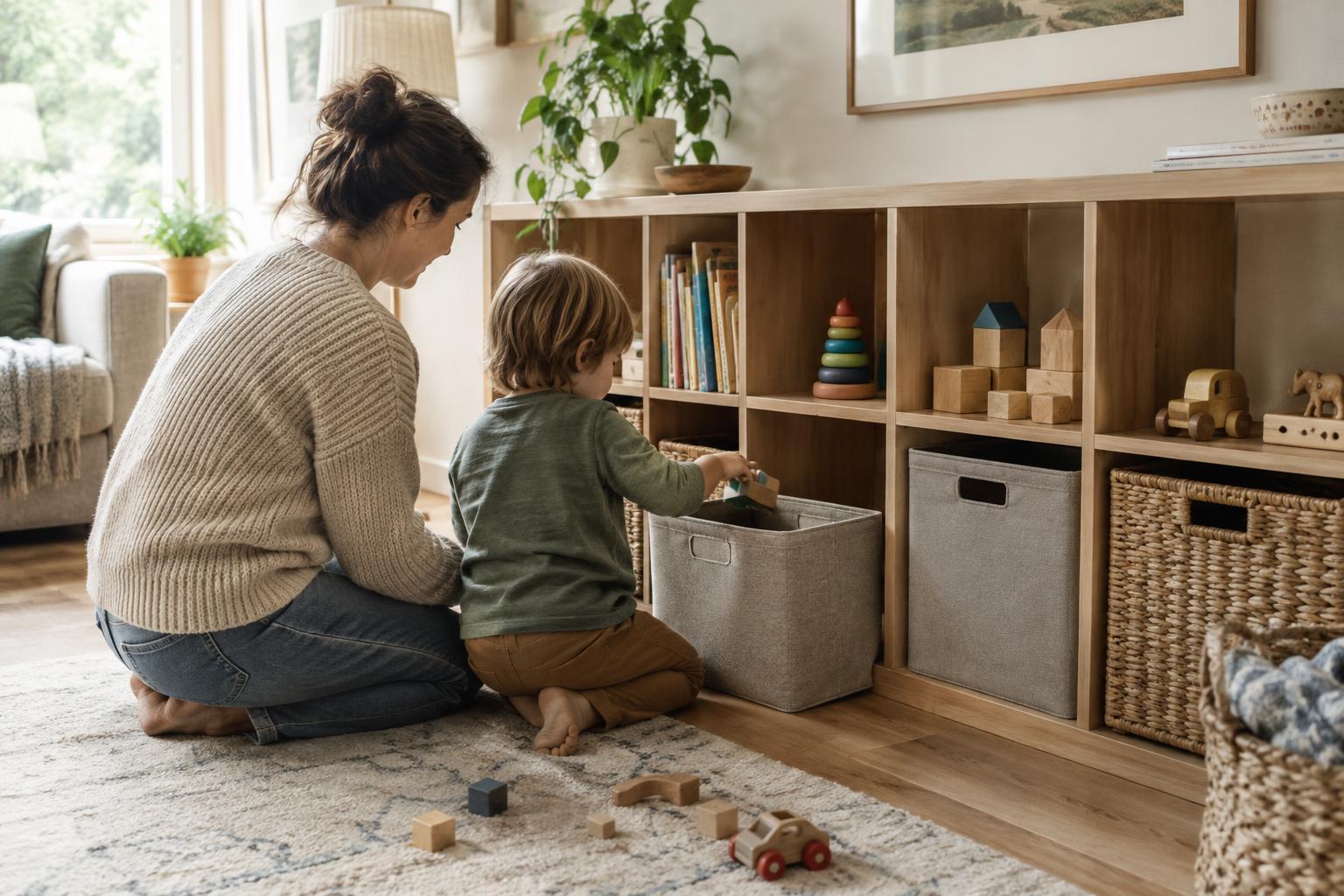
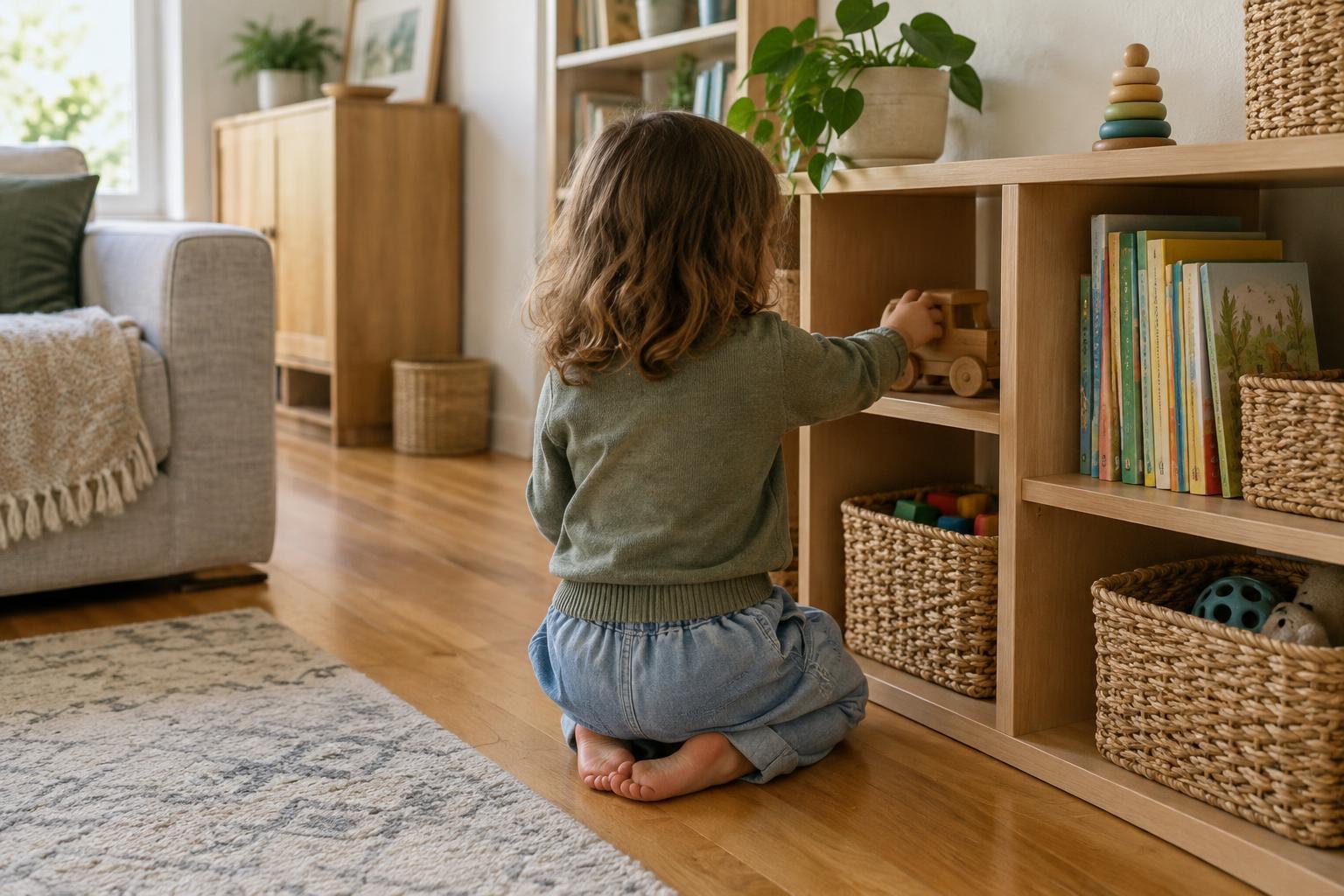
Choose one area to begin with, such as a coat corner or a play shelf. Give frequently used belongings a consistent home that a child can see and reach without climbing. Keep the selection manageable: a few bins of toys are easier to navigate than a deep box containing everything. Items used less often can stay elsewhere and be brought out when needed. Independence does not mean unrestricted access to every household item; it means children can handle appropriate parts of a routine themselves.
Make access simple and safe
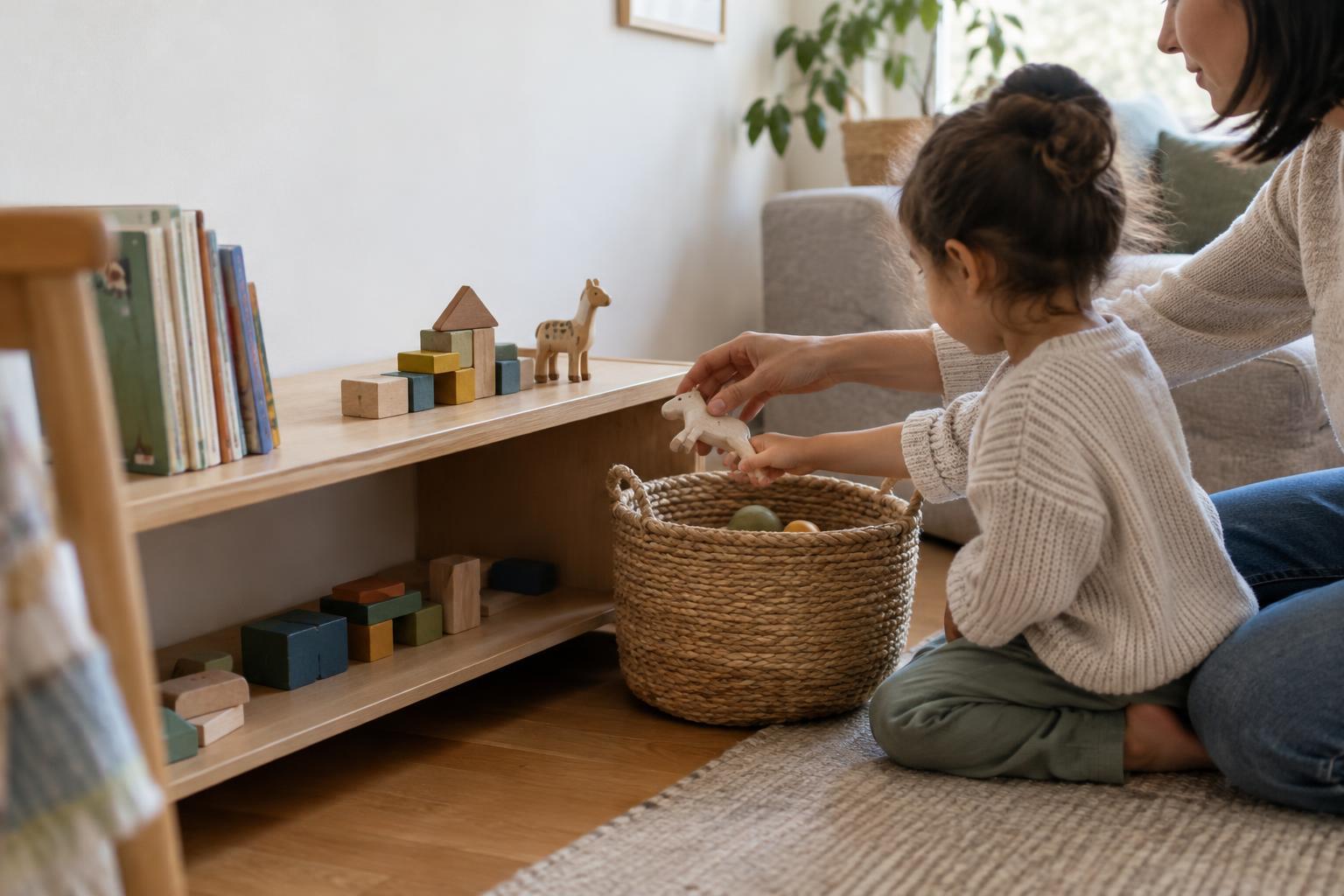
Low hooks, open shelves and lightweight containers often make it easier for children to take something out and return it. Check whether a child can lift a container when it is full, not just when it is empty. A wide, shallow bin may be easier to search than a tall one. If a lid is awkward or a drawer sticks, an open basket may work better for items used every day.
Safety matters more than convenience. Keep cleaners, medicines, sharp tools and other hazardous items secured out of children’s access. Store heavy objects where they cannot fall onto a child, and follow the furniture maker’s guidance for securing units that could tip. Take a child’s age and habits into account when choosing containers and contents: small pieces, plastic bags, cords and breakable items may call for adult-controlled storage. The goal is to make safe choices available, not to make every cupboard child-accessible.
Give each category a clear home
Children can participate more easily when a storage spot answers a simple question: “Where does this go?” Group belongings by how they are used. A basket near the door might hold hats; a low shelf could hold picture books; one drawer could contain clothes a child can choose from. Keeping each category in one predictable place is usually more helpful than sorting every object into a very narrow category.
Labels can help, but they do not have to be elaborate. A picture on a bin may help a child who is not yet reading, while a word label can support a child who is beginning to recognize print. You can use both. Let the contents determine the label, and change it when the collection changes. If children routinely put blocks in the basket labeled “cars,” that may be a sign the baskets need clearer placement or that the categories should be combined.
Connect storage to everyday routines
Even an easy-to-use shelf needs a moment in the day when things return to it. A short reset before a new activity, after getting home or before bedtime can make tidying feel like part of a familiar sequence rather than a separate project. Keep the task specific: “Put the books on their shelf” gives a child a clearer starting point than “Clean this room.” Doing it together at first also shows what the finished task looks like.
Offer a little choice within a clear boundary. A child might choose which two toys to return first or decide whether shoes go on a low rack or in an assigned basket. Adults can still handle tasks that are too heavy, high or complicated. When the system is not being used, look for friction before assuming a child is unwilling: the bin may be overfull, too far from where the item is used or difficult to open.
Adjust the system as your child grows
A useful setup is not permanent. Younger children may do best with a small number of visible options and plenty of room to drop items into a bin. Older children may be ready for more categories, drawers or responsibility for keeping track of supplies. As interests change, regularly check whether each storage spot still serves a purpose. Clearing out items that no longer fit the space can make the remaining belongings easier to manage.
Invite children to help decide where familiar items belong, then try the arrangement for a while. If they can find what they need and put it back with reasonable effort, the system is doing its job. The aim is not a perfectly tidy home. It is a home where children can practice small, age-appropriate responsibilities and where the next activity is a little easier to begin.