Start with the space you already have
Toy rotation means keeping some toys available for play and putting others away to bring out later. It does not mean buying more toys, matching containers or following a strict schedule. The most useful version is one your household can maintain on an ordinary day, even when nobody has time to sort every piece.
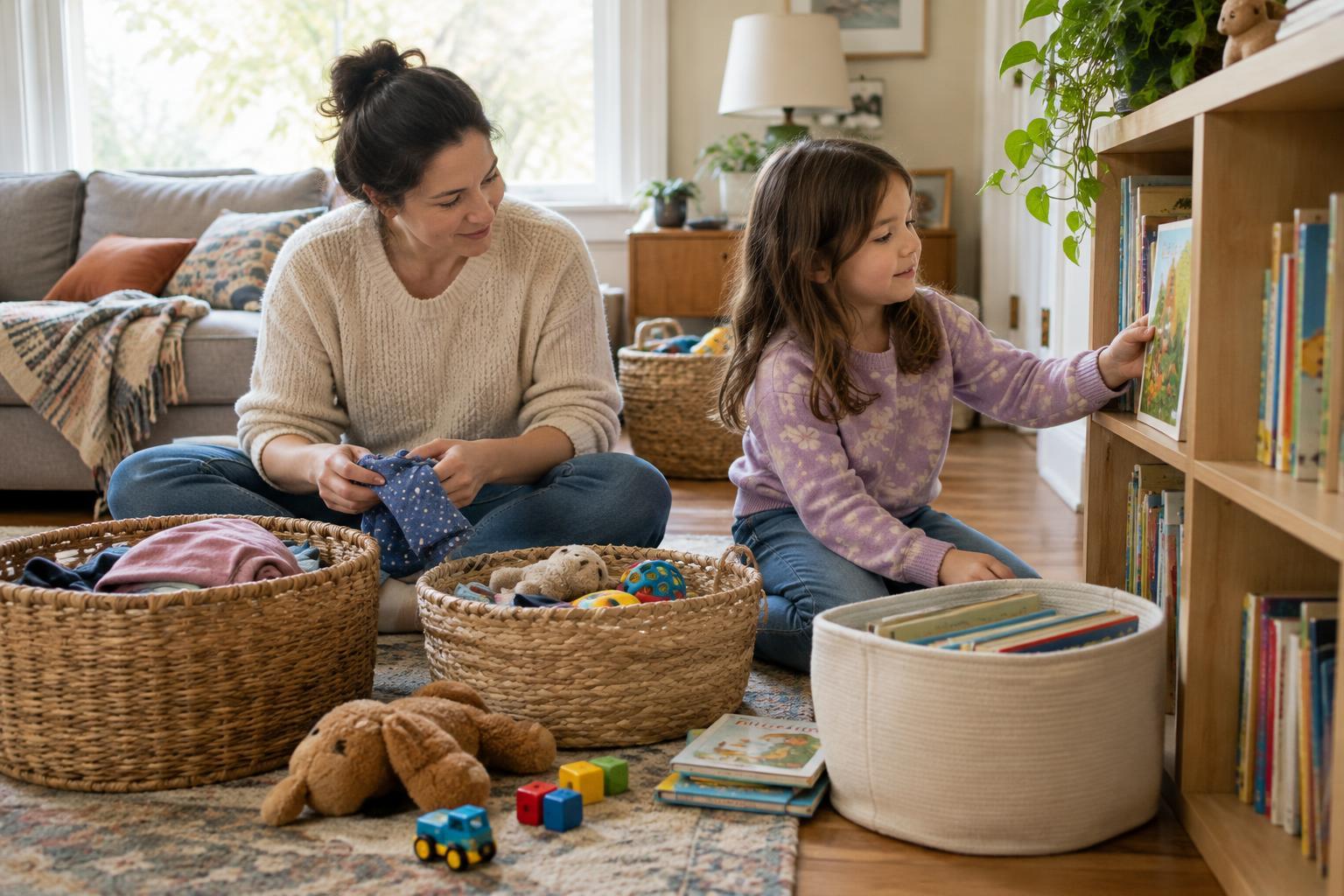
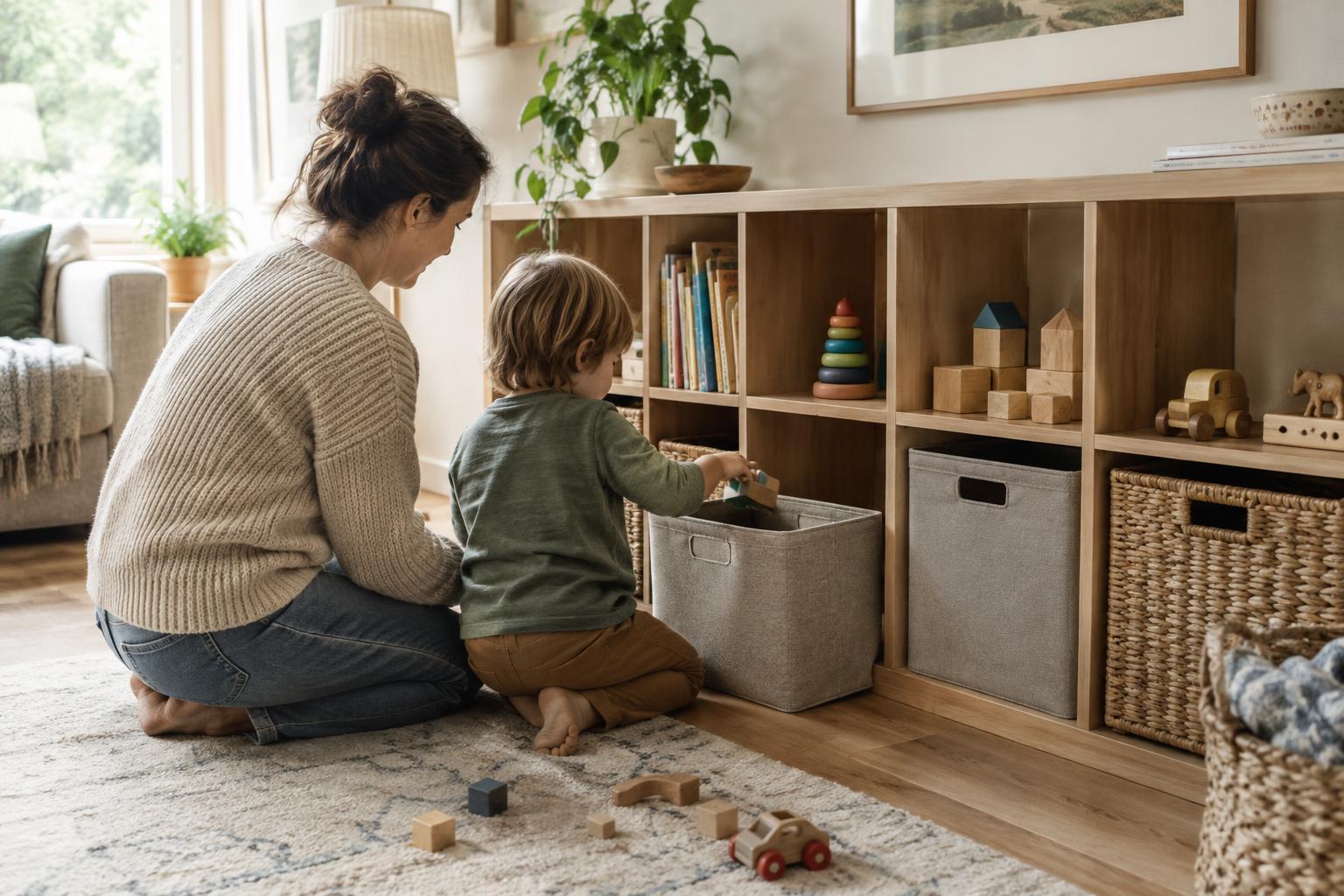
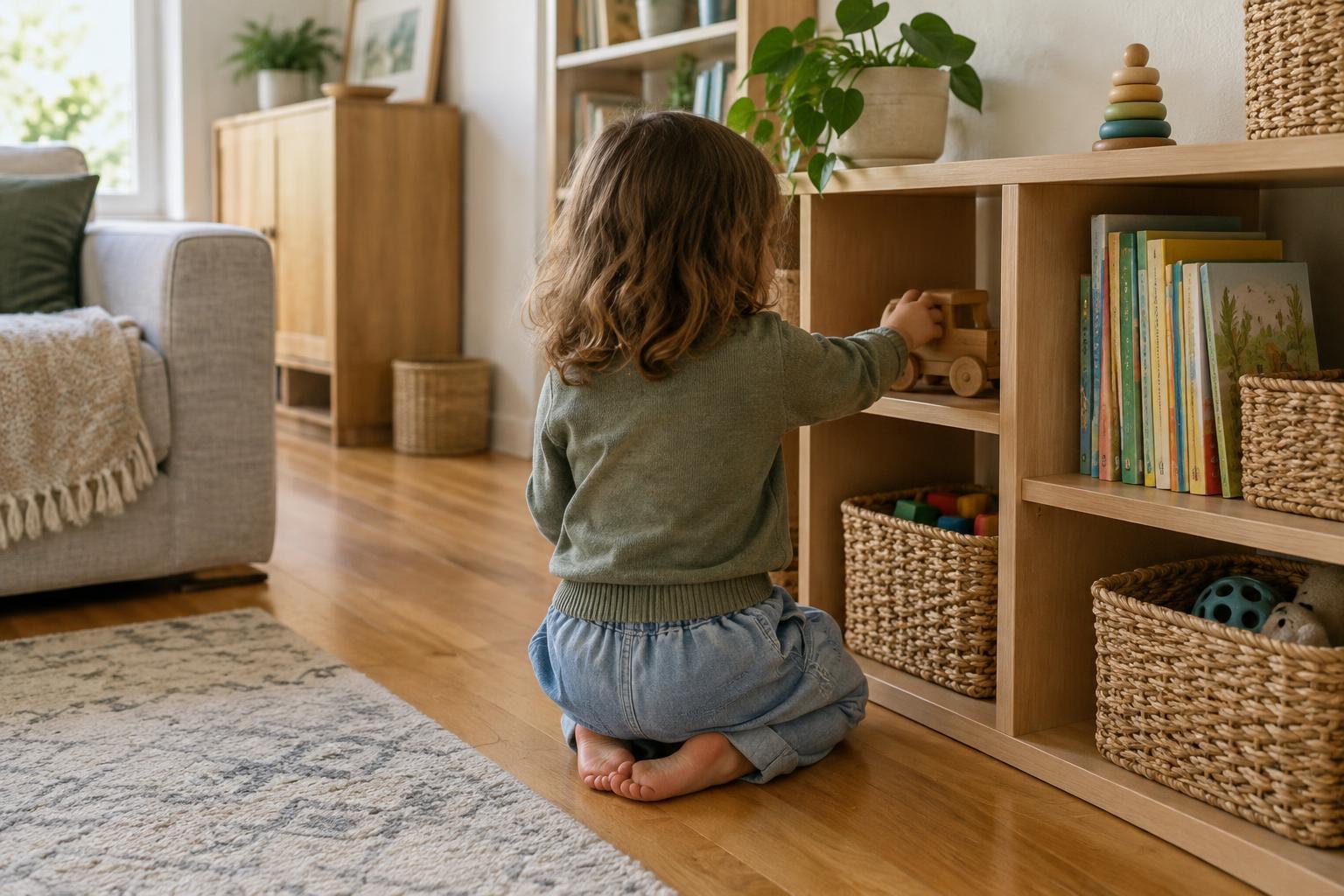
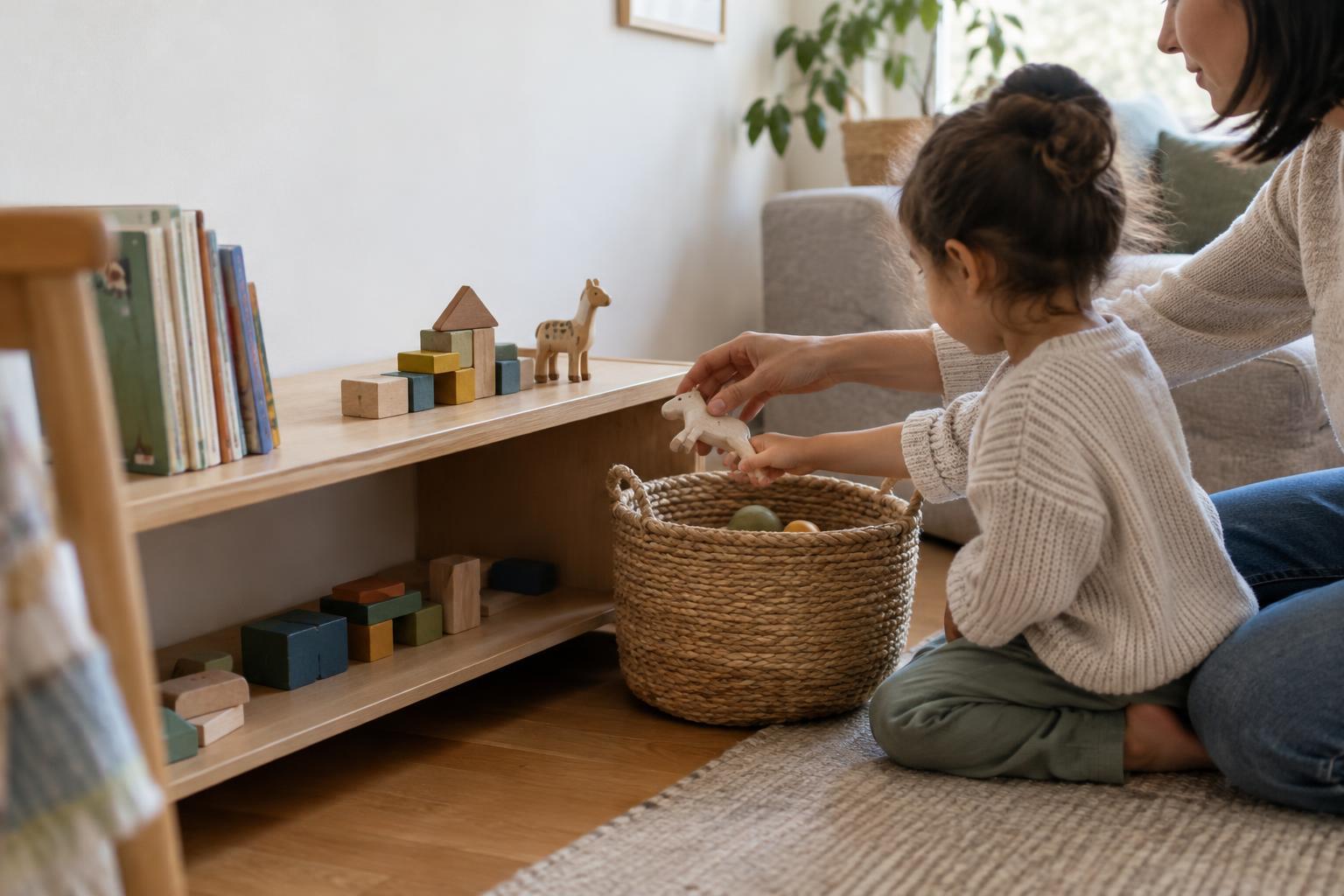
Begin with the area where toys are usually used. Notice what fits on a shelf or in a basket without being stacked so tightly that children cannot see or reach it. That space can set your limit for what stays out. If there is no suitable place to store a second group of toys, start smaller: swap the contents of one basket rather than trying to rotate the entire play area. The goal is a space that remains easy to use, not a room that looks empty.
Choose toys for the play happening now
Before putting anything away, gather toys that have drifted around the home and return stray pieces to their sets. Then look for a manageable mix of play options. Depending on a child’s age and interests, that might include building materials, pretend-play items, puzzles, art supplies or a few favorite books. Several toys that invite the same kind of play do not all need to be out at once.
Keep well-loved items accessible, especially if a child returns to them often. Rotation works better as an invitation than as a rule about what a child should enjoy. For younger children, consider whether the available toys are easy to reach and suitable for their stage of play; keep small parts away from children who might put them in their mouths. Older children can help decide which projects should stay out and which finished games or sets can rest.
Give stored toys one clear home
The quickest way for rotation to create more clutter is to turn the stored toys into an unsorted pile. Choose a limited storage spot, such as one closet shelf, a cabinet or a lidded bin. Use containers you already own if they work. A simple label describing the contents can help everyone put things back in the right place; it does not have to be part of an elaborate organizing system.
Store toys in groups that make sense when it is time to bring them out. Keep a puzzle with its pieces, for example, and place pretend-food items together rather than spreading them across several bins. If a toy cannot fit in the storage space, do not add another container automatically. That may be a useful moment to decide whether something is broken, outgrown, no longer used or better kept available. Set aside anything you plan to repair, pass on or recycle so it does not quietly join the rotation.
Swap a little at a time
There is no ideal interval for changing toys. A swap can happen when play seems repetitive, when cleanup has become difficult or when a child asks for something that is stored. Choose a few items to put away before bringing out replacements. This one-for-one habit keeps the available space from slowly filling up again.
Make the change at a calm point in the day when possible. A child may be in the middle of a long-running game that uses materials in unexpected ways. Ask before packing up an active project, or leave it in place and choose something else to rotate. Children who want to participate can help select a basket to revisit. If they are disappointed that a particular toy is going away, it is fine to keep it out. The system should support play and family routines, not turn every swap into a negotiation.
Keep the routine lighter than the clutter
Once a rotation is underway, pay attention to what happens during everyday cleanup. Are children able to find what they want and put it back? Do stored toys have a clear destination after a swap? If the answer is no, reduce the number of toys in circulation or simplify the categories. A single basket for building pieces may be more useful than several precisely sorted boxes that nobody has time to maintain.
Toy rotation is also optional. Some families prefer to keep most toys visible and simply tidy or thin out what is no longer used. Others may rotate only seasonal outdoor items or larger sets that take up a lot of floor space. Start with the smallest change that would make your home easier to live in, and adjust it as children’s interests and household routines change. A successful rotation is not one that stays perfectly organized; it is one that makes it easier to begin playing and easier to put things away.