Start with what happens in the room
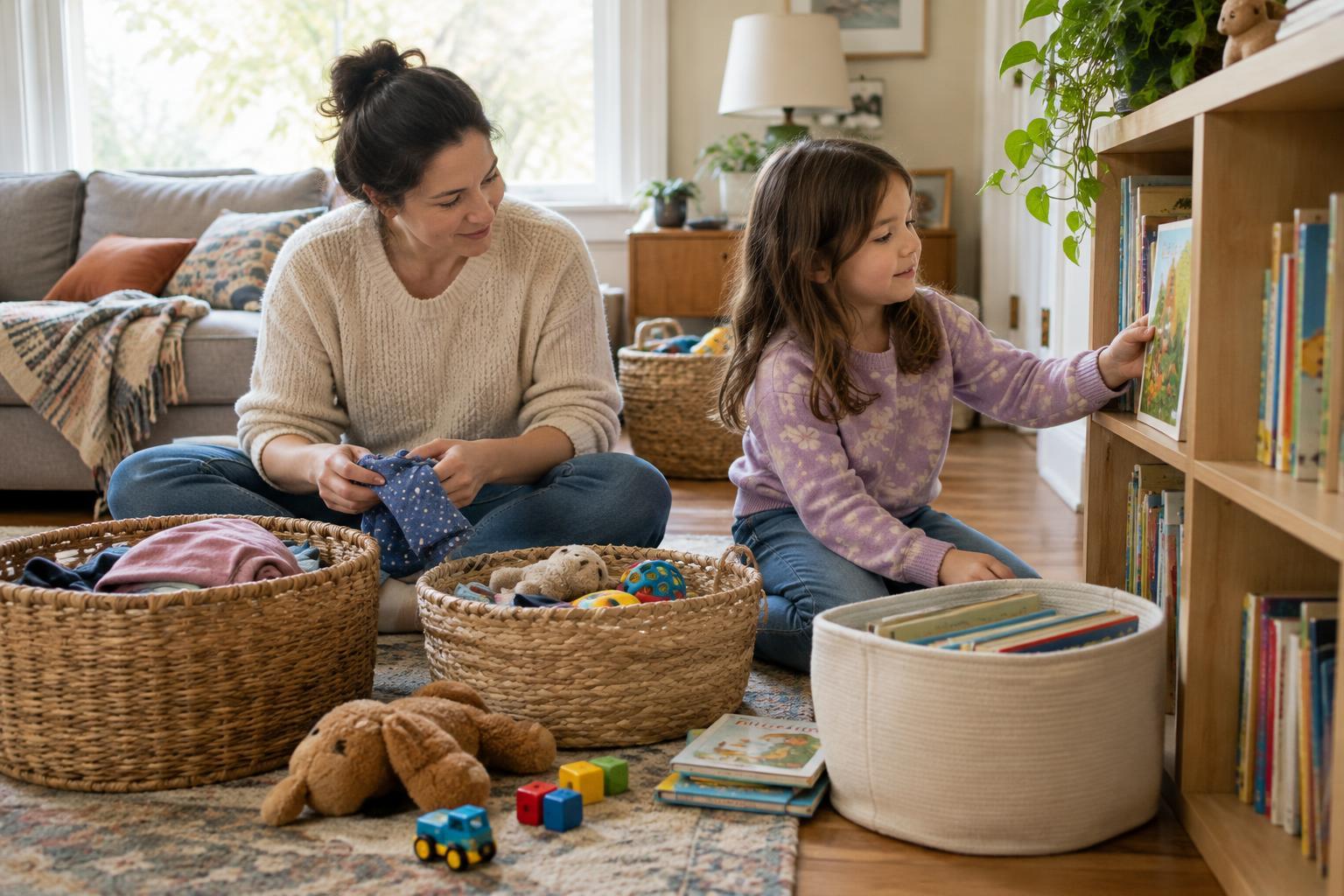
Family storage works best when it supports the activities that actually happen at home. Before choosing shelves or bins, notice where books are read, where building pieces are used and where coats tend to land. An item that is stored across the room from where it is needed may be harder to put away, even if its container looks tidy.
Also consider who needs to use the storage. A young child may manage a small selection of items on a low shelf, while an older child may prefer a labeled bin for a collection with many parts. Adults may want a quick place to gather supplies after a busy day. These needs can coexist; no single type of storage has to serve the entire room.
What open shelves do well
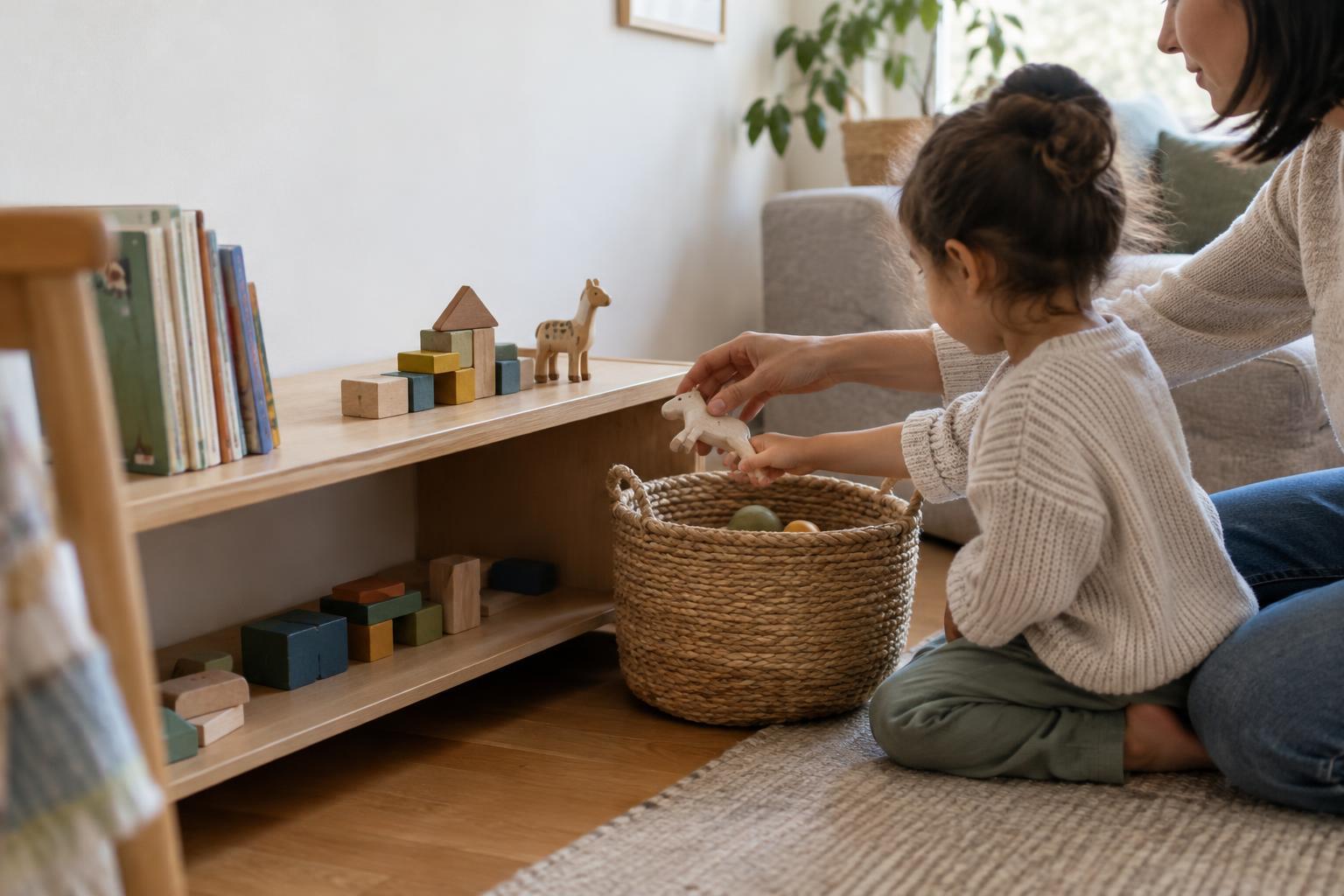
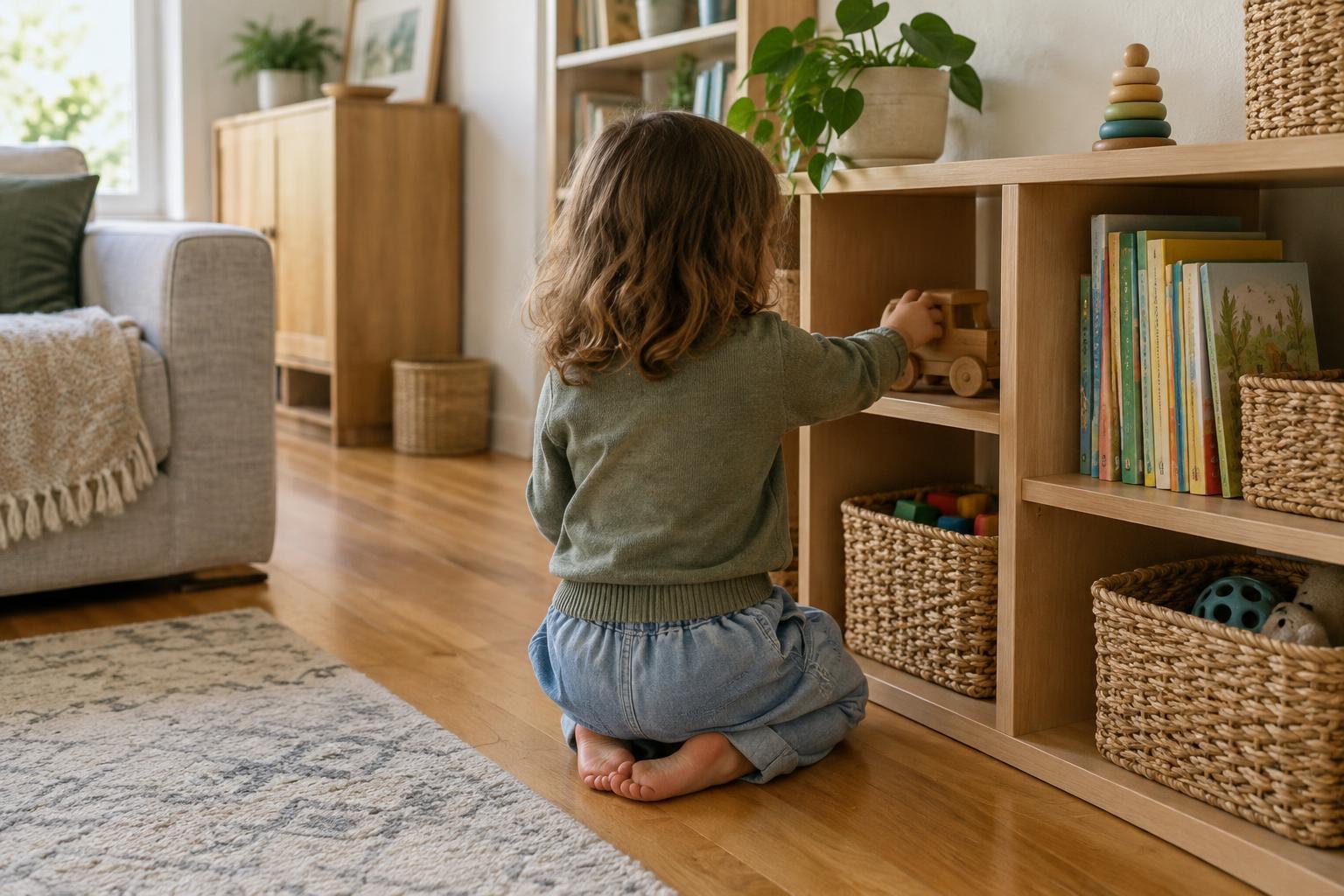
Open shelves make their contents visible. That can help children find a book, choose an activity and see where it belongs afterward. A shelf with a few clear categories, such as books on one level and puzzles on another, may be easier to use than a crowded shelf holding everything at once. Low, reachable shelves can also make it possible for children to take part in everyday tidying.
Visibility has a trade-off: everything on an open shelf contributes to how the room looks. Loose pieces, overflowing stacks and objects placed in front of one another can make choosing and cleaning up more difficult. If an open shelf feels busy, try leaving space between groups of items or displaying fewer choices at a time. Extra items can stay elsewhere until the family is ready to switch them in.
Open shelves are often useful for things used frequently or enjoyed in plain view, such as picture books and a small set of toys. They are less convenient for tiny pieces that scatter easily unless those pieces have a tray or container of their own.
Where closed bins earn their place
Closed bins can gather a set of related items into one unit: craft supplies, dress-up accessories or parts of a building set. They can make a shared room look calmer between activities, and they allow a family to move a project from one area to another. A bin is especially helpful when the contents would otherwise spread across several shelves.
The downside is that hidden contents are easy to forget. When every bin looks alike, someone may have to open several before finding what they need. Simple labels can help; for children who do not yet read, a picture or a familiar symbol can work alongside words. Keep categories broad enough that putting things away does not become a sorting project. “Cars” may be more useful than separate bins for every kind of vehicle.
Choose containers that suit the person expected to use them. A heavy box on a high shelf may be manageable for an adult but not for a child helping with cleanup. Lids can be useful for keeping a set together, yet a bin without a lid may be easier to use for items that come out every day.
Use a mix, with safety in mind
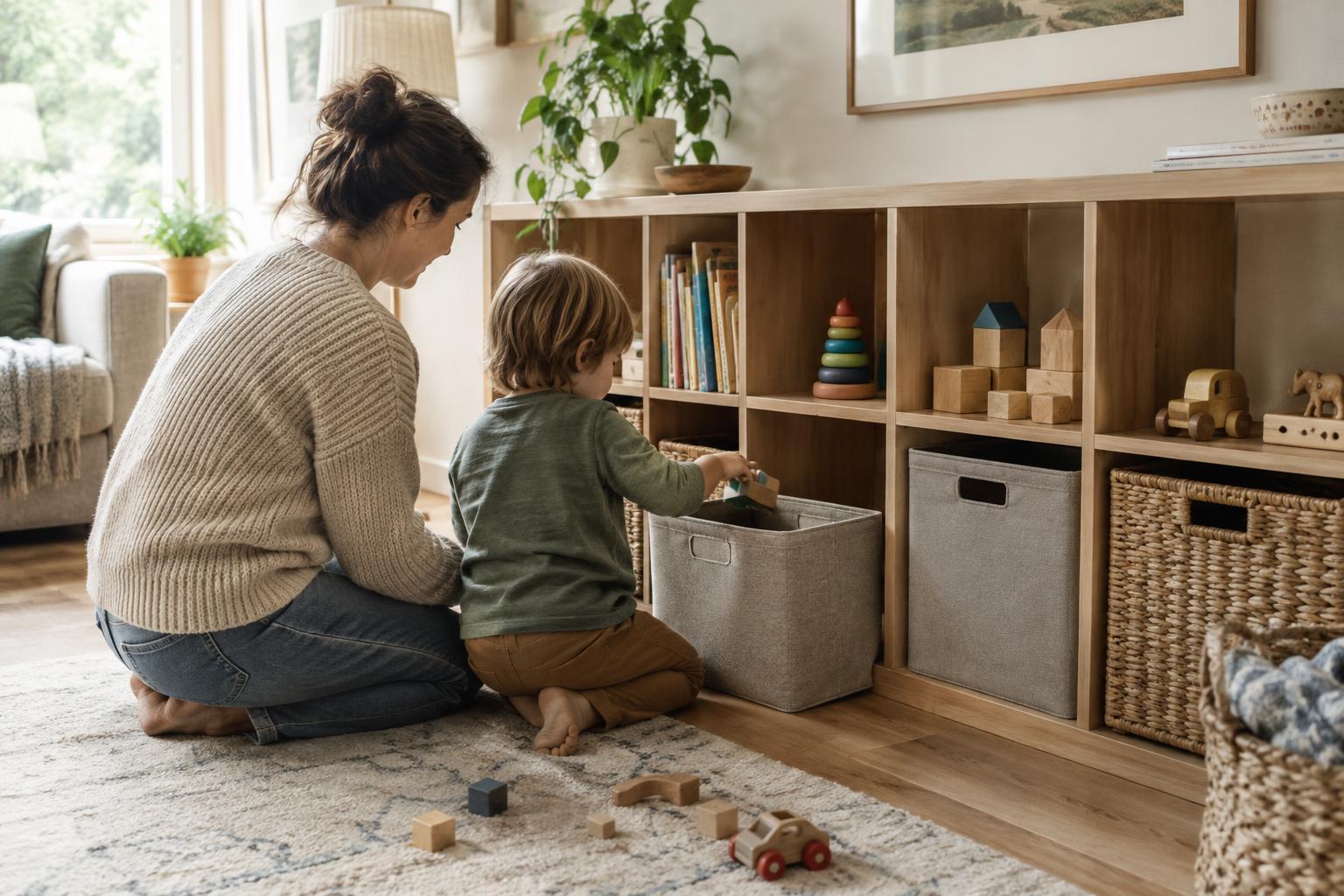
Many rooms benefit from an open shelf for everyday choices and bins for smaller collections. One approach is to place a few books and ready-to-use activities where children can reach them, then keep sets with multiple pieces in clearly marked bins nearby. This gives frequently used items a visible home without requiring every object to be on display.
Match access to children’s ages and abilities. Keep small parts and supplies that require adult help out of reach of children who may handle them unsafely. Check that shelving is stable, follow the furniture maker’s anchoring instructions and avoid putting heavy items where they could fall during ordinary use. Storage should be easy to use, but it should also fit the household’s safety needs.
Make the system easy to maintain
The best test of a storage plan is what happens after an activity ends. If cleanup regularly stalls, look for the extra step: a lid that is hard to open, a shelf that is too full or a category no one remembers. Moving a bin closer to the play area or giving an item a simpler home may help more than adding another container.
Invite children to help decide where familiar items belong when that is appropriate for their age. A short routine, such as returning one activity before starting another or doing a shared reset before bedtime, can make the storage system easier to remember. It does not need to produce a perfectly arranged room every time.
As interests and routines change, revisit the setup. An open shelf that once held a few favorite toys might later work better for school supplies, while a bin may become the right home for a growing collection. Aim for a system that helps everyone find, use and return things—not one that only looks neat when nobody is home.