Choose one easy-to-reach landing spot
A paperwork station does not need a dedicated desk or a set of matching containers. A shallow tray, a few labeled folders, and a pen can work on a kitchen shelf, near the family calendar, or wherever bags are usually unpacked. The best spot is one adults will notice during an ordinary day. If papers tend to arrive at the kitchen table, placing the station across the house may make it harder to use.
Keep the setup small enough to fit the space and the amount of paper your family receives. Leave room to put down a notice before sorting it; a system that requires an immediate decision every time may be difficult to maintain. If young children can reach the station, put blank paper they may use separately from forms that need to stay clean or contain personal information.
Give each paper a clear next step
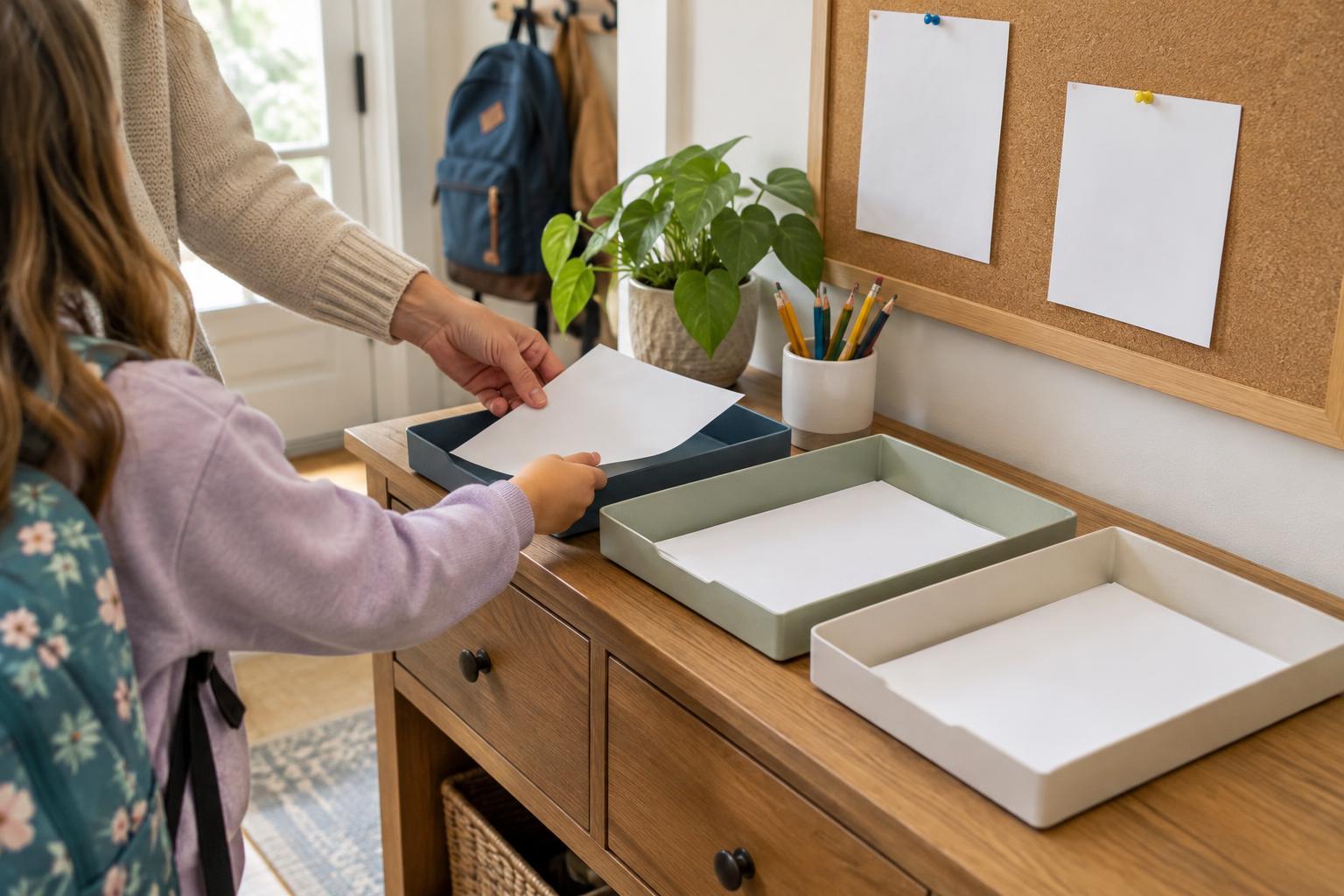
Start with three categories: “To review,” “To return,” and “To keep.” Incoming notices go in “To review” until an adult has read them. Permission slips and other completed forms move to “To return” so they can be packed for school. Papers that may be useful later, such as a class schedule or activity details, go in “To keep.” Use labels that make sense to everyone who handles the papers.
For a family with more than one child, a separate folder for each child may prevent mix-ups. You can still use one shared “To review” tray if that is simpler. Avoid making a category for every possible kind of notice at first. When there are too many choices, papers can end up in a pile beside the system instead of inside it. Add a new folder only when a repeated need becomes clear.
Connect the station to a short daily routine
Choose a regular moment to empty school bags, such as after arriving home or while preparing for the next day. Put papers in the landing tray rather than trying to handle every form at the doorway. Later, take a few minutes to read notices, note any action needed on the family calendar, and move each paper to its next place. A calendar reminder can help with a deadline, but the form itself still needs an easy-to-find home.
Before bags are packed, check “To return” for anything that needs to go back to school. If mornings are crowded, doing this check the evening before may be more manageable. The goal is not a perfect desk or an empty tray every day. It is a repeatable path from bag to review to return or storage, so that important papers are less likely to disappear under unrelated mail.
Invite children to help in age-appropriate ways
Children can take part without being responsible for deadlines or decisions. A younger child might place papers from a backpack in the tray with an adult nearby. An older child might check that a signed form has reached the “To return” folder and then put it in their bag. Showing where papers go can also make it easier for children to tell an adult when something needs attention.
Keep expectations flexible. A child may forget a notice, especially during a busy transition home, so an adult check can remain part of the routine. If a paper needs a signature or asks for a decision, handle that part yourself rather than relying on a child to interpret it. The station is a shared tool for learning an everyday habit, not a test of whether anyone can manage the process alone.
Clear it out without losing what matters
Once a week, look through the folders and remove papers that are no longer useful. Recycle duplicate notices and completed reminders when you no longer need them. Keep current reference papers together so that finding a schedule does not mean searching through months of old handouts. If your family prefers digital reminders, you can add dates to a calendar while keeping the original form in its folder until it has been returned.
Some school papers include names, contact details, or other personal information. Store those where visitors are unlikely to browse through them, and dispose of unneeded copies with privacy in mind. At the end of a term or school year, review the “To keep” folder rather than automatically saving everything. A useful paperwork station is one you can reset as family routines change.