Start with what your family already does
In a small home, making space for children does not always mean finding more floor space. It can mean making the space you have easier to use. Before rearranging anything, notice where daily life happens. Where does your child usually play? Where do shoes collect? Which activities end up on the kitchen table? These patterns offer a better starting point than an ideal room layout.
Think about the parts of the day that feel crowded. A basket for library books near the place you read may help more than a larger shelf across the room. A clear patch of floor may matter more than another piece of furniture. If several people share a room, ask what each person needs from it. Children can often help choose where a few of their belongings should go, even when adults make the final decisions about the layout.
Give play a place without giving it a whole room
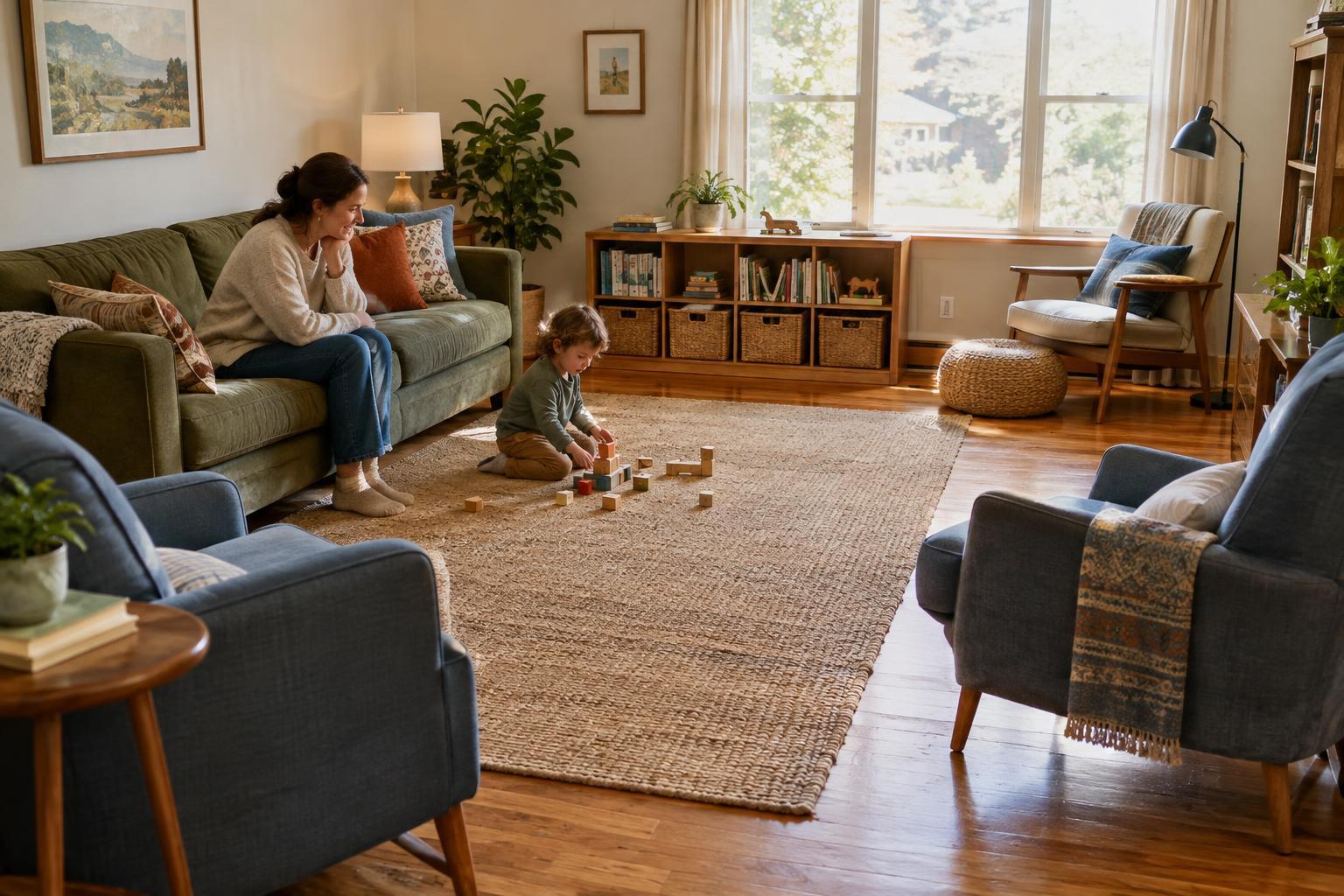
A play area can be a corner, a low shelf or a mat that comes out when needed. The aim is to give children a recognizable place to begin, not to keep every activity contained. A small tray can hold building pieces; a washable surface can mark a spot for drawing; a basket beside the sofa can make picture books easy to reach. When the living room serves many purposes, portable supplies let it change with the day.
Choose what to keep within reach based on your child’s age and how they use the space. Younger children may do best with a few sturdy, easy-to-put-away options. Older children may want somewhere to leave a project in progress, even if that means reserving one shelf or a corner of a table. Check that furniture and stored objects are suitable for your household, particularly if young children can reach or climb them.
Make storage simple to use
Storage works best when putting something away is nearly as easy as taking it out. Broad categories such as blocks, art supplies and dress-up clothes are often more useful than sorting every small item. Open baskets can help children see their choices, while a lidded box may be useful for supplies that need adult help. Labels with pictures can make a system easier for children who are not yet reading.
You do not need to store every toy in the main living area. If space allows, keep some items elsewhere and bring them out when interest returns. Leave room in baskets rather than packing them tightly; a child is more likely to help tidy when everything has an obvious place. If storage is high up, let an adult handle anything that cannot be reached safely.
Plan for the moments when spaces overlap
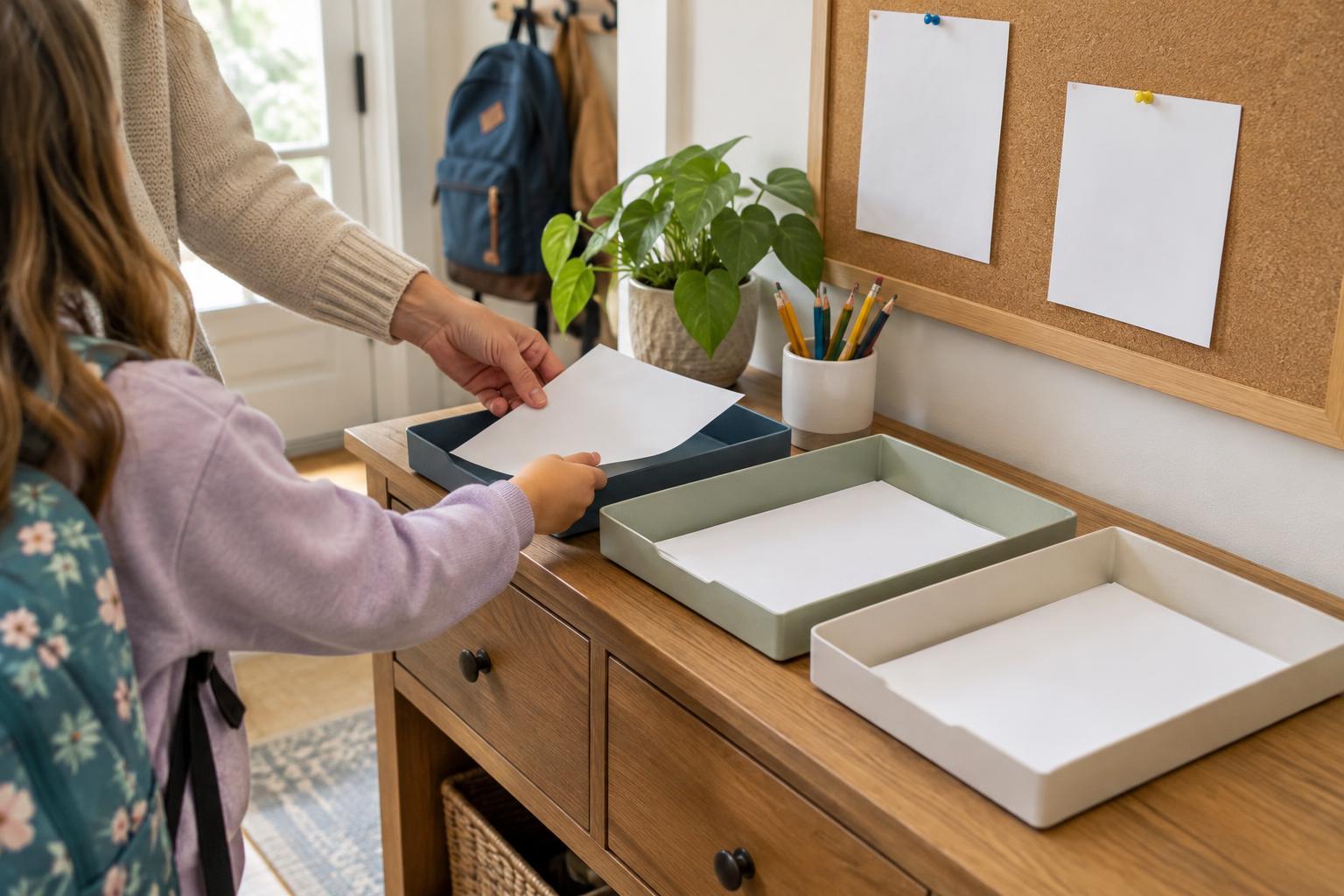
Small homes often ask one surface to do several jobs: breakfast, homework, crafts and dinner may all happen at the same table. A short transition routine can make those changes less frustrating. Keep the materials for one activity together, agree on a place for unfinished work, and allow a few minutes to clear the table before it is needed for something else. The routine does not have to be perfect to be helpful.
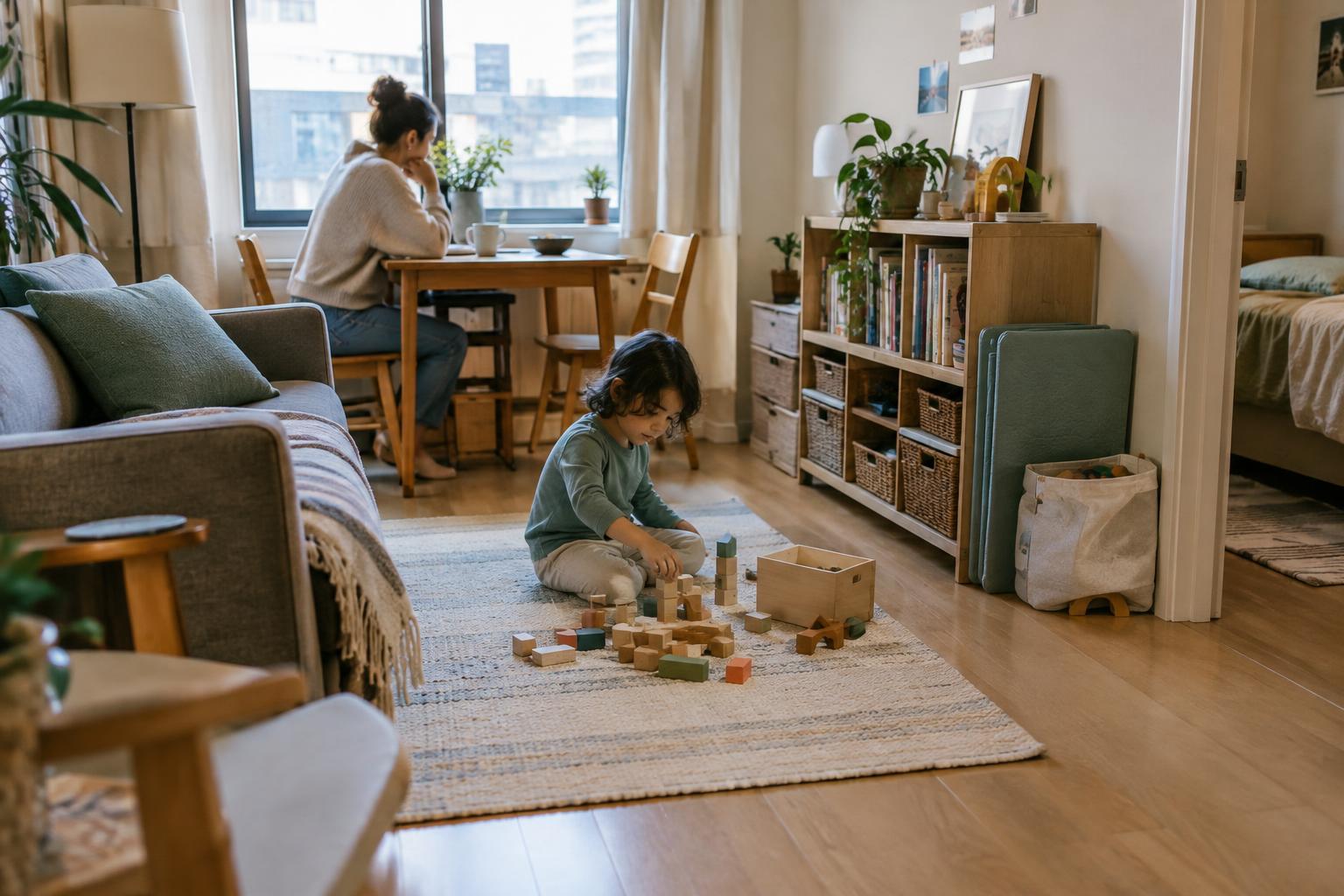
Shared space also needs shared expectations. Children may need to know where active play is welcome and when someone else needs quiet. Adults can explain these limits in concrete terms: “You can build on the rug while I use the table,” or “We’ll put the paints away before lunch.” When possible, offer an alternative rather than only saying no. Predictable boundaries can help everyone use the same room without expecting children to be still or quiet all day.
Leave room for comfort and change
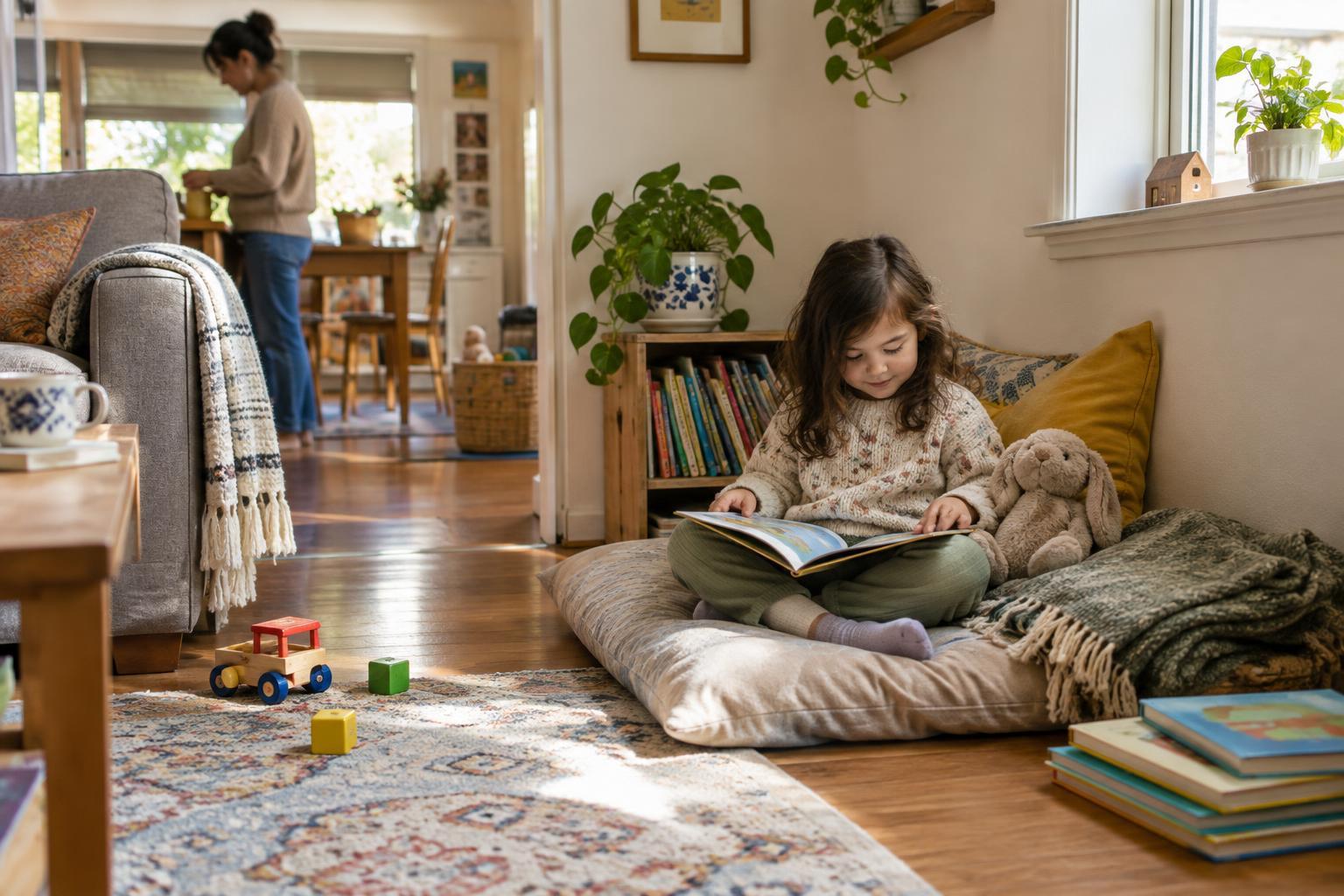
Alongside play and storage, consider whether your child has a comfortable place to pause. This could be a cushion by a bookshelf, a familiar chair or a spot beside a caregiver. It need not be private or elaborate. In a busy home, having a place associated with reading, resting or looking at books can offer a gentle change of pace.
A useful layout will change as children grow and family routines shift. Revisit it when a basket overflows, a favorite activity moves to a new spot or an arrangement starts making daily tasks harder. You might move one shelf before buying another, or remove an unused item to free a surface. Making space for children is less about fitting everything in than about keeping the home workable and welcoming for the people who live there.