Start with what happens in the room
Before moving furniture, notice how the family room works on an ordinary day. Where do people sit to talk or read? Where do children spread out a game? Does someone need a small surface for drawing, or a place to put a drink? A practical layout starts with these repeated activities rather than an ideal picture of a perfectly tidy room.
Pick two or three uses that matter most to your household. If the room is mainly for play and conversation, leave more open floor space and turn seating toward one another. If it also serves as a passage to another part of the home, protect a clear route through it. You do not need a separate area for every activity; the goal is to make common transitions feel easy.
Give movement and play enough room
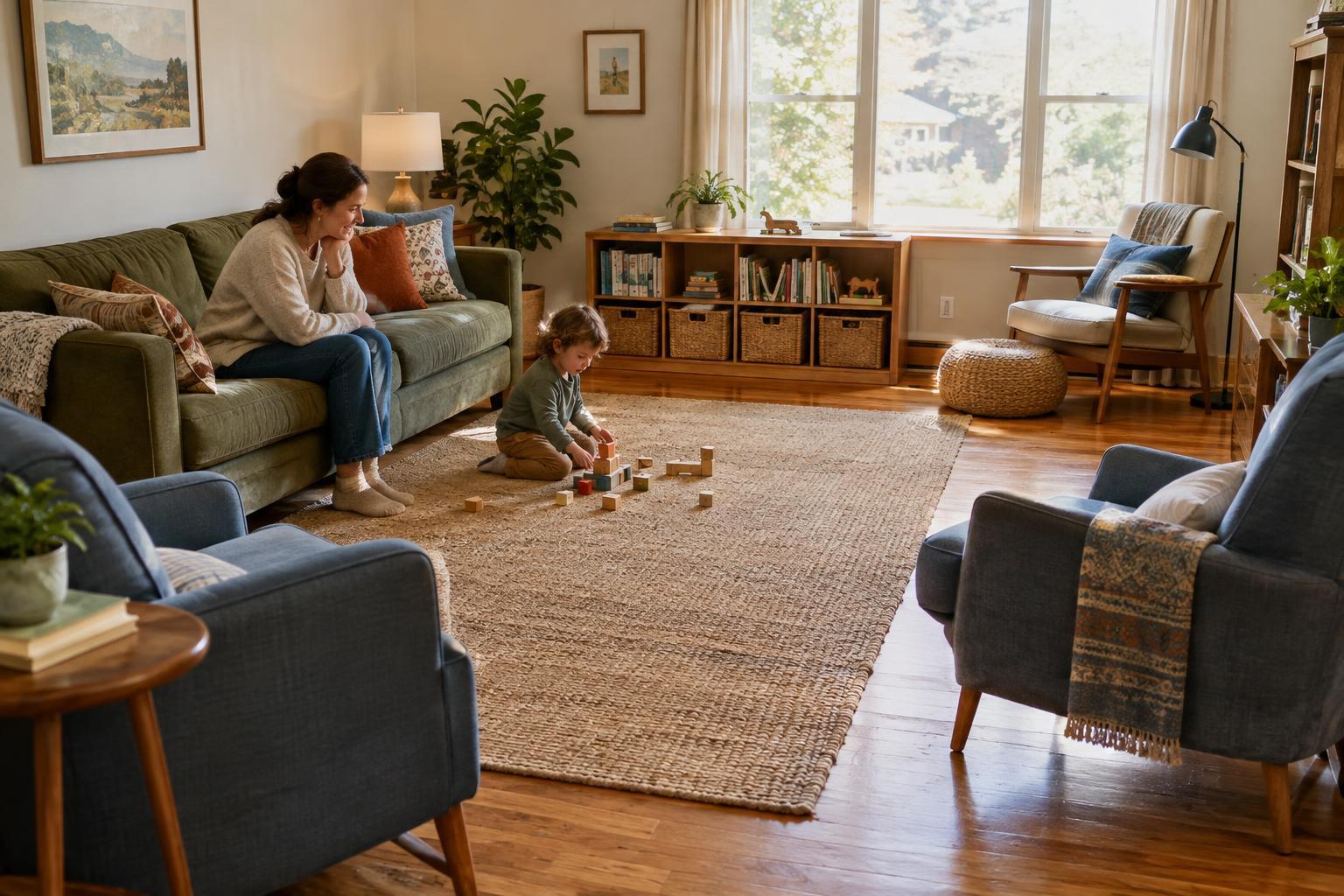
Large furniture often determines whether a room feels easy to share. Try placing the biggest pieces first, then walk the routes people take to doors, shelves and seats. Make sure drawers can open and that a person carrying laundry or a young child can pass without weaving around toys. When possible, keep the center of the room flexible so it can hold a floor game one moment and be cleared for sitting together the next.
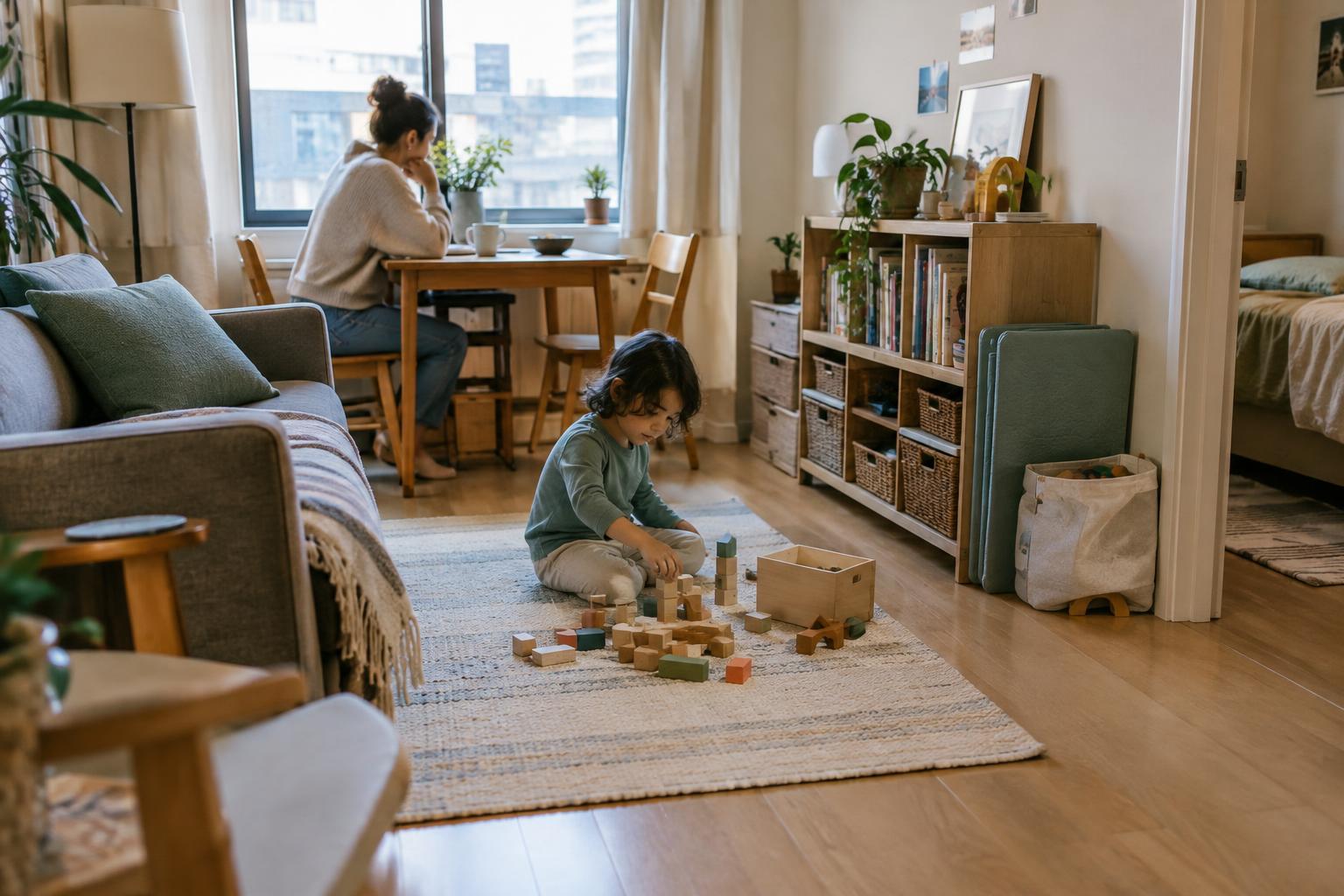
A rug or low table can suggest a play area without closing it off. For younger children, keep the activities they may use independently within comfortable reach and reserve a nearby spot for an adult to sit. As children grow, that same floor space might become a place for building projects or board games. A layout that can change with a few small moves is often more useful than one built around a single activity.
Arrange seating for the way you connect
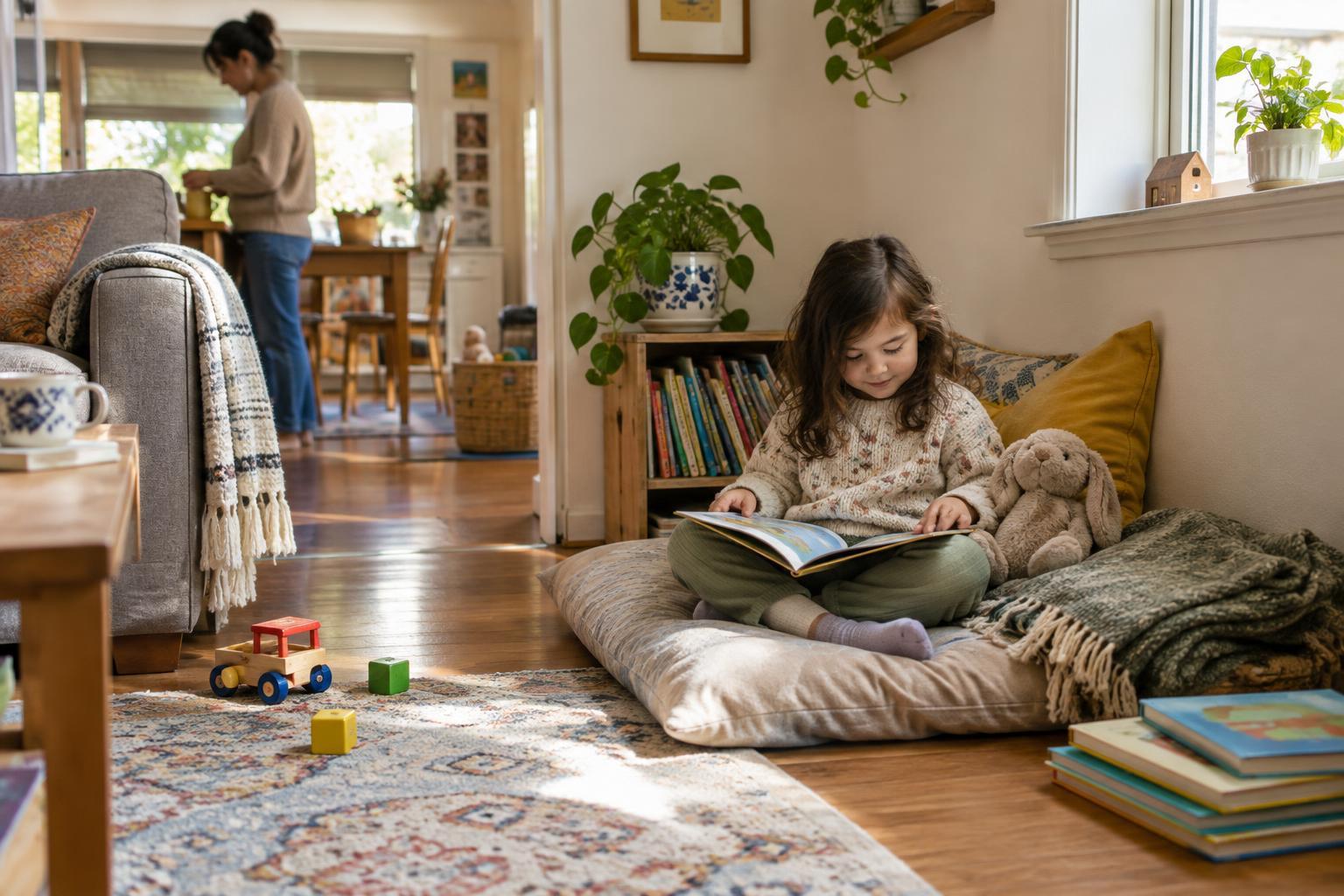
Seating does not have to form a perfect set. A sofa, one movable chair and a floor cushion may offer more options than several fixed pieces. Think about sightlines: people should be able to see one another without constantly turning, and an adult should be able to glance toward a play area from a comfortable seat. If a screen is part of the room, decide whether it should be the focal point or simply one option among others.
Small surfaces also make shared time easier. A sturdy side table can hold books or drinks without taking over the floor, while a low, clearable surface can support a puzzle. Choose placements that suit your household’s ages and habits, and check that furniture is stable and cords are kept out of busy paths. Comfort matters, but so does the ability to get up, move around and put things away.
Put storage where tidy-up happens
Storage works best when it is close to the activity it serves. If toys usually end up beside the sofa, a basket or low shelf there may be more useful than a cupboard across the room. Give frequently used items simple homes that family members can recognize: a bin for building pieces, a shelf for books and a place for blankets. Keep the system small enough that putting things away does not become a separate project.
Not everything needs to be visible at once. Rotating a few games or supplies into a closed cupboard can free up usable space, while open storage makes everyday favorites easy to reach. Consider which items children may get out on their own and which should stay in an adult-managed spot. A clear patch of floor at the end of the day is easier to achieve when each item has a nearby destination.
Test the layout before committing
A room can look balanced on paper and still feel awkward in use. Try an arrangement for a week and notice where people naturally sit, where clutter gathers and whether anyone has to move a chair to open a cabinet. Ask family members what feels convenient and what gets in their way. Those observations can guide small adjustments more reliably than trying to solve the whole room at once.
You might shift a chair, trade two storage spots or leave a little more floor open. Keep the features that help daily routines and let go of ones that only look appealing when the room is empty. A successful shared family room is not one that stays arranged for a photograph; it is one that welcomes the different things your family does there and can be reset without much fuss.