Start with the space you have
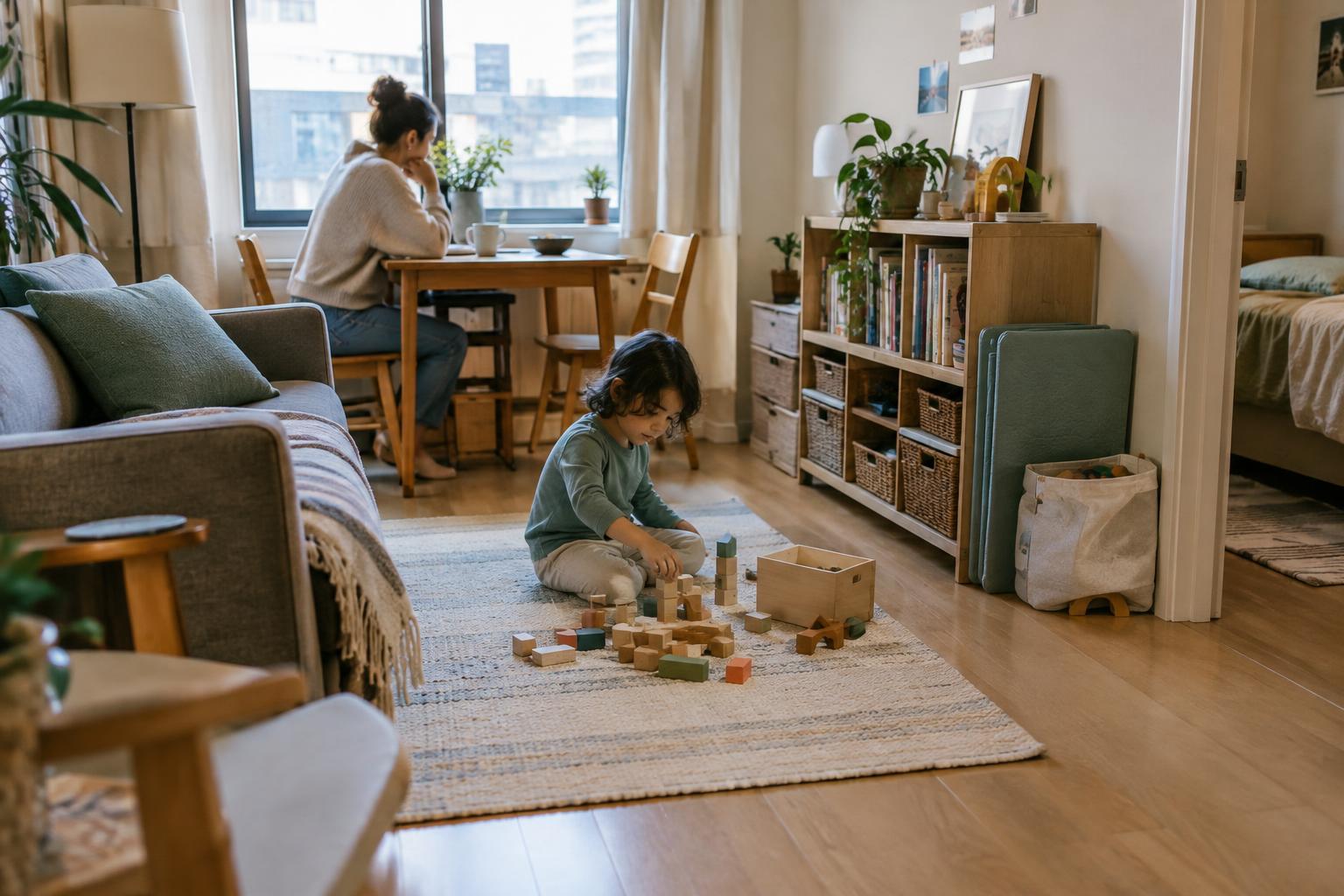
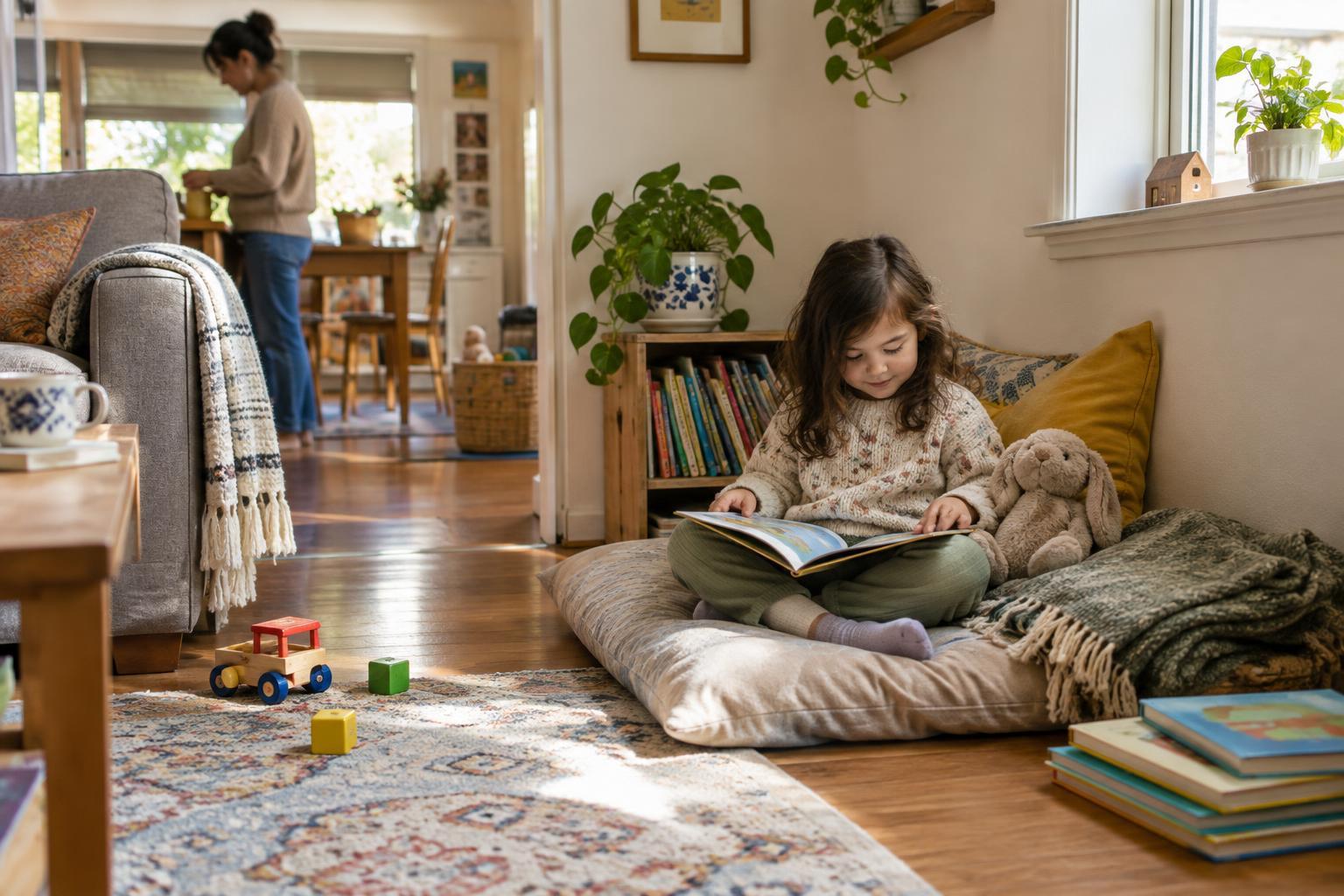
A quiet corner can be one end of a sofa, a cushion beside a bookshelf, or a small spot in a shared bedroom. The aim is not to shut out every household sound. It is to offer a place where someone can step away from the busiest part of family life for a little while. Choose a spot that is easy to reach and, for younger children, easy for an adult to see.
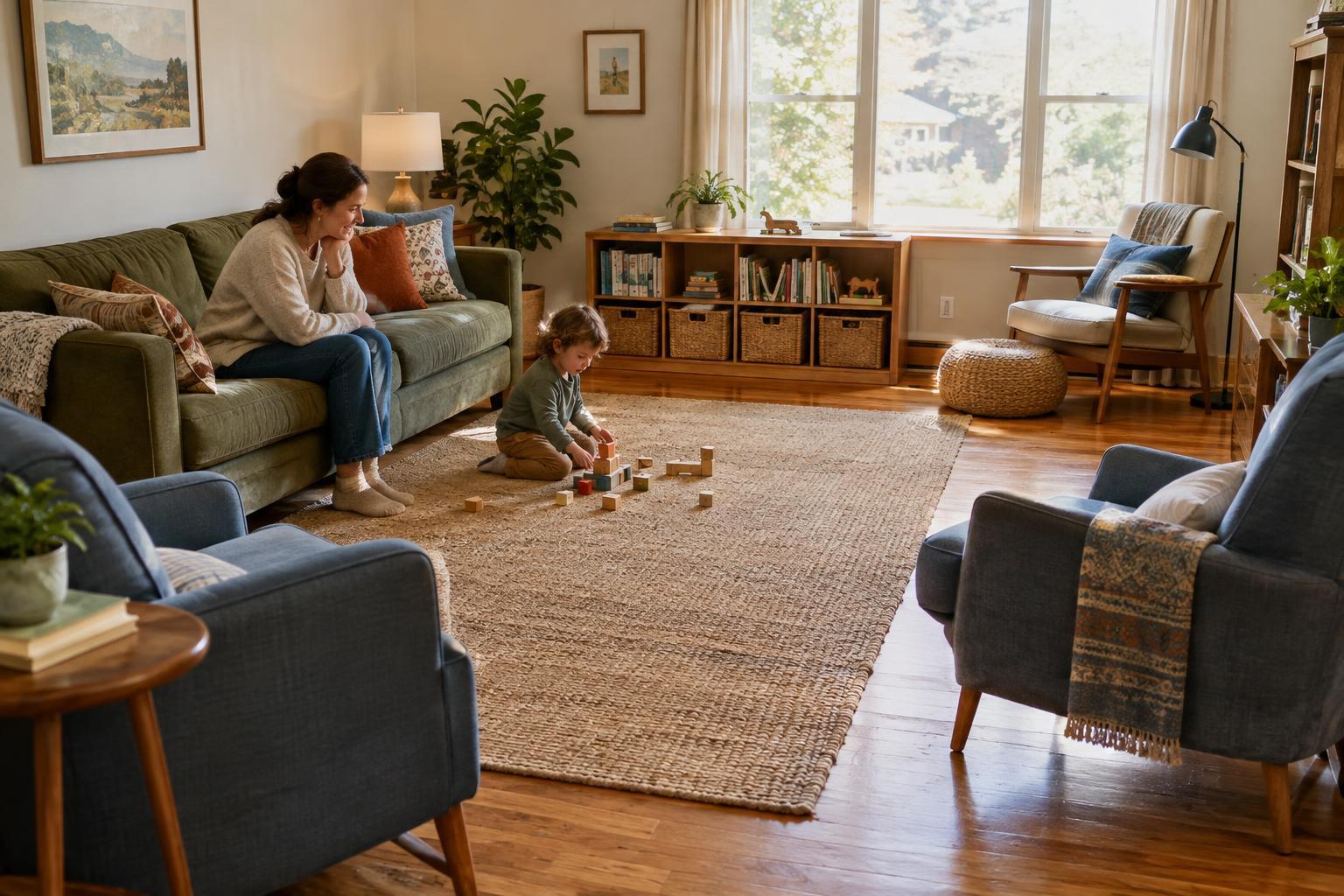
Notice when your home feels most crowded or noisy. If the kitchen is lively before dinner, a spot farther from the table may work better than one beside it. If a dedicated corner is not possible, a basket of quiet-corner items can move to whichever space is available. A predictable place is helpful, but the habit of making room for a pause matters more than a perfect layout.
Keep the setup simple and comfortable
Start with a washable cushion, a small rug, or a familiar blanket. Add a few choices that invite unhurried activity: picture books, paper and crayons, a soft toy, or a simple puzzle suited to the child's age. Too many objects can make the space feel like another play area to tidy. A small selection is easier to use and easier to put away.
Comfort also includes light, noise, and safety. A lamp may feel gentler than bright overhead lighting, but place cords and breakable items out of children's reach. Check that furniture is stable and that a child can leave the space freely. For babies and toddlers, keep loose items and small parts appropriate to their age and supervise as you normally would. The corner should feel welcoming, not hidden or enclosed.
Let children help shape it
Ask children what makes a space feel pleasant to them. One child may choose a favorite book; another may want a drawing displayed nearby. Offering two or three manageable choices gives children some ownership without turning setup into a large project. Preferences can change, so the corner can change too.
Different ages may use the space differently. A preschooler might look at books beside an adult, while an older child might read or sketch independently. A toddler may only sit for a minute before moving on. None of these uses needs to meet a set time goal. The corner is an option for slowing down, not a task children must complete.
Make it an invitation, not a punishment
Introduce the quiet corner at an ordinary, calm moment. You might say that anyone can use it when they want a break from noise or activity. Try using it yourself to read a page or take a short pause. This shows that taking a break is a normal household choice rather than something reserved for a child who has had a difficult moment.
If a child is upset, offer the corner without insisting: “Would you like to sit here with me, or would you rather stay where we are?” Some children want company; others want a little space while staying within reach. Listening to that preference can be more useful than expecting the corner to change how someone feels right away. Keep conversations about household rules separate so the space remains associated with comfort.
Fit quiet moments into family routines
A quiet corner works best when it fits the rhythms already in your home. It might be available after school, before a busy mealtime, or during a sibling's lively game. You do not need to schedule every visit. Simply keeping the space ready makes it easier for someone to choose a pause when one would help.
In a shared home, agree on a few simple expectations: keep voices lower nearby when possible, ask before joining someone, and return borrowed items when finished. These are flexible courtesies, not rules that require the house to become silent. Revisit the setup occasionally. If the corner becomes a storage spot or stops being used, clear it, move it, or swap in a book. A quiet corner can grow with your family while remaining small, useful, and easy to maintain.