Start with an invitation, not a set of rules
Block play does not need a complicated plan. Put a few blocks on a clear patch of floor or a low table and see what your child does first. They might line them up, carry them around, make a tower, or knock down one you built. Each approach gives them a way to explore shape, balance, space, and cause and effect.
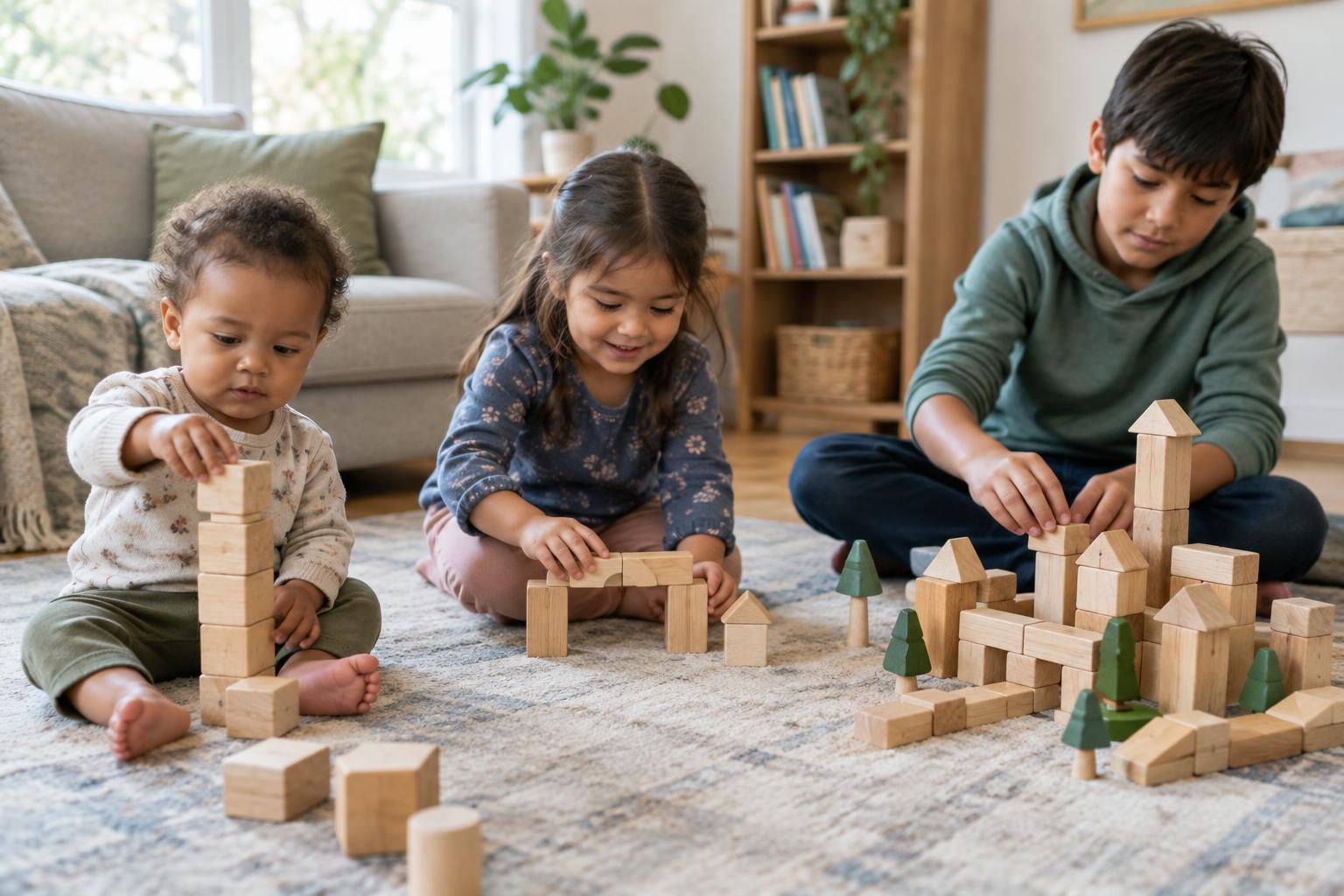
A challenge works best as an invitation: “Can we make a place for this toy to rest?” or “What could we build with these five blocks?” If your child changes the goal, follow their idea. A house that becomes a tunnel is still worthwhile play. Keep pieces appropriate for the child’s age, check for damaged blocks, and give younger children enough space to play without small parts from an older sibling’s set nearby.
For toddlers: stack, topple, and try again
For a child who is just beginning to build, offer a handful of large, easy-to-grasp blocks. Try taking turns adding one block to a short tower. Pause before the next turn so your child can look, reach, and decide where their block might go. If the tower falls, you can say what happened without treating it as a mistake: “It leaned, and then it tipped over.”
Other simple challenges are to make a row long enough for a toy to travel beside it or to put one block inside a space made by two others. Expect repetition. Building the same small tower and knocking it down several times may be exactly what your child wants to investigate. If frustration rises, use fewer blocks or build together rather than insisting on a finished structure.
For preschoolers: build for a purpose
Preschool-age children may enjoy a challenge with a story attached. Ask them to make a garage for a toy vehicle, a bed for a stuffed animal, or a bridge over a pretend river made from a scarf. These goals offer a reason to test ideas without requiring one correct result. A vehicle that does not fit through the garage door creates a natural question: “What could we move to make more room?”
You can also limit the materials for a fresh puzzle. Set out eight blocks and ask whether they can make two different towers, or invite them to build something that has a doorway. Let them count if they want to, but there is no need to quiz them. Words such as under, beside, wider, and taller fit naturally into conversation as you describe what you both notice.
For older children: add a design constraint
Children ready for longer projects can try challenges that call for planning and revision. Build a bridge that lets a toy pass underneath, create a tower that stands while someone gently taps the table, or design two connected rooms for a pretend character. Invite your child to sketch an idea first if drawing appeals to them, but leave room to change the plan once building begins.
Try asking, “Which part feels strongest?” or “What might happen if we move that block?” Rather than fixing a wobbly build yourself, offer time for another attempt. Children can compare two designs by looking at what each one does, not by deciding which is best. Siblings of different ages may work together if each has a meaningful role, such as choosing a route, building a wall, or testing whether a toy fits.
Make room for conversation and cleanup
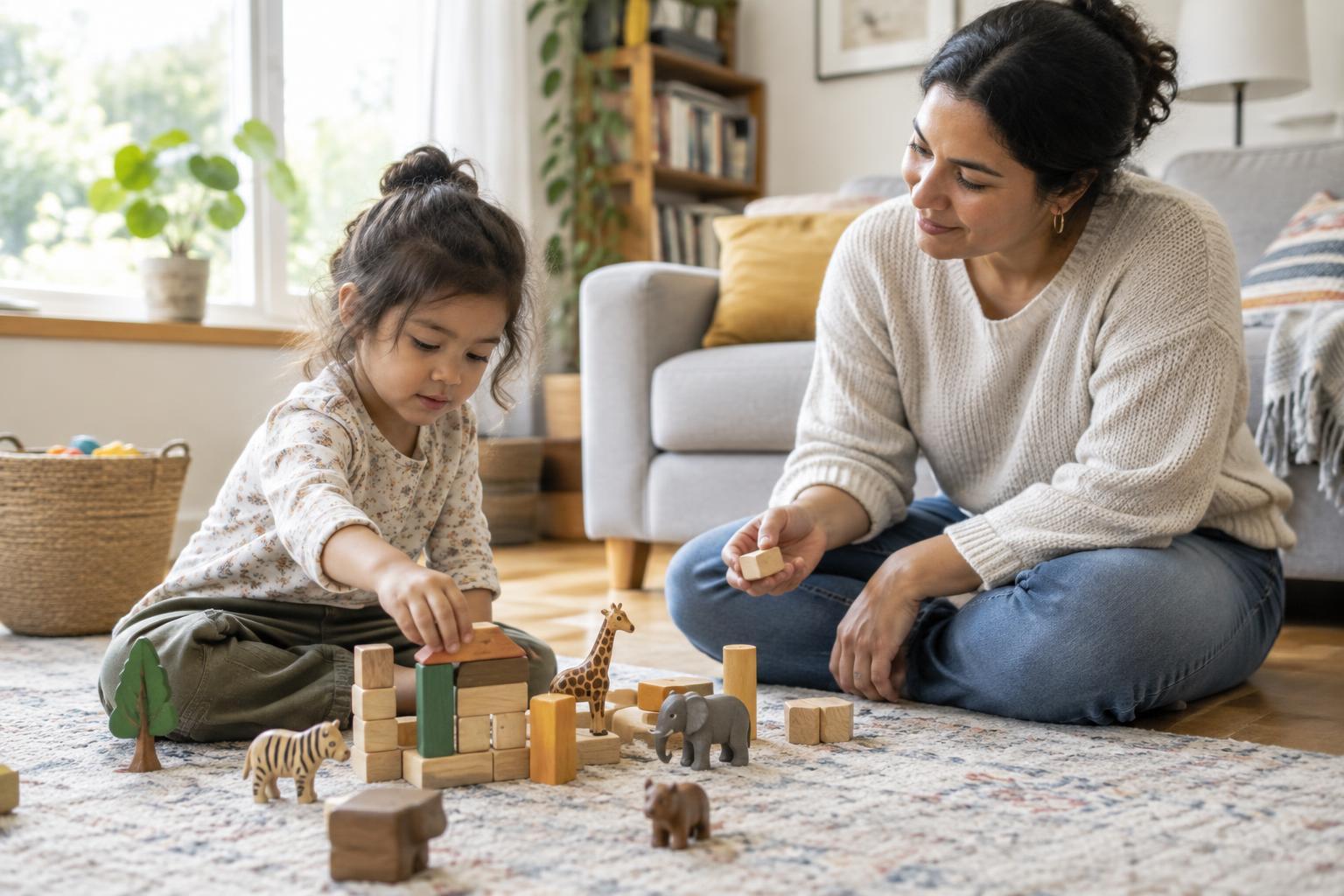
Your role can shift during play. Sometimes you are a building partner; sometimes you simply watch and respond when invited. Describe a choice you notice, ask an open question, or let a quiet stretch stay quiet. If your child asks you to copy their structure, try it. You may discover which details matter most to them.
Before putting blocks away, give the build a moment of attention. Your child might want to show someone how a door opens, take a picture, or rebuild one part tomorrow. If the structure needs to come down, invite them to decide how to take it apart and sort the pieces. A familiar cleanup routine makes it easier to return to play another day, with a new challenge or with no challenge at all.