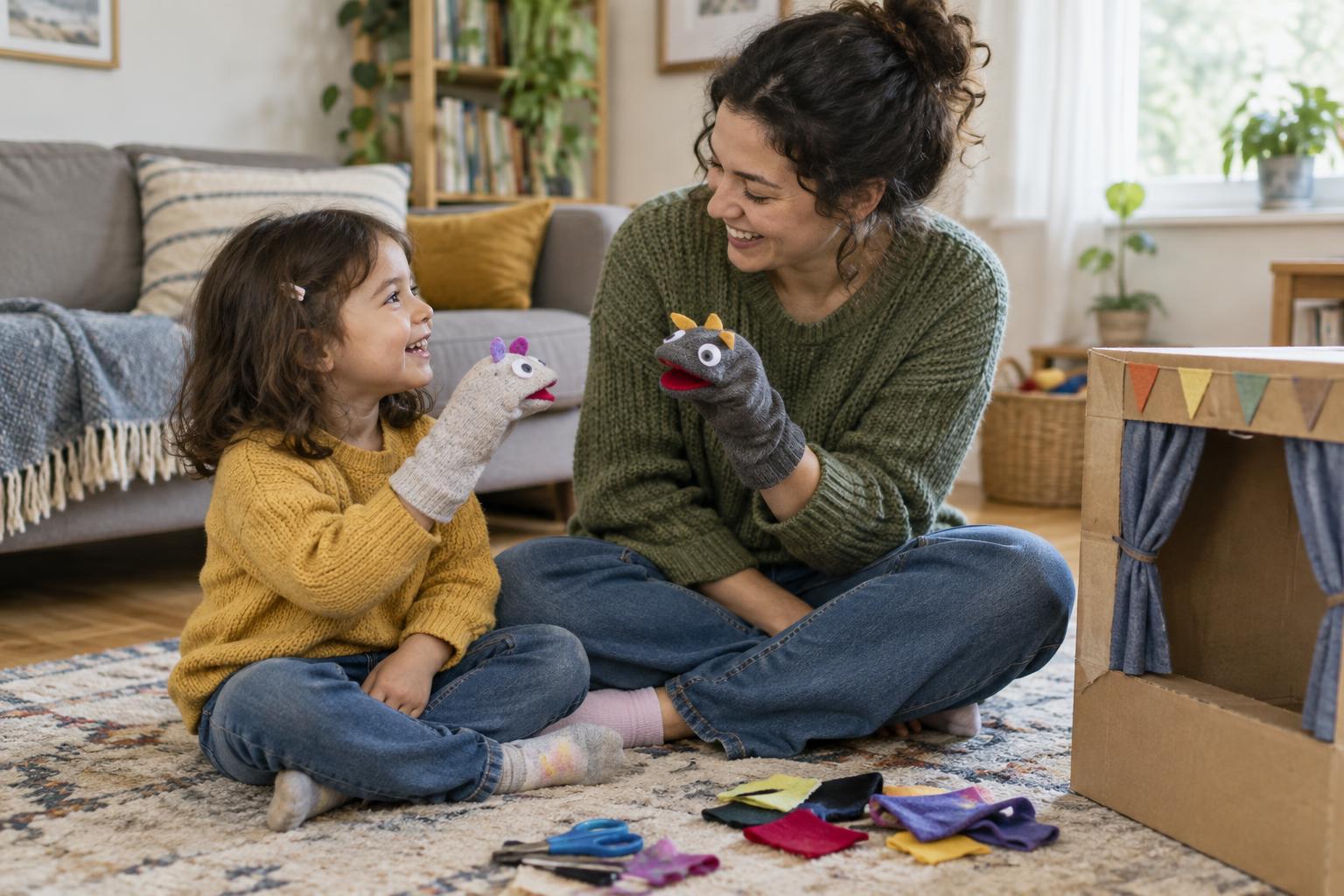
Watch the story before entering it
A child may turn a cushion into a boat, run a pretend shop or give every toy a job. Before joining, take a moment to notice what is already happening. Who are the characters? What objects have new meanings? Is the child speaking for everyone, or leaving space for another player? Watching first helps you respond to the game they have made rather than starting a different one.
You can ask a simple question such as, “Is there a part for me?” or “What’s happening in your shop?” Then accept the answer, even if your assigned role is to wait for a delivery or be the sleeping dragon. Some children want an active partner; others want an audience. Both are ways of inviting you into their play.
Follow the child’s lead, one turn at a time
Once you have a role, try doing a little less than you think you need to. If you are a customer, order something and let the child decide what the shop sells. If you are a passenger, ask where the bus is going rather than announcing the route. Short comments and questions give the child room to direct the next moment.
It is easy for an adult to build a detailed plot, especially when the play slows down. A pause does not always mean the child needs help; they may be thinking. You can wait, copy a small action or describe what you notice: “The teddy is getting ready for a trip.” If the child changes the rules halfway through, you can usually go along with it. Pretend play does not need a consistent script to be enjoyable.
Offer ideas as invitations, not instructions
Adding an idea can keep a game going, but it works best when the child can accept, change or ignore it. Try, “Should the dog come to the picnic?” instead of placing the dog at the table and deciding what it does. If your suggestion gets a firm “No,” that is useful information about the story the child wants to tell. You can return to your role and ask what happens next.
Younger children may enjoy familiar actions repeated many times, such as serving the same cup of tea or putting a toy to bed. An older child may invent elaborate rules or ask you to play several characters. In either case, you do not have to make the game more complex to make it worthwhile. Responding to what the child finds interesting is enough.
Keep boundaries clear without taking over the game
Following a child’s lead does not mean setting aside ordinary limits. If a pretend restaurant needs real kitchen tools, you can offer safer play items instead. If a game becomes too rough, state the boundary plainly: “I can play chase, but I won’t be pushed.” Then suggest a way to continue, such as having the characters run in place or hide behind cushions. For very young children, choose props that suit their age and supervise play with small items.
You can also name your own limits. If you have ten minutes, say so before you begin: “I can play until it’s time to start dinner.” A clear ending gives the child a chance to plan a last scene. When the time comes, you might ask where the characters should stay until the next game, without promising that the story must continue later.
Know when to step back
Your part in pretend play may be brief. A child might ask you to build a doorway, then carry on alone. Another may decide that the grown-up character has gone to work. Rather than trying to stay involved, take the cue and let the play continue. You can be nearby and available without narrating or directing every move.
If a child does not want you to join, you can respect that choice and offer connection at another time. The goal is not to turn every game into a shared activity. By entering when invited, taking a small role and leaving space for surprises, you help make play a place where the child’s ideas can lead.