Two useful ways to play
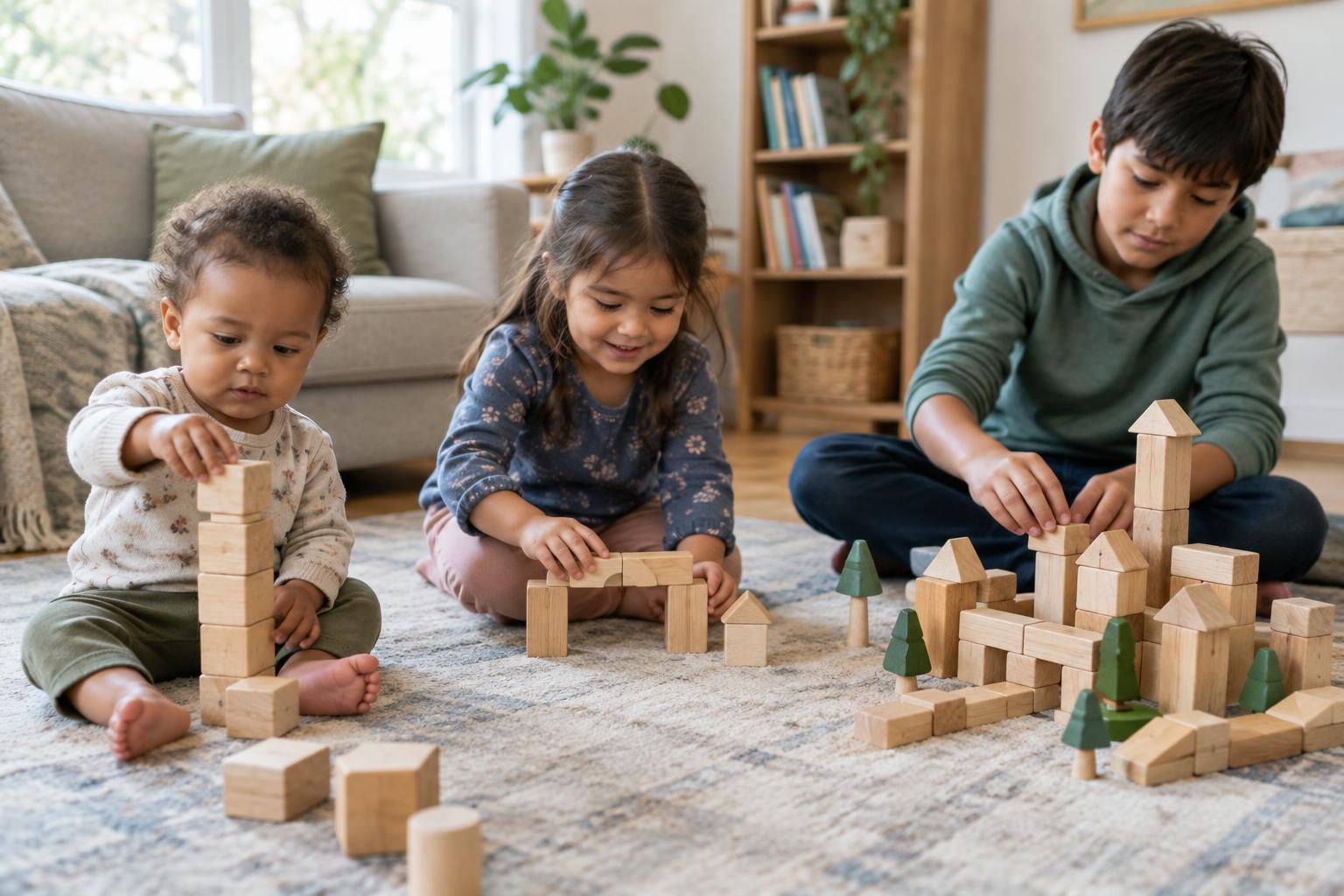
In child-led play, a child chooses what to do and how the play unfolds. They might turn a cardboard box into a bus, sort stones by a rule only they understand, or spend ten minutes making the same toy roll down a ramp. An adult can stay nearby, join when invited, and respond to the child's ideas without taking over.
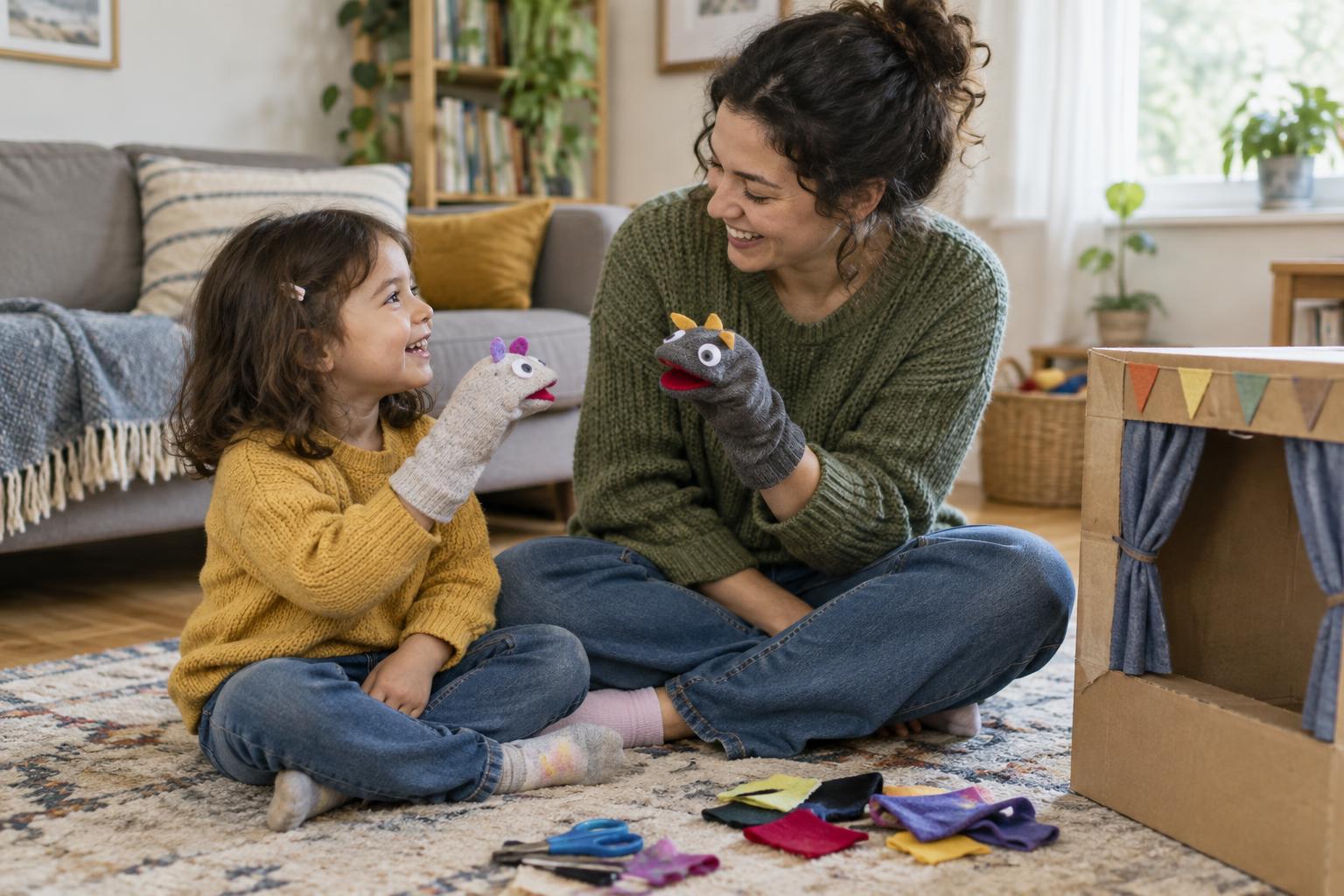
In adult-guided play, an adult introduces a goal, a material, or a simple structure. You might suggest building a bridge that can hold a toy car, show how to take turns in a board game, or invite a child to look for shapes while walking. The child still gets room to make choices. Guided play works best as an invitation rather than a test with one right answer.
Neither approach needs to fill every moment. Children may move between them in a single afternoon, and ordinary tasks can leave space for play without becoming elaborate activities.
When following your child's lead helps
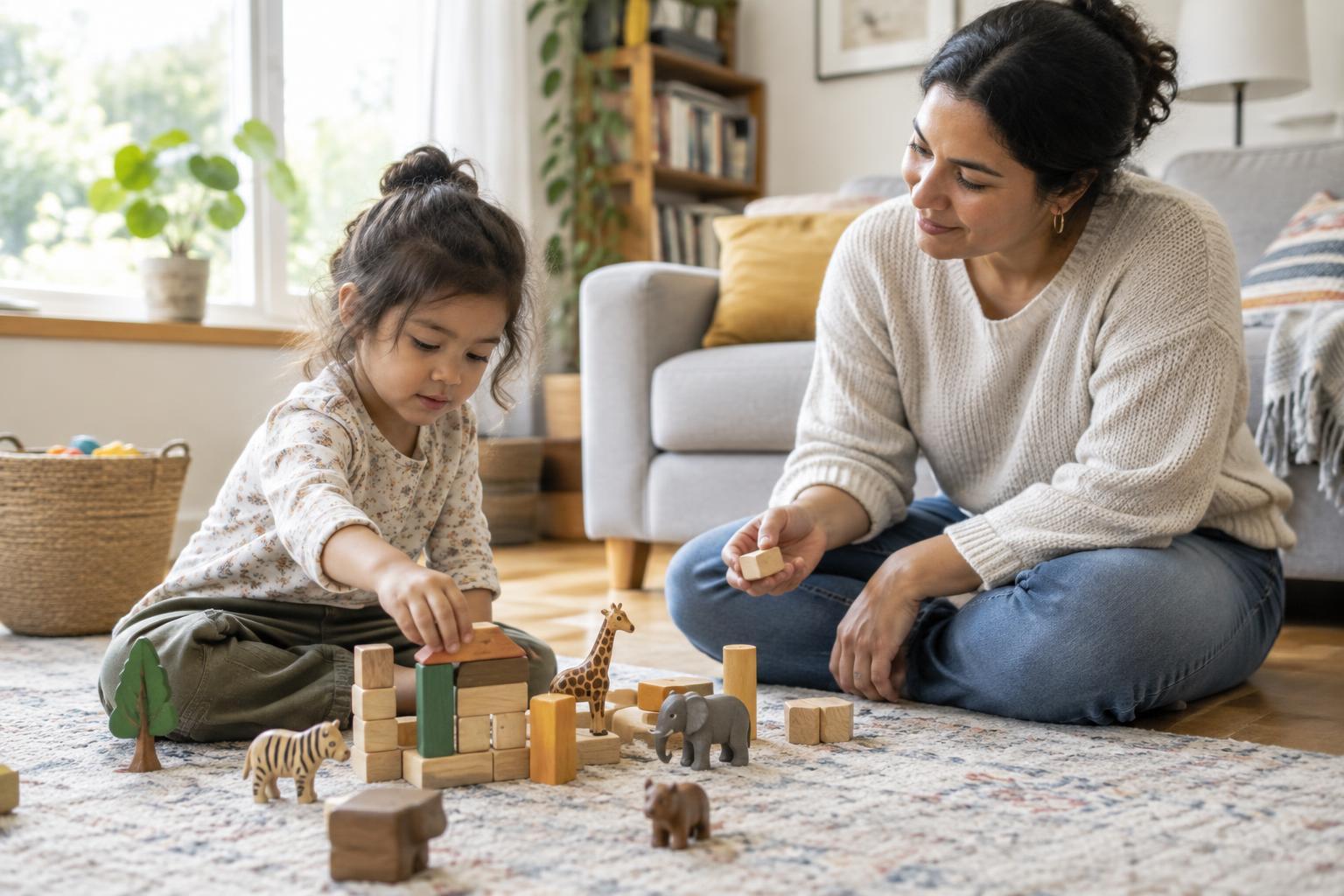
Choose child-led play when your child is absorbed in an idea and the setting is safe enough to let it develop. Watching for a moment before joining can show you what interests them. If you do join, try describing what you notice or asking a question that leaves the next move open: “Your animals are all under the table. What happens there?” You can also simply play the role your child gives you.
For younger children, following their lead may mean copying a sound, rolling a ball back, or letting them choose which block comes next. Older children may invent detailed stories, games, or rules. If they want you to participate, ask how the game works before proposing changes.
Child-led does not mean adults disappear or ignore limits. You can step in when something is unsafe, when shared materials need care, or when another person's boundaries matter. A brief, clear limit can protect the play without dictating the whole story.
When a little guidance is useful
Adult-guided play can help when a child wants to try something new but does not know where to start. Offer a small starting point, such as two colors of paint, a few loose parts for building, or a familiar game with one changed rule. Once the child begins exploring, you can ease back. If your idea does not catch their interest, it is fine to try another time.
Guidance is also useful when an activity has steps that make it easier or safer to enjoy. You might demonstrate how to pass scissors handle-first, help set up a simple obstacle course, or explain the first turn of a game. Keep directions short enough that the child can spend more time playing than listening.
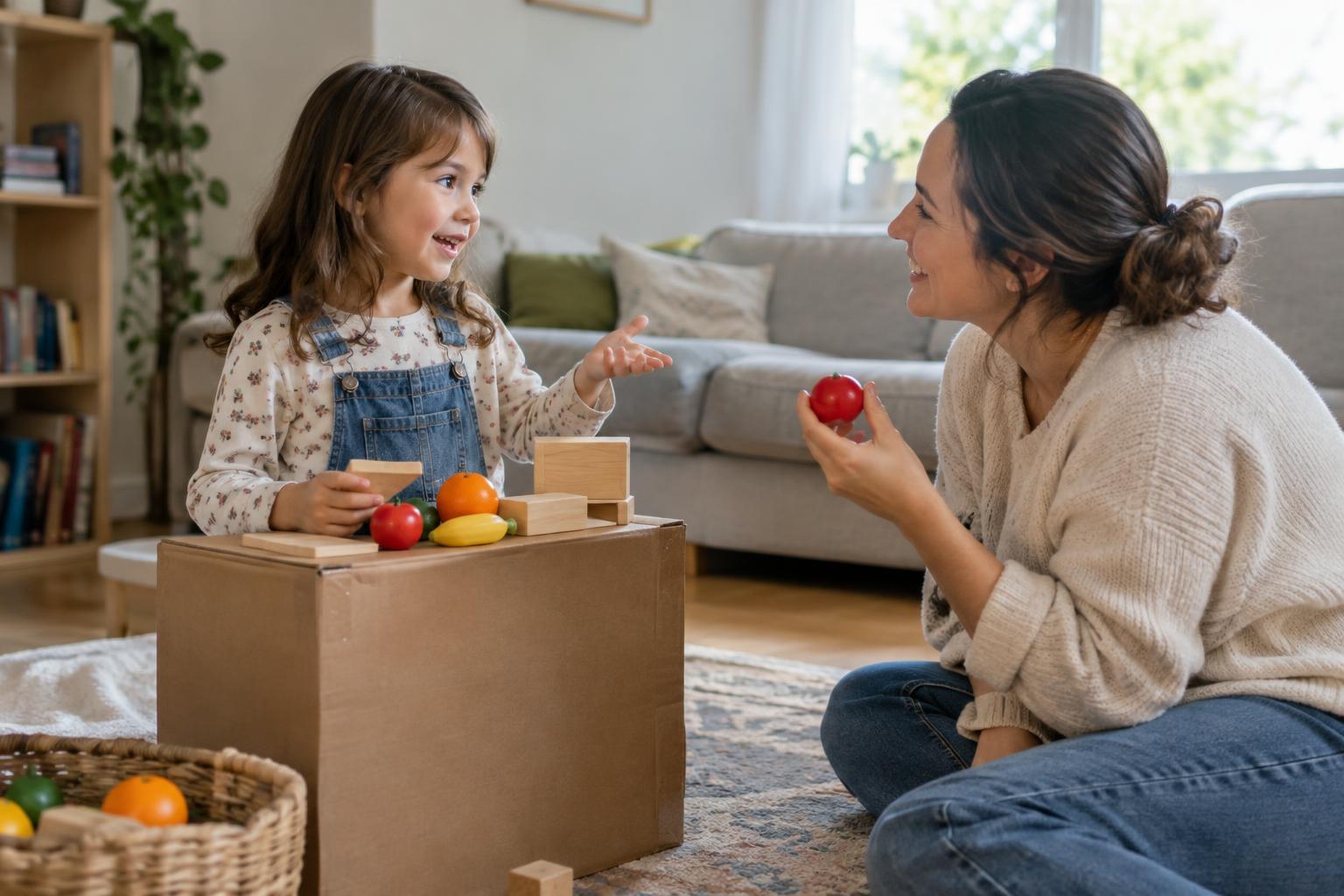
A shared goal can support play with siblings or friends, too. Suggest making a pretend shop together or building one home for several toy animals. Adults can help children agree on a starting plan while leaving room for each person to contribute an idea.
How to switch without taking over
A helpful question is: “Whose idea is driving this right now?” If your child is engaged, try following. If they seem stuck, invite them to choose between two possibilities or offer to show one way to begin. You can say, “Would you like an idea, or are you still working it out?” Their answer may change as the play continues.
Notice whether your guidance opens up the activity or narrows it. Showing how a ramp works may lead to more experiments; repeatedly correcting where the cars should go may end the game. When a child changes your planned activity, consider going with the change if it is workable. A counting game that becomes a pretend restaurant can still be a satisfying time together.
It can also help to set boundaries before play begins: which materials are available, where they can be used, and when cleanup will happen. Within those limits, children have more room to direct the details.
Making room for both in everyday life
You do not need a strict schedule that separates the two styles. While preparing a meal, you might invite a child to arrange napkins in any pattern they like, then guide them in counting how many places are set. Outdoors, they might choose a path to explore, while you suggest pausing to compare the textures of two leaves without needing to name them.
Keep expectations flexible. A toddler may enjoy short, repeated exchanges; an older child may want more time to develop a project. Mood, available space, and the demands of the day matter as well. Some days, the most useful contribution is a fresh idea. On others, it is a safe place, a few materials, and an adult willing to follow along.