Start with a character, not a script
A puppet story does not need a stage, a polished voice, or a planned ending. One sock puppet looking for its missing shoe is enough to begin. Give the character a small, familiar wish: finding a snack, visiting a friend, or deciding what to do on a rainy day. Then pause. A child might supply the next event, introduce another character, or take the story somewhere entirely unexpected.
If your child is new to puppet play, let the puppet do something simple before asking for ideas. It might knock gently on a pretend door or wonder aloud, “Where did my hat go?” Questions with many possible answers leave more room for invention than questions that test for a correct response. If the child would rather watch at first, you can tell a short story and offer the puppet when they seem interested.
Make puppets from what you have
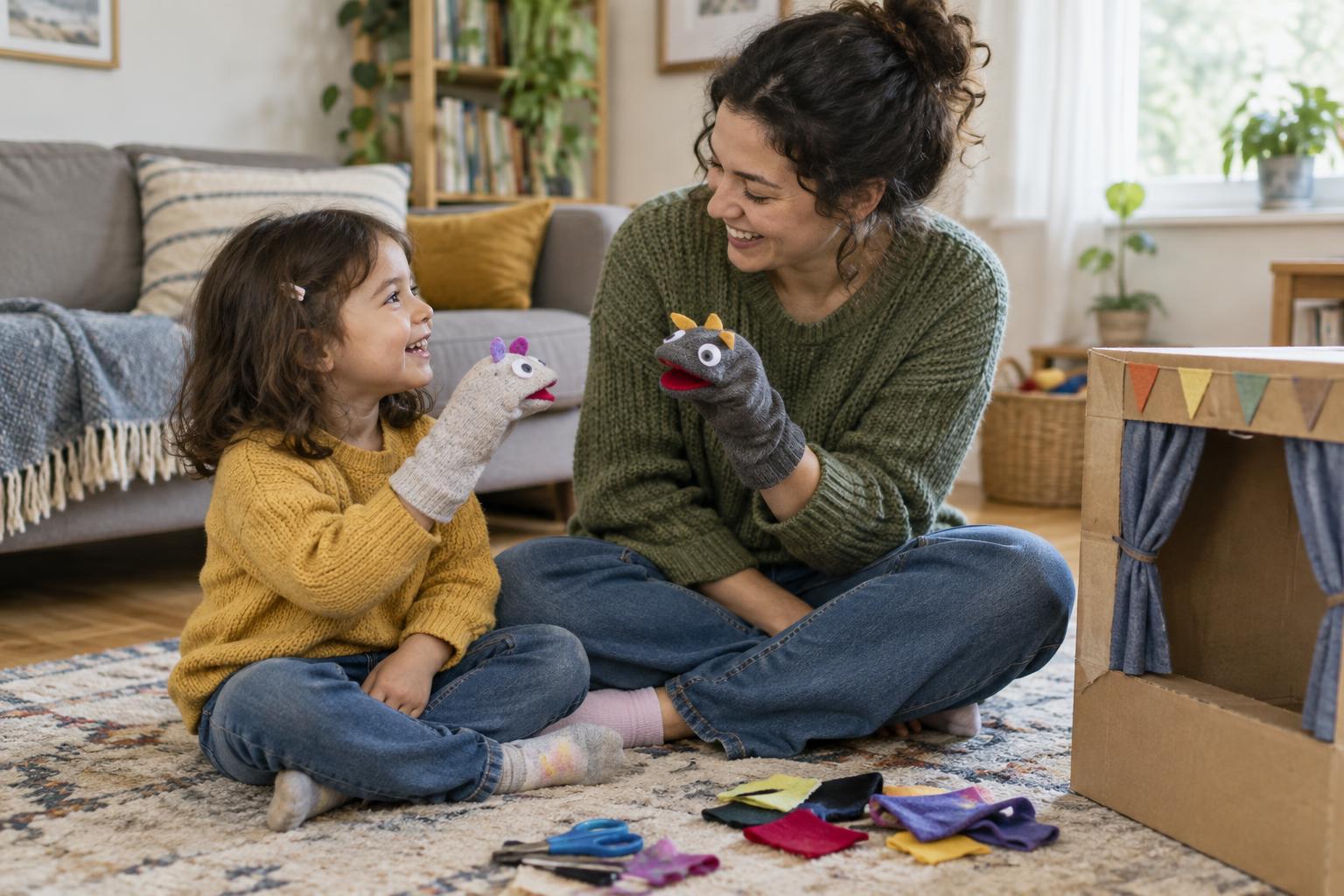
A hand behind a dish towel can become a shy creature. Paper bags, clean socks, or drawings attached to sturdy handles can become a cast of characters. Children can help choose names and decide what each puppet likes or dislikes. A cushion can be a mountain; a cardboard box can be a bus, a cave, or a home. Familiar objects make it easy to change the setting without preparing a new activity.
Match the materials to the child’s age and how they play. For children who still put objects in their mouths, avoid loose buttons, beads, detachable eyes, and other small parts. Check that homemade puppets are comfortable to handle, and stay nearby when using bags, strings, or craft supplies. Simple puppets often work especially well because children can reshape their identities as the story changes.
Share the storytelling
Take turns adding one small piece at a time. You might say, “The rabbit found a tiny door,” and ask, “Who is behind it?” Your child’s answer can become the next scene, even if it seems unrelated to what came before. A boat may suddenly fly, or the rabbit may decide to bake soup. Puppet play is a place to explore those ideas, not to enforce a tidy plot.
Children can join in different ways. A younger child may enjoy moving a puppet, making an animal sound, or choosing between two places to visit. A child ready for a longer story may invent a problem and several ways the characters could respond. You can adjust your part to leave space for theirs: describe what the puppet sees, then wait; repeat a phrase they enjoy; or hand over a character and ask what it does next.
When a story stalls, offer a gentle prompt rather than taking over. Try a surprise sound at the door, a lost object, or a visitor who needs directions. If your child changes the rules, follow along when you can. The shared attention matters more than keeping track of every detail.
Let characters explore everyday moments
Puppets can borrow ideas from ordinary family life. A character might learn to wait while another finishes speaking, figure out how to share a blanket, or pack for a trip to the park. Rather than making the puppet deliver a lesson, let the characters have different ideas. One may want to build a tower; another may worry it will fall. Ask what they could try, and allow the child to decide whether the ending is funny, quiet, or unresolved.
Stories can also make room for feelings without asking a child to explain their own. A puppet can be excited about a visit and still miss home. Another can feel frustrated when a game changes. You might describe what the character does and ask, “What could their friend say?” Keep the conversation light if that is what your child wants. A puppet story can simply be an adventure.
Keep it short and easy to revisit
A story can last two minutes or fill a longer stretch of play. Watch for your child’s interest rather than aiming for a set number of scenes. If attention shifts, give the characters a quick place to rest: “The fox went home for lunch. We can visit again another time.” Stopping while the play still feels enjoyable makes it easy to return to later.
You can keep a familiar puppet within reach and bring it out during an unhurried part of the day. It might meet a new character each time or continue an old adventure. Some children like telling the same story repeatedly, with only one detail changed. That repetition offers them a chance to lead with confidence, while the small changes keep the story open to discovery.