Start with the child, not the playground
A playground can look exciting from the gate and still be a poor fit for the child who will use it. Before choosing where to go, think about what your child enjoys and can currently do. A toddler who wants to climb the same low step repeatedly may be happier in a small play area than at a sprawling park. An older child might want room to run, balance, pretend or spend time with friends. The goal is not to find the most challenging equipment; it is to find a place where your child has inviting choices.
Age labels on equipment can be a helpful starting point, but children of the same age may move and play differently. Notice whether your child can approach an activity, try it and leave it without being hurried. If most of the equipment requires constant lifting or help to reach, that playground may be better saved for another day. You can also ask your child what they hope to do there, then look for a place with at least one option that matches.
Look at the layout before play begins
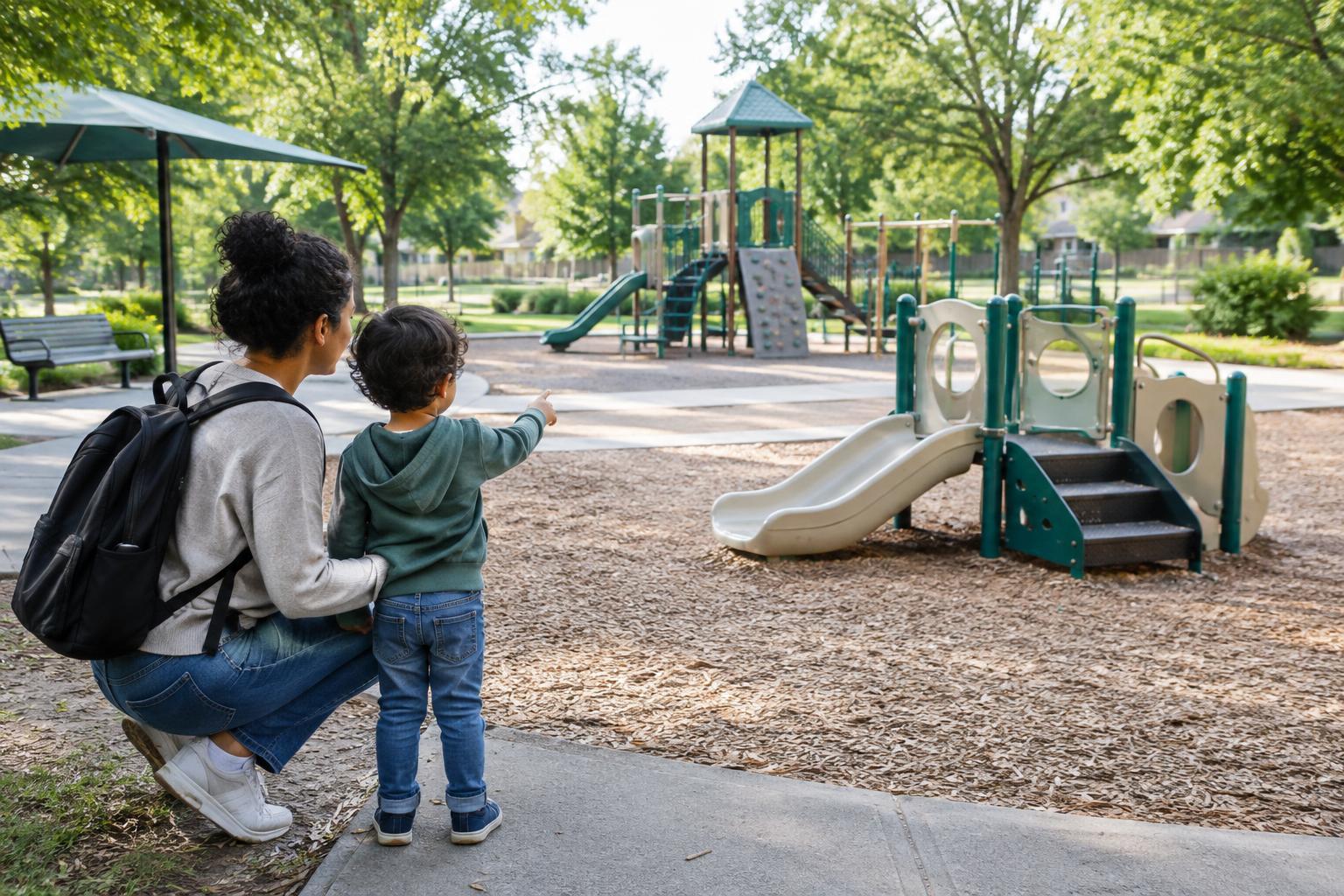
When you arrive, take a moment to walk the area together. Look for equipment that seems intended for younger children and notice how close it is to taller structures or fast-moving activities. Separate spaces can make it easier for children at different stages to play comfortably. If the playground is busy, consider whether there is enough room to pause, change direction and take turns without frequent collisions.
Sightlines matter, too. Can you see the places your child is likely to explore from a spot where you can stay nearby? Are there exits, paths, water features or other areas that call for extra attention? For families with more than one child, a compact layout may be easier to manage than a park where appealing activities are far apart. A quick look at the ground, equipment and any loose or damaged parts can help you decide whether to settle in or choose another place.
Match equipment to the way your child plays
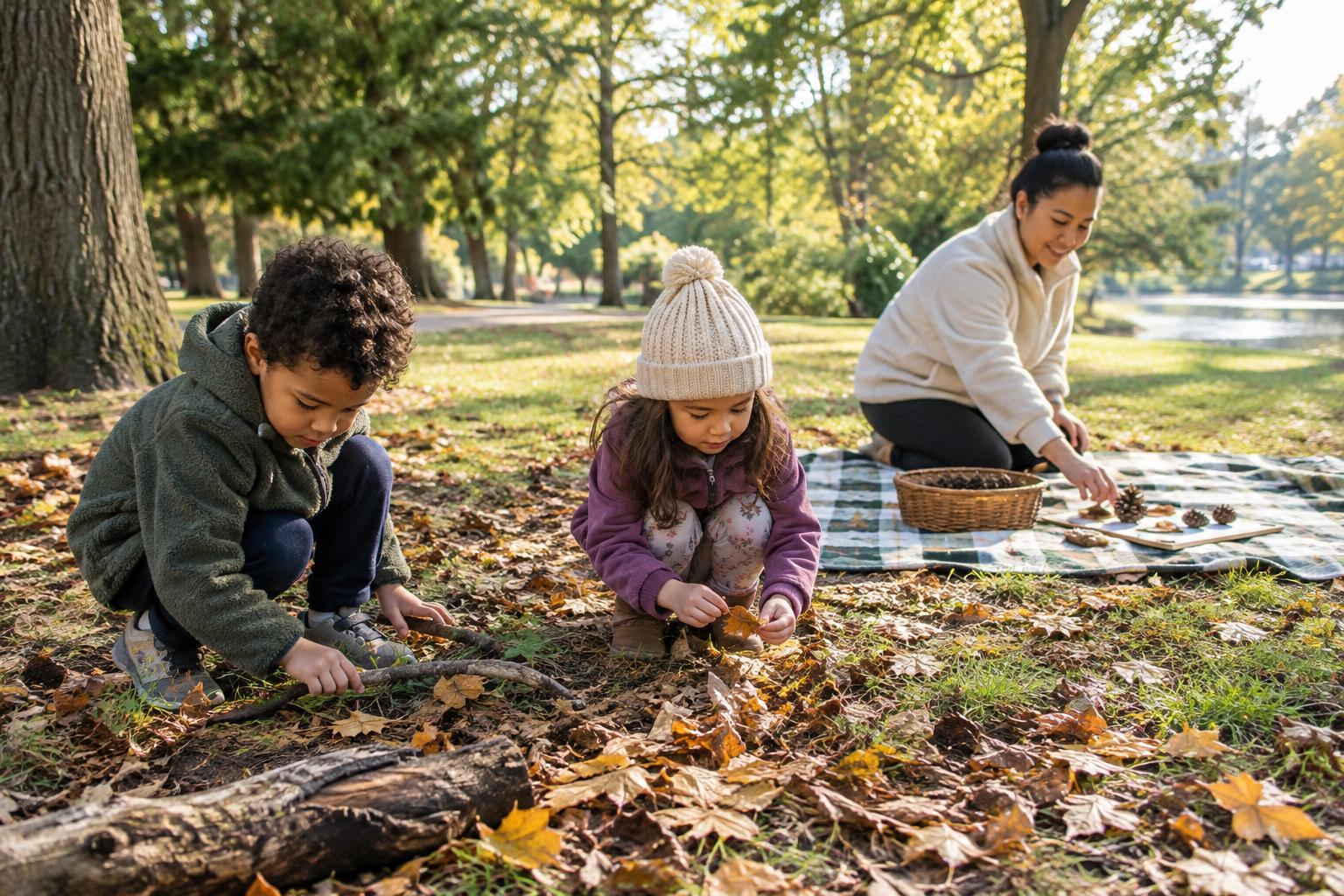
For younger children, low platforms, gentle slopes, short slides and ground-level activities may offer plenty to investigate. They may spend as much time collecting leaves or playing alongside another child as they do using a structure. Choose a space where you can stay close while still allowing them to make small choices, such as which step to try or when to move on.
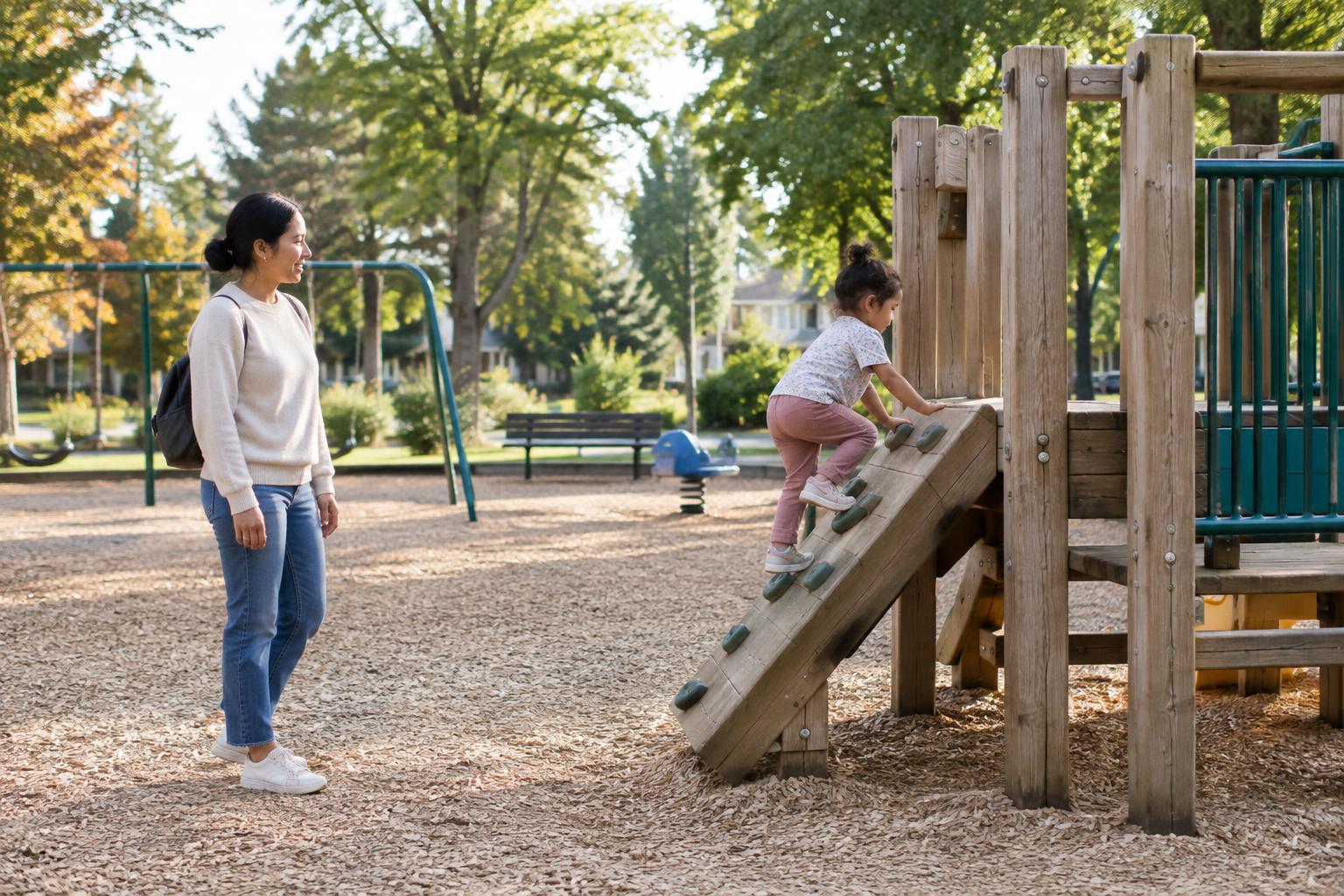
As children become more confident, they may be drawn to higher climbs, swings, balance features and games they invent together. Rather than deciding by height alone, watch how your child handles an activity: Can they find a secure way up and down? Do they seem comfortable waiting for a turn? Can they stop if they change their mind? A useful playground offers both familiar options and activities they can try when ready, without making the most difficult feature the center of every visit.
Consider comfort and access for the whole family
A playground works better when the practical details fit your outing. Shade, a place to sit, nearby toilets, drinking water and a route that is manageable with a stroller can all affect how long your family wants to stay. Surfaces and paths also matter when someone uses a mobility aid or finds uneven ground difficult. An accessible path is most useful when it connects to activities a child can enjoy, not just to the edge of the play area.
Think about sensory comfort as well. Some children enjoy a lively, noisy playground; others prefer a quieter space or a visit at a less busy time. An open area for running, a calmer corner or a simple bench for breaks can give a child a way to reset. You do not need a perfect park to have a good outing. Knowing where your family can pause, eat a snack or head home often makes play feel more relaxed.
Let each visit help you choose the next one
You may not know whether a playground is a good match until you have spent time there. Notice which activities your child returns to, where they ask for help and when they seem ready for a break. Those observations can guide your next visit more reliably than a list of impressive features. A familiar playground can be valuable because children know what to expect and can discover new ways to play in the same space.
Keep the plan flexible. Weather, energy levels and the number of other visitors can change how a playground feels from one day to the next. Some days call for a short visit to one favorite swing; others leave room for exploring the whole park. Choosing an age-appropriate playground is less about finding a single perfect destination and more about finding places where your child can play with growing confidence while your family enjoys being outdoors together.