Two ways to begin, not two opposing rules
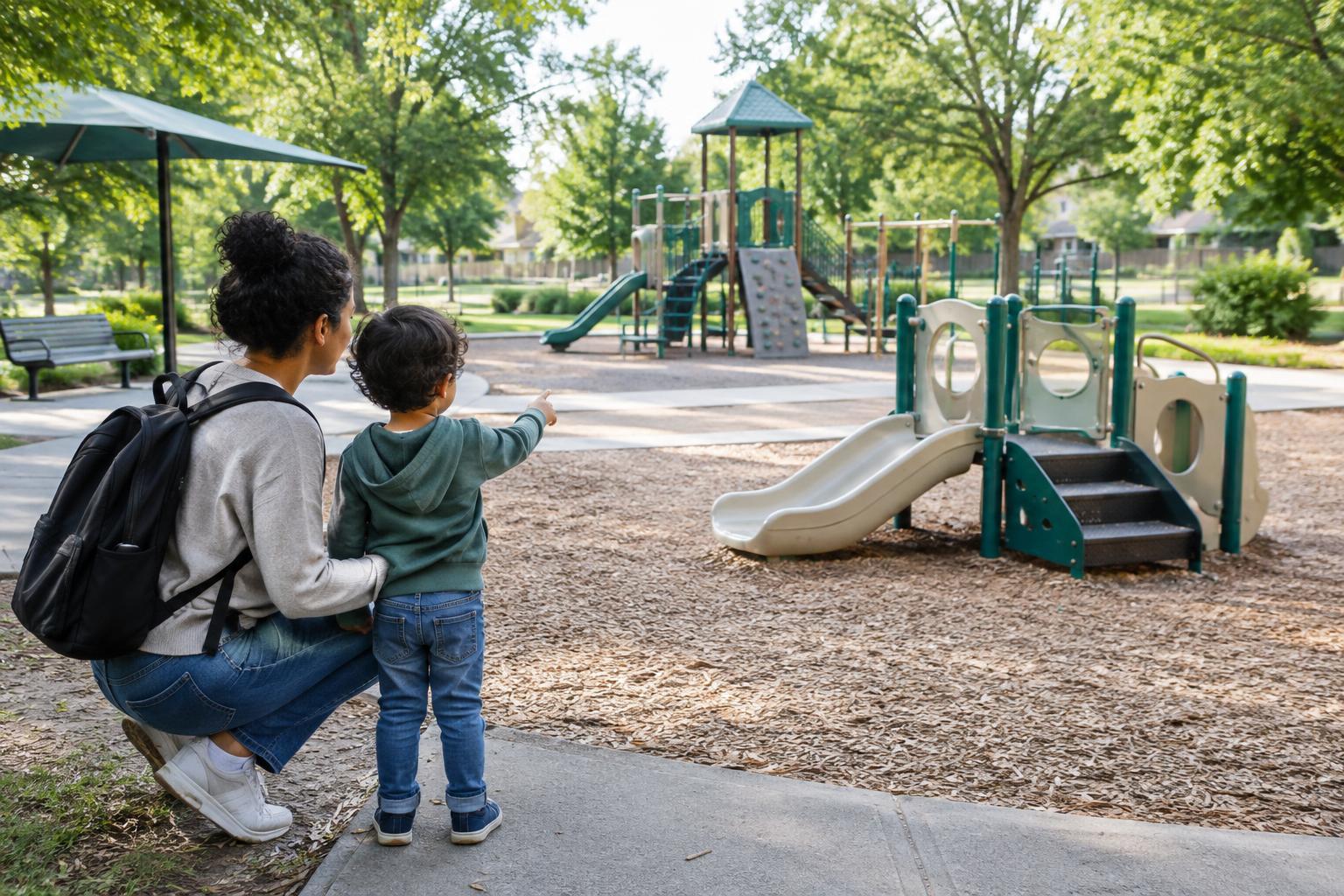
A trip outside can start with a plan: walk to a particular tree, look for interesting shapes, or bring a ball for a familiar game. It can also start with a simple invitation: “What would you like to do here?” Neither approach is automatically better. The useful question is what the children, setting and available time call for today.
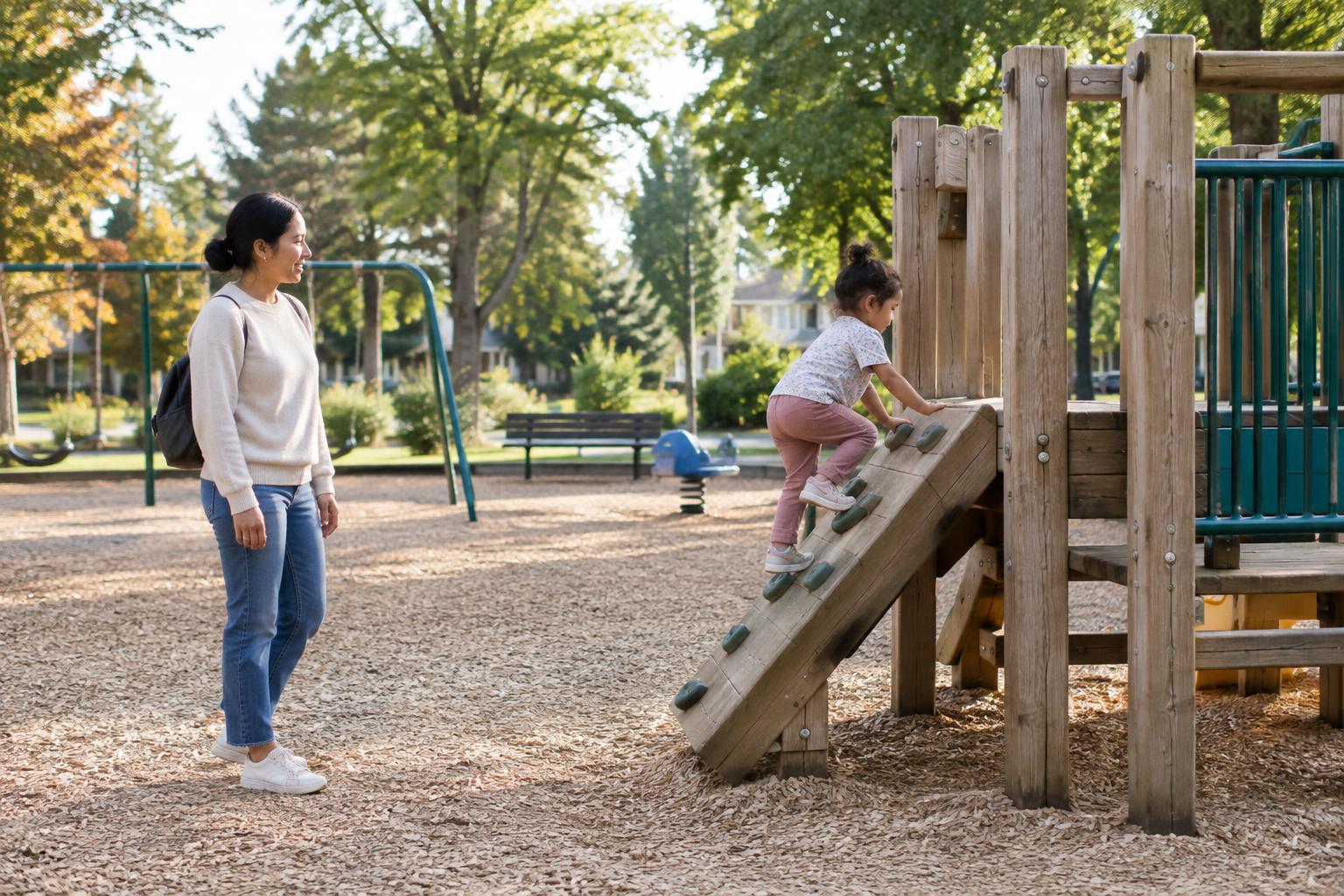
Free play means children have meaningful choices about what to explore and how to use the space. Planned activities have a clearer starting idea, such as making a leaf picture or following a short obstacle course. Both can include adult attention and shared conversation. A plan can leave room for children to change direction, and free play can happen within simple boundaries about where to go and what is safe to touch.
When free play fits the moment
Free play often works well when there is enough time to settle in and the space offers things children can use in different ways. A small patch of ground, a path, or a few fallen leaves may become part of a pretend shop, a building project, or a game with rules children invent. Adults do not need to supply an outcome. They can stay nearby, notice what interests the child, and join when invited.
Child-led time can be particularly welcome after a day with many instructions. Younger children may move quickly between ideas, while older children may spend longer negotiating a game or trying a challenge of their own design. If several children are playing, occasional help with turn-taking or explaining boundaries may still be needed. Free play is not the same as leaving children to manage every difficulty alone.
To make this approach easier, choose a place where the permitted play area is clear. Offer a few open-ended items if useful, such as a bucket, chalk, or a ball, then pause before suggesting what to do with them. If a child seems unsure, describe something you notice—“There are lots of shadows on this path”—and give them time to decide whether it sparks an idea.
When a plan helps
A planned activity can give outdoor time a gentle beginning when children are hesitant, the visit is short, or a group needs a shared focus. “Let’s find three different textures” is easier to enter than an open-ended request to play. A familiar game can also make a new place feel more approachable. The plan does not have to be elaborate: a simple invitation, a clear place to start, and a flexible stopping point are often enough.
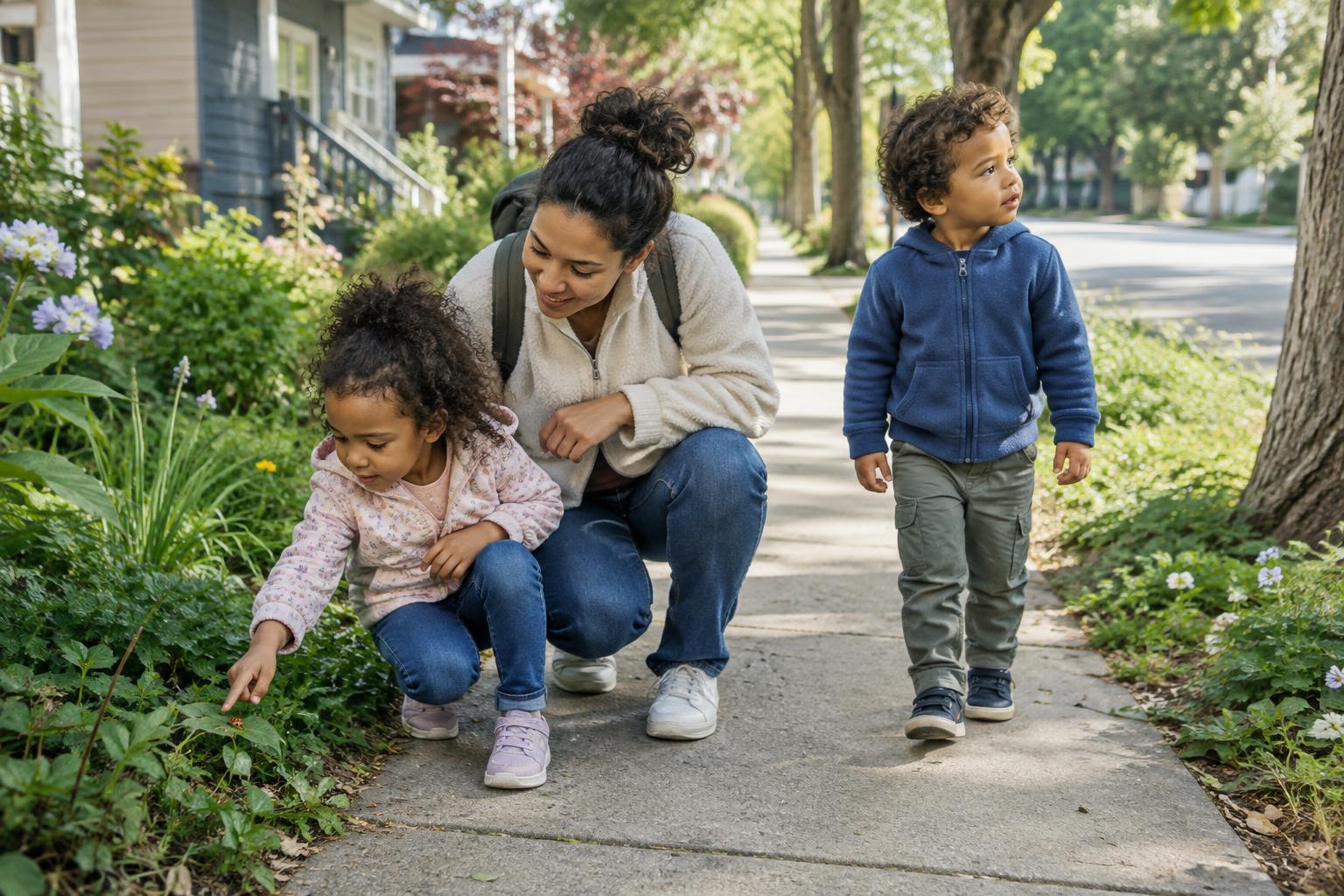
Structure can help families move through practical constraints. On a walk to an errand, children might look for circles or take turns choosing which safe path to follow. In a shared yard, a brief group game may help everyone learn where play is allowed. For a child who prefers to know what comes next, explaining the plan before going out can make participation easier. Build in a choice where possible, such as which object to look for first or whether to repeat the game.
Let one approach become the other
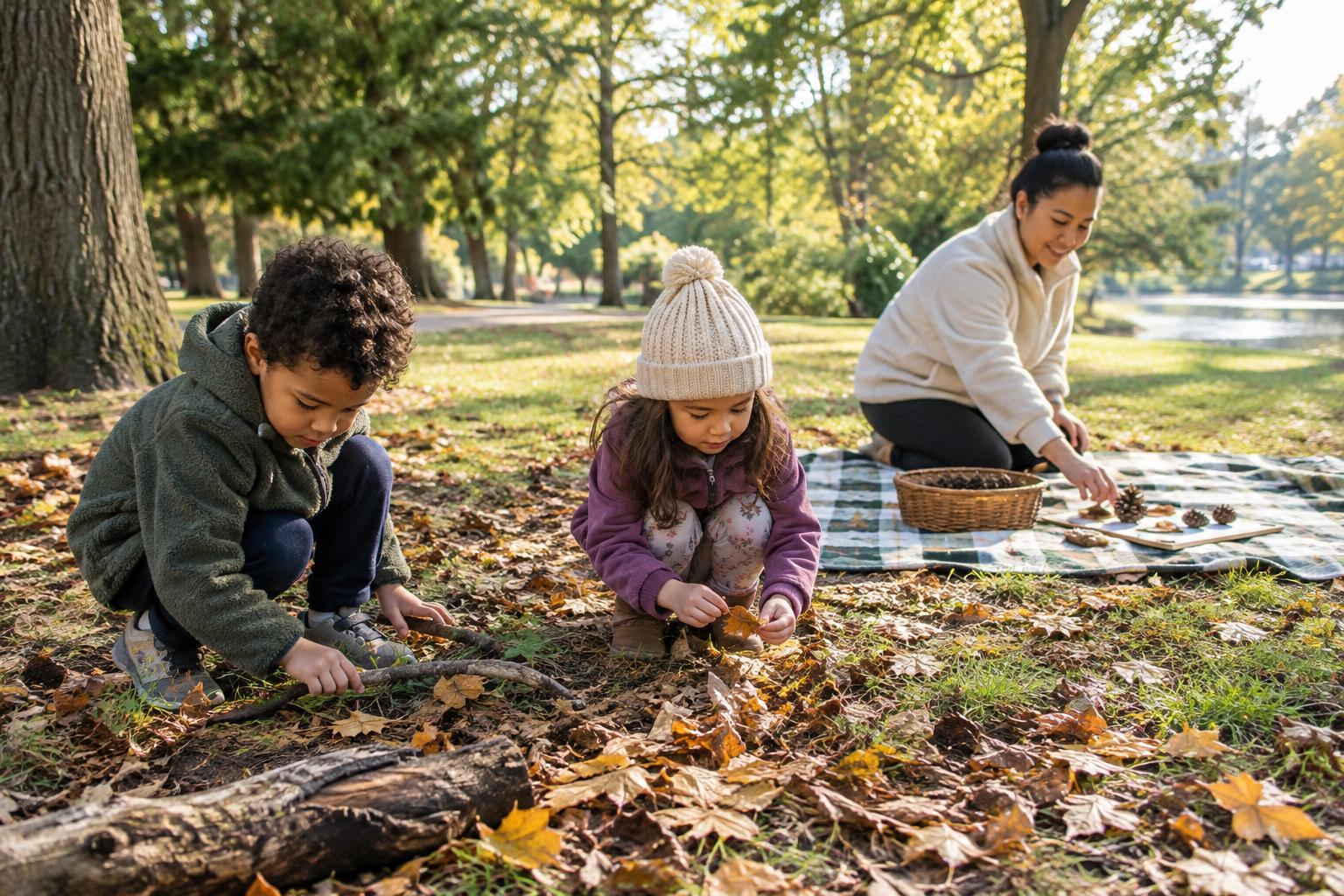
The most useful outdoor plans are often easy to abandon. A family might set out to collect leaves for a picture, then discover that the children are more interested in watching them blow across the ground. That is not a failed activity; it is a chance to follow a fresh question. Likewise, free play can become more structured when children ask for help setting up a race or need a shared rule to keep a game going.
Try planning an invitation rather than a finished result. Bring chalk and suggest drawing a route, but let children decide whether it becomes a road, a maze, or something else. If interest fades, switch to child-led play or simply continue the walk. A short transition warning can help when it is time to leave, especially if children are deeply involved in a game.
Keep the setting and the child in view
Before choosing free play or a planned activity, consider the basics: how much time you have, the weather, the space, and each child’s comfort with it. In a busy public area, closer supervision and firmer boundaries may be needed than in a familiar enclosed space. Some children may enjoy running games; others may prefer observing, collecting permitted objects, or playing while seated. Outdoor time can still feel worthwhile when it is quiet or brief.
A simple rhythm is to begin with one idea, allow room for choice, and check in as you go. Ask what children want to keep doing and notice when they seem ready for a change. Over time, families can build a mix of familiar activities and unplanned time. The goal is not to balance them perfectly on every outing, but to make space for both shared plans and children’s own discoveries.