Start with a purpose, not a packed schedule
A walk is easier to enjoy when it has one simple purpose: visit a familiar tree, look for different shapes, or stop at a place where everyone can sit. You do not need activities for every minute. Children often find their own points of interest in cracks in the pavement, moving shadows, or the sound of a passing vehicle. Leave enough time for those discoveries rather than treating the route as something to finish.
Choose a distance that fits the group’s energy and the time available, including the trip home. For a younger child, a short loop with several stops may be more satisfying than a longer walk toward a destination. Older children may enjoy helping choose between two routes or deciding which landmark to visit first. A clear but flexible plan gives everyone a starting point without making a change of course feel like a failure.
Make the route comfortable and easy to adapt
Before heading out, think about the practical details that can shape the mood of the walk. Consider where it is comfortable to cross streets, whether there is space for a stroller if you use one, and where you could pause if someone needs a break. Clothing suited to the weather and water for a longer outing can make it easier to stay outside. A nearby route is useful because it can be shortened when energy or interest runs low.
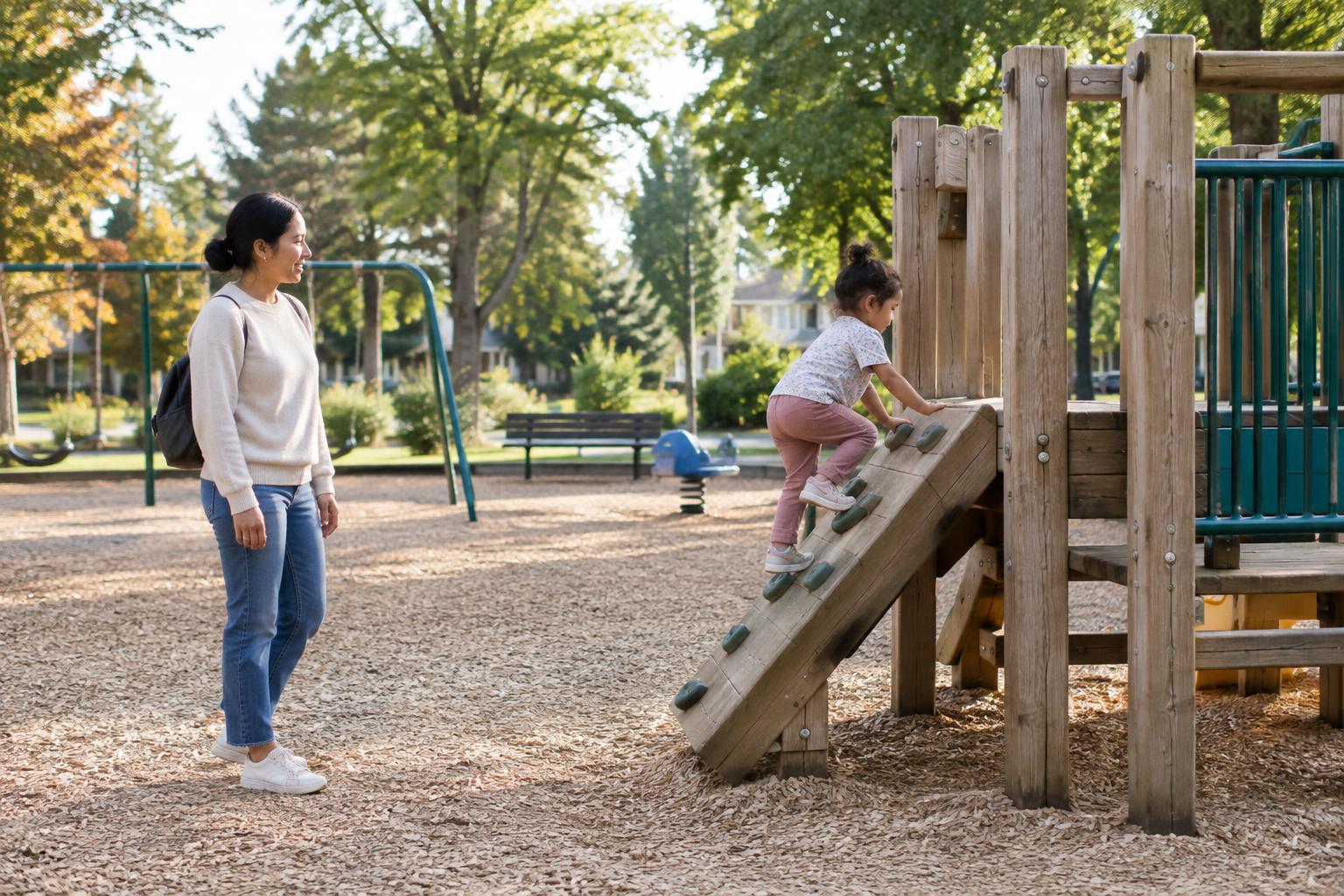
Invite children to take part in the plan in manageable ways. They might choose which corner to turn at, pick a place to pause, or carry a small bag for a jacket. Set simple boundaries before leaving, such as staying close at crossings and checking with an adult before touching unfamiliar plants or objects. These expectations make room for exploration while keeping the walk workable for the whole group.
Use noticing games that need no supplies
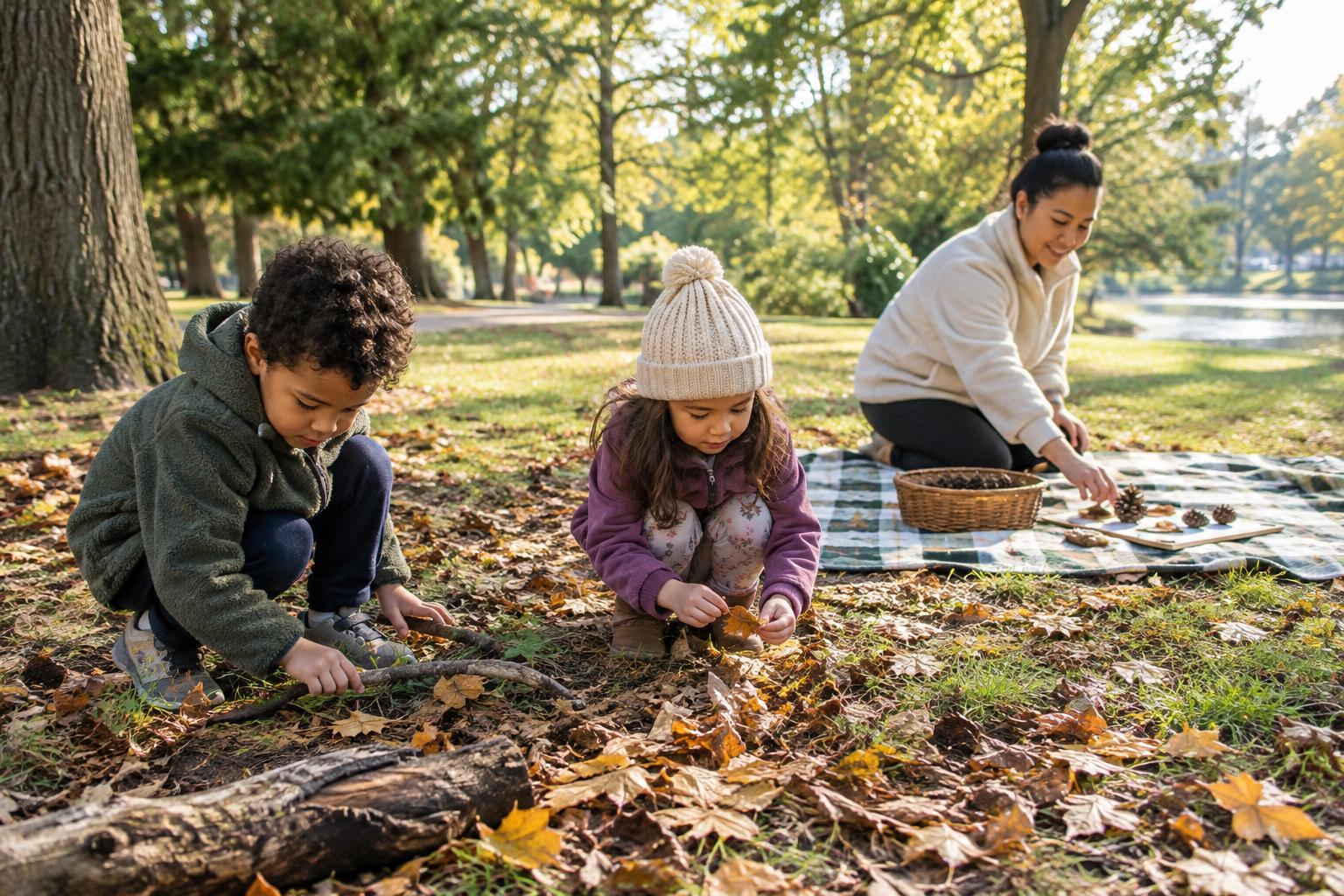
A good walking game can begin and end whenever attention shifts. Try looking for circles, spotting three different textures, or listening for sounds that are near and far. You can also take turns choosing a color to notice along the route. Keep the prompts open enough that there is no single correct answer: a child might call a puddle shiny while you notice the reflection inside it.
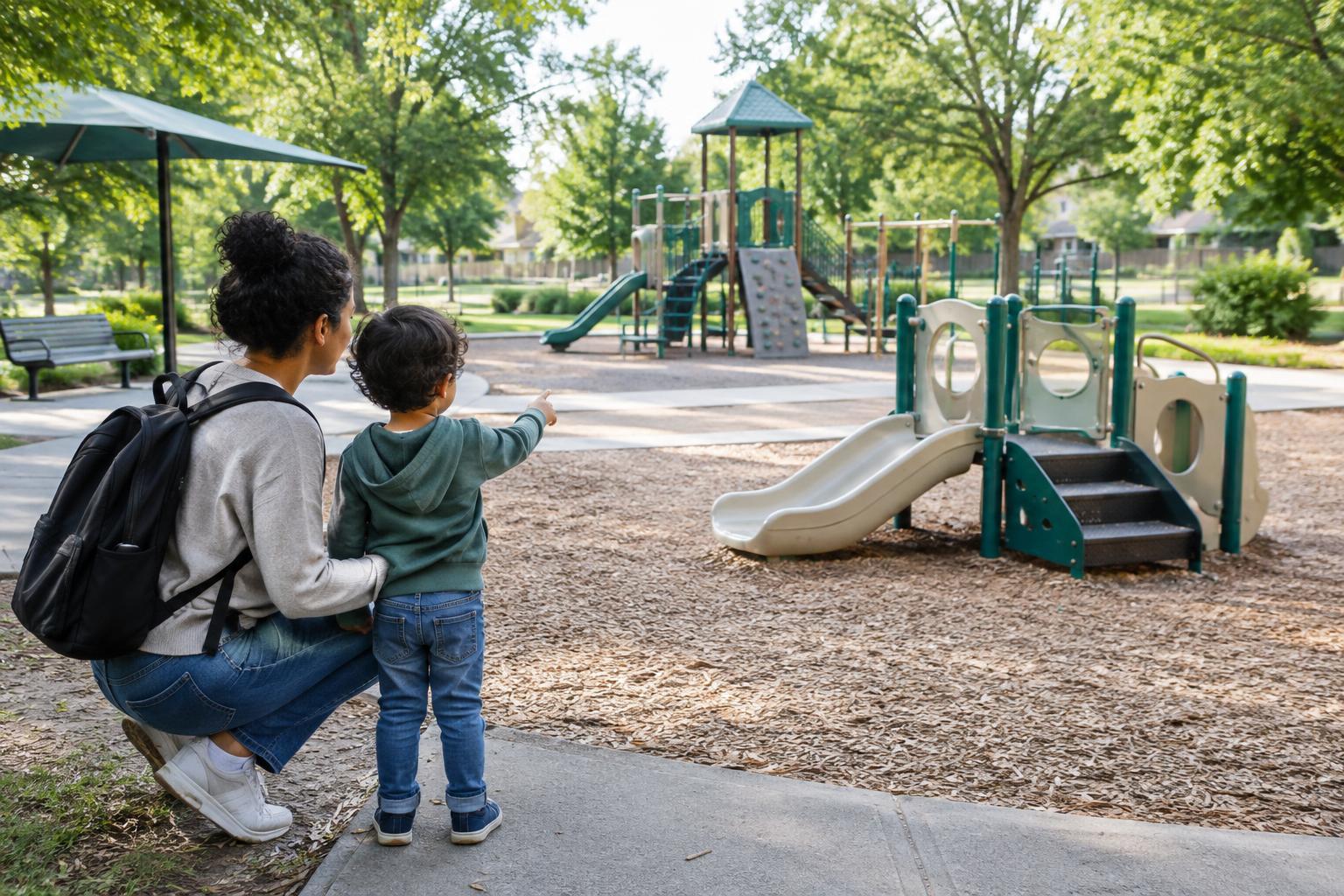
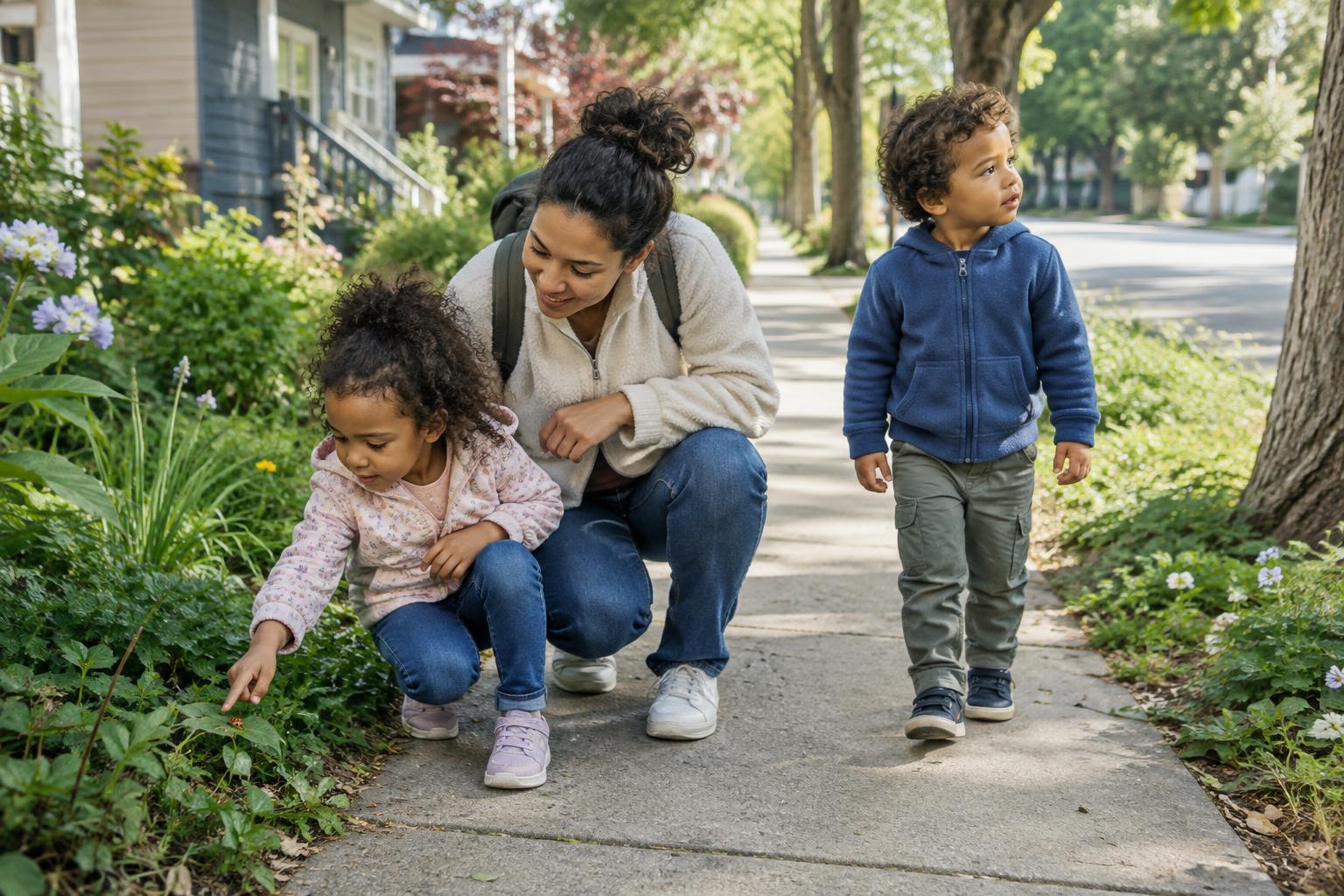
Match the invitation to the child rather than expecting everyone to play the same way. A toddler may enjoy naming what they see or pointing to something that moves. A child who likes stories might imagine where a trail of footprints leads. An older child may prefer comparing two streets or sketching a mental map of the route. If a game stops being fun, let it go. Quiet walking and conversation count as engagement too.
Follow questions without needing every answer
Neighborhoods offer small chances to talk about how places work. Children may wonder why one tree has bare branches, what a painted symbol means, or where a delivery is going. You do not need an immediate explanation for every question. Asking “What do you notice?” or “What do you think?” can keep a conversation going while you look more closely together. When you are unsure, it is fine to say so.
Try giving children time to finish an observation before introducing a new prompt. A familiar route can still feel different when you notice what has changed since the last walk: a new flower, a damp path, or a different sound at the same corner. Respectful curiosity also has limits. Enjoy gardens, homes, animals, and other people from an appropriate distance, and choose public places for stops and games.
End while the walk still feels manageable
Build the return trip into your plan instead of waiting until everyone is tired to turn around. A simple signal, such as heading home after reaching a particular corner, helps children know what to expect. If someone wants to keep exploring, offer a small choice within the limit: take one last look at the tree or choose the next crossing. That acknowledges their interest without extending the outing beyond what the group can comfortably do.
On the way home, ask what each person noticed rather than testing what they learned. A child might remember a dog, a bright door, or the snack afterward; each answer tells you something about what made the outing meaningful to them. You can use that interest to shape another walk, but there is no need to repeat the same games every time. The most useful walking routine is one your family can adjust and enjoy again.