Start with the way your family uses the door
An entryway often has to handle several jobs at once: shoes come off, bags get dropped, coats need hanging, and someone is looking for a missing mitten. Before adding storage, watch what happens during a few ordinary arrivals and departures. Where do shoes naturally land? Which items need to leave again tomorrow? Notice the places where people stop or have to step around a pile. Those observations are more useful than an ideal picture of how the space should look.
Choose a clear path to the door as your first priority. Then give the most-used items a place close to where they are taken off. If the entryway is small, it is fine to store only current-season gear there and keep occasional items elsewhere. The aim is not to fit everything beside the door; it is to make the next trip out easier.
Put everyday storage within reach
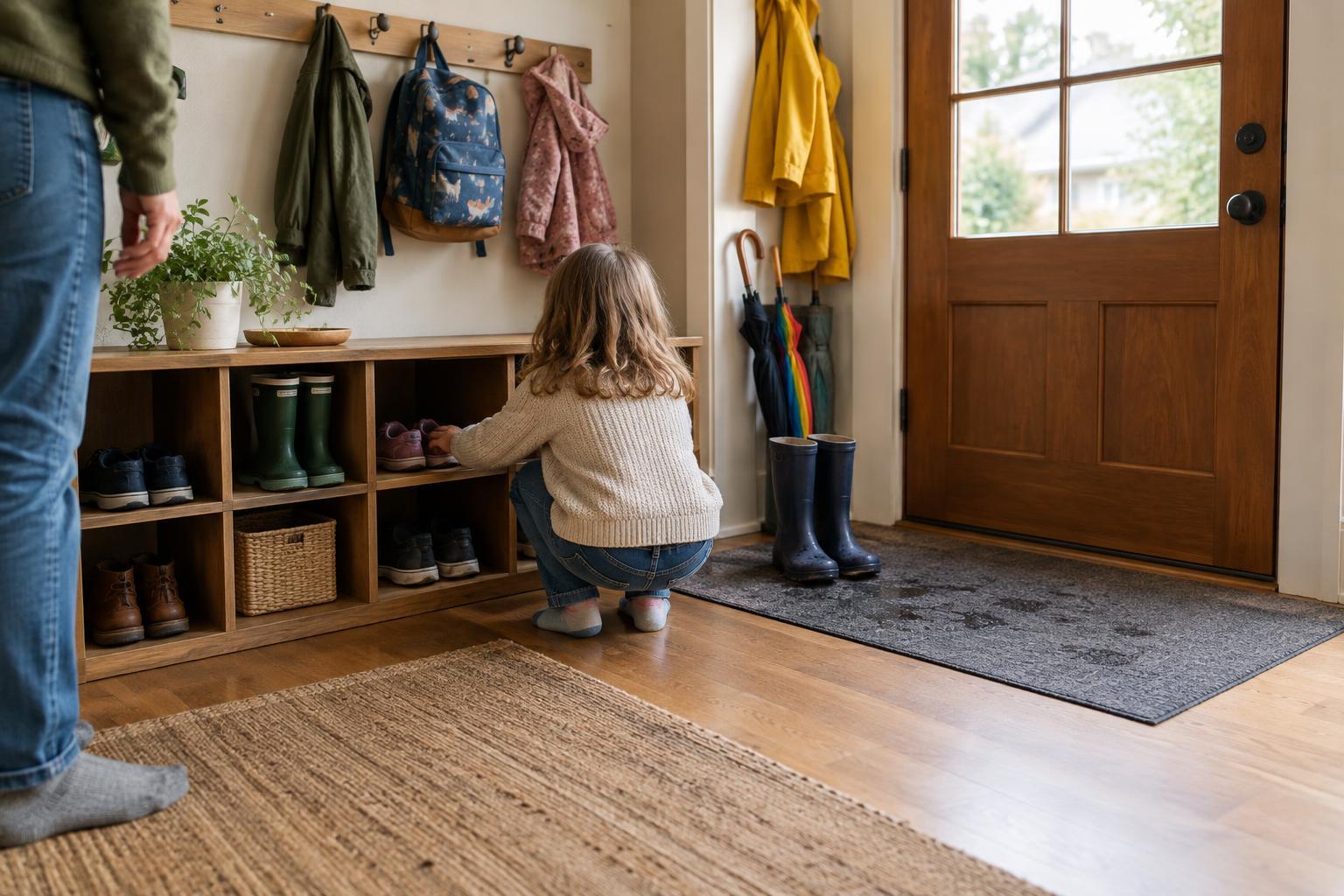
Children are more able to help when they can use the storage without asking an adult to lift or open something. A low hook for a coat, an open spot for a bag, and a shallow tray or basket for shoes can be enough. Leave a little space between hooks so sleeves and straps do not tangle. If several people share the area, a consistent place for each person's things may be easier to remember than a system with many categories.
Match the setup to the child rather than expecting one arrangement to work for every age. A younger child might manage placing shoes in a bin while an adult hangs the coat. An older child may be ready to hang a bag and check for the next day's essentials. Labels with simple words or pictures can help everyone find the right spot, but they are optional. A storage system that is easy to see and use often needs less explanation.
Make room for the messy parts
Shoes and coats are not always ready to go straight into storage. A mat or washable tray gives damp shoes a landing place and helps keep water and dirt away from the main walkway. Hooks or a separate spot for wet outerwear can allow it to dry before it is packed away. Keep a small place for the items that travel with coats and bags, such as hats or gloves, so they do not spread across a table.
Think about how the space will be cleaned as well as how it looks. Open containers can make daily putting-away simple, while a tray that can be lifted makes it easier to clear grit from the floor. Avoid filling every shelf or hook: a little spare room makes the entryway more forgiving when a visitor arrives or the weather changes. Check the area now and then for outgrown gear and items that no longer need to live by the door.
Build a short arrival and departure routine
A child-friendly entryway works best when its layout supports a routine that can be repeated. On arrival, the sequence might be shoes in their spot, coat on a hook, and bag in its home. Before leaving, a child can look at those same places in reverse. Keeping the steps few and familiar can be more manageable than asking everyone to put the whole house in order at the busiest point of the day.
Expect to do parts of the routine together, especially when a child is learning it or everyone is tired. You might name one step at a time, model where an item goes, or invite a child to choose which task to do first. If the routine repeatedly stalls, adjust the space: a hook may be too high, a basket may be too full, or a bag may be too awkward to store there. The setup can change as your family changes.
Keep the space usable and safe
Entryways are busy passages, so keep floors and exits clear rather than letting bags become obstacles. Choose stable storage, and secure furniture that could tip if a child pulls on it. Place hooks where they can be reached without climbing, and check that their shape and position do not create an obvious bumping hazard. Keep keys, small loose objects, and anything you do not want a young child handling in a separate, adult-accessible place.
Finally, treat the entryway as a working family space, not a display. A quick reset when shoes overflow or seasons shift is usually more useful than a complicated organizing project. When children can see where their things belong and take part in putting them there, the doorway becomes a practical place to practice everyday independence—one coat, bag, and pair of shoes at a time.