Start with the space you can offer
A drawing taped to the fridge, a card from a grandparent and a smooth stone brought home from a walk can all feel worth keeping. The difficulty is not that these things lack meaning. It is that family life keeps producing more of them. A useful keepsake system begins with a question: how much space can your home comfortably give to memories?
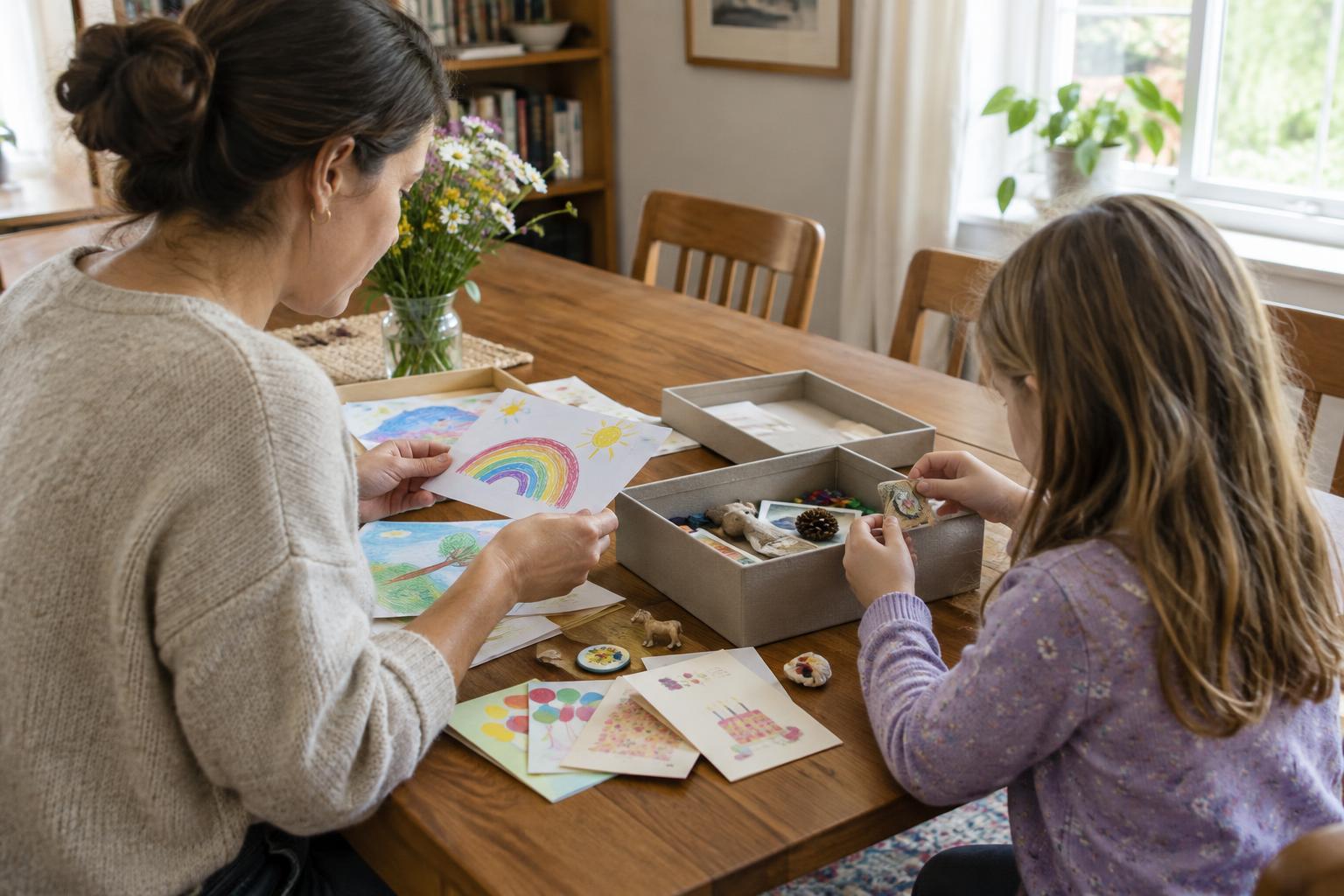
Choose a container before deciding what goes in it. A lidded box, a folder with sleeves or one drawer per child can provide a clear boundary. The container does not need to be large or perfectly organized. It needs to fit somewhere accessible and protect its contents well enough for your home. If several people share a small space, one family box plus a slim folder for each child may work better than a collection of bulky bins.
Decide what each item helps you remember
When everything feels special, it helps to look for variety rather than volume. One painting may show a child’s current fascination with bright colors; another may capture the first time they drew the whole family. Keeping both can tell a story. Keeping every painting from the same afternoon may not add much to it.
As you sort, ask what you would enjoy finding years from now. Does the item show a new skill, a shared experience, a child’s personality or a relationship that matters to your family? A few everyday objects may deserve a place alongside milestone items. A hand-drawn grocery list, for example, might recall a routine you loved doing together. An object does not have to look impressive to hold a good memory.
You can also let go of an item without letting go of its story. Write a short note on the back of a drawing, or photograph a large project before recycling its materials. A photo is not a perfect substitute for every physical object, but it can preserve the memory when the object is fragile, oversized or difficult to store.
Give new arrivals a temporary landing place
Making a decision about every school paper or craft project the moment it comes through the door can be tiring. Set up an easy landing place, such as an inbox or a designated shelf, where potential keepsakes can wait. Keep it separate from papers that need a response so invitations and forms do not disappear into the memory pile.
When the landing place fills, look through it together. Time can make choices easier: the project that felt impossible to discard on Tuesday may feel less important a few weeks later. Select a small number of favorites to move into long-term storage, display a few for now and release the rest. If the container is full, compare new items with what is already there rather than automatically adding another box.
Aim for a routine that fits your household. Some families may enjoy sorting at the end of a school term; others may only manage it when a folder gets crowded. Consistency helps, but the system should reduce work, not become another demanding chore.
Let children take part without making every choice theirs
Children may value things adults overlook: a bent paper crown, a ticket stub or a tiny construction made from scraps. Invite them to show you what an item means to them before deciding where it belongs. You might offer a display spot for current favorites and a limited space for things they want to save. This gives them a say while keeping the household boundary clear.
Younger children may find it hard to choose between objects, especially when asked to discard something they made. Rather than holding a big sorting session, try choosing one favorite from a small group and moving the others out of sight for a while. Older children may prefer to manage their own folder or box. If they do, explain the space available and let their choices change over time.
Keep private items in mind, too. A child may be happy to save a journal page or note but not want it shown to visitors or photographed for a shared album. Treating keepsakes with respect includes asking before displaying or sharing personal work.
Make memories easy to enjoy
A keepsake collection is more useful when the family can revisit it. Label boxes and folders with names or broad life stages, and add brief notes where the context might otherwise be lost. Store items somewhere reasonably dry and away from spills. For bulky objects, consider keeping one representative piece and a photo of the rest.
Take the box out occasionally, not only when it is time to sort. Let children tell the stories they remember, and share your own without insisting that everyone feel the same way about each object. The goal is not a complete record of childhood. It is a manageable collection that leaves room for both the memories you have made and the life your family is living now.