Notice when and where noise builds up
In a shared home, noise is rarely one single problem. Footsteps may carry through a floor, voices may travel down a hallway, and a lively game can feel much louder in a room with hard surfaces. Before changing anything, notice which sounds cause the most friction and when they happen. A few days of informal observation can help you distinguish a noisy activity from a space that amplifies ordinary activity.
Invite children into the conversation without making them feel responsible for every sound. You might say, “The hallway makes running sound especially loud. Where else could we play that game?” This keeps the focus on finding workable places for different activities. It also leaves room for the reality that children need to move, talk, and play at home.
Use furnishings to soften sound
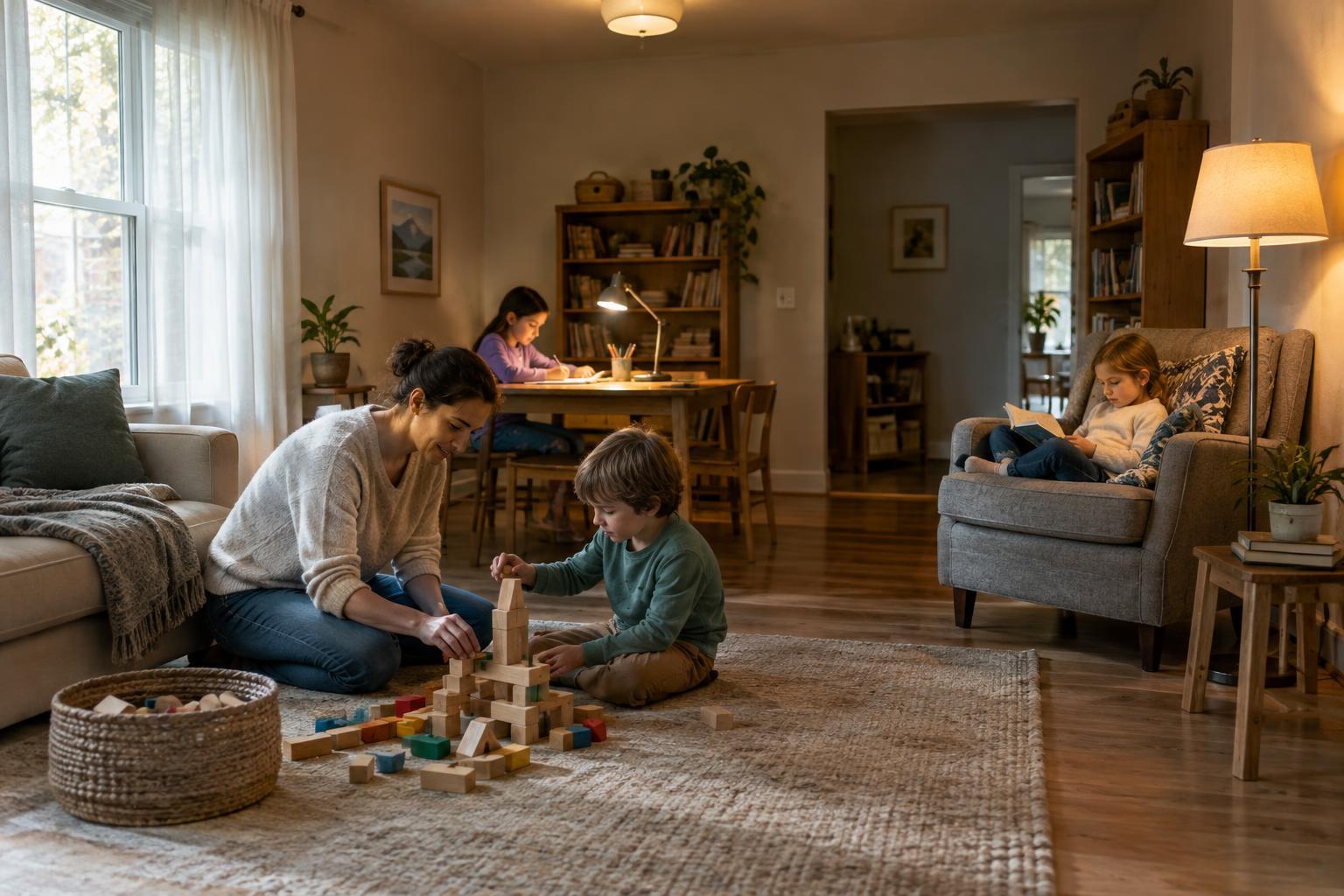
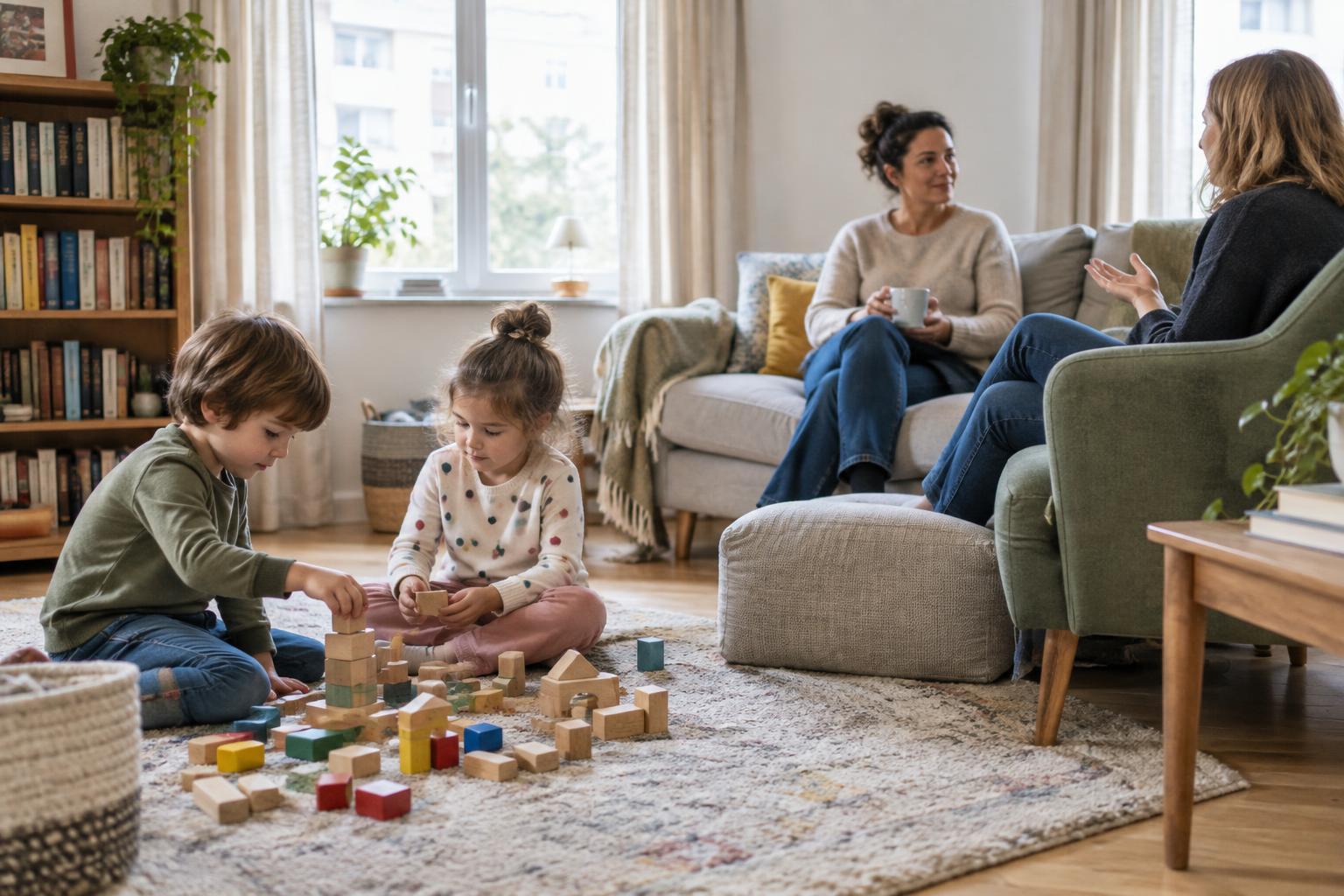
Soft materials can make a room feel less echoey, even if they cannot soundproof it. A washable rug or play mat can soften the sound of toys and footsteps; a rug pad may help it stay in place. Curtains, upholstered furniture, and full bookshelves can also reduce the hard surfaces that reflect sound within a room. Choose materials that fit your cleaning routine, and keep rugs secure so they do not become trip hazards.
Layout matters as much as what you buy. If possible, move a play area away from a shared wall, or place a table and chairs where active play tends to turn into repeated bumps. Give blocks, toy vehicles, or other noisy favorites a mat or low table instead of a bare floor. Test one change at a time: the goal is to find modest improvements, not to fill every corner with cushions.
Make space for both active and quiet play
Children may find it easier to follow a noise guideline when there is an appealing alternative. A small “big movement” spot could be a clear area for stretching, dancing, or building large structures during suitable hours. A quieter spot might hold puzzles, drawing supplies, books, or soft toys. These do not need to be separate rooms. Even two recognizable corners can help a family shift activities without ending the fun.
Match expectations to the time of day and the people using the space. A game that works well in the afternoon may be harder on a sleeping sibling or a neighbor in the evening. A simple transition, such as putting away bouncing balls before dinner and bringing out a tabletop game, is often easier to repeat than frequent reminders to “be quiet.” Keep the options flexible as children’s interests and abilities change.
Build routines that reduce avoidable noise
Some household sounds come from the way daily tasks unfold. Closing doors gently, placing felt pads under chairs, and keeping a basket near the entrance for shoes can reduce repeated clatter. When children help carry out these habits, show them what to do rather than relying on vague rules. For example, demonstrate how to push a chair back without scraping it, then give them a chance to try.
Shared schedules can help, too. If several people need calm at once, agree on a predictable quiet period and what it means in practice: voices at a conversational level, softer play choices, and headphones at a comfortable volume where appropriate. Quiet time need not mean silence. It can be a reliable window that helps everyone plan, while leaving other times open for ordinary family activity.
Talk with the people who share the space
In apartments or multigenerational homes, not every sound can be controlled from one room. A respectful conversation can clarify which noises are most disruptive and whether there are times when a small adjustment would help. Be specific and collaborative: “We can move the building game off the bare floor in the evening,” offers more than a promise that children will never make noise. Avoid assuming you know what others can hear or need.
Within your own household, revisit the plan after trying it. Ask what feels comfortable, what is difficult to remember, and whether anyone has lost a favorite way to play. If a solution makes home life tense without helping much, change it. A workable noise plan protects room for connection and play while showing care for the people on the other side of a wall, floor, or doorway.